
Remote properties, wooded hunting grounds, and irregular outdoor work sites rarely offer dependable cellular reception. A trail camera still needs to capture movement and deliver notifications, so antenna design, carrier selection, battery planning, and local coverage matter more than headline resolution. I compare seven cellular and non-cellular options for people who need dependable monitoring where bars fade quickly.
A Snapshot Of The Selections

TACTACAM Reveal X 3.0 Cellular Trail Camera


GardePro X66 Pro Cellular Trail Camera

VOOPEAK 4G LTE Trail Camera with Live Streaming

VOOPEAK 2.5K Cellular Trail Camera 2-Pack
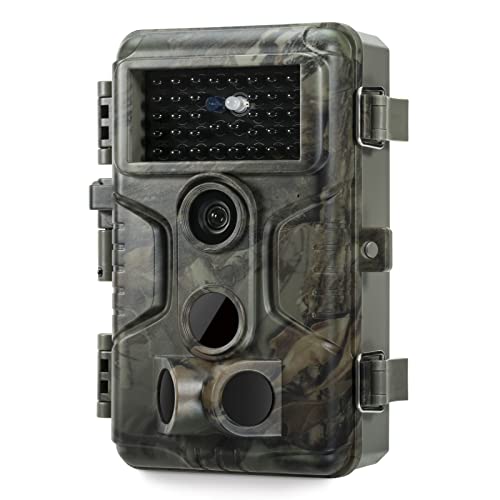
GardePro A3S Non-Cellular Trail Camera

Tactacam Reveal 4-Port Lithium Battery Multi-Charger Dock
What Each Pick Brings To The Table
The TACTACAM Reveal X 3.0 is built for people who need cellular monitoring without committing the camera to one network. Its automatic multi-carrier connection checks the stronger available LTE signal, which can make a wooded property more practical than a camera tied to a weaker provider. The night-vision and waterproof labeling also suit outdoor placements exposed to weather and accidental bumps.
For daily hunting checks or monitoring a remote cabin, the combination of multi-carrier LTE and stated battery life of more than six months reduces the maintenance cycle. The tradeoff is dependence on cellular service and a connected plan, so local coverage deserves confirmation before installation.
What Helps Most
- Selects the stronger available AT&T or Verizon LTE signal.
- More than six months of stated battery life supports long deployments.
- Night vision and waterproof construction suit outdoor monitoring.
- Integrated SIM removes the need to swap carriers in the field.
Things To Consider
- Cellular notifications still depend on usable coverage at the exact location.
- Long battery life assumes activity and signal conditions remain moderate.
- Remote placement requires careful sealing and regular battery checks.
Key Specs
Made For Remote Monitoring
This camera fits hunters, cabin owners, and property stewards who need LTE flexibility across uneven terrain.
A Better Fit Elsewhere
The GardePro A3S Non-Cellular Trail Camera suits locations with no dependable cellular reception at all.
Two cameras make this TACTACAM bundle more useful than a single unit for a property with separate access points, tree lines, or game trails. Each Reveal X 3.0 camera uses the same multi-carrier LTE approach, so a weak signal at one corner does not automatically determine the result at another location. That flexibility is valuable across uneven rural terrain.
The tradeoff is placement work. Two housings mean two mounting points, two battery routines, and two devices that may need separate coverage checks. I consider this a sensible monitored property bundle rather than a way to extend cellular reception itself.
Notable Upsides
- Two cameras cover separate trails, gates, or property edges.
- Multi-carrier LTE improves flexibility across changing signal conditions.
- Long stated battery life reduces visits for routine battery changes.
- Night vision supports overnight wildlife and property checks.
Minor Gripes
- Coverage still depends on carrier service at both mounting locations.
- Two devices require more frequent physical maintenance than one.
Right Fit For
This bundle suits people monitoring a larger property or tracking wildlife across two separated areas.
Reach For A Different Pick When
The TACTACAM Reveal X 3.0 Cellular Trail Camera is the simpler choice for a single remote camera location.
GardePro takes a different approach with the X66 Pro by emphasizing a rechargeable, replaceable battery pack and a connected data service. That design makes sense for a fixed camera used regularly, especially when a person can return to the location occasionally rather than replacing disposable cells. Shared plans can also simplify account management across several cameras.
Live View and on-demand HD requests require an active cellular plan, so the camera’s convenience depends on more than the hardware. Compared with the TACTACAM Reveal X 3.0, this model is a stronger fit for a stationary installation with planned charging access.
Notable Gains
- Rechargeable battery reduces routine battery disposal.
- Replaceable pack supports long-term power planning.
- Shared data plans can combine usage across multiple cameras.
- Live View adds remote situational awareness at a connected site.
Practical Considerations
- Live View and HD requests need an active cellular data plan.
- Charging access matters more than with a fixed disposable-battery setup.
Feature Snapshot
Who Will Love This
This camera suits a homeowner or hunter with a fixed site, regular charging access, and a need for remote viewing.
Another Choice May Suit
The GardePro A3S Non-Cellular Trail Camera is a better fit where cellular service is absent rather than merely inconsistent.
The VOOPEAK trail camera is aimed at people who want to look into a location rather than wait for a movement alert. Its 2.5K live stream works over 4G LTE without relying on local Wi-Fi, while remote controls cover settings, zoom, and playback. That makes it useful for a construction site, second home, or property boundary where a quick visual check matters.
The 360-degree live-view concept is attractive for wide outdoor spaces, but the cellular connection remains the limiting factor. In a heavily wooded valley or a metal-sided building, I would verify service before expecting the same experience as an open field.
Real Benefits
- 2.5K live streaming provides detailed remote viewing.
- 4G LTE avoids dependence on local Wi-Fi.
- Remote controls reduce physical trips to the camera.
- Panoramic viewing helps cover broad monitoring areas.
Points To Note
- Live streaming still needs usable cellular service.
- Remote access can be less reliable inside dense tree cover or buildings.
Technical Highlights
The Right Fit
This model suits property monitors and construction supervisors who need direct remote access over cellular service.
Consider Something Else When
The GardePro A3S Non-Cellular Trail Camera is the more dependable option where no cellular connection exists.
VOOPEAK’s two-camera bundle is built for a person covering two outdoor points and wanting fewer battery visits. Each camera includes a dedicated solar panel, while 2.5K live video and human auto tracking make it easier to review activity from a phone. That combination suits a field entrance, trail crossing, or property perimeter.
The fixed SIM and required data plan mean this is still a connected camera, not a self-contained recorder. Solar support reduces battery dependence, though panel placement, shade, and seasonal conditions affect how much charging help it provides. For most backyards and open fields, the extra panel is the defining feature.
Benefits That Matter
- Two cameras expand coverage across separate outdoor points.
- Dedicated solar panels reduce manual battery changes.
- 2.5K live video supports clearer remote review.
- Human auto tracking helps prioritize moving subjects.
Trade-Offs To Consider
- Each location still needs adequate 4G LTE coverage.
- Solar charging depends on unobstructed exposure and placement.
- Two mounted units require separate maintenance checks.
Built With In Mind
This bundle suits wildlife monitors and rural property owners who want two locations with reduced battery servicing.
Where A Sibling Pick Shines
The VOOPEAK Trail Camera with 360-degree streaming is the better single-camera choice for direct live inspection.
The GardePro A3S takes a different approach from the cellular models: it records locally and does not depend on a data plan or carrier signal. That makes it the most dependable option in a hollow, dense forest, or remote property where cellular reception is absent. Its Sony Starvis sensor, 64MP photo capability, 1296P video, and sound recording provide useful detail for wildlife and property documentation.
The tradeoff is the absence of phone-based remote viewing. I consider that a benefit for consistent local capture, but users must retrieve the memory card or footage manually. Night vision reaches up to 100 feet, so placement and angle remain important.
Where It Excels
- Local recording avoids dependence on cellular coverage.
- Sony Starvis sensor supports low-light capture.
- 1296P video includes sound for environmental context.
- Night vision extends monitoring to as far as 100 feet.
Small Caveats
- Footage retrieval requires physical access to the camera.
- High-resolution files may require more storage capacity.
Product Snapshot
Who Should Grab It
This camera suits wildlife observers and rural property monitors who prioritize recording over remote connectivity.
Look Elsewhere When
The TACTACAM Reveal X 3.0 Cellular Trail Camera is preferable when phone notifications and carrier flexibility are essential.
This dock is not a trail camera, but it belongs in a low-signal setup because reliable power reduces one more field-maintenance problem. It charges up to four TACTACAM Reveal Lithium Cartridge V1 and V2 batteries in a single 12V dock, replacing several separate charging arrangements. That is especially useful for a person rotating batteries across two cameras or maintaining several monitoring points.
The compatibility is specific: the dock is designed for Reveal lithium cartridges, not unrelated battery packs. That narrow fit is useful for preventing mismatched charging setups, though anyone with mixed battery brands needs a separate charging plan.
A Few Highlights
- Charges up to four compatible cartridges together.
- Supports Reveal Lithium Cartridge V1 and V2 batteries.
- Approximately 4.5-hour charging cycle supports organized rotations.
- Single dock simplifies a multi-camera battery routine.
Less Ideal Details
- Compatibility is limited to specified Reveal lithium cartridges.
- Charging still requires access to a suitable 12V power source.
Core Details
Made For Multi-Camera Owners
This dock suits Reveal camera owners who rotate several batteries and want a more organized charging station.
Skip It When
The single-camera TACTACAM Reveal X 3.0 is more relevant for a setup that needs only one camera and its matching battery ecosystem.
What To Weigh Before Choosing A Cellular Camera
Signal and carrier flexibility
For a wooded property, cellular coverage can change dramatically over a short distance. A camera that selects between major LTE networks gives a location more options than a camera tied to one carrier. Placement near a ridge, road, or tower can matter more than resolution.
Battery logistics
Long battery life is useful only when the camera can sit without frequent visits. Rechargeable packs suit locations with planned charging access, while disposable batteries may be more convenient where a sealed solar panel is impractical. Two-camera setups also double the maintenance points.
Local recording versus remote viewing
Cellular cameras send photos and video through a data plan, but non-cellular models keep working when reception disappears. Remote viewing is valuable for cabins and work sites, while local recording is often the safer choice in isolated terrain.
Plan and storage costs
Live View, on-demand HD requests, and uploads create ongoing data-plan expenses. High-resolution local footage also needs suitable storage. I include those operating details before focusing on the camera’s headline resolution.
Common Mistakes In Low-Signal Monitoring
Coverage Is Not The Same As Signal Quality
A camera may show a connection indicator while struggling with uploads or live requests. Check coverage at the mounting point, not merely at the nearest road, and account for trees, terrain, and building materials.
More Features Do Not Fix A Weak Network
Night vision, high resolution, and remote controls cannot compensate for an absent cellular link. For genuinely remote locations, the GardePro A3S Non-Cellular Trail Camera may be more dependable than a connected model.
Battery Plans Need A Routine
A camera with a solar panel still needs the panel positioned for useful exposure, while a rechargeable battery still needs periodic charging. I would set a maintenance interval based on the location and activity level rather than assume every deployment behaves the same.
Frequently Asked Questions
Do trail cameras work without cellular signal?
Non-cellular trail cameras record locally, while cellular cameras need usable LTE coverage for remote features. The best choice depends on whether local capture is enough.
Which network works best in low-signal areas?
Coverage varies by location, and no single carrier is dependable everywhere. A camera with automatic multi-carrier selection offers more flexibility than a single-network model.
Can live viewing work without Wi-Fi?
The VOOPEAK models use 4G LTE for remote viewing, so nearby Wi-Fi is not required. A cellular data plan and adequate signal are still necessary.
Which battery setup is easiest to maintain?
A rechargeable battery suits a fixed camera with regular charging access. Solar panels can reduce battery servicing in open areas, though shade and panel placement affect results.
Is a non-cellular camera better for remote land?
It often is. The GardePro A3S records without a cellular plan, making it practical where reception is absent, although footage requires physical retrieval.
Conclusion
I favor the TACTACAM Reveal X 3.0 for flexible LTE monitoring, the GardePro A3S for isolated locations, and the VOOPEAK pair for two-point solar-assisted coverage. A charger dock becomes valuable once the camera count rises. Match the connection method to the terrain first, then settle battery and storage details around that decision.