
A long switchback at mile six makes hydration a real decision. You want cold water that survives the climb, a cap you can flip open one-handed, and a build that shrugs off drops on granite. The picks below cover a wide range of trail needs, from ultralight day hikes to multi-day backcountry routes where you filter straight from streams.
The Choices Worth Comparing
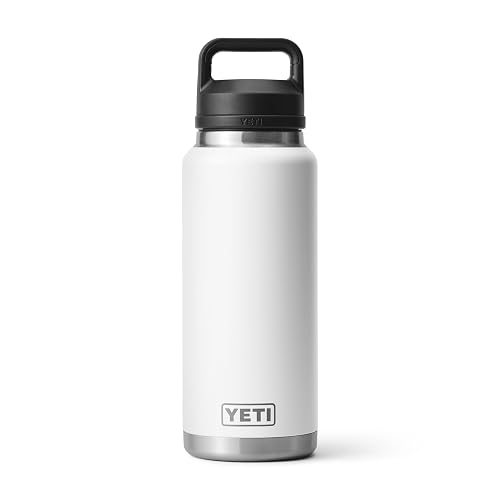
YETI Rambler 36 oz Bottle with Chug Cap

YETI Rambler 26 oz Bottle (Cape Taupe)

Takeya Actives 24 oz Insulated Bottle (Onyx)
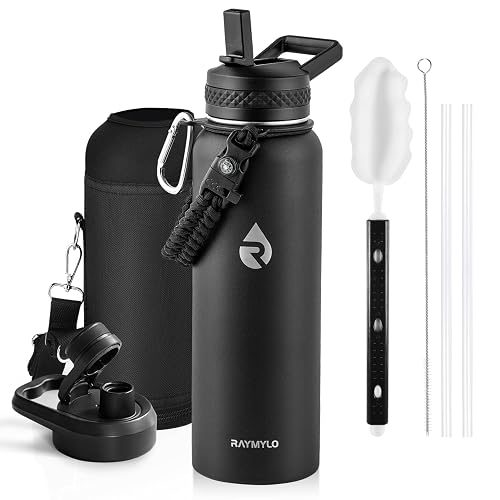
RAYMYLO 40 oz Triple Wall Insulated Bottle
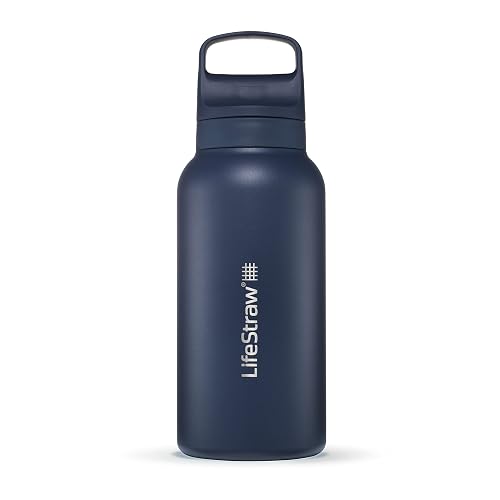
LifeStraw Go Insulated 1L Filter Bottle
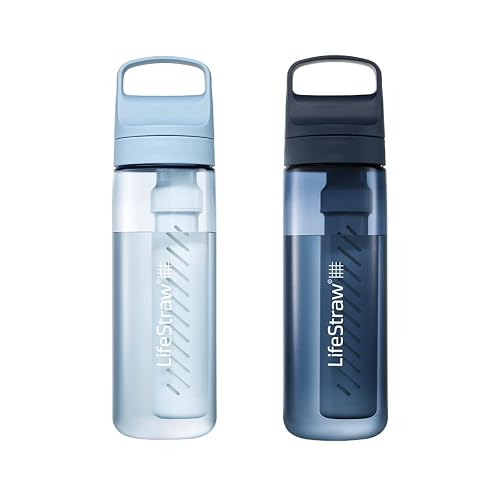
LifeStraw Go 22 oz Filter Bottle, 2-Pack
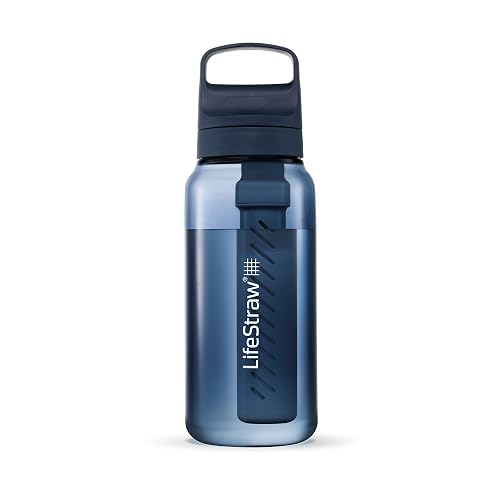
LifeStraw Go 1L Filter Bottle (Aegean Sea)
Why These Options Stand Out
Big trail days drink bottles dry, and the YETI Rambler 36 oz is built for exactly that. The body uses 18/8 kitchen-grade stainless steel, the kind you see in restaurant kitchens, paired with a double-wall vacuum (an airless gap between two steel walls that slows heat transfer) to keep cold water cold and morning coffee hot through the last refilled mile. The Chug Cap uses a TripleHaul Handle that opens with a quick half-twist, so you can take a sip without breaking stride on a graded climb.
Compared with the smaller 26 oz Rambler covered below, this one trades a tighter pack footprint for volume that survives a full alpine day. The DuraCoat color finish tends to resist scuffs and fading through rough handling, which matters when a bottle lives clipped to the outside of a pack.
Notable Upsides
- 36 oz capacity covers long stretches between filter points on the trail.
- Double-wall vacuum insulation holds temperature through full sun exposure.
- One-handed Chug Cap operation is useful when the other hand holds trekking poles.
- Kitchen-grade 18/8 steel holds up to repeated drops on rocky terrain.
- No Sweat exterior keeps the bottle grippy in humid canyons.
Things To Consider
- 36 oz is heavy once filled, so over-packing water can weigh down smaller frames.
- Wide body may not fit narrower pack-side pockets designed around 25 oz bottles.
Key Specs
Who It Suits Best
Day hikers and backpackers tackling long, dry stretches who want fewer refill stops and a tank of a bottle.
Consider Something Else When
Travelers and casual hikers who run lighter packs should look at the YETI Rambler 26 oz instead, which is easier to clip to a hip belt and weighs less when full.
Some trails reward lighter loads, and the YETI Rambler 26 oz keeps the same steel-and-vacuum construction as its bigger sibling in a pack-friendly size. The 100% leakproof Chug Cap stays shut in a stuffed pack, and the same TripleHaul half-twist motion means you can drink without stopping for a full unscrew. Owners of the 36 oz Rambler often pick this one up as a second bottle for shorter routes.
For half-day hikes and warm-weather loops, 26 oz is a sweet spot: enough water for a couple of hours of effort, light enough that the bottle doesn’t dominate the pack. Cape Taupe is a muted, low-glare finish that suits a backcountry aesthetic better than a high-vis color.
The Practical Payoff
- Smaller footprint fits more hip-belt pockets and side sleeves.
- Leakproof Chug Cap protects electronics and soft gear in a pack.
- Lighter carry when full, which trail runners and fast hikers appreciate.
Honest Caveats
- Smaller capacity means more refills on long, exposed routes.
- Heavier per ounce than plastic or soft-flasks if ultralight is the priority.
Right Fit For
Fast hikers, trail runners, and day-trippers who want YETI build quality in a carry-friendly size.
Look Elsewhere When
You regularly hike eight-plus miles between water sources and need a bigger reservoir like the RAYMYLO 40 oz to cut down on refill stops.
Versatility matters when a bottle lives in both a cup holder and a pack pocket, and the Takeya Actives 24 oz is shaped for exactly that crossover. The slim 18/8 stainless body slides into standard car cup holders, and the double-wall vacuum is rated to keep drinks cold for up to 24 hours, a meaningful claim for a long, hot approach in the sun. The Insulated Spout Lid flips open for quick sips and seals shut for a leakproof seal in a commuter bag.
On the trail, the BPA-free build and dishwasher-safe convenience (top-rack friendly, which matters when a bottle gets gritty from trail dust) make this a low-maintenance pick. For people who split time between driving, working, and hiking, this is the one that just goes everywhere.
Where It Helps
- 24-hour cold retention handles full-day summer hikes.
- Cup-holder-friendly diameter simplifies road-to-trail transitions.
- Dishwasher-safe construction makes cleanup simple after a dusty trip.
Points To Keep In Mind
- Spout lid design is not as rugged as a threaded Chug Cap under heavy abuse.
- 24 oz may run short on hot, dry routes where you’d want 30+ ounces.
Feature Snapshot
Made For
Active commuters and casual hikers who want one bottle that works as well in a car as on a forest path.
Swap It Out When
Backcountry travelers filling from streams should reach for the LifeStraw Go Insulated 1L Filter Bottle, which combines filtering and insulation in one step.
When a single bottle has to cover a long hot day, the RAYMYLO 40 oz leans into capacity. The triple-wall vacuum construction (three steel layers with vacuum gaps between them) is rated to keep drinks cold for up to 36 hours, which stretches well past even the longest one-day hike. A copper-plated inner wall helps reflect radiant heat, slowing the warm-up that kills cold water in a sunny canyon.
The bottle comes with both a spout lid and a straw lid with rubber gasket seals, so you can pick your drinking style. Compared with the YETI 36 oz Rambler, the RAYMYLO offers more volume and a multi-lid system, though owners commonly report a heavier feel in the hand.
The Case For It
- 40 oz capacity reduces refill pressure on long routes.
- Triple-wall vacuum extends cold retention past a full day of hiking.
- Includes both spout and straw lids for different use cases.
- Wide mouth simplifies adding ice at the trailhead.
Trade-Offs To Consider
- Fully filled, the 40 oz adds noticeable pack weight over smaller bottles.
- Oversized diameter may not fit standard pack-side pockets designed for narrower bottles.
Best Suited To
Group hikes, dog-walking doubles, and base-camp setups where one bottle serves multiple people or one very thirsty hiker.
Where Another Pick Suits Better
Solo hikers chasing a light kit should consider the Takeya Actives 24 oz, which trades capacity for easier carrying.
Backcountry hiking often means drinking from streams, and the LifeStraw Go Insulated 1L combines a two-stage filter (an internal membrane and carbon stage that screen out bacteria, parasites, microplastics, and chlorine for better taste) with vacuum insulation in one vessel. The stainless body is BPA-free, and the bottle accepts a standard refill from a trickling creek on a switchback, filtering as you sip. That combination collapses two pieces of kit into one for thru-hikers and section hikers who refill multiple times a day.
Insulation keeps filtered water cool on warm ridges, which is a small but appreciated comfort on a long traverse. Aegean Sea is a soft blue finish that hides scuffs better than lighter shades.
Standout Benefits
- Two-stage filter handles questionable water sources without extra tablets.
- Vacuum insulation holds cold water at elevation.
- 1L capacity carries meaningful water between refills.
A Few Limitations
- Replacement filters are an ongoing cost worth budgeting for heavy users.
- Filter flow rate is slower than drinking unfiltered water from a regular bottle.
Quick Facts
Whose Shelf It Belongs On
Backpackers and section hikers who refill from streams and want one bottle to filter and cool in a single step.
Reach For A Different Pick When
You’re hiking well-maintained trails with reliable taps, in which case a non-filter insulated bottle like the YETI Rambler 36 oz is the simpler, lighter choice.
Two hikers, two bottles: the LifeStraw Go 22 oz 2-pack solves a common problem for couples and travel partners who want a filtered bottle each without buying twice. The same two-stage filter from the larger LifeStraw bottles handles bacteria, parasites, and microplastics, so refilling from unfamiliar taps abroad or backcountry springs is less of a gamble. The BPA-free build keeps plastic taste out of the equation.
Icelandic Blue and Aegean Sea finishes offer a visual contrast so you can tell your bottle from your partner’s at a glance. The 22 oz size is friendly in a daypack, and the two-bottle format doubles as a backup if one filter clogs mid-trip.
Real Benefits
- Two-bottle bundle suits couples and shared travel kit.
- Two-stage filter handles uncertain tap and stream water.
- Compact 22 oz size fits daypacks and small commuter bags.
Some Limits To Know
- Non-insulated body means cold water warms up faster than in the 1L insulated sibling.
- Replacement filters need tracking on longer trips.
Perfect Match For
Traveling duos and friends heading abroad who want one filtered bottle each from a single purchase.
A Better Fit Elsewhere
Solo hikers prioritizing cold retention should pick the LifeStraw Go Insulated 1L Filter Bottle, which adds vacuum insulation to the same filter system.
For international travel where tap water is a question mark, the LifeStraw Go 1L filter bottle is a practical pick. The 1L size carries enough for a day of refills from uncertain sources, and the two-stage filter tackles bacteria, parasites, microplastics, and chlorine taste in one motion. The BPA-free body keeps the bottle light in a carry-on, which matters when luggage weight is a budget.
Compared with the insulated LifeStraw option covered earlier, this version skips the vacuum wall for a lighter carry. That’s a sensible trade for travelers chasing weight savings over cold retention.
Positive Points
- Filters out contaminants from questionable taps and streams.
- 1L size covers a full day of casual city exploration.
- BPA-free build is travel-friendly and lightweight.
Where It Is Less Suited
- Non-insulated body lets cold water warm up in summer climates.
- Filter replacement adds long-term cost for daily users.
Who Should Grab It
International travelers and digital nomads who want a single bottle that handles unfamiliar tap water on the move.
Not Your Match When
You’re hiking hot trails where cold water matters as much as clean water; the LifeStraw Go Insulated 1L is the better route.
Matching Capacity, Insulation, and Trail Conditions
The right hiking bottle balances three variables: how much water you need between refills, how cold you want that water to stay, and what the water source actually is. Big bottles like the 36 oz and 40 oz options here cover long, dry stretches but add pack weight, while 22 to 26 oz bottles keep things light for fast hikes. Filtration matters whenever streams, snowmelt, or sketchy taps enter the picture.
Capacity and Pack Fit
Capacity drives weight and pack geometry. A 40 oz bottle weighs over two and a half pounds when full, and that mass shifts your center of gravity on uneven terrain. Lighter hikers and trail runners usually do better with 22 to 26 oz bottles they can refill more often. Bigger bodies, like the YETI Rambler 36 oz and the RAYMYLO 40 oz, suit slower days with longer water gaps.
Insulation and Construction
Double-wall vacuum insulation is the standard for keeping water cold through a hot day. Triple-wall designs add another layer (and a bit of weight) for extra retention. Kitchen-grade 18/8 stainless steel resists dents on rocky trails, and a No Sweat exterior (a finish that prevents condensation from forming on the outside) keeps the bottle grippy in humid conditions or when your hands are wet from a stream crossing.
Filtration on the Trail
When you refill from natural sources, an integrated filter removes the guesswork. A two-stage filter, which combines a hollow-fiber membrane (a fine tube structure that blocks bacteria and parasites) with a carbon stage (activated charcoal that adsorbs chemicals and improves taste), handles bacteria, parasites, microplastics, and chlorine taste. The trade-off is flow rate, which runs slower than unfiltered drinking, and filter replacements over time.
Smart Choices Before You Click
Shopping for hiking bottles looks simple until you realize how many small decisions pile up. Two quick checks save headaches on the trail.
Common Shopping Slip Ups
The most common error is buying the largest bottle on the market without checking pack fit. A 40 oz bottle is useless if it won’t fit your side pocket or hip belt, forcing you to stash it where you can’t grab it. Another trap is choosing a filtered bottle for a trail with reliable taps, paying for replacement filters you never need. Measure your pack’s bottle pockets and look at your typical water sources before deciding on capacity and filtration.
The Upgrade Payoff
Premium bottles earn their position through better steel, tighter vacuum seals, and cap mechanisms that survive real use. Triple-wall insulation extends cold retention well past what a basic double-wall bottle manages, and Chug Cap systems with proper threading hold up to years of trail abuse. The upgrade is worth it for hikers who carry a bottle every weekend; casual once-a-summer walkers can save with simpler designs.
Frequently Asked Questions
How long do insulated hiking bottles actually keep water cold?
Most double-wall vacuum bottles hold cold water through a full day of hiking in moderate heat. Triple-wall designs extend that to roughly a day and a half, depending on sun exposure and how often the cap comes off.
Are filter bottles safe to use on every stream?
Two-stage filters handle bacteria, parasites, microplastics, and chlorine, but they do not remove viruses. In regions known for viral water contamination, boiling or chemical treatment is still recommended alongside filtration.
Can I put carbonated drinks in these bottles?
Carbonation builds pressure inside a sealed vacuum bottle, and most manufacturers warn against it. Stick to still water, iced coffee, or electrolyte drinks to avoid cap leaks and lid stress.
Do insulated bottles fit standard car cup holders?
Slim 22 to 24 oz bottles like the Takeya Actives typically fit standard cup holders. Wider 36 to 40 oz bottles often do not, so check the diameter if you commute to the trailhead with a full bottle.
How often do LifeStraw filters need replacing?
Replacement timing depends on use, but most two-stage filters are rated for a fixed number of liters. Heavy hikers replacing water multiple times a day may need a new filter every few months, while occasional travelers can go much longer.