
Spending long weekends in a tree stand or checking a food plot from miles away is the kind of freedom that pulls most hunters into the woods in the first place. The trouble is, you can’t be in two places at once, and a WiFi-only camera leaves you blind the moment you step off your home network. Cellular cameras for hunting solve that by sending photos and clips straight to your phone over 4G LTE, so a buck on your lease at sunrise ends up in your pocket before breakfast. The picks below cover solar-powered workhorses, multi-camera scouting packs, and rugged units that shrug off weeks of rain.
A Snapshot Of The Selections
Zonetiger 4G LTE Solar Cellular Trail Camera 64MP 4K
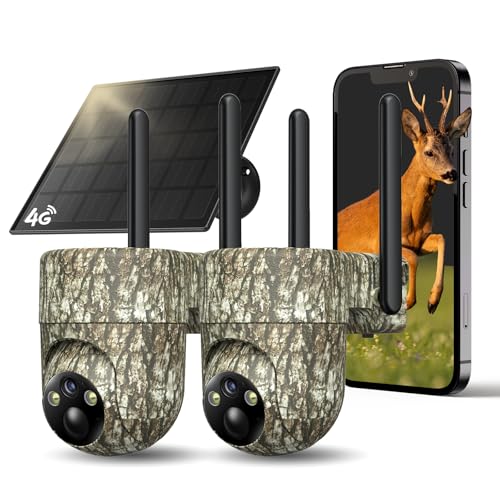
TKENPRO 4G LTE Cellular Trail Camera 360° Live Stream Solar

Moultrie Edge 3 Cellular Trail Camera 40MP 0.5s Trigger
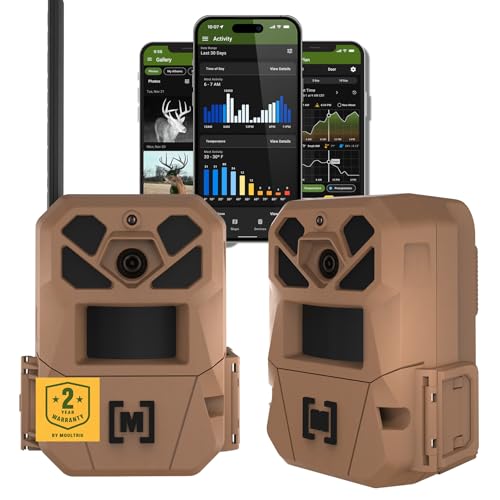
Moultrie Edge 3 Cellular Trail Camera 2-Pack 40MP

Moultrie Edge 3 Cellular Trail Camera 3.4W Solar Power Pack

MagicEagle Cellular Trail Camera 13,000 mAh Solar Panel

Vosker VKX Solar 4G-LTE Outdoor Cellular Security Camera
More Details On Our Top Picks
The Zonetiger pairs 64MP stills with 4K video over 4G LTE, which lands squarely in the sweet spot for hunters who want detail without a separate upload box. The built-in solar panel keeps the internal battery topped up across a typical hunting season, so you can mount it on a pine or a fencepost and largely forget about it until trail-cam season ends.
For most public-land hunters and small-lease owners, the year of included photo data is the real draw. Auto network switching means the camera hunts for the strongest carrier signal at activation, which helps when your hunting spot sits in a fringe coverage zone. App control handles everything from sensitivity to scheduling.
Useful Highlights
- Year of free photo data removes the recurring plan during your busiest scouting window
- 64MP sensor pulls usable ID detail from a 40-foot trigger zone in early-morning light
- Built-in solar panel trims downtime in the field, especially across long summer sits
- GPS tagging helps you sort images by stand location when reviewing dozens at once
- Auto network switching picks the strongest carrier, cutting dropouts on remote ridgelines
Worth Noting
- Video transfers and live view typically require a paid plan tier beyond the included photo data
- Solar output drops sharply under heavy canopy, so you may still want a spare battery on hand
Quick Specs
Who Should Grab It
Hunters running one or two cameras across a single property who want a year of data without juggling subscription tiers.
Skip It When
The TKENPRO makes more sense if real-time live streaming is the priority over raw still resolution.
Where the Zonetiger is built for image quality, the TKENPRO leans into live situational awareness. The 360° pan head turns the camera into a remote set of eyes you can sweep around a feeder from the app, which is a different kind of scouting than waiting for a still image to land in your inbox.
A built-in SIM and automatic network locking make setup straightforward, and a week of trial data gives you a real test window before committing to a plan. Hunters who manage food plots or lease groups benefit most, since one camera can survey a whole clearing rather than staring at one trail.
Why It Works Well
- 360° remote pan lets you scan a clearing without repositioning the unit
- Built-in SIM with automatic network selection simplifies first-time setup
- Seven days of trial data lets you verify signal and image quality before paying
- Live streaming helps you confirm target animals before walking in
Trade Offs
- Continuous live streaming drains the battery faster than still-only modes
- Data top-ups become necessary once the trial period ends
Feature Card
Whose Stand It Belongs On
Food-plot managers and lease-group members who value real-time visibility over maximum megapixels.
Look Elsewhere When
The Moultrie Edge 3 fits better if you want a faster trigger and longer battery life without the pan-tilt motor.
The Moultrie Edge 3 is the workhorse of the lineup, designed for hunters who care more about capturing the moment than live streaming it. A half-second trigger speed means a cruising buck is far less likely to ghost past the sensor zone before the shutter fires, and 40MP stills give you enough detail to ID a single spike from a fork.
Multi-network auto-connect across all four major U.S. carriers removes the headache of choosing a plan up front. For hunters who run a single camera on a hard-to-reach ridge, the Edge 3 balances image quality, response time, and reliability in a familiar Moultrie housing.
Good Reasons To Consider
- 0.5-second trigger keeps fast-moving deer inside the frame
- 40MP stills deliver solid ID detail in daylight and dusk
- Four-network auto-connect works across most U.S. coverage areas
Points To Keep In Mind
- No bundled solar panel, so plan for AA swaps or a separate power add-on
- App interface favors Moultrie’s ecosystem, which may feel busy if you run other brands
Quick Specs
Built With In Mind
Solo hunters who want one reliable camera on a known travel corridor without managing multiple plans.
Reach For A Different Pick When
The Moultrie Edge 3 with the 3.4W solar pack makes more sense for those who want to skip battery swaps entirely.
This two-pack takes the Edge 3 platform and doubles it, which is exactly what most hunters need once they realize one camera only covers one corner of a property. Two units at a trail intersection and a scrape line tell a far better story than one well-placed camera alone.
For lease partners, family hunting clubs, and anyone managing 40 acres or more, having a matched pair removes guesswork. Both cameras run on the same Moultrie app and multi-carrier auto-connect logic, so you’re not juggling two different dashboards.
Noteworthy Benefits
- Matched pair covers two stand sites from a single purchase decision
- Shared app and carrier logic simplify scouting across multiple locations
- Same 0.5s trigger and 40MP sensor as the single-camera Edge 3
Some Limits To Know
- Two cameras means two data plans once any trial period ends
- Still no solar panel included, so both units rely on AA cells or add-on power
The Right Fit
Hunters covering a lease with multiple pinch points or food plots who want matched hardware instead of mixed brands.
Where A Sibling Pick Shines
The Moultrie Edge 3 with the 3.4W solar pack beats this pair if you only need one camera and want longer runtime between visits.
The Edge 3 with the 3.4W solar pack answers the single biggest complaint about trail cameras: battery swaps. Mount it where it gets a few hours of midday sun and you can largely skip quarterly climbs into the tree to refresh AA batteries, which matters when your camera sits on a ladder stand a half-mile from the truck.
It keeps the same trigger speed, sensor, and multi-carrier auto-connect as the standard Edge 3, so you’re not trading image quality for convenience. For a single-camera setup on a year-round lease, this combination is often the most balanced pick.
Where It Excels
- Matched 3.4W solar panel extends runtime across most of the hunting calendar
- Same fast trigger and reliable carrier handshake as the standard Edge 3
- Clean integration avoids third-party panel compatibility guesswork
Honest Caveats
- Solar yield drops in dense canopy or during short winter days
Who Will Love This
Hunters with a single permanent camera location who want minimal maintenance across an entire season.
Consider Something Else When
The Moultrie Edge 3 two-pack wins for anyone who needs to monitor multiple sites at once.
The MagicEagle leans hard on internal battery capacity rather than swappable cells, with a 13,000 mAh pack that pairs with an integrated solar panel. For hunters who mount a camera and forget about it until season’s end, that approach saves the long hike back to swap batteries.
2K video, no-glow IR for night stealth, and an IP66 weather rating round out a rugged build aimed at remote food plots and backcountry scrapes. The no-SIM cloud-based network tech automatically latches onto the strongest available signal at boot.
A Few Strong Suits
- Massive 13,000 mAh battery plus solar cuts visits to nearly zero in sunny setups
- No-glow IR keeps the camera discreet during nighttime scouting
- IP66 housing handles steady rain and humid summer conditions
- Audible video capture adds an extra layer of behavioral context
Things To Consider
- Higher internal capacity means a heavier unit, so mount placement matters
- Cloud-network tech depends on coverage at the exact mount site
Feature Snapshot
Made For
Backcountry hunters placing a single camera deep on a lease or national forest where trips to check it cost real time.
Swap It Out When
The Vosker VKX suits you better if your priority is security-style monitoring rather than wildlife ID detail.
The Vosker VKX sits at the security-camera end of the category, which makes it a smart pick for hunters who also need to keep an eye on a camp, ATV, or equipment storage area. A frameless solar panel and an included SIM card cut the setup friction that usually comes with cellular gear.
Motion activation up to 100 feet sends instant photo alerts, and on-demand 15-second video clips cover the moments a still frame can’t quite tell. For a cabin in a remote hollow, the VKX pulls double duty as both scouting tool and property watch.
The Upside
- Solar-powered design with included SIM card for quick deployment
- 100-foot motion detection covers wide approaches and driveways
- On-demand 15-second video requests fill in gaps between photo alerts
- IP65 weather resistance handles seasonal rain and snow
A Few Limitations
- Tuned more toward security than wildlife ID, so image detail trails the dedicated hunting cameras
- Continuous on-demand video use can shorten battery life between sun cycles
Best Suited To
Hunters who also need a watch-eye on a camp, cabin, or equipment lot during the off-season.
A Better Fit Elsewhere
The MagicEagle is the stronger match if your goal is wildlife scouting rather than property monitoring.
What Separates a Good Cellular Camera from a Frustrating One
Network compatibility eats more time than any other factor when picking cellular cameras for hunting. Confirm the camera’s auto-connect feature actually works on the carrier with the strongest signal at your exact mount site, since a model that locks to one network can be useless in a coverage dead zone. Cell coverage maps tend to oversell fringe signal, so a quick phone test on-site saves a wasted season.
Trigger speed matters more than megapixels for fast-moving deer. A 0.5-second response catches a cruising buck in frame, while a sluggish two-second trigger delivers empty frames and grass shots. Image resolution helps with antler ID at moderate distance, but a missed trigger is the more common scouting failure.
Power source quietly decides how often you hike back to the camera. Solar panels cut visits dramatically in sunny edge-of-field setups, but dense canopy, north-facing slopes, and short winter days can starve the panel. Internal high-capacity batteries like the MagicEagle’s 13,000 mAh pack buy you time without direct sun, while swappable AA cells keep you flexible but cost trips.
Storage and app ecosystem shape the daily experience once the camera is mounted. Most cellular cameras use a mobile app for image review, plan management, and settings tweaks, so a clunky app turns into clunky scouting. Look at how images are organized, how plans are billed, and whether the app supports multiple cameras under one login if you plan to scale beyond a single unit.
Key Considerations Across These Picks
Pitfalls Shoppers Hit
Mounting a camera before confirming cell signal is the classic rookie move. Test your phone at the exact tree at the exact time of day you plan to scout, since signal swings wildly between dawn and dusk in hilly terrain. Skipping this step means a season of missed triggers and silent storage cards.
Overlooking subscription math catches most shoppers off guard. Free trial data and the first year of photo transmission feel generous until renewal, and a single camera on a higher tier can quietly cost more than the hardware itself over a few seasons.
When Paying More Pays Off
A higher-tier model earns its premium through reliability, not megapixels. Faster triggers, more robust multi-carrier handshakes, and properly integrated solar panels show up as fewer wasted trips and more useable images. For hunters running multiple cameras across a full lease, that reliability premium compounds quickly across the season.
Frequently Asked Questions
Do cellular trail cameras work without WiFi?
Yes. Cellular cameras for hunting use 4G LTE networks with their own SIM or embedded data plan, so they send images and clips directly to your phone even in remote areas where WiFi is unavailable.
How long do the batteries actually last?
It depends on solar exposure, trigger frequency, and how often you request live video or photo transfers. In sunny edge-of-field setups with a solar panel, many units run most of a season without battery swaps. Heavy traffic or frequent remote requests shorten that window noticeably.
Is a data plan always required?
Almost always, though a few models include a year of free photo data or a multi-day trial period. Video transfers, live streaming, and high-frequency use typically require a paid plan tier once any included data is used.
Can these cameras handle winter weather?
Most current hunting-grade cellular cameras are rated for rain, snow, and cold, with housings like IP65 or IP66. Battery efficiency drops in deep cold, so pairing a weather-rated camera with a solar panel or high-capacity internal battery is the safer winter play.
What is a trigger speed and why does it matter?
Trigger speed is the delay between motion detection and the shutter firing, typically listed in fractions of a second. A faster trigger like 0.5 seconds captures animals in mid-stride rather than catching them exiting the frame, which is the difference between a useful scouting image and a blank grass shot.