
Remote property monitoring no longer means weekly drives to swap SD cards. A modern cellular trail camera pushes photos to your phone over 4G LTE, and solar models stretch battery life across an entire season. The trade-off is complexity: data plans, network compatibility, solar positioning, and trigger speed all vary widely between models.
This roundup focuses on hunters, ranchers, and wildlife watchers who need reliable image delivery without constant site visits. The list runs from feature-packed solar flagships down to simple dual-pack scouting rigs, with honest notes on where each one earns its place and where it falls short.
The Leading Options At A Glance
Zonetiger 4G LTE Cellular Trail Camera 1-Year Free Data 64MP 4K
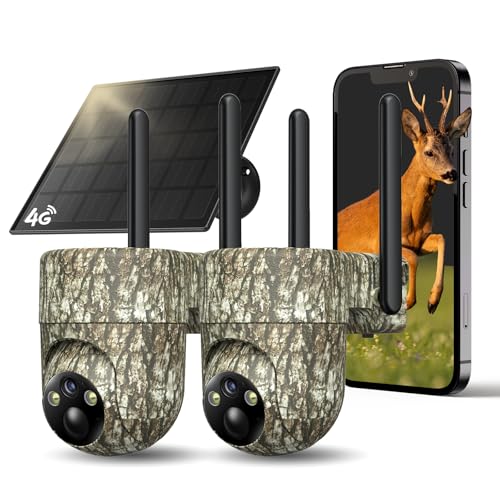
TKENPRO 4G LTE Cellular Trail Camera 360° Live Streaming Solar

Solar Trail Camera 4G LTE Night Vision 4K Live 64MP

Moultrie Edge 3 Cellular Trail Camera 40MP 0.5s Trigger
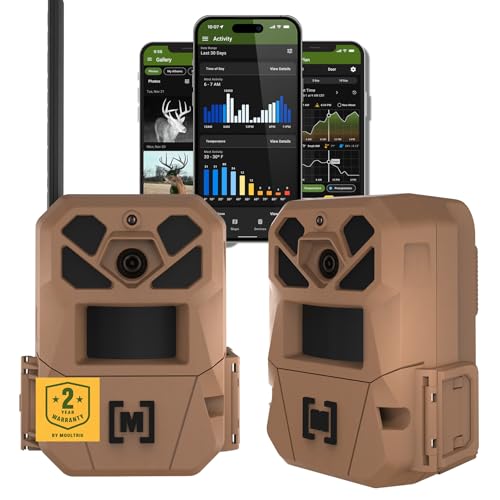
Moultrie Edge 3 Cellular Trail Camera 2-Pack 40MP 0.5s Trigger

Moultrie Edge 3 Cellular Trail Camera 3.4W Solar Power Pack
SPYPOINT Flex-M Solar Bundle Cellular Trail Camera

SPYPOINT Flex-S-Dark Ultimate Pack SD Card + LIT-22
What Each Pick Brings To The Table
The Zonetiger arrives ready to use out of the box, which matters for first-time cellular camera owners who don’t want to wrestle with a separate SIM purchase. Auto network switching scans for the strongest 4G signal in your area, so the camera self-selects a carrier instead of locking you into one provider at checkout. That flexibility is genuinely useful if you scout on public land that crosses cell coverage zones.
Built-in GPS tagging stamps each photo with location data, which helps when you manage a network of cameras across a large property. The 64MP still capture and 4K video offer more detail than most scouting projects need, but the option is there when you want to identify individual animals. Solar power keeps the unit running without battery swaps, and app control lets you tweak settings from the truck.
Positive Points
- One year of free photo data removes the early cost barrier that catches many first-time buyers off guard
- Auto network switching means the camera picks the best carrier without manual SIM swaps
- GPS-tagged photos help you map animal movement across multiple camera locations over a season
- Solar power panel reduces battery swaps to near zero in most sun-exposed setups
- App-based remote control cuts down on trips to the camera, especially during hunting season
Worth Noting
- Video transfer and live view sit behind a paid tier, so streaming enthusiasts should budget for that add-on
- Solar panel orientation matters; shaded mounting spots will drain batteries faster than the listed spec suggests
Key Specs
Who It Suits Best
Newcomers to cellular scouting who want the lowest possible learning curve and a full year to decide whether to commit to a paid data plan.
Consider Something Else When
Predator hunters who rely on no-glow flash should look at the SPYPOINT Flex-S-Dark instead, since the Zonetiger’s flash setup prioritizes image brightness over stealth.
The 360° pan-and-stream approach sets the TKENPRO apart from the static-angle field typical of the rest of this list. Where a fixed-lens camera watches one corridor, this model rotates to cover open areas like food plots, stock tanks, or property corners. It’s a different kind of tool, and the use case is narrower, but for the right site it solves a problem no other pick here can.
The built-in SIM locks onto the strongest 4G signal at activation, and the first seven days of unlimited data let you test the camera’s real performance at your site before paying. Solar input extends runtime in sun-exposed placements. Compared to the Zonetiger’s static lens, the TKENPRO trades raw megapixel count for situational awareness, so buyers chasing identification detail should weigh that trade-off carefully.
Everyday Wins
- 360° rotation covers open spaces a fixed camera would miss entirely
- Auto signal lock picks the strongest carrier at the deployment site
- Seven days of trial data lets you evaluate performance before paying
- Solar power keeps the unit running across seasons in most placements
Trade Offs
- Moving parts introduce a longer-term wear concern over a fully static housing
- Lower still resolution than dedicated scouting cameras means ID is harder on distant animals
- Continued data use after the trial requires in-app top-up
Right Fit For
Ranchers and property owners monitoring open feeding areas or corrals where a single wide angle beats a tight trail frame.
A Better Fit Elsewhere
Deer hunters running narrow trail corridors should pick the Moultrie Edge 3 instead, since its 0.5-second trigger outperforms a rotating camera on fast, straight-line movement.
Live 4K streaming over LTE is the headline feature, and for wildlife watchers rather than hunters, it changes how a camera is used. Instead of checking photos after the fact, you can open the app and see a feed in real time, which is genuinely useful for nature photographers, researchers, or anyone running a remote cabin with curious visitors passing through.
The 64MP stills pair well with the video, so you keep high-resolution captures alongside streaming sessions. Solar power and waterproof housing extend the deployment window through wet seasons. Set against the Moultrie Edge 3 reviewed below, the Cadrali leans into media quality and connectivity, while the Moultrie leans into trigger speed, so the choice depends on whether you want to watch or to capture.
Where It Helps
- 4K live streaming adds real-time viewing that photos alone cannot match
- 64MP stills deliver identification-grade detail on individual animals
- Night vision support extends monitoring through the most active hours
- Waterproof housing handles rain and snow across multi-season deployments
Points To Keep In Mind
- Live 4K streaming consumes data quickly and may require a higher data tier than basic photo plans
- App-based live view performance depends heavily on your cell signal at the camera site
Built With In Mind
Wildlife enthusiasts, educators, and property owners who want to watch animals in real time rather than reviewing stills after dark.
Look Elsewhere When
Hunters focused on the 0.5-second trigger window get more value from the Moultrie Edge 3, where the spec sheet clearly favors fast-capture scenarios.
The Moultrie Edge 3 is built around one core promise: it captures animals before they have cleared the frame. That 0.5-second trigger speed is the headline stat, and for whitetail hunters chasing cruising bucks or anyone patterning coyotes, the difference between 0.5 and 1.5 seconds often means a usable photo or a clean miss. Moultrie’s four-network auto-connect logic removes the SIM-swap step that has historically frustrated new buyers.
The 40MP stills sit below the Zonetiger’s 64MP and the Cadrali’s 4K live feed, but for trail-level photography, 40MP is more than enough to score antler points. Nationwide coverage across all major U.S. carriers means the camera works in more places without manual configuration. Owners commonly report that the auto-network feature is the single biggest quality-of-life improvement over older cellular models.
A Few Strong Suits
- 0.5-second trigger captures moving deer and predators that slower cameras miss
- Four-network auto-connect handles nationwide coverage without manual SIM setup
- 40MP resolution hits the sweet spot for ID work without bloating file sizes
Honest Caveats
- No solar panel in the base package means swapping batteries on remote sites every few weeks
- Still resolution trails the higher-megapixel Zonetiger and Cadrali picks
Key Specs
Best Suited To
Hunters running a single high-traffic trail or scrape who care more about capture rate than pixel count.
Swap It Out When
Long-term remote sites that need solar power should step up to the Moultrie Edge 3 with the 3.4W solar pack, since the base unit’s battery-only design limits season-long deployment.
Buying two Moultrie Edge 3 cameras at once is the move for anyone managing multiple trails or several acres of hunting land. The two-pack shares the same trigger speed, 40MP sensor, and four-network auto-connect logic as the single unit, so you get consistent image quality across every site. The shared app handles both cameras in one place, which is easier than juggling separate accounts.
For most setups, the 2-pack makes sense when you know you need coverage in two distinct locations, like a bedding-area exit and a food plot approach. Where it falls short is solar power; the bundle ships with no solar accessory, so each camera will need fresh batteries on a rotation. If your sites are spread far apart, the time saved by cellular delivery on two units can be substantial over a season.
What Makes Sense
- Two-camera coverage in a single purchase simplifies multi-site scouting
- Shared Moultrie app handles both units without separate logins
- Identical spec sheets mean consistent image quality across locations
Less Ideal Details
- Battery-only design means each camera needs its own swap cycle, doubling the maintenance
- The 2-pack pricing advantage shrinks if you only really need one active site
Whose Shelf It Belongs On
Land managers and hunters running two or more established scouting sites who want matched equipment across the property.
Reach For A Different Pick When
A single backcountry camera is all you need, since the 2-pack adds upfront cost without a second use case to justify it.
This is the same Moultrie Edge 3 camera reviewed above, paired with a 3.4W solar power pack that solves the base model’s biggest weakness. Remote properties without easy access can run the camera through an entire season without battery swaps, which is the real value. For most users, the 0.5-second trigger and 40MP capture remain identical, so performance carries over fully.
The solar panel is sized to keep the unit topped up in most daylight conditions, but heavily shaded placements will still see some drain. The full Moultrie app experience applies, including four-network auto-connect. Compared to the SPYPOINT Flex-M Solar Bundle below, this package trades the included mounting arm and strap for a higher-output panel, which suits permanent ground-mount setups over temporary tree hangs.
Notable Upsides
- 3.4W solar panel extends runtime across a full season in most placements
- 0.5-second trigger speed carries over from the base Moultrie Edge 3
- Single-purchase combo avoids the need to buy a solar accessory separately later
Possible Compromises
- Solar panel requires a clear sightline to the sky, which limits mounting in thick canopy
- Upfront cost is higher than the battery-only Edge 3, so casual users may not recoup the difference
Quick Facts
Perfect Match For
Hunters with established remote sites who don’t want to revisit the camera for battery swaps during hunting season.
Skip It When
Mobile users who move cameras between locations should pick the SPYPOINT Flex-M Solar Bundle, since the included mounting arm makes redeployment faster.
The Flex-M bundle pairs SPYPOINT’s proven cellular platform with a compact solar panel plus a heavy-duty mounting arm. That last piece matters more than the spec sheet suggests, since temporary tree-hang setups benefit enormously from a proper articulating arm. Dual-SIM LTE flexibility is the technical highlight: the camera works across multiple carriers, so weak-signal areas become less of a problem than they would be on a single-carrier unit.
IP65 water resistance covers the typical rain and snow conditions most hunters face, though submersion is a different story. GPS tagging and motion activation round out a solid feature set. The free SPYPOINT photo transmission plan at lower photo counts is a meaningful cost saver for budget-conscious users. Compared to the Moultrie Edge 3 with solar, the Flex-M leans into flexibility and mounting hardware, while Moultrie leans into raw trigger speed.
Noteworthy Benefits
- Included solar panel and articulating mounting arm simplify setup from day one
- Dual-SIM LTE handles weak-signal areas better than single-carrier cellular cameras
- IP65 water resistance handles typical rain and snow exposure across seasons
- GPS tagging and motion activation support modern scouting workflows
Worth Bearing In Mind
- IP65 is splash-resistant, not submersible, so flood-prone deployment sites are still a bad idea
- Free photo transmission plan is limited, and heavy use will push you toward a paid tier
Who Will Love This
Run-and-gun hunters who redeploy cameras often and need a flexible mount and dual-carrier connectivity in a single box.
Not Your Match When
Predator hunters who need no-glow flash should jump to the SPYPOINT Flex-S-Dark, since the Flex-M’s flash setup prioritizes image brightness over invisibility.
The Flex-S-Dark is the predator-hunting pick in this list, and the no-glow flash is the reason it earns that title. No-glow LEDs emit no visible light, so wary coyotes, bobcats, and fox don’t spook the way they do around standard IR flash. For night-sensitive species, the difference between a triggered camera and a full memory card is often just that single specification.
Built-in solar power keeps the camera running through long seasons, while 40MP stills and 1080p video with sound capture enough detail for most ID work. The included SD card and LIT-22 lithium battery bundle round out a true ready-to-deploy package. Compared to the Flex-M reviewed above, the Flex-S-Dark trades mounting hardware and dual-SIM flexibility for invisible flash and higher-end accessories, so the choice depends on whether your priority is stealth or versatility.
Bright Spots
- No-glow flash keeps wary predators from spooking after dark
- Built-in solar panel supports extended deployment without battery swaps
- 40MP stills and 1080p video with sound capture behavior and ID detail
- Ultimate pack includes SD card and LIT-22 battery, so no extra purchases are needed
Some Limits To Know
- No-glow flash produces slightly less illumination than low-glow or red-glow alternatives
- Upfront cost is higher than the base Flex-M bundle, so casual users may not use the stealth features
Feature Snapshot
Who Should Grab It
Predator hunters targeting coyotes, bobcats, or fox who need a flash that won’t spook wary animals at the bait site.
Where Another Pick Suits Better
Whitetail hunters on a tight budget get more value from the Moultrie Edge 3, since trigger speed and price matter more than flash type for that use case.
What Matters Most Before Choosing Cellular Trail Cameras
Connectivity And Carrier Coverage
A cellular trail camera is only as useful as the signal at your site. Check your carrier’s coverage map at the exact deployment location, not the nearest town, before you buy. Models with multi-network or dual-SIM capability handle weak-signal areas better than locked-carrier units. For most rural properties, auto-connect features prevent the SIM-swap headache that has historically plagued the category.
Trigger Speed And Image Quality
Trigger speed, measured in seconds, decides whether you capture the animal or capture empty brush. Anything around 0.5 seconds handles fast-moving deer and predators well. Photo resolution matters for identification but is rarely the deciding factor; 40MP hits the practical sweet spot for antler scoring and coat-pattern ID. Higher megapixel counts inflate file sizes and slow app delivery without much real-world benefit for most hunters.
Power And Solar Considerations
Battery-only cameras work for short seasons and accessible sites, but any location you can’t reach easily benefits from solar. Check the panel’s wattage and your mounting spot’s sun exposure before buying. A shaded tree hang in a north-facing hollow will drain even a good solar panel faster than the spec suggests, so match the panel to the actual placement, not the brochure photo.
Data Plans And Long-Term Cost
First-year free data is common in this category, but ongoing data subscriptions add up across a multi-camera network. Estimate your monthly photo volume and budget for a paid tier once the trial period ends. Some brands limit free plans to a specific number of photos per month, which is fine for low-traffic sites but insufficient for active food plots.
Key Considerations Across These Picks
Pitfalls Shoppers Hit
The most common mistake is choosing a camera based on megapixel count alone, when trigger speed and network compatibility matter more in real scouting scenarios. Another trap is ignoring solar panel orientation; a camera marketed as solar can drain quickly in heavy shade, leaving you with a dead unit at the worst time. Always confirm the panel’s wattage and your site’s sun exposure before you commit.
What The Higher Tier Buys
Premium cellular trail cameras earn their higher cost through better build quality, faster triggers, and accessories that budget models skip. The Moultrie Edge 3’s 0.5-second trigger, the SPYPOINT Flex-S-Dark’s no-glow flash, and the Zonetiger’s year of free data are all real upgrades that show up in the field. The honest read is that mid-tier models cover most needs, and the highest tier pays for itself only when your specific use case lines up with its specialty.
Frequently Asked Questions
Do cellular trail cameras need WiFi to work?
No. Cellular trail cameras use 4G LTE networks, the same signal your smartphone uses away from home. That’s why they’re useful for remote hunting properties, where WiFi is rarely available. You do need a data plan through the camera’s app, but no router or hotspot is required.
How long do solar-powered trail cameras last?
A properly sized solar panel keeps a camera running through an entire hunting season in most sun-exposed placements. Performance drops in heavy shade, and a few weeks of overcast weather can drain the battery below safe levels. Plan for one or two manual recharges per year in shaded sites.
What does trigger speed mean on a trail camera?
Trigger speed is the delay between an animal entering the detection zone and the camera capturing an image. Faster triggers, around 0.5 seconds, capture moving animals before they leave the frame. Slower triggers, around 1.5 seconds, often produce blank or partial photos on fast-moving deer and predators.
Can cellular trail cameras work in areas with weak cell signal?
Performance depends on the camera’s network flexibility. Models with auto-connect or dual-SIM features handle weak-signal areas better than single-carrier units. In a true dead zone, a cellular camera will not transmit photos regardless of brand, so SD card storage still matters as a backup.
Are cellular trail cameras worth the extra cost over standard models?
For remote properties where you can’t visit often, cellular delivery saves hours of driving across a season. The data plan cost is the trade-off, so the math works best for sites far from home. Standard SD card cameras still make sense for accessible locations where weekly swaps are easy.