
Wi-Fi has no business showing up in your hunting lane. Trail cameras sit miles from a router, deep in timber or propped against a fence post in a food plot, so the practical ones lean on cellular signals, onboard storage, or direct-phone pairing to move images. That changes how you scout: instead of hiking in to swap SD cards every week, the right setup beams photos straight to your phone or saves them locally until you’re ready to pull them.
This roundup gathers six options built for exactly that reality. Four run on LTE cellular networks, one uses a direct Wi-Fi-to-phone connection (no router required), and one pairs solar panels with cellular radios so the camera stays awake longer between checks. Each one suits a slightly different style of hunter or landowner, from the back-forty scout to the weekend naturalist.
An Overview Of The Picks
Zonetiger 4G LTE Cellular Trail Camera Solar 64MP 4K
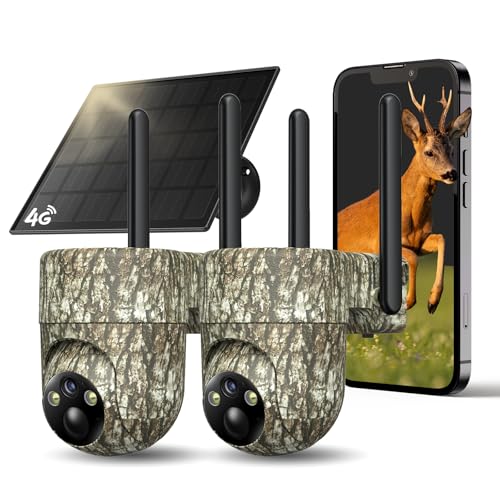
TKENPRO 4G LTE Cellular Trail Camera 360° Solar

Cadrali Solar Trail Camera 4G LTE 4K 64MP
SPYPOINT Flex-M Solar Bundle Cellular Trail Camera

GardePro E6+ WiFi Bluetooth Trail Camera Dual Antennas

SPYPOINT Flex-S-Dark Solar Cellular Trail Camera
The Picks, Examined More Closely
For landowners tired of climbing a tree stand every weekend to check a memory card, this Zonetiger model solves the access problem before it starts. The 4G LTE radio talks to the cell network wherever there’s tower coverage, and the built-in solar panel keeps the battery topped off in open-canopy placements. That combination matters on remote leases where the nearest plug is a two-hour drive.
Auto network switching is the quietly useful bit: if one carrier fades out, the camera looks for the next strongest signal. The 64MP sensor and 4K recording pull surprisingly detailed images for a trail cam, and GPS tagging lets you confirm placement later when you’re sorting through dozens of thumbnails.
Useful Strengths
- One year of free photo data bundled with the camera, lowering the first-season cost
- Solar panel extends battery life in food plots and open meadow edges
- 64MP stills and 4K video give you enough resolution to identify bucks and coyotes
- Auto network switching improves reliability in fringe-signal areas
- GPS tagging helps you map camera positions across a large property
Things To Consider
- Video transfers and live view typically require a paid plan on top of the free photo data
- Solar charging slows down under heavy tree cover, so placement matters more than the spec suggests
Made For
You manage a large hunting lease or rural property and want year-one scouting with minimal trips to the field.
Consider Something Else When
The TKENPRO 4G LTE Cellular Trail Camera 360° Solar suits you better if you specifically want a 360° viewing angle.
The 360° lens changes how you think about placement. Where the Zonetiger covers a focused zone in front of a trail, the TKENPRO watches a full sweep around the mount, picking up animals approaching from any direction. That’s a real advantage around feeders or mineral licks where game circles in.
Built-in SIM support means the camera automatically latches onto the strongest available LTE carrier at setup, and a short trial data window lets you confirm coverage before committing to a paid plan. Compared to the Zonetiger, this one’s angle is the differentiator: if your property has wide-open sites that demand broad coverage, it earns its premium slot.
Reasons It Performs
- 360° field of view eliminates blind spots around central attractants
- Built-in SIM with automatic carrier selection reduces setup friction
- Live streaming gives you a near-real-time look at active sites
- Solar panel keeps the unit alive through long scouting seasons
Trade Offs
- Per-image detail drops because the sensor covers a wider arc
- Data plans beyond the trial period add to ongoing ownership costs
Who It Suits Best
You’re running a security-style watch over a large clearing or feed area and need direction-agnostic coverage.
Where Another Pick Suits Better
The Cadrali Solar Trail Camera 4G LTE 4K 64MP makes more sense if image sharpness matters more than viewing angle.
Resolution is the headline here. The 64MP sensor paired with 4K live video means you can read ear tags, count antler points, and identify small predators with confidence. For serious deer managers and researchers, that level of detail justifies a step up from standard 20MP game cameras.
The night vision array pushes usable images further into dusk than typical IR setups, and the waterproof housing holds up through wet hunting seasons. Compared to the TKENPRO, this Cadrali model trades panoramic width for raw pixel count, which is the right call when individual identification matters more than sweep coverage.
Everyday Wins
- 64MP stills resolve fine details like antler points and facial markings
- 4K live video streams clearly to your phone during scouting windows
- Night vision extends shooting hours without spooking game with bright flashes
- Solar panel reduces trips to swap batteries during peak season
Room For Improvement
- Higher resolution files eat data plan allotments faster than lower-res cameras
- Body size is bulkier than the TKENPRO, so it stands out more in visible placements
Best Suited To
You’re a deer manager, researcher, or landowner who needs sharp, identifiable images more than wide-area coverage.
Skip It When
The SPYPOINT Flex-M Solar Bundle Cellular Trail Camera is a better fit if you want a more established brand ecosystem and dual-SIM flexibility.
SPYPOINT built its reputation on cellular scouting, and the Flex-M bundle delivers a complete kit out of the box. The camera pairs with a dedicated SPLB-10 solar panel, a sturdy mounting arm, and an installation strap, so you skip the accessory shopping most solar builds require.
Dual-SIM LTE gives the unit a fallback when one carrier drops out, and IP65 weather resistance handles spring rains and summer storms alike. The free photo transmission plan that ships with the camera lets you run the basics without an immediate subscription upgrade.
Everyday Perks
- Bundled solar panel and mount save you from buying accessories separately
- Dual-SIM LTE improves connection reliability across carrier coverage gaps
- IP65 rating covers most weather you’d leave a trail cam in
- GPS tagging helps confirm placement and track camera movement if bumped
Points To Keep In Mind
- The free photo plan is a starter tier, not unlimited; heavy users top up fast
- Night vision range trails some competing models in side-by-side field reports
Right Fit For
You want a known cellular-scouting brand with a complete solar-ready package and room to grow your plan as needed.
Reach For A Different Pick When
The GardePro E6+ WiFi Bluetooth Trail Camera Dual Antennas suits you better if you’d rather skip data plans entirely.
The E6+ doesn’t want a cellular subscription, and that single decision changes who it’s for. The camera uses direct Wi-Fi and Bluetooth to talk to your phone, no router, no monthly fee. You walk up to the camera, connect, and pull images. That’s it.
Dual antennas stretch the working range out to roughly 165 feet in open air, so you don’t need to be standing right next to the unit. Walls, dense brush, and metal structures cut that distance down, though, so think of it as a same-property tool rather than a remote-leases solution. There’s no SIM card slot, so this camera won’t send images to your phone while you’re at work, but the trade-off is zero recurring costs.
The Good Stuff
- No subscription or data plan ever, which keeps long-term ownership cheap
- Dual antennas stabilize the link up to 165 feet in open conditions
- Bluetooth pairing simplifies first-time setup
- Lower upfront cost than the LTE-equipped picks above
Some Limits To Know
- You must be physically near the camera to retrieve photos
- Range drops sharply through walls, metal, or dense foliage
- No remote notifications, so it doesn’t function as a real-time alert system
Whose Shelf It Belongs On
You scout smaller parcels, food plots close to home, or backyard wildlife zones and want a no-monthly-fee option.
A Better Fit Elsewhere
The Zonetiger 4G LTE Cellular Trail Camera Solar 64MP 4K serves you better if you need remote access from town.
No-glow flash is the quiet super-power here. Where standard infrared LEDs give off a faint red glimmer that educated bucks learn to recognize, no-glow technology emits nothing visible to the human eye or a deer’s. On pressured properties where game patterns have shifted around camera placements, that single feature can make the difference between useful intel and empty memory cards.
The Flex-S-Dark package pairs the camera with an SD card and a LIT-22 lithium battery pack, so the unit ships ready for season-long deployment. 40MP photos and 1080p video with audio capture enough detail for most scouting goals, and the integrated solar panel keeps the LIT-22 topped off in open placements. Compared to the Flex-M bundle above, this one trades dual-SIM flexibility for stealth and bundled power.
Positive Takeaways
- No-glow flash avoids spooking educated deer and wary predators
- Bundled LIT-22 battery pack plus solar panel extends runtime dramatically
- Included SD card means the camera ships field-ready
- Audio capture adds context to trail and feeding behavior
Worth Bearing In Mind
- Bundled package pricing puts this above the Flex-M Solar bundle for similar resolution
- No-glow flash range typically falls short of low-glow alternatives in dense cover
Who Should Grab It
You hunt a high-pressure property where deer have learned to avoid standard IR cameras and you need the stealth.
Look Elsewhere When
The SPYPOINT Flex-M Solar Bundle Cellular Trail Camera makes more sense if you don’t need no-glow flash and want dual-SIM flexibility.
Key Factors To Weigh Before Choosing Your Camera
A hunting camera that doesn’t lean on Wi-Fi needs to handle one of three alternative workflows: cellular transmission, direct phone pairing, or full local storage. Cellular models push images to your phone through an LTE connection, so you can check a camera from anywhere with cell service. Direct-pairing cameras like the GardePro E6+ skip the network entirely and rely on you being physically nearby to pull photos. Pure local-storage cameras hold everything on an SD card until you swap it out. Each approach suits a different scouting style, and your property layout, signal coverage, and patience for monthly fees should drive the choice.
Resolution is the next big decision. A 64MP sensor gives you room to crop into a distant frame and still identify a buck, while 20MP sensors are usually enough for general movement and presence detection. Higher resolution also means larger files, which adds up if you’re paying per photo on a cellular plan. Battery and solar support deserve attention too, especially for cameras placed far from your truck: a built-in solar panel can mean the difference between a season of scouting and a mid-season hike to swap batteries.
Common Buying Traps And Worthwhile Upgrades
Pitfalls Shoppers Hit
The most common mistake is buying a cellular camera without first checking cell coverage at the exact placement site. Carrier maps are a starting point, but actual signal can vary dramatically between a ridge top and a creek bottom two hundred yards away. The second trap is ignoring ongoing data plan costs: the camera’s price is only the first-year cost. A third misstep is choosing resolution without thinking about storage and transmission fees, since 4K video eats data allotments far faster than standard stills.
Where The Extra Money Goes
Higher-priced cellular models typically bundle in features that matter once you’ve used the camera for a season. Dual-SIM support improves reliability when one carrier’s signal is weak. No-glow flash costs more but pays off on pressured properties. Integrated solar panels and lithium battery packs add real convenience, but they’re priced into the unit rather than sold as accessories. The upgrade is worth it when you can confirm it solves a real problem you’d otherwise face.
Frequently Asked Questions
How do hunting cameras without Wi-Fi actually send images?
They use one of two methods: cellular LTE networks, which push photos to your phone via an app through a mobile data plan, or direct Wi-Fi-to-phone pairing, which works only when you’re physically near the camera. Some models also store everything on an SD card with no remote access at all.
Do I need a monthly subscription for every no-Wi-Fi trail camera?
No. Only cellular models require a data plan, and even those often come with a free starter tier or trial period. The GardePro E6+ uses direct phone pairing and never needs a subscription. Local-storage cameras need only an SD card.
What does “no-glow” flash mean for hunting cameras?
No-glow flash uses infrared LEDs engineered to emit no visible light, so deer, predators, and trespassers can’t see the camera firing at night. It’s a strong choice for pressured properties where game has learned to avoid standard red-glow IR cameras.
Will a solar panel really keep a trail camera running all season?
In open placements with reasonable sun exposure, a solar panel significantly extends battery life and often eliminates mid-season swaps. Heavy tree cover, north-facing slopes, and short winter days reduce solar output, so placement and season both matter.
Can I check my camera from my phone if I’m out of state?
Only cellular LTE models give you true remote access. As long as the camera has signal and an active data plan, you can pull images, adjust settings, and receive motion alerts from anywhere with cell service on your own phone.