
Stalking open-country game across sage flats or timbered ridges means committing to shots where guessing the yardage just won’t cut it. A quality laser rangefinder turns an educated estimate into a confident hold, especially on targets beyond a few hundred yards where each click of elevation matters. The picks below cover everything from pocket-friendly bow units to thermal rangefinding hybrids for serious open-country hunters.
The Essentials At A Glance

Vortex Crossfire HD 1400 Laser Rangefinder
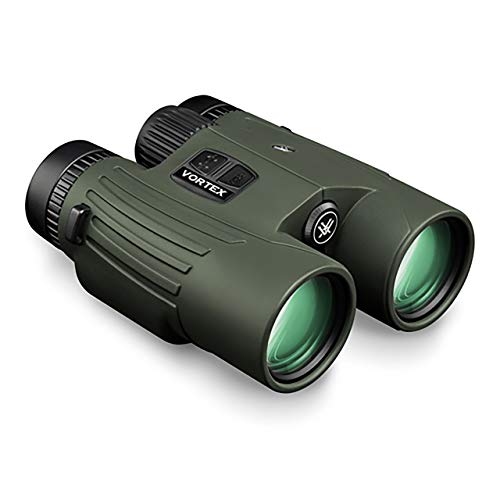
Vortex Fury HD 5000 10×42 Laser Rangefinding Binoculars

AOFAR HX-1200T Range Finder 1200 Yards

Vortex Razor HD 4000 Laser Rangefinder

AOFAR HX1000 Range Finder 1000 Yards

AOFAR HX-700N Hunting Range Finder 700 Yards

ATN BlazeSeeker 6 207 Thermal Monocular

ATN BlazeSeeker 6 210 Thermal Monocular

ATN BlazeHunter XD 2-16x Thermal Monocular LRF
The Picks, Examined More Closely
The Crossfire HD 1400 punches above its weight class for hunters who need a no-fuss tool they can grab on every spot-and-stalk trip. The 5x magnification paired with a 21mm objective (the front lens that gathers light) keeps the unit compact enough to pocket in a binocular harness, while the HD optical system delivers a crisp image through dawn and dusk glassing windows.
Reaching out to 1400 yards on reflective targets, with game ranging effective to roughly 750 yards, it covers the distances most rifle hunters actually encounter on western hunts. Compared to the bulkier Fury HD 5000 binoculars covered next, this is a single-purpose unit that stays light on the chest pack. Run it on a whitetail ridge or an early-season mule deer stalk and you get reliable yardage without fumbling through menus.
Reasons It Performs
- 5x magnification with HD glass delivers clean target identification at typical hunting distances
- 1400-yard max range on reflective targets covers almost any open-country shot opportunity
- Lightweight housing makes it comfortable to carry all day in a bino harness or chest pouch
- Simple interface lets you range quickly without pulling your eyes off the target
- Works equally well for bowhunters ranging tree trunks and riflemen confirming a hillside shot
Things To Consider
- Single-lens design means no separate binocular for glassing, unlike the Fury HD 5000
- Range performance drops on low-contrast targets in heavy fog or rain, a common field limitation
Who It Suits Best
This fits the hunter who already runs dedicated binoculars but wants a fast, dedicated ranging tool in the pack.
Consider Something Else When
If you prefer glassing and ranging through a single optic, the Vortex Fury HD 5000 10×42 binoculars make more sense.
The Fury HD 5000 cuts weight and setup time by merging binoculars and rangefinder into a single 10×42 platform. Right-side button placement lets you range and glass without breaking your grip, a small detail that pays off when a buck steps out of a draw at last light.
Where the Crossfire HD 1400 is a dedicated range unit, this is the optic you live on all day. The 10x magnification pulls distant ridges closer for positive ID, and the 5000-yard reflective range opens up terrain most hunters never even attempt to measure. For anyone tired of swapping between binos and a separate rangefinder, this consolidates both into one familiar sweeping motion.
The Helpful Details
- 10×42 binocular configuration doubles as your primary glassing optic
- Right-side button controls enable true one-handed ranging in the field
- Long maximum range handles reflective targets across open-country landscapes
- HD optical system maintains edge sharpness across the wide field of view
Points To Note
- Heavier than a dedicated monocular rangefinder like the Crossfire HD 1400
- If the unit takes a hard hit, both glassing and ranging go down at once
- Premium pricing makes it a significant investment over entry-level options
Feature Snapshot
Made For
Western hunters who want to glass and range with one optic, especially on spot-and-stalk mule deer and sheep trips.
Reach For A Different Pick When
Day hunters on tighter budgets who rarely range past 700 yards should consider the AOFAR HX-700N instead.
The AOFAR HX-1200T brings genuine long-distance capability to hunters who would rather not stretch into premium territory. Both bow and rifle modes feed you angle-compensated horizontal distance, which is the actual shot distance rather than the line-of-sight number. That distinction matters on steep uphill or downhill shots where a flat yardage reading would put your arrow over the back.
A 6×25 optical configuration keeps the unit pocketable, while the waterproof, dustproof, and fog-resistant sealing shrugs off weather that would sideline flimsier designs. Sitting between the AOFAR HX1000 and the higher-end Vortex offerings, this model represents the sweet spot where most weekend hunters land.
Everyday Advantages
- Angle compensation displays true horizontal distance for uphill and downhill shots
- Dedicated bow mode tunes the readout for archery-specific trajectory holds
- Sealed housing handles rain, fog, and dust typical of late-season hunts
- 1200-yard maximum range covers the vast majority of hunting scenarios
Worth Noting
- Optical clarity on the 25mm objective won’t match larger Vortex offerings in low light
- Brand recognition and resale value lag behind premium manufacturers
Whose Shelf It Belongs On
Budget-conscious hunters who still want real long-range performance for western bow or rifle pursuits.
Not Your Match When
If low-light glassing quality is a priority, the Vortex Crossfire HD 1400 is a stronger pick in the same category.
The Razor HD 4000 sits in Vortex’s upper tier and shows it where it counts most: in the field, where conditions rarely cooperate. Four targeting modes, Normal, First, Last, and Extended Laser Range, give you the right tool whether you’re ranging a lone buck in timber or a ridge line 2000 yards away.
Angle compensation is handled through the HCD (Horizontal Component Distance) mode, the same ballistic-friendly reading the crossfire model uses, but with optical quality that holds up at full magnification. For long-range rifle shooters building custom ballistic charts, this delivers the precision inputs the data demands.
Bright Spots
- Four targeting modes adapt to common ranging scenarios without menu diving
- HCD mode outputs angle-compensated distance directly in the rifleman’s preferred format
- HD lens system maintains image quality that justifies the premium tier
- 4000-yard max range handles distant western terrain with reflective surfaces
Honest Caveats
- Premium positioning means a notable step up in cost from the Crossfire HD 1400
- Mode switching takes a moment longer than simpler single-mode units
Quick Facts
The Right Fit
Long-range precision shooters who want a top-tier dedicated ranging tool to feed custom ballistic solutions.
A Better Fit Elsewhere
Archery-only hunters who never range past a few hundred yards should save money with the AOFAR HX-700N.
The HX1000 strips out anything you don’t actually need in the field and concentrates on what most hunters use day to day. Press-and-hold operation delivers range, scan, and speed modes through a single power control, no complicated button mapping to forget at 5 a.m. on a frost-covered ridge.
With 1000 yards of reflective range and angle-compensated horizontal distance output, it handles both rifle and bow duties. Waterproof construction lets it ride in a pack during coastal rain or mountain showers without worry. This sits comfortably between the bare-bones HX-700N and the longer-reaching HX-1200T.
Features That Help
- Single-button operation reduces fumbling during fast-paced spot-and-stalk sequences
- Three operating modes cover the scenarios most hunters encounter
- Horizontal distance readout suits both rifle and archery shooting angles
- Waterproof sealing handles typical wet-weather hunting conditions
A Few Limitations
- Lower magnification than premium offerings limits target detail at extreme range
- Optical brightness trails behind Vortex options in overcast or twilight conditions
Best Suited To
All-around hunters who split time between bow and rifle seasons and want one rangefinder to do both.
Skip It When
Western rifle hunters regularly pushing 800+ yards should step up to the Vortex Razor HD 4000 instead.
The HX-700N is the unit a newer bowhunter can buy without wincing at the receipt. Six-times magnification plus a 25mm objective lens keeps it pocketable on a treestand or in a saddle hunting pack, while advanced pin sensor technology maintains accuracy within about a yard on most shots.
Bow mode tunes the output for archery trajectories, and the speed function doubles it for casual range practice. At 700 yards of max range, this won’t push to open-country rifle distances, which is exactly the point. For whitetail, elk at moderate distances, and treestand setups, it covers the real-world workload.
What Stands Out
- Compact size and light weight suit treestand and still-hunting setups
- Pin sensor accuracy within roughly one yard on most targets
- Bow and speed modes adapt to archery and recreational ranging
- Lower price point makes it accessible for hunters just building their kit
Trade Offs
- 700-yard ceiling rules out the long shots western rifle hunters pursue
- Build quality and optical coatings sit a tier below the AOFAR HX-1200T
- Less long-term resale protection than premium-tier rangefinders
Perfect Match For
New bowhunters or casual rifle hunters who rarely shoot beyond 400 yards and want a simple first rangefinder.
Another Choice May Suit
Hunters planning longer shots in mountainous terrain should look at the AOFAR HX-1200T for more reach.
The BlazeSeeker 6 207 expands this list into thermal territory, where heat signatures replace visible light as the target reference. The 256×192 sensor resolution, paired with SharpIR AI image enhancement, delivers recognizable animal outlines through total darkness, fog, and light brush cover.
Variable magnification from roughly 1.2x to 9.6x lets you scan wide for movement then punch in for ID. Storage sits at 32GB, enough for a season of recorded scouting sessions. Unlike the laser-only units above, this won’t give you a precise yardage, so it pairs naturally with a traditional laser rangefinder for serious shot calling.
A Few Highlights
- Thermal imaging detects heat through darkness, fog, and partial cover
- SharpIR AI processing clarifies edge detail on distant animals
- Variable magnification supports both scanning and target identification
- 32GB onboard storage captures scouting and recovery footage
Small Caveats
- Does not output precise laser yardage for ballistic calculations
- Thermal battery life trails daylight optics and requires charging discipline
At A Glance
Who Should Grab It
Predator, hog, and nighttime scouting hunters who need to find game in low-light or zero-light conditions.
Look Elsewhere When
Daylight rifle hunters focused on ballistics should pair the Vortex Razor HD 4000 with a traditional scope instead.
The 210 variant steps up from the 207 with more reach, pushing magnification to roughly 1.7x to 13.6x for tighter long-distance thermal observation. Same 256×192 sensor and SharpIR AI engine, so image processing stays consistent across the BlazeSeeker 6 line.
Where the 207 favors scanning broad country at lower power, this 210 model leans into identifying heat signatures across open flats or recovering game after dark. The 32GB memory bank stores recorded sessions for review back at camp. Still no laser rangefinder built in, so hunters pairing this with a long-range rifle plan will want the ATN BlazeHunter XD covered next.
Benefits That Matter
- Higher magnification ceiling reaches further into open-country terrain
- Consistent SharpIR AI processing matches the 207 model family
- 32GB onboard storage handles multi-day scouting expeditions
- Handheld form factor stays light enough for extended carry
Where It Is Less Suited
- Higher magnification narrows field of view for close-range scanning
- Lacks integrated laser rangefinding that the BlazeHunter XD offers
Built With In Mind
Open-country hunters who need thermal reach past the 207 model’s ceiling, especially across western plains.
Swap It Out When
If you want thermal imaging paired with a built-in laser rangefinder, the ATN BlazeHunter XD is the logical upgrade.
The BlazeHunter XD closes this list by combining thermal imaging with a built-in 1000m laser rangefinder, a pairing you won’t find in the BlazeSeeker 6 units above. The 1280×1024 sensor pushes thermal resolution well past the 256×192 tier, while the 1920×1080 OLED display renders heat signatures in sharper detail than most handheld units.
Variable 2-16x magnification covers everything from field-edge scanning to distant ID. SharpIR AI enhancement tidies up the edges, and IP67-rated sealing shrugs off rain and dust. With 32GB storage and onboard Wi-Fi, this is the most complete thermal-plus-rangefinding package on the list, designed for hunters who actually need to make precision calls after dark.
Practical Advantages
- Integrated 1000m laser rangefinder removes the need for a second device in the field
- 1280×1024 thermal sensor exceeds the resolution of the BlazeSeeker 6 units
- IP67 sealing handles harsh weather and accidental drops into water
- Wi-Fi connectivity enables file transfer and live viewing on a paired phone
Things To Weigh
- Specialty feature set commands a higher price than laser-only rangefinders like the Vortex Razor HD 4000
- Battery management matters more with both thermal and laser functions drawing power
Feature Rundown
Who Will Love This
Serious nighttime hunters and professionals who need thermal identification and range data in a single unit.
Not Your Match When
Daylight-only hunters should save money and step down to the Vortex Crossfire HD 1400.
Factors To Consider When Choosing Rangefinders For Long Range Hunting
Maximum Range And Target Type
Manufacturers quote two different maximums: reflective range, the distance at which the laser bounces off man-made surfaces or rock, and game range, which represents what you’ll actually see on an animal. Honest reviews and spec sheets show both. For most western hunting, game range matters more than the headline number.
Angle Compensation For Uphill Shots
On sloped terrain, line-of-sight distance lies to you. A 400-yard shot uphill only requires the hold that 320 yards of horizontal distance would demand. Look for a rangefinder that outputs horizontal component distance (HCD) or an angle-compensated mode for archery and rifle shooting on uneven ground.
Optical Quality And Objective Lens Size
Bigger objective lenses gather more light but add weight. For dawn and dusk hunts, a 25mm to 42mm objective balances low-light performance with pack-friendly carry. Lens coatings matter too: fully multi-coated optics outperform basic coated glass significantly in marginal light.
Weight And Ergonomics
A rangefinder you leave in the truck isn’t useful. Consider how the unit rides in your chest harness or pack pocket. Single-button operation reduces fumbling, while right-hand button placement supports one-handed use without breaking your grip on binos or rifle.
Durability And Weather Sealing
Waterproof and fog-proof ratings matter more than marketing suggests. Late-season hunts push you into wet brush, rain, and freezing temps. Look for explicit waterproof sealing rather than implied water resistance, especially if you hunt mountain country.
Key Considerations Across These Picks
Wrong Turns To Avoid
The most common mistake is chasing the highest reflective range number on the spec sheet, then discovering the unit struggles past 400 yards on actual game. Game range matters more than headline reflective distance. Another pitfall is buying a thermal unit when you only hunt daylight hours. The ATN BlazeHunter XD is a specialty tool, not a universal upgrade over a quality laser rangefinder like the Vortex Razor HD 4000. Also, don’t skip practicing with your rangefinder before season opens. The interface feels clunky until muscle memory kicks in, and learning that on a live animal is poor timing.
Where The Extra Money Goes
Stepping from a sub-$200 AOFAR unit to a Vortex Razor HD 4000 buys you four targeting modes, premium HD glass, and tighter build tolerances. With thermal units, the jump from BlazeSeeker 6 to BlazeHunter XD quadruples sensor resolution, adds laser rangefinding, and improves weather sealing to IP67. For casual hunters, the extra cost rarely translates to more animals in the freezer. For serious long-range and nighttime hunters, the upgrade pays back in confidence and capability that cheaper units cannot match.
Frequently Asked Questions
How far should a hunting rangefinder reach?
For most North American hunting, 600 to 800 yards of game range covers the realistic shot distances you’ll encounter. Longer range helps with scouting but isn’t strictly necessary for shot calling.
Do I need angle compensation for bowhunting?
Yes, on any shot where the target sits above or below your stand. Angle compensation shows the horizontal distance, which matches the trajectory your sight is calibrated for.
Is a thermal rangefinder worth it for daytime hunting?
Generally no, since daylight optics deliver sharper detail and longer battery life. Thermal excels after dark and through fog, making it a specialty tool rather than a primary hunting optic.