
Standing in a frozen treeline for three hours teaches you quickly whether your boots were built for the job. The right pair keeps heat locked in, water out, and your footing steady on slick leaves or mud, while a bad pair turns a quiet morning into a miserable one. This roundup walks through seven rubber hunting boots built for serious cold-weather fieldwork, breaking down insulation, traction, fit, and the small details that separate a quick trip from an all-day sit.
A Fast Comparison Of The Options

MUCK Woody Max Hunting Boot

Simms Men’s Freestone Boot
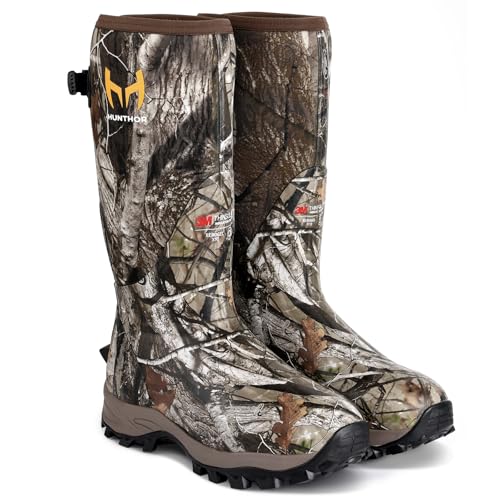
Hunthor Xerogel Insulated Rubber Boots

LaCrosse Men’s Grange 18″ Hunting Boot

LaCrosse Alphaburly Pro 18″ Insulated Boot

Hunthor Waterproof Rubber Rain Boots

Hunthor 1600g -20°F Rated Boots
Taking A Closer Look At The Options
The MUCK Woody Max has earned a near-cult following among late-season hunters who refuse to call a sit short because the thermometer dropped below zero. The 5mm internal neoprene core, the term for a closed-cell rubber foam that traps warmth and sheds water, works with a fleece lining to trap body heat against your foot while keeping slush and standing water from seeping in.
A 2mm thermal foam layer sits beneath the footbed, and the stretch-fit topline hugs your calf to seal warmth in. Compared to the LaCrosse Grange further down this list, the Woody Max leans warmer and more flexible, but trades a bit of structure for that heat retention. If you spend long, motionless hours in cold water or snow, you may find this balance lands exactly where you need it.
Good Reasons To Consider
- 5mm neoprene plus fleece lining for serious cold-weather heat retention
- Stretch-fit topline seals in warmth around the calf
- High-grade rubber exterior sheds water and resists abrasion
- Trusted platform widely reported to last multiple seasons of hard use
Things To Consider
- Bulkier profile than non-insulated pac boots, which can tire smaller legs on long hikes
- Heavier weight may feel like dead weight walking to a far stand
Who It Suits Best
Late-season whitetail or waterfowl hunters in northern climates who sit still for hours in deep cold.
Where Another Pick Suits Better
Walkers covering miles of dry terrain should look at the LaCrosse Grange 18″ instead, since lighter builds trade less heat for more stamina.
Simms built the Freestone for anglers first, and that DNA shows up in every seam. The boot favors a low-profile silhouette that makes wading, walking rocky creek banks, and stepping quietly into a duck blind far easier than taller pac styles. You trade raw insulation for agility, which is exactly the right call when temperatures are mild and water depth is the real challenge.
Compared to the MUCK Woody Max that opened this list, the Freestone runs leaner and lighter. Its vulcanized rubber construction shrugs off punctures from sharp gravel, and the tread pattern grips slick river rock in a way most generic hunting outsoles cannot match.
Key Advantages
- Lightweight construction reduces leg fatigue on long walks
- Vulcanized rubber upper for proven waterproof sealing
- Aggressive tread grips wet rock and mossy shoreline
- Streamlined cut fits under waders without bulk
Worth Noting
- Little built-in insulation means cold-weather hunters will need thick sock layering
- Sizing runs narrow for some foot shapes
Made For
Anglers and hunters who wade into marshes, rivers, or beaver ponds and need traction over warmth.
Consider Something Else When
Northern deer hunters facing frozen ground should reach for the LaCrosse Alphaburly Pro 18″, which pairs waterproof rubber with proper insulation.
Hunthor’s Xerogel insulated boot targets hunters who want modern insulation tech without paying the premium attached to legacy hunting brands. Xerogel is a proprietary insulating material designed to add warmth without the extra bulk of thicker neoprene. The result is a boot that feels closer to a hiking shoe than a traditional pac.
You get a fully waterproof rubber lower and a tall shaft that keeps you dry when stepping through flooded timber or crossing a shallow slough. Where the Simms Freestone leans wading-first, this one aims for sit-and-wait comfort in damp, chilly conditions.
What It Does Well
- Xerogel insulation traps heat with less bulk than older foam systems
- Full rubber shell stands up to standing water and mud
- Modern construction suits hunters who want agility from their boot
- Tall shaft sheds debris and keeps moisture from spilling in
Room For Improvement
- Brand recognition trails established names like Muck and LaCrosse
- Long-term durability data is still limited compared to legacy models
Best Suited To
Hunters who favor a lighter, more athletic boot for wet woodland hunting where warmth matters but weight matters too.
Look Elsewhere When
Freezing-climate hunters who need proven deep-cold insulation should reach for the Hunthor 1600g -20°F Rated Boots at the end of this list.
The LaCrosse Grange is a workhorse. Built around ZXT rubber, a high-density natural rubber compound that resists cracking and abrasion, this 18-inch boot has been on farms, in food plots, and in soggy timber blinds for years. It does not chase newfangled insulation tech; it delivers a fully waterproof shell with a focus on long-term durability.
The adjustable top strap, the ankle-fit design, and the EVA footbed (a lightweight foam that cushions each step) make the Grange more comfortable than its rugged looks suggest. For muddy late-season drives or simply walking the property line to check cameras, it earns its keep.
Standout Benefits
- ZXT rubber holds up season after season in wet, muddy conditions
- Innovative ankle fit grips the heel and locks the foot in place
- EVA footbed cushions long days on hard ground
- Slip-resistant heel outsole grips wet mud and slick slopes
- Adjustable top strap customizes calf sealing
Points To Note
- No built-in insulation, so cold-weather hunters need heavyweight socks
- Heavier than athletic-style boots during long hikes
Who Should Grab It
Land managers, farmers, and hunters who spend more time slogging through mud than stalking across dry ground.
Not Your Match When
You need insulation for sub-freezing sits; the MUCK Woody Max is built for that exact scenario.
The Alphaburly Pro sits at the sweet spot of LaCrosse’s hunting line. Natural scent-free rubber pairs with insulating neoprene, and 400 grams of Thinsulate Ultra, a thin synthetic fiber insulation that traps warm air without adding weight, brings enough warmth for most fall and early-winter hunts without the bulk of a deep-freeze boot.
The Active Fit design keeps your foot locked in place, and the burly tread pattern handles mud, muck, and snow without clogging. For most hunters chasing deer or turkey in changing weather, this is the kind of boot that quietly handles everything you ask of it.
The Case For It
- 400G Thinsulate Ultra balances warmth and mobility
- Scent-free rubber keeps your trail profile low
- Active Fit locks the foot and resists heel lift
- Self-cleaning tread pattern sheds mud effectively
Honest Caveats
- 400G insulation is not enough for true deep-freeze late-season sits
- Taller 18-inch shaft can feel stiff until broken in
The Right Fit
General-purpose hunters chasing deer, turkey, or small game in mid-fall through early winter.
Swap It Out When
Sub-zero late-season hunters need the Hunthor 1600g -20°F Rated Boots instead, which is rated for much colder conditions.
For hunters working warm-weather deer stands, early-season turkey hunting, or scouting chores in damp woods, the Hunthor Waterproof Rubber Rain Boot covers the basics without asking for much in return. It is a tall, fully waterproof rubber boot with a simple, dependable design.
It does not pretend to be a deep-cold specialist. Where the MUCK Woody Max leans into neoprene warmth or the LaCrosse Grange adds ankle-fit engineering, this one stays lean. For mild, wet days that just need dry feet, that simplicity is the entire point.
A Few Highlights
- Fully waterproof rubber lower keeps feet dry in wet grass and puddles
- Easy pull-on design suits quick trips to the blind
- Budget-friendly entry point for new hunters
Soft Spots
- No insulation means cold mornings require thick sock layering
- Basic traction compared to premium outsoles
- Limited long-term durability data compared to legacy brands
Whose Shelf It Belongs On
New hunters, occasional outdoorsmen, and anyone needing a backup pair for light-duty wet conditions.
A Better Fit Elsewhere
Hunters facing real cold and long sits will get more from the LaCrosse Alphaburly Pro 18″ Insulated Boot, which adds proper insulation and ankle support.
When the forecast calls for bitter cold and the kind of late-season deer hunt where you sit through wind chills well below zero, the Hunthor 1600g -20°F Rated Boot is built for that exact punishment. The 1600 grams of insulation far exceed what most hunting boots pack, putting it in true deep-freeze territory.
The full rubber lower keeps slush and standing water out, and the tall shaft seals warmth around your calves. Compared to the Alphaburly Pro 400G, this boot is heavier and warmer, and that trade-off shows up the moment the temperature drops.
Where It Helps
- 1600g insulation rated for -20°F conditions
- Full waterproof rubber shell for deep snow and standing water
- Tall shaft keeps snowmelt and slush from spilling over the top
- Aggressive tread pattern grips frozen ground and ice
Some Limits To Know
- Bulk and weight can slow hunters covering long distances on foot
- Overkill for mild or mid-season hunts
Built With In Mind
Northern hunters, ice-fishing anglers, and anyone facing prolonged exposure to extreme cold.
Reach For A Different Pick When
Mid-season hunts in milder weather will be handled better by the LaCrosse Alphaburly Pro 18″ Insulated Boot, which is lighter and more versatile.
What Matters Most Before Choosing Rubber Boots For Hunting
Start with insulation weight, measured in grams, because that single number sets the comfort ceiling for your season. 400G handles cool fall mornings, 800G covers early winter, and 1200G or higher is reserved for genuine deep-freeze situations. Choose based on the coldest typical hunt day, not the average.
Next, look at shaft height. An 18-inch boot keeps water and debris from spilling over the top in deep mud or snow, while shorter cuts breathe better and weigh less for active stalks. Traction matters too: aggressive, self-cleaning lugs grip mud and snow, while flatter treads excel on hardpack and rock.
Finally, fit is everything. A boot that slips at the heel will blister within an hour, no matter how good the rubber is. Always try boots on with the hunting socks you plan to wear and leave a thumb’s width of toe room for downhill walks.
Key Considerations Across These Picks
Mistakes Worth Dodging
Buying more insulation than your climate requires is the most common slip-up. A 1600G boot in 40°F weather causes sweat buildup, and moisture inside the boot kills warmth faster than cold air ever could.
Skipping the break-in window is another. Even flexible neoprene boots benefit from a few short outdoor walks before a full-day hunt.
Where The Extra Money Goes
Premium boots buy better rubber compounds, refined fit systems, and insulation that holds its loft after years of compression. You also gain cleaner seam construction, which matters when standing in water for hours.
For most hunters, the upgrade pays off in fewer cold feet, longer boot life, and less distraction in the field.
Frequently Asked Questions
How much insulation do I need for hunting?
For typical fall hunts, 400G works well. Deep-winter or late-season hunters in northern climates benefit from 800G to 1600G.
Are rubber boots better than leather for hunting?
Rubber wins for waterproofing and wet conditions, while leather breathes better and breaks in to your foot. Many hunters keep both.
How tall should hunting boots be?
15 to 18 inches covers most hunting situations. Taller boots excel in deep snow and standing water, while shorter cuts suit active stalking.
Can I wear rubber boots in snow?
Yes, especially insulated models with aggressive treads. Neoprene-lined rubber boots handle snow particularly well when paired with proper insulation.
How do I care for rubber hunting boots?
Rinse off mud after each use, dry them at room temperature away from direct heat, and store them upright to preserve the shaft shape.