
You spend long hours on your feet in wet, cold, and unpredictable terrain, and your boots either carry you through the season or ruin it. Choosing the right rubber hunting boots comes down to matching insulation weight, height, and traction to the conditions you actually face, whether that’s a late-season deer stand in frozen timber or a damp early-fall duck blind. The eight pairs below cover the realistic hunting scenarios you’re most likely to encounter this year, from light all-purpose rubber boots to serious extreme-cold gear.
The Leading Options At A Glance
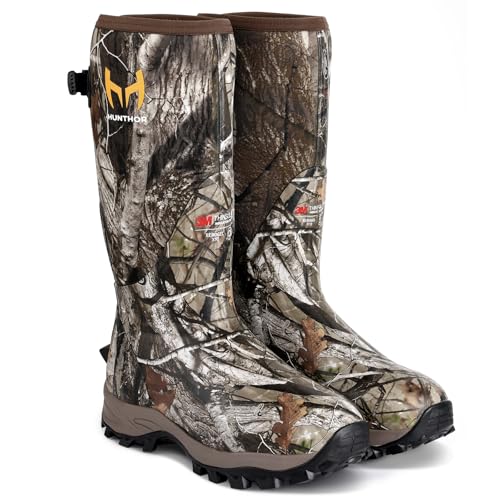
Hunthor Waterproof Xerogel Insulated Rubber Boots

MUCK Mossy Oak Woody Max Boot

MUCK Arctic Pro Insulated Boot

Aigle Course 2 Vario Hunting Boots

Hunthor Waterproof Rubber Rain Boots

LaCrosse Alphaburly Pro 18″ Insulated Boots

Hunthor 1600g Insulation -20°F Boots

Hunthor 800g Insulation Rubber Farm Boots
A Closer Look At Each Pick
The Hunthor Xerogel insulated boot focuses on lightweight warmth without the bulky feel of a heavy pac boot. Xerogel here is a thin insulating layer that traps heat while staying flexible, so your feet bend naturally as you step over logs and low brush.
You get a fully waterproof rubber shell that handles creek crossings, dew-heavy mornings, and muddy approach trails. For hunters walking moderate distances in cold conditions, the lighter construction may keep your legs fresher than a heavier insulated option.
Practical Advantages
- Lightweight Xerogel layer keeps warmth up without adding bulk under the foot.
- Waterproof rubber shell shrugs off puddles, snow, and standing dew.
- Flexible construction reduces leg fatigue on long approaches.
- Clean rubber exterior rinses off with a hose after a muddy hunt.
Trade Offs
- Less aggressive tread than dedicated swamp or bog boots.
- Insulation may feel light for hunters sitting motionless in deep-freeze stands.
Right Fit For
Hunters who hike moderate distances in cool, damp conditions and prefer flexibility over maximum warmth.
A Better Fit Elsewhere
For hunters facing subzero windchills, the MUCK Arctic Pro Insulated Boot brings thicker cold-weather insulation.
The MUCK Woody Max in Mossy Oak camo blends a warm, fleece-lined boot with a break-up pattern upper that disappears into fall foliage. It’s the kind of boot you grab when you’re sitting in a treestand for hours and want your feet quiet and warm.
The rubber lower extends high up the calf for wading and snow, while the camo shaft adds visual concealment from wary deer. Compared to the Hunthor Xerogel, this boot trades flexibility for thicker insulation and a taller profile.
The Good Stuff
- Fleece lining plus thermal foam under the footbed hold heat during long sits.
- Mossy Oak camo breaks up your silhouette against tree bark and brush.
- Stretch-fit topline seals in warmth while flexing with your calf.
- High-grade rubber exterior resists punctures and abrasion.
Honest Caveats
- Taller shaft can feel stiff on hunters used to ankle-height boots.
- Camo fabric may absorb water in heavy rain if not treated.
Made For
Still-hunters and treestand hunters who want camouflage plus serious warmth in late fall and early winter.
Swap It Out When
For muddy farm chores and ranch work where camo matters less, the Hunthor 800g Insulation Rubber Farm Boots offer a more utilitarian build.
The MUCK Arctic Pro is the warmest hunting boot in this lineup, designed for hunters who head out when temperatures plunge and stay gone for hours. The fleece lining plus thermal foam create a serious defense against frostbite-risk conditions.
Where the Woody Max handles cold autumn mornings, the Arctic Pro steps in for ice-fishing trips, late-season muzzleloader hunts, and snowmobile excursions. Its comfort range starts well below freezing, which matters when you’re perched on a frozen riverbank at dawn.
A Few Highlights
- Subzero comfort rating targets extreme cold-weather hunting.
- Fleece lining plus thermal foam layer keeps warmth consistent.
- Tall rubber shell handles deep snow and slush.
Where It May Fall Short
- Thick insulation can feel overly warm on active mid-season hunts.
- Heavier build tires out hunters covering long distances on foot.
Best Suited To
Hunters working treestands or ice-fishing shelters in well-below-freezing temperatures.
Another Choice May Suit
For milder winter days where lighter insulation is enough, the LaCrosse Alphaburly Pro 18″ Insulated Boots balance warmth and mobility.
The Aigle Course 2 Vario brings European bootmaking to the hunting market with a unisex fit that works for shared gear between partners or for hunters who struggle to find wide sizes. Aigle has built rubber boots in France for over 170 years, and that heritage shows in the construction.
Compared to the MUCK boots, this pair leans toward traditional hand-laid rubber with a more classic silhouette. You trade some insulation thickness for a refined fit and durable build.
A Favorable Mix
- Hand-built rubber construction offers durable waterproofing.
- Unisex sizing accommodates a wider range of foot shapes.
- Classic silhouette appeals to hunters who prefer traditional styling.
Less Ideal Details
- Lighter insulation than cold-climate-specific hunting boots.
- European sizing may require careful size conversion from US measurements.
Who Will Love This
Hunters walking damp woodland and field edges who value craftsmanship and a more tailored fit.
Reach For A Different Pick When
For hunters who want heavy insulation and aggressive camo, the MUCK Mossy Oak Woody Max Boot is the more purpose-built choice.
The Hunthor Waterproof Rubber Rain Boot strips things down to a no-insulation rubber shell that shines in wet, mild conditions. There’s no thermal layer between you and the weather, which keeps weight and bulk to a minimum.
This boot makes sense for early-season deer scouting, summer fishing trips, and soggy mornings when warmth isn’t the priority but waterproofing is everything. Compared to the Hunthor Xerogel, it trades insulating layers for a lighter, cooler build.
Where It Helps
- Uninsulated rubber shell keeps feet cool in warm-weather hunts.
- Lightweight design reduces fatigue on long walks.
- Easy to hose clean after muddy or sandy use.
Practical Considerations
- No insulation means cold feet once temperatures drop below 50°F.
- Smooth rubber outsole may lack bite on steep, muddy slopes.
Right Fit For
Early-season hunters, summer anglers, and anyone working damp conditions where warmth is secondary.
Where Another Pick Suits Better
For cold-weather hunts where insulation matters, the Hunthor 800g Insulation Rubber Farm Boots add warmth without too much extra weight.
The LaCrosse Alphaburly Pro is a long-standing favorite among hunters who need one boot that handles most of the season. The natural rubber shell delivers waterproofing in any condition, while the 400G Thinsulate Ultra insulation keeps you comfortable without overheating during active movement.
Compared to the Hunthor 800g and 1600g boots, the Alphaburly Pro sits in the middle on warmth. You get enough insulation for frosty mornings, but not so much that your feet swamp in mid-day sun.
The Value In It
- Natural rubber upper is scent-free and quiet when stepping carefully.
- 400G Thinsulate Ultra handles three-season temperatures comfortably.
- Active Fit design keeps the boot snug against your leg and ankle.
- Aggressive tread pattern grips mud, muck, and snow.
- EVA footbed cushions long days on uneven ground.
Things To Consider
- 18-inch shaft can feel bulky for hunters with shorter legs.
- Not warm enough for subzero still-hunts.
Key Product Details
Who Should Grab It
Mid-season hunters who want one reliable boot from early fall through late winter in moderate climates.
Look Elsewhere When
For serious subzero work, the MUCK Arctic Pro Insulated Boot delivers heavier thermal protection.
The Hunthor 1600g Insulation boot targets hunters who sit still for hours when temperatures drop well below freezing. The 1600-gram rating means thick insulation that fills the boot, so your feet stay warm even when you’re not moving.
This is a heavier, more serious cold-weather option than the 800g Hunthor model. The trade-off is weight and reduced agility on rough terrain.
Good Reasons To Consider
- 1600g insulation handles cold, motionless hunting conditions.
- -20°F rated for serious winter environments.
- Rubber shell waterproofs deep snow and slush.
Possible Compromises
- Bulky construction feels heavy on long walks.
- Too warm for active late-fall hunts above freezing.
Perfect Match For
Hunters who work long sits in freezing treestands or snow-packed terrain.
Not Your Match When
For active three-season hunting where you need flexibility, the LaCrosse Alphaburly Pro 18″ Insulated Boots offer lighter insulation.
The Hunthor 800g Insulation Rubber Farm Boot strikes a middle path between the uninsulated rain boot and the heavy 1600g winter pac. You get meaningful warmth without the bulk of an extreme-cold boot, which makes this a versatile pick for working farms and cooler hunting days.
Compared to the LaCrosse Alphaburly Pro, this boot leans more utilitarian and less feature-loaded. That keeps the price approachable for hunters buying multiple pairs or replacing worn rubber boots every season.
Key Advantages
- 800g insulation covers cool-weather hunts and chores.
- Rubber shell handles mud, manure, and wet grass.
- Approachable build suits everyday farm and property work.
Points To Note
- Less aggressive tread than dedicated hunting boots.
- Insulation can feel light when temperatures drop below 20°F.
Whose Shelf It Belongs On
Ranchers, landowners, and hunters who need a versatile boot for property work and cooler-season hunting.
Consider Something Else When
For specialized late-season hunts in deep cold, the Hunthor 1600g Insulation -20°F Boots step up the thermal protection significantly.
Factors That Matter Most When Choosing Rubber Hunting Boots
Match Insulation Weight To The Temperature You Hunt In
Insulation weight, measured in grams, directly affects warmth. 400G Thinsulate handles frosty mornings, 800G covers cool-season hunting, and 1600G or more tackles deep-freeze conditions. Pick insulation based on the coldest temperature you’ll actually face. Overinsulated boots sweat your feet on active mid-season hunts, while underinsulated boots leave you miserable in a stand.
Consider Shaft Height And Fit Around The Calf
Shaft height ranges from ankle to knee. Taller shafts protect against water and snow, but they add weight and can restrict walking. A stretch-fit topline helps seal in warmth without binding. Make sure the shaft clears your knee or sits comfortably below it based on the terrain you cover.
Weight Affects How Far You Can Walk Comfortably
Thicker insulation and taller shafts add ounces that matter on long approaches. Lightweight rubber boots reduce leg fatigue on miles-long hikes, while heavier pac boots suit shorter walks and longer sits. Match boot weight to your hunting style.
Key Considerations Across These Picks
Pitfalls Shoppers Hit
Buying heavily insulated boots for early-season hunts is one of the most common mistakes. Hot feet blister faster than cold feet, and sweating inside a rubber shell leads to clamminess that feels worse than mild cold. Another frequent slip is ignoring shaft height: short shafts let water pour over the top when wading through marshy ground.
Where The Extra Money Goes
Premium boots typically deliver better rubber compounds, more refined tread patterns, and more thoughtful insulation layering. Higher-tier boots also tend to fit more comfortably out of the box, with ergonomic footbeds and stretch-fit toplines that cheaper models skip. The upgrade pays off when you hunt ten or more days a season in tough conditions, since durability and comfort compound over time.
Frequently Asked Questions
How Do I Choose The Right Insulation Weight For My Climate?
Start with the coldest average morning temperature you’ll face during hunting season. 400G covers down to roughly 30°F, 800G handles teens and twenties, and 1600G is built for subzero conditions.
Are Rubber Hunting Boots Better Than Leather For Wet Conditions?
Rubber wins in standing water, marshy ground, and wet grass because the waterproof barrier is built into the material. Leather breathes better but needs regular treatment to stay waterproof.
Should I Size Up To Wear Thick Socks?
Sizing up half a size is reasonable when you plan to wear heavy insulated socks, but going too big causes heel slip and blisters. Try boots on with the socks you actually hunt in.
How Long Do Rubber Hunting Boots Typically Last?
With regular use and basic care, a quality rubber boot lasts three to five seasons. Cleaning mud off after each hunt and storing boots out of direct sunlight extends the lifespan noticeably.
Do These Boots Work For Non-Hunting Activities?
Yes, especially the farm and rain boot styles. Many hunters double them up for chores, fishing, and outdoor work, which gets more value out of the purchase.