
Glass matters more than most hunters expect. The difference between a clean, color-true image at dusk and a dim, fuzzy blob where a buck used to be often comes down to the optic in your hands. A solid 10×42 setup strikes a useful middle ground for hunting: enough magnification to sort antler tines and read body language at distance, paired with objective lenses (the large front lenses that gather light) wide enough to keep things bright when the sun drops.
These nine picks span price tiers and design philosophies. Some favor rugged simplicity for the truck or saddle. Others lean into extra-low-dispersion glass (special lens formulations that reduce color fringing) and fully multi-coated optics (multiple anti-reflective coatings on every air-to-glass surface) for hunters who spend long evenings behind the eyepiece. A couple stretch beyond the 10×42 spec on this list because hunters shopping in this category often wonder about them. Each one earns its place for a specific type of shooter.
A Side-By-Side Look
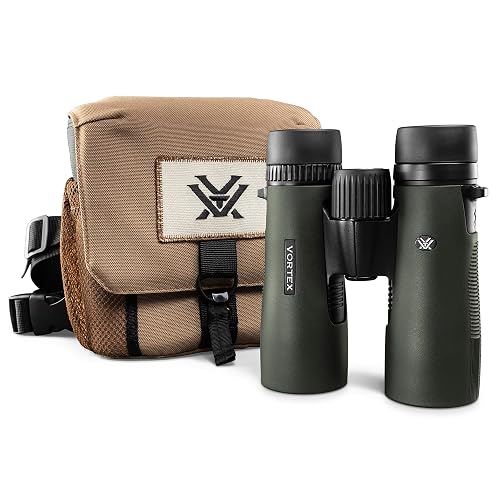
Vortex Diamondback HD 10×42 Binoculars
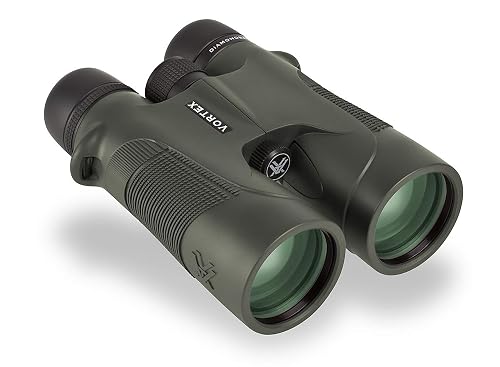
Vortex Diamondback 10×50 Roof Prism Binocular
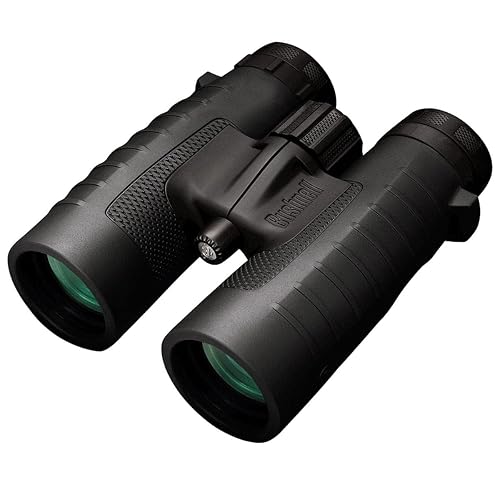
Bushnell 10x42mm Trophy XLT Binoculars
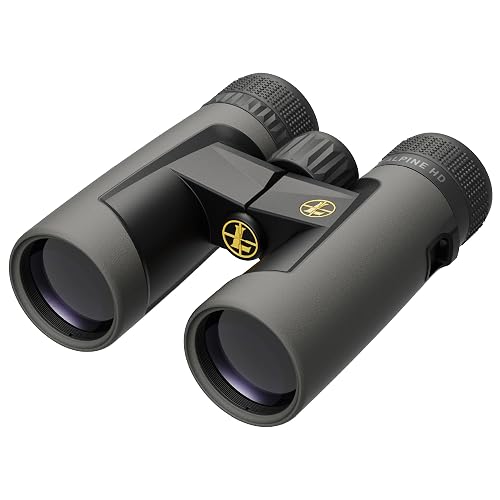
Leupold BX-2 Alpine HD 10x42mm Binoculars

Leupold BX-1 McKenzie HD 10x42mm, Mossy Oak
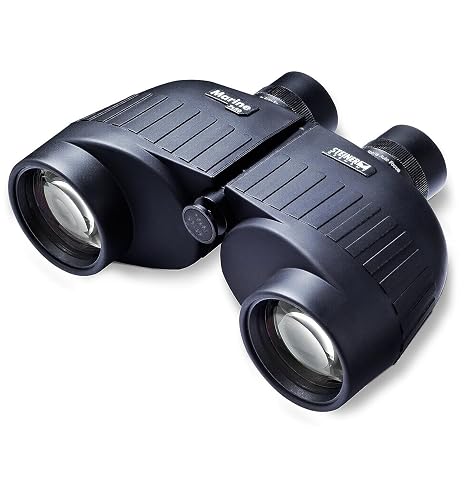
Steiner Marine 7×50 Binoculars
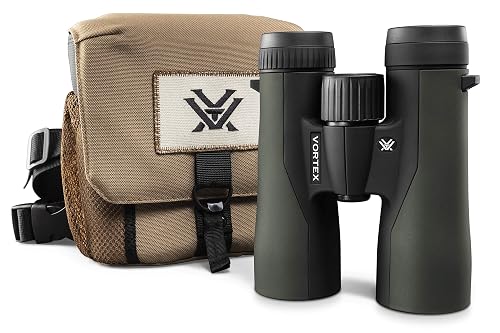
Vortex Crossfire HD 10×42 Binoculars
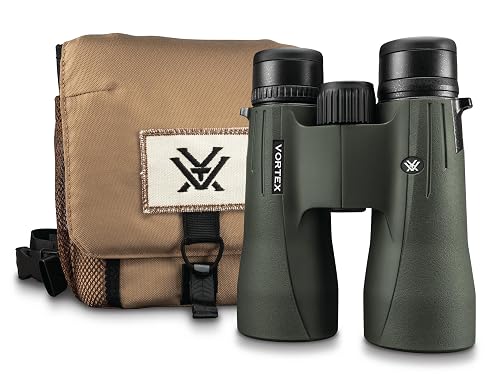
Vortex Viper HD Roof Prism 12×50

Athlon Optics 8×42 Midas G2 UHD
What Each Pick Brings To The Table
The Vortex Diamondback HD is the optic most hunters in this size class end up comparing everything else against. A 10x magnification paired with 42mm objectives gives you enough reach to read a bedded buck at 200 yards while still letting the glass stay compact enough to hang from a chest harness all day. Fully multi-coated lenses and phase-corrected prisms (prism coatings tuned to keep the optical phase aligned, which sharpens contrast) keep the image punchy in the half-light when most deer movement happens.
Where this binocular really earns its reputation is in the rubber armor, the O-ring sealed chassis, and the fogproof nitrogen purge (a nitrogen gas fill that prevents internal fogging across temperature swings). That means a wet morning in a ground blind or a cold truck ride into a hot stand won’t haze up the inside of the tubes. For most deer and elk hunters logging long sits, it’s a practical, hard-to-beat starting point in the lineup.
Standout Benefits
- Fully multi-coated optics deliver clean color and solid contrast at dawn and dusk
- Argon-purged, O-ring sealed body handles rain, snow, and temperature swings in the blind
- Armor coating and decent eye relief (the distance your eye sits behind the eyepiece while still seeing a full image) make these comfortable with or without glasses
- Compact enough to ride on a chest harness without bouncing on steep climbs
Things To Consider
- Image brightness trails the larger 50mm options you’ll see later in this list
- Owners commonly report the included strap is the first thing to get swapped out
Quick Facts
Best Suited To
Whitetail and mule deer hunters who want a single do-it-all 10×42 for truck, blind, and stalk.
Look Elsewhere When
You do most of your glassing in the last 15 minutes of legal light and want every lumen you can get; the Vortex Diamondback 10×50 covers that scenario better.
Step up from a 42mm to a 50mm objective and the difference shows up exactly when hunters need it most: that last half hour of light. The Diamondback 10×50 gathers noticeably more light than its smaller sibling while keeping the same familiar Vortex chassis, rubber armor, and weatherproofing you read about above. You give up a touch of portability, but you gain a brighter image and a wide field of view for scanning big openings.
Where this glass earns its spot is for hunters in timber-edge or ag-field country where glassing distances stretch out and the sun disappears behind the ridge. It’s also a comfortable pick for spotting western sheep or antelope where you spend more time behind the optic than behind the trigger. You may find the extra size feels bulky on long pack-ins, so it leans toward truck, ATV, or horseback hunters more than saddle-bag scrambles.
Reasons It Performs
- Larger 50mm objectives pull in more light during the final minutes of legal shooting
- Wide field of view helps track moving animals across open country
- Same rugged, O-ring sealed chassis as the rest of the Diamondback line
Worth Noting
- Heavier and bulkier than the 10×42 version, which matters on long walks
- Slightly more sensitive to precise eye placement, especially for glass-wearers
Made For
Hunters chasing low-light game in open terrain who’ll trade some size for clearer glassing at dusk.
Skip It When
Most of your hunting is from a tree stand on whitetails; the Vortex Diamondback HD 10×42 is a lighter, more comfortable pick for that scenario.
The Bushnell Trophy XLT line has been a familiar sight in hunting camps for years, and the 10×42 version carries that reputation forward. You get a 6.2-degree angle of view, which translates to a generous wide field at typical hunting distances. For hunters moving between tree stands, food plots, and the occasional boat-based duck hunt, the waterproof construction is a real comfort when weather turns sideways.
It isn’t built to compete with the high-end HD glass in this list on raw image fidelity, but the honest read is that most hunters won’t notice the gap until they’re comparing side by side in dim light. The chassis is grippy, the focus wheel is in a natural spot, and the optic stays comfortable on long sits. This is a sensible choice for someone who wants a familiar name, decent optical performance, and a price tag that doesn’t sting when the binocular takes a tumble off a tailgate.
The Good Stuff
- Wide 6.2-degree field of view helps locate and follow moving animals
- Waterproof build holds up to rain, sleet, and boat spray
- Comfortable eye relief for eyeglass wearers during long sessions
- Forgiving focus wheel that works well with cold or gloved hands
Trade Offs
- Color fidelity and edge sharpness trail the premium HD glass above
- Owners commonly report the included neck strap is the first accessory they replace
Right Fit For
Hunters who want a trustworthy all-weather 10×42 without paying for flagship-grade optics.
Reach For A Different Pick When
You’re chasing sheep or mule deer in wide-open country at first light; the Vortex Viper HD 12×50 gives you noticeably more reach for that style of glassing.
The BX-2 Alpine HD is where Leupold’s reputation for rugged American-built optics starts to show up in the spec sheet. The open-bridge roof prism design (a chassis shape with a cut-out between the barrels for a lighter, easier grip) shaves noticeable weight over traditional double-bridge binoculars. For hunters logging long pack-ins for elk or goat, that weight savings adds up by the time you reach the rim.
Fully multi-coated lenses and BAK4 prisms (a high-grade optical glass that produces a clean, round exit pupil) keep the image sharp from edge to edge. The shadow gray rubber armor stays quiet against rifle stocks and pack frames, and the waterproof, fogproof chassis is built to handle the kind of weather that pushes lesser glass back to the truck. This is a step-up option for hunters who want premium feel without stepping into the much pricier European flagship category.
Positive Takeaways
- Open-bridge design cuts weight noticeably for backcountry hunters
- BAK4 prisms and fully multi-coated glass deliver crisp, edge-to-edge clarity
- Waterproof and fogproof for cold mornings and wet terrain
- Quieter rubber armor than glossy finishes on a rifle stock
Room For Improvement
- Costs more than entry-level 10×42 options without dramatic gains in low light
- Open-bridge grip takes a few outings to feel natural for users used to traditional barrels
Who It Suits Best
Backcountry hunters willing to spend more for a lighter, premium-feeling binocular they can pack all day.
Where Another Pick Suits Better
You want a more budget-friendly first serious 10×42; the Leupold BX-1 McKenzie HD delivers the same brand at a friendlier entry price.
The BX-1 McKenzie HD is Leupold’s invitation into the HD optic world without the higher price of the Alpine line you just saw. Built around the company’s Advanced Optical System, it pushes solid light transmission through fully multi-coated lenses. The Mossy Oak camo wrap is a small touch, but for hunters who want glass that disappears against a backpack or a turkey vest, it does the job.
The 10x42mm format hits that comfortable middle ground for a wide range of North American hunting. You get enough magnification to count points on a buck across a meadow, and the 42mm objectives keep the binocular light enough to wear around your neck without a strap that ends up aching by mid-afternoon. For a hunter buying their first “real” binocular, this is a friendly on-ramp into a brand known for solid customer service if anything ever goes sideways.
Features That Help
- Advanced Optical System with fully multi-coated lenses for bright, accurate color
- Camo wrap blends in against a turkey vest or whitetail pack
- Roof prism body keeps the chassis slim and easy to pack
- Solid choice for the first serious hunting binocular in a kit
Small Caveats
- Low-light performance is good but not exceptional compared to the 50mm options in this list
- Some users find the focus wheel a touch stiff out of the box before it breaks in
Who Should Grab It
First-time binocular shoppers who want a trusted American brand at a sensible price point.
Swap It Out When
You do most of your hunting in low-light situations and want noticeably more brightness; the Vortex Diamondback 10×50 is the obvious step up.
The Steiner Marine 7×50 is the odd pick in a 10×42 roundup, and it’s here for good reason. Hunters who glass from boats, slog through coastal marsh, or chase ducks in sideways rain know that the spec sheet matters less than whether the binocular survives a swim. Steiner’s floating prism system uses flexible silicone lens mounts to absorb shock and keep optical alignment intact after years of hard use.
You give up magnification (7x is meaningfully less reach than 10x), but you gain a wide, stable image that’s much easier to keep steady on a rocking boat or a windy ridgeline. The Sports Auto Focus system keeps things sharp from roughly 20 yards out without constant refocusing, which is genuinely useful when scanning a marsh for incoming birds. This isn’t a backcountry ultralight pick. It’s a tank with glass, and for the right hunter that’s exactly what matters.
Where It Excels
- Floating prism system absorbs shock to preserve optical alignment over time
- Waterproof and rubber armored for marine and wet-marsh hunting
- Sports Auto Focus stays sharp across long distances without constant wheel turning
- Wide field of view makes scanning open water easier
Less-Strong Areas
- Lower 7x magnification means less reach than the 10×42 picks above
- Heavier than most modern roof prism designs in this roundup
Whose Shelf It Belongs On
Boat-based hunters, coastal guides, and duck hunters who need glass that survives drops overboard and saltwater spray.
A Better Fit Elsewhere
You’re spot-and-stalking big game at long distances across open ridges; the Vortex Viper HD 12×50 pulls in much more detail at range.
The Crossfire HD sits below the Diamondback HD in Vortex’s lineup but brings a lot of the same core technology to a lower price. Fully multi-coated lenses, BAK4 prisms, and a nitrogen-purged chassis handle rain, fog, and temperature swings just like its pricier sibling. The included GlassPak binocular harness is what sets it apart: it keeps the optic against your chest, ready to deploy with one hand while your other hand stays on a rifle or trekking pole.
For a hunter building a kit on a working budget, that harness alone is worth considering. It changes how you carry the binocular all day and keeps it from swinging on a neck strap during long stalks. The optical performance is a clear step behind the Diamondback HD on edge sharpness and low-light brightness, but it’s a noticeable step up from bare-bones entry glass. This is a sensible choice for someone who wants proven Vortex quality without paying for the top tier.
A Favorable Mix
- GlassPak harness included for fast, stable carry in the field
- Fully multi-coated lenses and BAK4 prisms at a budget-friendly price
- Waterproof and fogproof chassis handles real hunting weather
Honest Caveats
- Low-light brightness trails the Diamondback HD above
- Chassis is a touch heavier than slimmer premium options
Perfect Match For
Hunters building their first kit on a real budget who still want proven waterproof, multi-coated optics.
Not Your Match When
You spend more time glassing at dusk than at midday; the Vortex Diamondback 10×50 is a worthwhile stretch for that scenario.
The Viper HD 12×50 is the pick on this list for hunters who glass at real distance. The extra two power over a 10×42 makes a meaningful difference when you’re picking apart a sheep band on a far ridge or sorting mule deer bucks at a quarter mile. Pair that with 50mm objectives and the HD optical system, and you’ve got a binocular that pulls detail out of landscapes most 42mm glass can’t reach.
It comes with the same GlassPak chest harness as the Crossfire, which makes the extra weight manageable. Trade-offs show up in steadiness: 12x magnification amplifies every tremor, so you may find yourself leaning on a pack or trekking pole for a steady image. Hunters in heavy cover doing close-range deer hunting will probably find the magnification more frustrating than useful. This is a specialist pick for open-country hunters who need reach above all else.
Why It Works Well
- 12x magnification pulls in detail at extreme glassing distances
- 50mm objectives and HD optical system brighten the image at that reach
- GlassPak harness supports the extra weight comfortably
- Compact for a full-size 50mm binocular with this much power
Things To Weigh
- Higher magnification amplifies hand tremor; steady support becomes essential
- Narrower field of view makes locating fast-moving animals harder
- Heavier than 10×42 picks; you’ll notice it on long stalks
Quick Facts
Built With In Mind
Western hunters glassing sheep, antelope, and mule deer across big open country at long range.
Consider Something Else When
Your hunting is mostly whitetails in timber at 100 yards or less; the Vortex Diamondback HD 10×42 is a better fit for that scenario.
The Athlon Midas G2 UHD shows up here because hunters comparing 10×42 glass often wonder whether dropping to 8x is worth the steadier image. The answer depends on your hunting style. An 8×42 with extra-low-dispersion glass and a magnesium chassis pulls in a brighter, sharper image than many 10×42 options at the same price, and the lower magnification makes it noticeably easier to hold steady on a heavy heartbeat.
The magnesium chassis is a meaningful upgrade over the typical polycarbonate body in this price tier. It shaves weight without giving up the rugged feel you’d expect from a hunting optic, and the XPL lens coating helps keep the front lenses scratch-free through years of pack-in abuse. For hunters who walk miles before they ever lift their binocular, this is one of the most comfortable options in the roundup. You trade a little reach for a lot of comfort.
Key Advantages
- ED glass and ESP dielectric coating improve color and contrast
- Magnesium chassis is lighter than typical polycarbonate bodies at this tier
- XPL coating adds scratch resistance for rough backcountry days
- 8x magnification produces a steadier image for most users
Points To Note
- Less reach than 10x and 12x picks at the same general distance
- Not a 10×42, so the spec doesn’t match the headline category
Who Will Love This
Hunters covering big miles on foot who prefer a steadier, lighter image over maximum reach.
Another Choice May Suit
You need 10x specifically for sorting distant antler points; the Vortex Diamondback HD 10×42 stays in that familiar format with strong optics.
Choosing 10×42 Binoculars That Actually Fit Your Hunt
Magnification and Objective Balance
A 10×42 sits in a sweet spot for most North American hunting because it pairs meaningful reach with a bright, compact body. Ten power is enough to read antler tines and bedded shapes at several hundred yards, while 42mm objectives keep the chassis light enough for all-day carry. If you do most of your glassing in the last 20 minutes of legal light, consider stepping up to a 50mm objective. If you walk more than you sit, consider stepping down to 8x for a steadier image.
Glass Quality and Coatings
Look for terms like “fully multi-coated” (anti-reflective coatings on every air-to-glass surface), “ED glass” (extra-low-dispersion glass that reduces color fringing), and “BAK4 prisms” (a high-grade optical glass standard). These features show up in spec sheets and translate directly to better color, contrast, and low-light performance. A binocular with fully multi-coated lenses and a phase-corrected prism will outperform a cheaper binocular with single-coated optics, even at the same magnification.
Weatherproofing and Durability
Hunting means rain, snow, cold truck rides into warm blinds, and the occasional drop off a tailgate. O-ring sealed, nitrogen-purged (or argon-purged) chassis keep moisture and dust out and prevent internal fogging across temperature swings. Rubber armor protects the optic from drops and keeps it quiet against rifle stocks. If you hunt in coastal marsh or from boats, look specifically for waterproof ratings and shock-absorbing prism mounts.
Size, Weight, and Carry System
A binocular you leave in the truck is a wasted purchase. Try to handle a candidate before committing when possible, and pay attention to the included carry system. Chest harnesses distribute weight better than neck straps for long days, and a good harness keeps the optic ready to deploy one-handed while your other hand holds a rifle. For backcountry hunters, every gram matters, so prioritize lighter chassis materials like magnesium.
What To Watch For Before You Commit
Mistakes Worth Dodging
A common slip-up is buying the highest-magnification binocular you can find and then discovering it amplifies your hand tremor to the point of frustration. Most hunters in real hunting conditions are steadier at 8x or 10x than at 12x. Another trap is ignoring the carry system: a great optic on a bad strap becomes a neck-ache by noon, and you stop using it. Finally, don’t assume price always equals image quality; a mid-tier binocular with ED glass and fully multi-coated lenses can outperform a pricier model without those features.
When Paying More Pays Off
The upgrade from entry-level to mid-tier glass usually shows up in three places: color accuracy, edge-to-edge sharpness, and low-light brightness. If you spend serious time glassing at dawn and dusk, those improvements are worth real money. The jump from mid-tier to flagship glass, however, gets you smaller refinements: better chassis materials, slightly wider fields of view, and premium warranty service. For most hunters, mid-tier is the practical sweet spot, and the picks above mostly live there.
Frequently Asked Questions
What does 10×42 mean on binoculars?
The first number is magnification (how many times closer the image appears), and the second is the objective lens diameter in millimeters (how much light the front lens can gather). A 10×42 makes objects appear ten times closer and uses 42mm front lenses for a balance of reach and light gathering.
Are 10×42 binoculars good for hunting in low light?
Yes for most hunting conditions. A 10×42 with fully multi-coated lenses handles dawn and dusk well, though a 50mm objective gathers more light for the very last minutes of legal shooting.
What’s the difference between roof prism and porro prism binoculars?
Roof prism designs (used in most picks above) are slimmer, more compact, and easier to weatherproof. Porro prism designs use an offset lens arrangement that can deliver a slightly wider image but bulk up the chassis noticeably.
How far can you see with 10×42 binoculars?
You can typically identify a deer at 400 to 600 yards in good light, depending on conditions and the optic’s quality. Atmospheric haze, mirage, and lighting all affect usable range on any given day.
Do I need ED glass for hunting?
ED glass reduces color fringing around high-contrast edges, which becomes more visible at longer distances and during low-light glassing. It’s a meaningful upgrade for hunters who spend long sessions behind the optic, but it’s not strictly required for shorter-range hunting.