
A good night’s sleep can turn a brutal ridge day into a bearable one, and the pad under your sleeping bag quietly decides which one you get. Backpackers carrying loads through shoulder seasons, scouts sleeping on rocky ground, and weekend hikers who refuse a sore back all need a pad that balances warmth, weight, and pack size. The seven options below cover self-inflating comfort, ultralight air construction, and cold-weather insulation, so you can match the mat to the trip instead of the other way around.
The Leading Options At A Glance
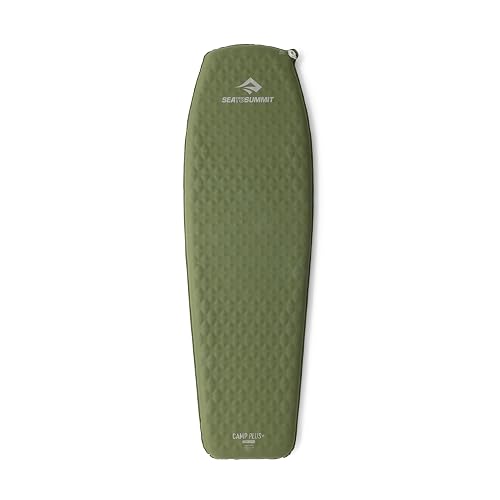
Sea to Summit Camp Plus SI Sleeping Mat, Tapered Regular
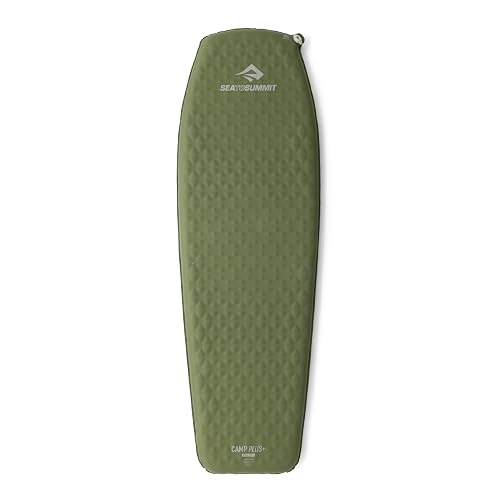
Sea to Summit Camp Plus SI Sleeping Mat, Tapered/Large

Sea to Summit Camp Plus SI Sleeping Mat, Rectangular/Large
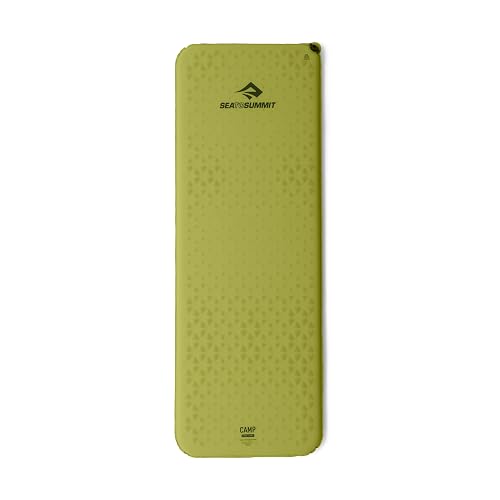
Sea to Summit Camp Plus SI Sleeping Mat, Rectangular/Regular
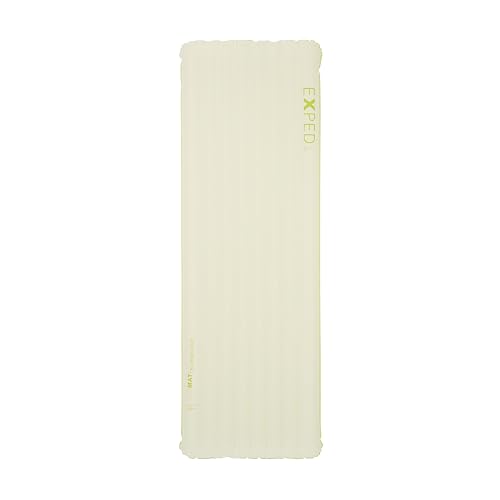
Exped Ultra Ultralight Inflatable Backpacking Sleeping Pad
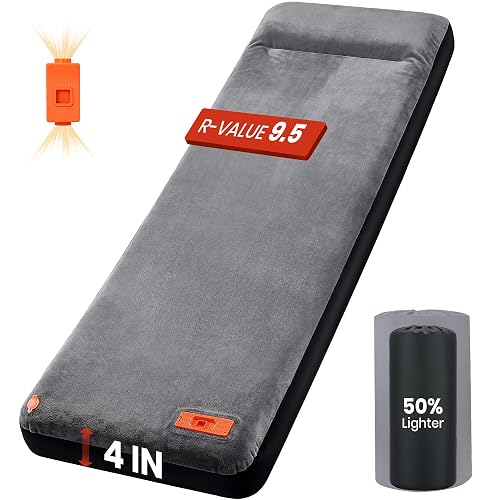
Self Inflating Sleeping Pad with Electric Pump 4″ Ultra-Thick
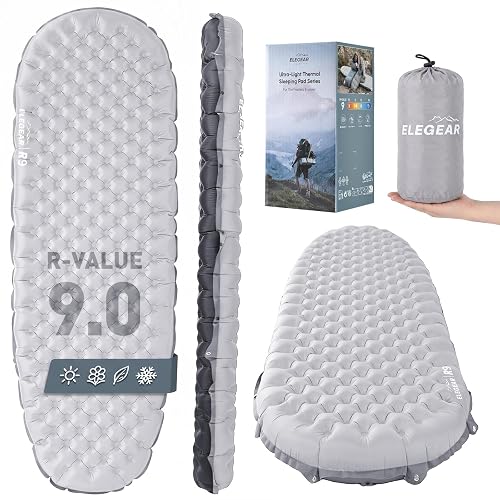
Elegear 4″ Thick Sleeping Pad 9 R-Value Insulated
The Details Behind The Selections
For backpackers who chase shoulder-season trips and want a pad that won’t leave them shivering at 25°F, the Tapered Regular brings serious insulation without the bulk of a full rectangular cut. The 2.6-inch foam stack pairs with a 4.3 R-value, a measure of how well a pad blocks heat loss to the cold ground, which makes it a strong match for late fall and early spring overnights. Its tapered shape shaves weight where your legs don’t need the extra width, helping balance warmth against pack volume.
Compared with the pricier rectangular Camp Plus models, this tapered version trades a few square inches of sleeping surface for a noticeably smaller stuffed size, which most three-season backpackers will appreciate. The reversible valve setup speeds up inflation and lets you bleed off air in controlled bursts to dial in firmness, useful for restless sleepers who top off pressure mid-night.
Everyday Perks
- High R-value handles cold ground during shoulder-season trips
- Self-inflating foam core means most of the air fills itself
- Reversible valve supports fast setup and controlled micro-adjustments
- Updated valve design helps the mat roll tighter for pack-friendly storage
Things To Consider
- Heavier than ultralight air mats, so long-distance hikers may notice the ounces
- Foam layers occasionally need more breath-inflation than the marketing suggests
Quick Facts
Best Suited To
Backpackers tackling four-season routes who want warmth without stepping up to a winter-specific expedition mat.
Skip It When
Counting every gram for a thru-hike points you toward the Exped Ultra Ultralight Inflatable Backpacking Sleeping Pad instead.
Taller hikers and restless side sleepers tend to feel cramped on standard-length pads, and the Tapered/Large version of the Camp Plus adds the length and width most grown adults actually need. You still get the same 2.6-inch foam profile and 4.3 R-value as the regular sibling, so the warmth story doesn’t slip when the dimensions stretch out. Think of it as the same proven recipe in a body-friendly package.
Where the regular Tapered rewards minimalists, this Large version prioritizes a comfortable sprawl over the smallest possible pack footprint. The tapered cut keeps the foot end narrow, which trims a bit of bulk without sacrificing the shoulder room restless sleepers rely on.
What Helps Most
- Extra length and width suit taller hikers and broad-shouldered sleepers
- Same 4.3 R-value as the regular, so cold-ground performance is consistent
- Self-inflating foam core reduces setup effort after a long day
- Reversible valve simplifies packing in the morning
Worth Noting
- Stuffed size grows along with the dimensions, eating into pack space
- Total weight climbs meaningfully versus the tapered regular, which thru-hikers may feel
Whose Shelf It Belongs On
Backpackers over six feet who move around at night and want genuine four-season insulation under their bag.
A Better Fit Elsewhere
Anyone building a sub-1-lb kit will be happier trading warmth for grams with the Exped Ultra Ultralight Inflatable Backpacking Sleeping Pad.
If you tend to sleep like you’re trying to take up the entire tent, the Rectangular/Large version trades the narrow footbox of the tapered models for a flat, full-width surface from shoulders to toes. The foam depth and 4.3 R-value carry over unchanged, so this is fundamentally the same insulation platform, just with a more spacious cut. Gear shelves and gear-heavy campers who don’t mind a bigger pack footprint will appreciate the extra real estate.
Compared with the Rectangular/Regular below, the Large adds meaningful room for taller users or anyone who rolls onto their stomach and stretches out. For two-person tent layouts, the flat edges also make pad-to-pad pairing easier when sharing sleeping space.
What Makes Sense
- Full rectangular surface eliminates foot-end taper pinch for restless sleepers
- 4.3 R-value delivers reliable cold-ground insulation across shoulder seasons
- Self-inflating foam reduces setup time after dark
- Rectangular edges simplify pairing pads side-by-side in a tent
Points To Note
- Bundled size and weight run heavier than any tapered sibling in this lineup
- Wider footprint can press against tent walls on narrow backpacking shelters
Feature Snapshot
Made For
Campers who value sprawling comfort over minimalist pack size and camp in conditions where warmth is non-negotiable.
Look Elsewhere When
Mountaineers in deep-winter conditions should consider the Elegear 4″ Thick Sleeping Pad 9 R-Value Insulated for stronger cold-weather insulation.
Newer backpackers and scout troops usually need a forgiving mat that doesn’t punish a sloppy campsite, and the Rectangular/Regular version of the Camp Plus fills that role well. It runs a slimmer 1.5-inch foam profile with a 4.2 R-value, a slight step down from the thicker Camp Plus siblings, but it stays warm enough for three-season trips and most shoulder-season overnights. The Air Zone construction channels foam into support-heavy zones while keeping the overall bulk trim.
Where the larger Camp Plus models chase premium warmth, this Regular aims to be the mat you don’t think about: simple to inflate, easy to roll, and forgiving on rocky tent pads. For casual campers, that low-fuss character usually matters more than spec-sheet supremacy.
Useful Highlights
- 1.5-inch foam is comfortable for casual campers without overpacking
- Air Zone construction balances support where the body rests and lightness elsewhere
- Reversible valve streamlines inflation and one-way deflation
- 4.2 R-value covers three-season use across most US camping zones
Trade Offs
- Thinner foam stack feels firmer on rough ground than 2.6-inch siblings
- Less winter margin than the thicker Camp Plus mats or the Elegear cold-weather pad
At A Glance
Right Fit For
First-time backpackers, scouts, and weekend campers who want a friendly mat that doesn’t demand perfect technique.
Consider Something Else When
Trips into real winter call for the higher insulation of the Elegear 4″ Thick Sleeping Pad 9 R-Value Insulated instead.
When every gram on the trail matters, foam-core pads start to feel like dead weight, and that’s exactly the gap the Exped Ultra is built to fill. It comes in under one pound while still delivering 3 inches of air-mat cushion, a generous stack for a summer and shoulder-season sleeping surface. Air-insulated chambers run head-to-toe to keep the pad stable when you roll over, so it doesn’t feel like a balloon on flat ground.
The pitch is simple: trim your kit without sacrificing a real sleeping platform. It’s the obvious counterweight to the heavier Sea to Summit foam-core options above, trading some cold-weather insulation for a noticeably lighter pack.
Standout Benefits
- Sub-1-lb weight eases long-distance load carrying
- 3-inch air cushion feels more comfortable than slim foam mats
- Air-insulated chambers improve stability during restless sleep
- Packs down small enough for ultralight pack configurations
Factors To Consider
- Air construction is more puncture-sensitive than closed-cell foam mats
- Requires lung-power or a separate pump for setup at the end of a tiring day
Quick Technical Notes
Who It Suits Best
Thru-hikers, bikepackers, and gram-counting backpackers running summer and warm-shoulder routes who want air-mat comfort at minimum weight.
Reach For A Different Pick When
Late fall and winter trips need the heavier but warmer Sea to Summit Camp Plus SI Sleeping Mat in the Tapered Regular configuration.
Car campers and overlanders usually care more about comfort at camp than pack weight, and this LLUAII mat leans into that with a 4-inch foam stack and a built-in electric pump. The pump handles inflation and deflation through a single control, taking the manual breath-and-shove routine out of the picture. A 9.5 R-value gives it strong cold-weather credentials, and the integrated pillow removes one more piece of gear from your packing list.
Where the Sea to Summit pads and the Exped Ultra target backpackers, this one is built for the back of a truck, a cot, or a guest room. If your “trailhead” involves a parking lot rather than a trail, the convenience argument starts to win quickly.
Advantages To Know
- 4-inch profile delivers genuine mattress-like cushion off-pavement
- Built-in electric pump simplifies setup and teardown significantly
- 9.5 R-value supports cold-weather and shoulder-season use
- Integrated pillow removes extra gear from the packing list
A Few Limitations
- Bundled size and weight make it impractical for backpacking trips
- Electric pump requires a power source, limiting remote use
Spec Overview
Perfect Match For
Car campers, truck-bed sleepers, and cold-weather campers who value easy setup over packable weight.
Swap It Out When
Backpackers should reach for the Sea to Summit Camp Plus SI Sleeping Mat in the Tapered Regular build instead.
For shoulder-season snow trips and winter basecamps, insulation matters more than pack size, and the Elegear 4-Inch Thick Sleeping Pad leads this list with a 9 R-value. That figure is roughly double what the Camp Plus models offer, which becomes the difference between a peaceful night and a hypothermic one when the ground hits freezing. The 4-inch depth also doubles as serious padding for restless sleepers on frozen, irregular terrain.
Unlike the ultralight Exped Ultra, this pad is happy to carry its weight because the trade-off is warmth. Think of it as the mat you grab when conditions get serious, not the one for a July weekend on a coastal trail.
The Value In It
- 9 R-value delivers four-season insulation for serious cold
- 4-inch depth protects hips and shoulders on frozen, rocky terrain
- Insulation system aims at consistent warmth across the sleep surface
- Wide profile supports varied sleep positions without edge slumping
Things To Weigh
- Bulk and weight run higher than three-season backpacking pads
- Overkill for warm-weather trips where lighter mats handle the job
Who Should Grab It
Winter campers, mountaineers, and shoulder-season backpackers heading into freezing ground conditions who prioritize warmth.
Another Choice May Suit
Summer backpackers chasing low pack weight will find the Exped Ultra Ultralight Inflatable Backpacking Sleeping Pad a more practical match.
Picking A Pad That Matches Your Trail
Understanding R-Value And Warmth
R-value measures how well a sleeping pad blocks heat flow to the cold ground. The higher the number, the more insulation between your body and frozen earth. Most three-season backpackers are well served by pads in the 3 to 4.5 R-value range, while winter campers typically want anything from 5 upward. Choosing a pad with too little insulation is one of the most common reasons for cold, sleepless nights even with a warm sleeping bag.
Weight, Packed Size, And Trip Style
Air mats dominate the ultralight end of the spectrum because they pack down small and use almost no foam. Foam and self-inflating mats are heavier but more puncture-resistant and simpler to use. For trips where you carry everything on your back, every gram compounds across thousands of footsteps, so the lighter pad often pays for itself in reduced fatigue. For car camping or short carries from the trailhead, comfort usually wins over weight.
Thickness And Sleep Comfort
A thicker pad lifts your hips and shoulders farther off the ground, which matters more for side sleepers and anyone on rocky or uneven tent sites. Air mats can hit 3 to 4 inches without much weight penalty, while self-inflating foam mats typically run between 1.5 and 2.6 inches. Thicker pads also feel more mattress-like, which can help anyone transitioning from indoor sleeping to backcountry nights.
Shape And Fit
Tapered pads trim weight and packed size by narrowing at the feet, which works well for back sleepers and warm-blooded minimalists. Rectangular pads maximize usable space and pair easily inside two-person tents. Size matters too: taller hikers often find regular-length pads leave their feet hanging off the end and sleep colder because of it.
Key Considerations Across These Picks
Where Shoppers Go Wrong
The most common slip is choosing a pad based on the warmth of the sleeping bag alone, ignoring how much heat the ground steals overnight. Another frequent mistake is buying an ultralight air mat for a cold-weather trip and learning too late that high R-values matter more than low ounces. It also helps to check the listed dimensions against your height before ordering, since many “regular” pads run short for anyone over six feet.
Why Top Tier Costs More
Higher R-values and thicker foam stacks require more material and more complex construction, which pushes prices up. Pads with built-in pumps or integrated pillows also add components that simpler self-inflating designs don’t need. The premium is worth paying when you actually need the warmth or convenience, but for summer trips a mid-range option usually covers the job without the extra cost.
Frequently Asked Questions
What R-value do I need for winter camping?
For freezing ground temperatures, look for a pad rated at least 5, and ideally 7 or higher for extended winter trips. The Elegear 4-Inch Thick Sleeping Pad with its 9 R-value is well suited to serious cold.
Are self-inflating pads easier than air mats?
Self-inflating pads handle most of the inflation on their own, which is friendlier for beginners and tired evenings. Air mats like the Exped Ultra stay lighter and pack smaller but demand lung power or a separate pump.
How thick should a backpacking sleep pad be?
For most side sleepers, 2.5 inches or more keeps hips and shoulders comfortable on uneven ground. Stomach and back sleepers can usually get by with thinner 1.5 to 2-inch pads if they prioritize pack weight.
Can I use a car camping pad for backpacking?
It works in a pinch for short carries, but most car camping pads are too heavy and bulky for multi-day backpacking. Pads like the LLUAII electric-pump model are great in a truck bed but impractical on the trail.
How do I prevent punctures on an air sleeping pad?
Clear your tent floor of sharp debris before laying the pad down, use a footprint or groundsheet beneath it, and keep the pad away from pine needles and broken branches. Carrying a small patch kit adds little weight and prevents a ruined night.
The Takeaway
The right backpacking sleep pad depends less on brand name and more on how cold the ground gets and how far you carry it. Match R-value to your season, match thickness and weight to your trip style, and pick a shape that fits your body. Any of the seven pads above will deliver a solid night’s rest when matched to the conditions you actually camp in.