
Days on the trail mean long sun exposure, and your pack already feels heavy. A solid backpacking sun umbrella cuts UV glare, drops the temperature beneath its canopy, and slips into a side pocket when the storm rolls in. These seven picks travel light, open fast, and hold up to wind that bends lesser umbrellas in half.
The Shortlist At A Glance
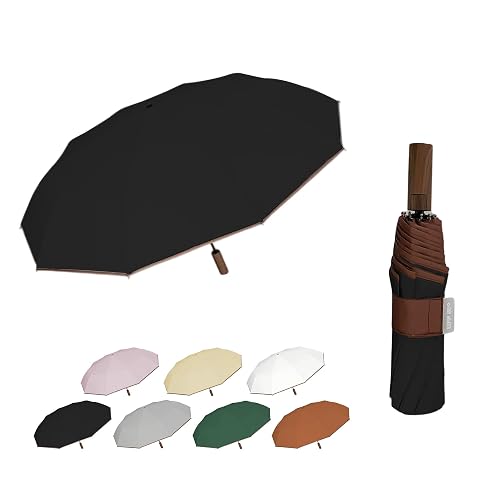
Compact Travel Folding Umbrella (Wood-Grain Handle)
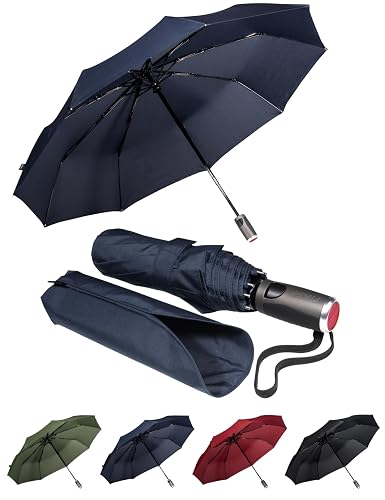
LifeTek Premium Travel Umbrella (Windproof)
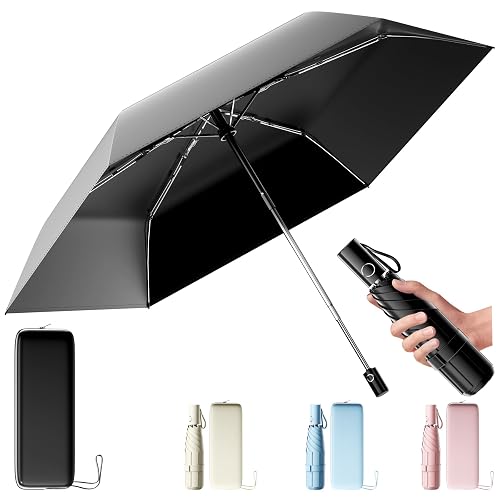
Moorrlii UPF 50+ Compact Travel Umbrella
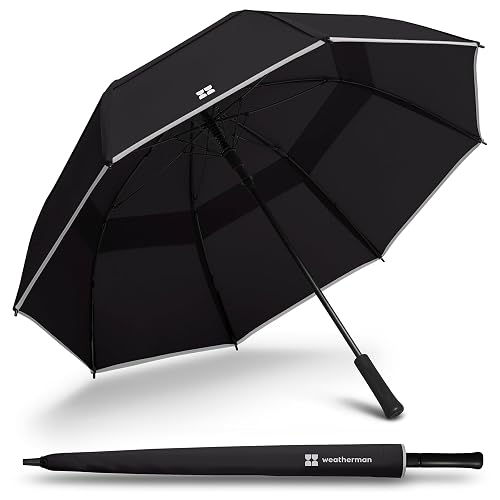
Weatherman Stick Umbrella 55 MPH (Black)
Weatherman Premium Small Compact Mini Umbrella
Weatherman Premium Collapsible Travel Umbrella
BAODINI Small UV Protection Travel Umbrella 42″
More On The Choices That Made The List
A folding umbrella that doubles as a sun shield, this pick slips into a backpack side pocket without crowding the rest of your kit. The wood-grain handle gives it a tactile, almost classic feel compared to the plastic grips on most folding umbrellas, and the contrast-color canopy adds a touch of personality on the trail. UPF 50 (Ultraviolet Protection Factor of 50, meaning the fabric blocks roughly 98% of UV radiation) blocks harsh rays on exposed ridgelines, while auto open/close means you can deploy one-handed while adjusting a hip belt.
Ten ribs (the internal spokes that hold the canopy stretched) reinforce the canopy against gusts better than the typical six or eight, and the wide wrist strap clips to a pack strap or daisy chain when you need both hands free. The included carrying pouch keeps the wet fabric off clean layers inside your pack.
Benefits That Matter
- UPF 50 fabric blocks the majority of UV rays on alpine sections
- Auto open/close works one-handed when navigating tricky terrain
- Wide strap attaches to backpack webbing for hands-free carry
- Wood-grain handle stays grippy when damp or sweaty
- Pouch prevents wet canopy from soaking clothes or sleeping bag
Trade Offs
- No specified wind rating, so extreme gusts may invert the canopy
- The wood handle adds a touch of weight versus all-plastic alternatives
- Owners commonly report the contrast paint chipping after hard use
Made For
Day hikers and weekend backpackers who want one umbrella that handles sun and surprise rain without weighing down their kit.
Skip It When
The Weatherman Stick Umbrella 55 MPH suits you better, since exposed ridgeline trekkers need a rigid fiberglass frame that won’t buckle in sustained wind.
LifeTek built this umbrella for travelers who measure free space in cubic inches rather than liters. It fits inside a laptop bag, a tote, or a pack’s brain compartment, then springs out with a single button when the sky turns. The reinforced frame targets windier travel days, while the UV-protective canopy handles sunny afternoons at outdoor markets or rest stops.
Compared to the first pick’s wood-handle styling, this one leans more utilitarian: lighter, slimmer, easier to forget you’re carrying it. The automatic open and close feels especially useful when you’re juggling a phone, a passport, and a coffee.
The Upside
- Slim folded profile fits purses and laptop bags
- One-button auto deployment when hands are full
- Reinforced frame handles steady coastal or ridge gusts
- Works as both rain and sun shelter
Minor Gripes
- The exact canopy diameter isn’t specified, so coverage may feel tight for taller users
- UV protection level isn’t quantified in the listing
- Owners commonly note the shaft can loosen after months of auto openings
Whose Shelf It Belongs On
Commuters and urban travelers who need a discreet umbrella that slides into a work bag yet still handles a sudden downpour.
A Better Fit Elsewhere
The BAODINI Small UV Protection Travel Umbrella 42″ works better for backpackers who want explicit UPF 50+ coverage and a wider arc above their head.
Moorrlii designed this umbrella around one question: how do you maximize UV blocking without sacrificing pack space? The answer is a black glue inner coating layered under a water-repellent (treated so rain beads and rolls off rather than soaking through) outer canopy. Sunlight hits the dark layer and absorbs instead of passing through, which makes the air beneath feel noticeably cooler on the brightest stretches.
The 39-inch canopy spreads wide enough for one person plus a small daypack, and the 9.8-inch folded length tucks into most pack lids. If you’ve been eyeing the LifeTek’s slim profile but want explicit UPF 50+ (the fabric blocks over 99% of UV radiation) confirmation, this is the cleaner pick.
A Favorable Mix
- UPF 50+ certification blocks the harshest midday UV
- Black inner coating drops felt temperature in direct sun
- Water-repellent outer sheds brief showers without leaking
- 9.8-inch folded size fits in pack brain or coat pocket
Small Caveats
- Single-person coverage means limited shade for a partner
- Auto open only, manual close may slow entry back into the pack
Key Specs
Best Suited To
High-altitude hikers and desert trekkers who need verified UV blocking and a compact folded footprint.
Reach For A Different Pick When
The Weatherman Stick Umbrella 55 MPH fits your needs instead, since ridgeline travelers face wind more than UV intensity.
The stick format trades packability for outright durability. Where folding umbrellas rely on small hinges that can fail under pressure, this Weatherman uses an industrial-strength fiberglass frame rated to resist 55 mph winds. On an exposed ridge or a coast path, that difference is the gap between a usable shelter and a snapped spoke.
The water-repellent fabric dries quickly between squalls, which matters when you need to stow the umbrella and keep moving. It’s longer than the folding picks here, so it pairs better with a trekking pole in one hand than a backpack strap on the shoulder.
Real-World Strengths
- 55 mph wind rating handles exposed ridgelines and gusty valleys
- Fiberglass ribs flex instead of snapping under pressure
- Quick-drying fabric stows without soaking other gear
Points To Note
- Stick format is too long for most pack pockets
- Heavier than folding umbrellas during long carries
Feature Snapshot
Who Should Grab It
Backpackers tackling exposed terrain, windy alpine passes, or coastal trails where folding umbrellas tend to give up.
Swap It Out When
The Weatherman Premium Collapsible Travel Umbrella fits better for thru-hikers who need similar wind resistance in a pack-friendly folding format.
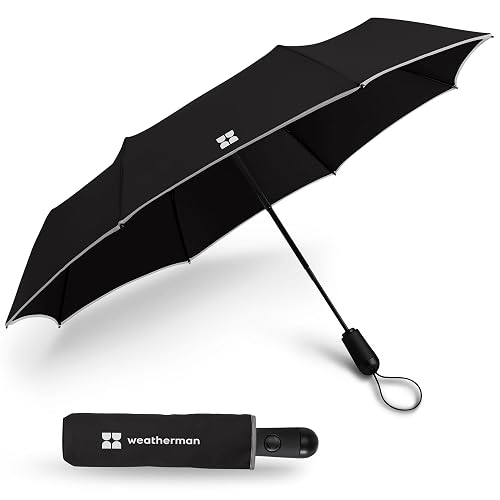
This is the smallest umbrella in the Weatherman lineup, aimed at travelers who pack light and move often. It shrinks down small enough to sit in a jacket pocket or a small pack pocket, then expands into a canopy wide enough for one hiker on a sunny day. Compared to the heavy-duty stick version, this one feels more like a daily companion than an emergency shelter.
It’s the kind of umbrella you forget in your bag until you need it, which is exactly what most backpackers want. You won’t find the same 55 mph rating here, so this pick belongs on gentler terrain.
Points In Its Favor
- Compact folded size slips into jacket pockets
- Lightweight enough to forget you’re carrying it
- Carries Weatherman’s travel-friendly build quality
Where It May Fall Short
- No specified wind rating beyond general travel use
- Smaller canopy means limited coverage in sideways rain
Perfect Match For
Weekend travelers and casual hikers who want shade and rain coverage without adding noticeable weight to their kit.
Look Elsewhere When
The Moorrlii UPF 50+ Compact Travel Umbrella suits you better, since sun-focused backpackers benefit from the verified UV rating.
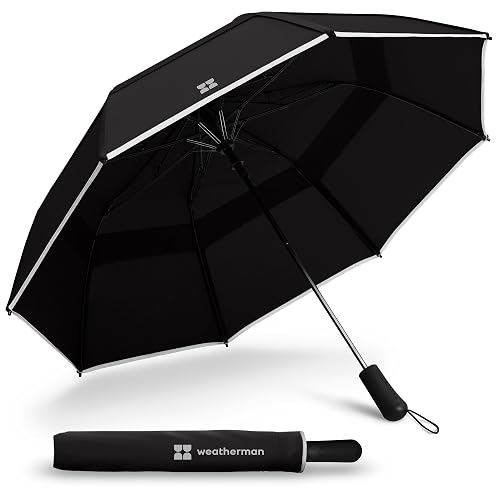
Think of this as the folding cousin of the Weatherman Stick Umbrella. It carries the same industrial fiberglass frame and 55 mph wind rating, but collapses into a pack-friendly bundle when the storm passes. Long-distance hikers who need storm-worthy construction without the bulk of a stick will find this the most balanced option in the lineup.
The auto-open feature works smoothly with one hand, useful when you’re gripping trekking poles or scrambling over talus. Quick-dry fabric means you can collapse and pack without worrying about damp gear soaking your insulation layer.
What Works In Its Favor
- 55 mph wind resistance in a folding format
- Fiberglass ribs flex rather than snap under load
- Auto open keeps one hand free for poles or balance
- Quick-dry fabric stows without soaking other gear
- Compact fold fits in most 30+ liter pack lids
Trade-Offs To Consider
- Heavier than entry-level folding umbrellas
- Premium build pushes the price above basic travel umbrellas
Quick Facts
Right Fit For
Long-distance backpackers and thru-hikers who log thousands of miles and need a folding umbrella that survives storm after storm.
Not Your Match When
The Weatherman Premium Small Compact Mini Umbrella fits better, since shorter trips call for lighter gear than this heavy-duty build provides.
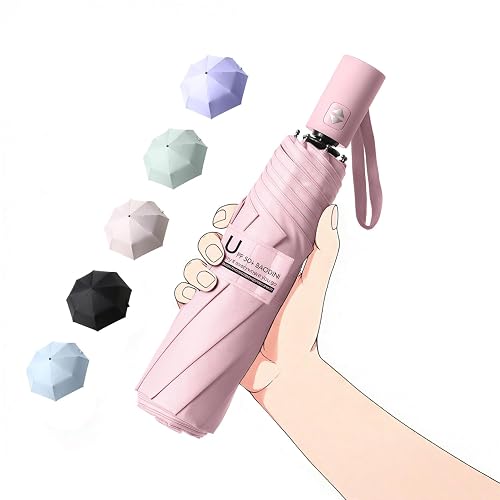
The 42-inch arc sets BAODINI apart from the smaller folding umbrellas earlier in this list. That extra span shades you and a hiking partner, or covers you plus a daypack at a rest stop. UPF 50+ protection makes it a sun-first design that handles rain as a bonus, not the other way around.
It folds down small enough for a purse or a pack’s side pocket, so the larger canopy doesn’t translate into a bulky bundle. Compared to the Moorrlii’s 39-inch reach, this one gives you noticeably more headroom when the sun sits directly overhead.
Useful Strengths
- 42-inch arc shades two people or one plus a pack
- UPF 50+ blocks intense midday UV
- Compact fold fits purses and pack pockets
- Doubles as rain shelter when needed
Where It Is Less Suited
- Wider canopy catches more wind in open terrain
- Larger span can feel heavy on a long day of one-handed carry
Feature Card
Who Will Love This
Backpackers who often hike with a partner or want extra shade over a child carrier on sunny trails.
Where Another Pick Suits Better
The Weatherman Stick Umbrella 55 MPH works better for solo hikers facing serious wind exposure, since this wider canopy can act like a sail in gusty conditions.
Choosing A Backpacking Sun Umbrella That Actually Pulls Its Weight
A backpacking sun umbrella earns its place by balancing three things: UV defense, wind handling, and pack footprint. Before you decide, think through the trail conditions you actually face.
UV Protection And Canopy Coating
UPF (Ultraviolet Protection Factor) measures how much UV radiation a fabric blocks. UPF 50 blocks roughly 98% of UV, while UPF 50+ blocks over 99%. Look for ratings, not vague “UV protection” claims. A black inner coating absorbs light that penetrates the outer fabric, dropping the felt temperature beneath the canopy by several degrees on direct sun.
Wind Resistance And Frame Construction
Fiberglass ribs flex under pressure rather than snapping like steel or plastic alternatives. Wind ratings matter most on exposed ridges and coastal trails, where a standard folding umbrella can invert in seconds. Higher ratings typically add weight, so match the rating to your terrain rather than defaulting to the toughest build.
Pack Footprint And Weight
A folded umbrella between 9 and 12 inches fits most pack lids and brain compartments. Anything longer usually rides strapped to the outside, where it can shift during scrambles or catch on branches. Weight ranges from roughly 8 ounces for ultralight travel models to over a pound for storm-rated sticks.
Coverage Width And Use Case
Canopy arcs between 36 and 42 inches cover a solo hiker comfortably; anything wider suits pairs or hikers who want shade over a pack. Think about whether you hike solo or with company, and whether the umbrella doubles as a rain shelter on multi-day trips.
Key Considerations Across These Picks
Where Shoppers Go Wrong
Most shoppers grab the cheapest folding umbrella without checking the UV rating or frame material. Sun umbrellas without verified UPF ratings block far less UV than labeled, and plastic ribs tend to crack in sustained wind. Also worth noting: a wide canopy can act like a sail on exposed terrain, so bigger isn’t always better for serious hikers. Measure your pack pocket first, then match the umbrella to the space you actually have.
When Paying More Pays Off
Premium umbrellas in this category use fiberglass frames instead of plastic, verified UPF ratings instead of vague claims, and reinforced ribs that flex rather than snap. The jump shows up most clearly on multi-day trips where a snapped spoke leaves you without shade or rain shelter. If your hikes run short and sheltered, a budget model handles the job. For thru-hikers and ridge runners, the upgrade pays for itself in reliability.
Frequently Asked Questions
What UPF rating should I look for in a backpacking sun umbrella?
A UPF 50+ rating is the standard you want, blocking over 99% of UV radiation. Anything below UPF 30 leaves significant UV reaching your skin, especially at altitude where UV intensity climbs roughly 10% per 1,000 meters of elevation gained.
Can a backpacking sun umbrella handle rain too?
Yes, most umbrellas in this category work as dual-purpose rain and sun shelters. Look for water-repellent canopy fabric that sheds rain quickly, and quick-drying materials so the umbrella stows without soaking other gear inside your pack.
How do I store a wet umbrella in my pack?
Most travel umbrellas include a carrying pouch that contains the wet canopy and protects dry layers. Allow the umbrella to drip-dry at camp when weather permits, and never zip a soaked umbrella into waterproof compartments without ventilation.
Are stick umbrellas better than folding umbrellas for backpacking?
Stick umbrellas handle wind better thanks to longer, sturdier frames, but they don’t fold into pack pockets. Folding umbrellas trade some wind resistance for packability, which matters more on trails where you need both hands free.
Do black inner coatings really make a difference in sun protection?
Yes, black inner coatings absorb UV light that penetrates the outer fabric, reducing the radiation reaching your skin. The darker the inner layer, the more heat it absorbs, and the cooler the air feels directly beneath the canopy.
Bottom Line
The right backpacking sun umbrella depends on where you walk: fiberglass-framed folding models for thru-hikers, compact UPF 50+ canopies for desert and alpine routes, and stick builds for exposed wind. Match the build to your terrain, and the shade pays you back every long mile.