
A dead battery in a trail camera is a missed season of wildlife data. Anyone running a scouting setup knows the frustration of climbing into a tree stand, swapping SD cards, and realizing the AA lithiums died two weeks ago. The right battery, charger, or solar panel changes everything about how a camera performs across months of unattended fieldwork. This roundup looks at cameras, lithium packs, and solar pairings built to keep triggers firing from the first frost to early spring.
How The Shortlist Stacks Up
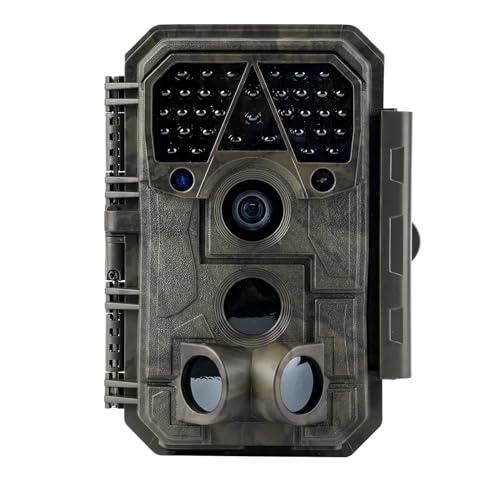
Meidase P70 Non-Cellular Trail Camera 64MP 1296p

Meidase P70 2-Pack Trail Camera Non-Cellular 64MP

Meidase SP1000 Solar Panel 10W for Trail Cameras

Meidase L800D 8000mAh Lithium Battery Type-C

MagicEagle Cellular Trail Camera 4G Solar Army Green

Meidase P300 Pro WiFi Trail Camera 7800mAh SD Card

Meidase P300 WiFi Trail Camera Dual-Antenna

Meidase P300 Pro WiFi Trail Camera 7800mAh Solar Ready
A Deeper Look At The Lineup
The Meidase P70 is a no-nonsense scouting tool for hunters who want sharp imagery without paying for cellular plans. It captures 64MP stills and 1296p video, so you can crop still frames and still read ear tags on distant bucks. A fast 0.1-second response helps when deer bolt past the sensor zone.
Run it on eight AAs and you can stretch deployment well past a hunting season in moderate climates. No-glow 940nm infrared keeps the camera invisible to wildlife, which matters at pressured lease properties where animals spook easily.
Where It Helps
- 0.1-second trigger speed catches animals that pause only briefly in the detection zone.
- 100ft no-glow night vision reaches across food plots without spooking nocturnal wildlife.
- 1296p H.264 video compresses cleanly so memory cards fill last weeks, not days.
- Wide f/1.6 aperture pulls in more light, sharpening low-light photos noticeably.
Things To Consider
- Standard AA power means swapping cells every few months in cold weather or high-traffic spots.
- No WiFi means you must physically retrieve the SD card for every check.
Key Specs
Right Fit For
Budget-conscious hunters running one or two remote cameras over a single season.
Where Another Pick Suits Better
The MagicEagle Cellular Trail Camera fits better if you want phone-based remote viewing and a built-in 13000mAh cell.
This two-camera bundle packages two P70 units, letting you build a multi-angle scouting grid without paying full price twice. Setup is identical to the single P70, so settings learned on one body transfer directly to the second.
For most hunters, pairing cameras at feeding and travel corridors reveals movement patterns a single unit cannot. The shared 64MP sensor and 100ft night reach keep image quality consistent across the array.
What Pays Off
- Two units let you triangulate travel direction rather than guessing from one angle.
- Identical menus mean you only learn one interface for both cameras.
- Bundle pricing often beats buying two singles separately on the listing.
- Same waterproof housing handles rain and snow through late-season hunts.
Worth Noting
- You still swap batteries and SD cards on both bodies twice as often.
- No cellular relay means checking both units requires field visits.
Best Suited To
Land managers running paired cameras at pinch points and bedding edges.
Skip It When
Choose the Meidase P300 WiFi Trail Camera if you want in-remote setting changes from a phone.
The SP1000 is a 10-watt solar panel built specifically for the Meidase P300 Pro, S950P, and S965 Pro trail cameras. It recharges the camera’s internal lithium cell rather than running the camera directly, which smooths out long gaps between visits.
An IP65 weather rating means it survives steady downpours, dust, and freeze-thaw cycles. Position it where direct midday light is unobstructed for the cleanest trickle-charge results.
Real Benefits
- 10W output keeps the internal cell topped up across months of standby time.
- IP65 rating handles steady rain and dusty backcountry setups.
- Drastically reduces how often you climb up to swap AAs.
Trade Offs
- Only compatible with listed Meidase models, not universal.
- Heavy tree canopy or north-facing angles reduce charging effectiveness.
- Does not power the camera directly during heavy trigger bursts.
Who It Suits Best
Owners of supported Meidase cameras who mount in spots too remote for frequent battery swaps.
Look Elsewhere When
Pick the MagicEagle Cellular Trail Camera if you want a panel plus 13000mAh battery in a single integrated unit.
The L800D is the official factory replacement lithium cell for Meidase P100P, P300 Pro, S965 Pro, and S950P trail cameras. At 8000mAh it offers roughly triple the runtime of a typical AA loadout, depending on trigger frequency and temperature.
A Type-C charging port modernizes the recharge step, so you can top off from any phone charger or power brick on the drive to your hunting property.
Why It Works Well
- 8000mAh capacity extends unattended run time dramatically over AAs.
- Type-C port uses cables you already own for phones and tablets.
- Factory-tested for exact fit with supported Meidase models.
- Rechargeable design cuts down on disposable cell waste over years of use.
Points To Note
- Limited to specific Meidase camera models listed.
- Cold-weather performance drops, a known trait of lithium chemistries.
Quick Facts
Whose Shelf It Belongs On
Existing Meidase owners whose original cell has lost capacity or runtime.
Another Choice May Suit
The Meidase SP1000 Solar Panel is a better companion for those who want to skip manual recharging entirely.
For hunters who refuse to climb trees every month, the MagicEagle cellular camera pairs a 13,000mAh internal battery with a built-in solar panel. The 4G connection sends photos and 2K clips to your phone without a physical SIM swap.
Audible video captures a short sound clip alongside the footage, which can confirm whether a coyote or a deer triggered the shot. IP66 sealing handles heavy weather, though sealed gaskets still need an annual check.
Good Reasons To Consider
- 13,000mAh battery is the largest cell in this lineup.
- Built-in solar panel offsets the cost of climbing for swaps.
- Audible video records ambient sound alongside 2K clips.
- No physical SIM required thanks to cloud-based signal routing.
Honest Caveats
- Cellular coverage is required at the mount site or the camera falls back to local capture only.
- Larger body is heavier than AA-powered units.
- Subscription tiers may apply for full app functionality.
Feature Snapshot
Made For
Hunters managing remote properties who want push notifications instead of field trips.
Reach For A Different Pick When
Pick the Meidase P70 2-Pack if your area has weak cellular signal or you prefer a non-connected workflow.
The P300 Pro pairs Bluetooth and built-in WiFi so you can adjust settings, preview shots, and pull clips from your phone without pulling the SD card. Two antennas push wireless range up to 165 feet in clear sightlines.
The kit ships with an industrial-grade 64GB SD card preformatted for the camera, a small detail that saves the formatting step on day one. The 7800mAh internal cell handles weeks of moderate trigger activity.
What Helps Most
- 165ft phone-based WiFi eliminates most ladder climbs for setting tweaks.
- 7800mAh internal battery stretches runtime well past standard AA kits.
- 0.1-second trigger captures motion at trail-running pace.
- 64GB industrial SD card included so setup is truly plug-and-play.
A Few Limitations
- Direct phone WiFi only, won’t connect to home routers or computers.
- Heavy vegetation, walls, and metal cut the effective wireless range noticeably.
Perfect Match For
Tech-forward users who want phone-driven scouting without subscription fees.
A Better Fit Elsewhere
The MagicEagle Cellular Trail Camera is a smarter upgrade when remote push notifications matter more than local app control.
The P300 keeps the same dual-antenna wireless setup as the Pro but ships without the internal lithium cell, so it runs on standard AAs. For users who already stockpile lithium AAs, that swap feels natural.
For most backyards and access-friendly sites, AA power is plenty. A 120-degree detection arc catches movement across a wide approach, useful at mineral licks or water sources where deer fan out unpredictably.
Positive Takeaways
- 165ft phone-based WiFi works cleanly in open sightlines.
- 120-degree detection arc covers broad trails without tilting the lens.
- AA power means swapping cells is the only maintenance step.
- No subscription fees since the WiFi is direct to phone only.
Room For Improvement
- Frequent AA swaps in cold weather or busy camera zones.
- No internal cell means no solar panel pairing option.
Who Should Grab It
Site owners with easy ladder or pole access who already keep AA lithiums on hand.
Swap It Out When
Step up to the Meidase P300 Pro WiFi Trail Camera if you want a built-in cell with the same wireless features.
This P300 Pro variant trades the bundled SD card for solar-panel readiness, pairing with the SP300, SP350, or SP1000 panels. It is the right pick for users who plan a long-term install from day one.
Mount both at a food plot corner or a winter mineral site and the system quietly tops off the internal cell through shoulder seasons. Dual antennas still deliver 165 feet of phone-based WiFi for in-field adjustments.
Practical Advantages
- Solar pairing cuts maintenance trips to almost zero in clear-sky regions.
- 7800mAh cell buffers cloudy stretches without dropping offline.
- 0.1s trigger captures walking deer cleanly at moderate speed.
- 100ft no-glow night vision reaches wider food plot edges.
Things That May Matter
- Solar panel is sold separately, adding to total cost.
- Solar charging drops sharply under heavy canopy or winter sun angles.
The Numbers That Matter
Built With In Mind
Property owners planning a permanent install with a paired solar panel from day one.
Where A Sibling Pick Shines
Pick the Meidase P300 WiFi Trail Camera if you prefer AA power and no solar setup at all.
What Matters Before Choosing Batteries For Trail Cameras
Power Source: Disposable vs. Rechargeable
Disposable lithium AAs remain the simplest field option, especially when you already stockpile them for other gear. Rechargeable lithium packs save money over years and pair well with solar panels, but they require a charging routine and lose capacity in extreme cold.
Internal Capacity and Real Runtime
Manufacturers publish capacity in mAh (milliampere-hours), a measure of how long a battery can deliver a given current. Higher numbers mean longer runtime between swaps, though actual life depends on trigger frequency, temperature, and how often the camera uses night vision.
Connectivity Style
WiFi-direct cameras link to your phone at close distances, while cellular models send photos anywhere you have service. The trade-off is straightforward: WiFi is free but requires close visits, while cellular adds convenience at the cost of subscription fees and signal dependence.
Solar Pairing Compatibility
A solar panel is only useful if it physically fits your camera’s charging port and outputs the correct voltage. Check compatibility lists carefully before buying a panel, since third-party panels with the wrong output can damage battery controllers or charge inconsistently.
Smart Strategies Before You Commit
Common Shopping Slip Ups
Buying a solar panel without checking the camera’s compatibility list is the most common error, followed closely by underestimating battery drain in cold weather. Cold temperatures reduce usable capacity in both lithium-ion packs and standard AAs. Many shoppers also forget that heavy canopy cuts solar output by more than half, leaving a panel essentially useless in dense woods.
When Paying More Pays Off
Higher-tier models earn their keep through larger internal cells and integrated solar support. They also tend to bundle reliable industrial SD cards, saving you the formatting step on a busy scouting weekend. The upgrade pays off most clearly for users mounting cameras in places where climbing to swap cells is genuinely difficult. For casual backyard use, an entry-level camera with replaceable AAs delivers comparable image quality at a noticeably lower outlay.
Frequently Asked Questions
How long do trail camera batteries actually last?
Most AA-powered units run two to six months in moderate weather, while internal lithium cells with solar pairing can stretch across a full season. Trigger frequency and night vision use drain cells fastest.
Can I use rechargeable NiMH AAs instead of lithium?
Yes, NiMH cells work in most cameras but deliver lower voltage per cell and lose charge faster in cold weather. Lithium AAs typically outperform NiMH in winter scouting conditions.
Do solar panels work in shaded woods?
Solar output drops sharply under heavy canopy or north-facing slopes. A panel needs several hours of direct midday sun to meaningfully offset daily drain.
How do I store lithium cells safely between seasons?
Store cells at roughly 40 to 60 percent charge in a cool, dry location. Avoid full discharge or full charge during long storage, both of which shorten lithium lifespan.
Is a cellular camera worth the subscription cost?
Cellular models earn their subscription when the camera sits where climbing is difficult or unsafe. For low, accessible mounts, a WiFi-direct camera saves recurring fees.