
Stalking whitetail at dawn, glassing an open ridge before first light, picking apart a treeline from a hundred yards out, these are the moments a good pair of binos earns its keep. A solid hunting binocular cuts weight on long carries, pulls in usable detail in low light, and stays steady in cold, wet hands. The wrong pair leaves you squinting through a narrow exit pupil while the buck slips into the cedars.
This list rounds up nine options covering daylight hunting, low-light glassing, and dedicated night-vision setups, mixing traditional roof-prism binos with digital goggles that record what you see. Each pick leans toward a specific hunting style, so you can match the glass to your terrain, your quarry, and how far you typically shoot from.
The Picks In Brief

Leupold BX-2 Timberline HD Binoculars, 10x42mm

WOSPORTS 3280ft Full-Color Night Vision Binoculars, 48MP

WOSPORTS 4K Night Vision Goggles, 80X Total Magnification

Vortex Diamondback HD 10×42 Binoculars

Bushnell 10x42mm Trophy XLT Binoculars
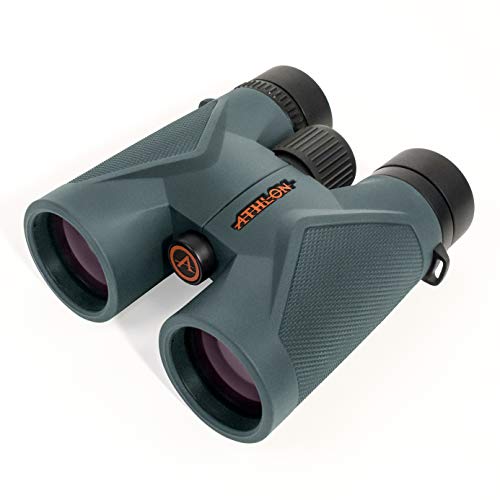
Athlon Optics 8×42 Midas UHD Gray Binoculars with ED Glass

Steiner Marine 7×50 Binoculars

Vortex Crossfire HD 10×42 Binoculars

WOSPORTS 4K Night Vision Goggles, 10X Optical & 8X Digital Zoom
The Picks, Examined More Closely
Leupold built the BX-2 Timberline HD 10×42 for hunters who push deep into the backcountry and want one optic that does the job season after season. The open-bridge roof prism body (a design where a single structural bar connects the two optical tubes, leaving the top open for a lighter, easier grip) trims weight without feeling fragile, and the 10x magnification gives you the reach to ID a buck at the timberline without dragging a spotting scope along.
Owners commonly report that the optical system pulls genuinely usable light during the last twenty minutes of shooting light, which is usually when mature bucks finally move. Compared to the Vortex Diamondback HD that sits further down this list, the Leupold feels a touch more refined in the hand and tends to track moving targets a bit smoother at full magnification.
Real-World Strengths
- Sealed and nitrogen-purged (internal air replaced with inert nitrogen gas to prevent internal fogging across temperature swings) for rain, snow, and sub-freezing morning stalks.
- Lightweight open-bridge chassis reduces forearm fatigue on long glass-and-move sessions.
- Fully multi-coated lenses (multiple anti-reflective coatings on every air-to-glass surface) help deliver bright, color-true images in low light.
- Backed by Leupold’s U.S.-based customer support, a quiet advantage if anything ever goes sideways mid-season.
Worth Noting
- Sits at a higher tier than entry-level 10x42s, so casual weekend hunters may not use the full performance envelope.
- 10x magnification demands a reasonably steady hold; tripod-mounting is the move for extended glassing sessions from a fixed stand.
Who It Suits Best
Western big game hunters covering long glassing distances on foot, and anyone who wants one dependable bino to span elk, deer, and sheep seasons.
Where Another Pick Suits Better
Budget-minded whitetail hunters glassing shorter distances at dawn and dusk will get more value from the Vortex Crossfire HD 10×42.
Where the Leupold and Vortex picks on this list are pure daylight optics, the WOSPORTS 3280ft shifts the conversation into full-color and infrared night observation. The 3280ft full-color range (color imaging works in low ambient light before switching to infrared mode) and 1300ft IR reach make it useful for hog hunters, coyote callers, and anyone running bait sites where the action happens well after dark.
It records 4K video and 48MP stills to a memory card, so you can pull footage off the device to review shot placement or share a successful stalk. For a traditional daylight glassing optic, look at the Vortex Diamondback HD; this pick lives in a completely different niche.
Everyday Advantages
- Full-color night vision in low ambient light plus infrared mode for true darkness, covering both dusk and after-hours use.
- 4K video and 48MP photo capture let you document a hunt without packing a separate camera.
- Rechargeable battery setup is friendlier on long sessions than disposable cells.
Points To Keep In Mind
- Heavier and bulkier than standard 10×42 roof prisms, so it is a dedicated night optic, not an all-day walker.
- You will need to manage memory card storage and battery charging between hunts, which adds a small pre-trip routine.
- IR illumination at maximum range reveals your position to anything with eyes, including other hunters in the area.
Best Suited To
Predator, hog, and varmint hunters who need long-range night observation and want to record what they see.
Not Your Match When
Daylight spot-and-stalk whitetailers will find the WOSPORTS 4K Night Vision Goggles a more useful dual-purpose pick.
The WOSPORTS 4K Night Vision Goggles split the difference between observation tool and recording device. The 3-inch built-in screen means you are not squinting through a single rubber eyecup; you can hand the unit to a hunting partner and let them watch alongside you, which makes it handy for patterning new properties or training a less experienced shooter on what to look for.
It comes with a 64GB TF card out of the box and supports expansion up to 256GB, so storage rarely becomes the bottleneck on multi-day trips. The 80X total magnification (a combined optical plus digital zoom figure) reaches out for long-distance ID work, though the digital portion of that zoom trades sharpness for distance, so most owners lean on the optical range for any detail that matters.
Standout Benefits
- 3-inch HD screen makes it easy to share the view, useful for showing a buddy what just stepped out of the cedars.
- 4K video and 48MP photo capture built in, with a 64GB card in the package.
- Storage expandable to 256GB, enough for multiple nights of footage before you need to offload.
- Day and night usable, so one device covers scouting and after-dark hunts.
Honest Caveats
- Digital zoom past the optical range produces softer images; for clean ID work, stay in the lower magnification range.
- Battery life depends heavily on how much IR you run, so a spare power source belongs in the pack.
Right Fit For
Hunters who want to record their scouting and nighttime hunts on a single device without carrying a separate camera.
Look Elsewhere When
You need pure optical reach without any digital zoom softening; the Leupold BX-2 Timberline HD 10×42 is the cleaner daylight option.
The Diamondback HD has become a fixture in the deer woods for good reason: Vortex managed to push HD-grade glass into a price bracket that does not require a second mortgage. The 10×42 configuration hits the sweet spot for most North American hunting, enough magnification to read a buck’s antler points at the far edge of a food plot, enough objective lens to gather light in the last fifteen minutes of shooting light.
For a hunter who wants one binocular for the truck and another for the stand, the Diamondback HD is a strong primary optic and an even better backup. The Athlon Midas UHD lower on this list uses ED glass (extra-low dispersion glass, which reduces color fringing around high-contrast edges) at slightly less magnification, which is worth a look if you want steadier views over a wide field.
Practical Advantages
- HD optical system with select glass elements aimed at cutting chromatic aberration (color fringing) for cleaner images.
- Fully multi-coated lenses help the optic pull usable light deep into legal shooting hours.
- Argon-purged housing (internal air replaced with argon gas, which resists moisture intrusion longer than nitrogen in some environments) for fog and water resistance in wet climates.
- Covered by Vortex’s warranty and support, well-regarded in the hunting community.
Softer Spots
- Color fidelity and edge sharpness are not quite at the level of the Leupold BX-2 Timberline HD, especially at the edges of the field of view.
- 10x magnification makes the optic harder to hold perfectly steady for users with shaky hands or older eyes.
Made For
Whitetail and mule deer hunters who want a dependable all-season bino at a price that does not punish a rough field season.
Skip It When
You need rock-steady views on a moving boat or in heavy seas; the Steiner Marine 7×50 is purpose-built for that job.
Bushnell’s Trophy XLT has been on the market long enough that you can find them in nearly every pro shop and gas station sporting goods rack in deer country. The 10×42 format will feel familiar to anyone who has used a hunting binocular in the last twenty years, and the 6.2° angle of view is genuinely wider than what most 10×42 competitors offer, which makes a real difference when you are scanning an open alfalfa field for bedded deer.
That wider field means less panning to find a target, and the rubber-armored body holds up to brush, rain, and the occasional drop onto a truck seat. The waterproof and fogproof construction (nitrogen-purged and O-ring sealed) is the kind of thing you stop worrying about once you have used a bino through a wet November. For less magnification and steadier views, the Athlon Midas UHD 8×42 sits a few picks down.
Positive Points
- Wide 6.2° field of view covers more ground per sweep, useful for open-country hunting and large food plots.
- Waterproof and fogproof housing shrugs off rain, snow, and cold morning stalks.
- Rubber armor protects the chassis from scuffs and absorbs minor drops.
- Proven platform that has been a hunter favorite for years.
A Few Limitations
- Optical performance sits a tier below the Vortex Diamondback HD in low light, where edge sharpness and color accuracy start to matter more.
- At 10×42 the optic is on the heavier side for all-day carry compared to compact 8×42 alternatives.
Perfect Match For
Open-country hunters who want a wide field to scan large clearcuts, ag fields, and western basins without panning constantly.
Another Choice May Suit
Low-light whitetailers in thick cover get more usable light and better edge clarity from the Vortex Diamondback HD 10×42.
The Midas UHD 8×42 is the gentlest entry point on this list. The lower 8x magnification makes the view easier to hold steady, which matters for younger hunters, new optics users, and anyone who has been frustrated by the constant micro-tremor of a 10x binocular at full magnification. ED glass keeps color fringing in check along high-contrast edges like a dark buck against an oak ridge at sunrise.
The 8.1° angular field of view (the width of the scene measured in degrees; higher means more in the frame) gives a generous window for finding moving deer, and at roughly 25 ounces, the binocular is light enough to hang from a neck strap for an entire morning sit without neck strain. For more reach on long glassing shots, the Vortex Diamondback HD or the Bushnell Trophy XLT 10×42 are the natural step up.
Good Reasons To Consider
- ED glass reduces color fringing around branches and antler tines, especially in harsh morning light.
- Bak-4 prisms (barium crown glass prisms that reflect more light than standard glass for brighter images) and phase correction (a coating that aligns light waves for sharper contrast) help produce a brighter, more contrasty image.
- 17.2mm eye relief is generous enough for eyeglass wearers to see the full field of view.
- Close focus around 6.5 feet lets you study nearby birds, signs, and detail at the base of your stand.
Things To Weigh
- 8x magnification is shorter than most dedicated hunting binos, so identifying antlers at 400+ yards takes more effort.
- Premium ED glass puts the price above bare-bones 8×42 entry models.
Who Will Love This
New hunters, kids learning the glass, and anyone who values a steady, wide view over long-range magnification.
A Better Fit Elsewhere
Western hunters covering long sight lines will appreciate the extra reach of the Leupold BX-2 Timberline HD 10×42.
The Steiner Marine 7×50 is the old-school workhorse of this list, a binocular that has been anchoring boat decks and coastal blinds for decades. The 7×50 formula produces an exit pupil (the beam of light exiting the eyepiece, measured in millimeters; larger means brighter image in low light) of about 7mm, which is roughly the maximum your pupils can dilate to in darkness, so the optic hands every available photon to your eye when conditions go dim.
The Sports Auto Focus system means you set the focus once for your eyes and the binocular stays sharp from roughly 20 yards to infinity without constant refocusing. For land-based deer hunting where weight and pack size matter more, the Athlon Midas UHD 8×42 is the lighter, more compact alternative.
What Makes Sense
- 7mm exit pupil delivers a notably bright image in fading light, a real edge at dawn and dusk.
- Sports Auto Focus keeps the image sharp from 20 yards to infinity after a single adjustment, no constant refocusing.
- Marine-grade construction stands up to spray, salt, and rough handling on boats and kayaks.
- 356ft field of view at 1000 yards is wide for a 7x, helping you track movement on open water.
Some Limits To Know
- Larger 50mm objective lenses and 7×50 Porro prism design (a traditional prism arrangement that uses a folded light path for a wider, deeper image) make this binocular bulkier and heavier than compact roof-prism hunting binos.
- 7x magnification is short for ID work on distant bucks, though that is rarely a complaint in marine use.
Built With In Mind
Boat-based hunters, waterfowl guides, and anyone who values a bright, low-eye-strain image over long glassing sessions on open water.
Reach For A Different Pick When
Your hunting is land-based whitetail or western big game; the Vortex Diamondback HD 10×42 is a better walking optic.
The Crossfire HD sits below the Diamondback HD in Vortex’s lineup, and for many hunters that is exactly the right place to land. The HD optical system and 10×42 configuration are very familiar to anyone who has used a hunting bino in the last decade, and the included GlassPak harness keeps the optic locked against your chest for a quiet, hands-free carry between stands.
That harness is the underrated detail. Climbing into a ladder stand with a bino hanging from a neck strap is a recipe for cracked eyepieces and bumped teeth; the chest harness keeps the optic out of the way and ready to bring up fast. For a step up in optical refinement at a moderate price bump, the Vortex Diamondback HD is the natural sibling pick a few spots up this list.
Key Advantages
- HD optical system with select glass elements for cleaner, more color-accurate images than basic 10×42 designs.
- GlassPak harness included, a real convenience for tree-stand and spot-and-stalk hunters.
- Fully multi-coated lenses for bright, contrasty views in low light.
- Covered by Vortex’s warranty, a meaningful long-term ownership plus.
Trade Offs
- Optics are a step behind the Vortex Diamondback HD in low-light transmission and edge sharpness.
- The harness adds bulk that some minimalist hunters find fussy for short walks to a ground blind.
Whose Shelf It Belongs On
Hunters building a first serious kit on a real-world budget, especially whitetailers who spend a lot of time in tree stands.
Swap It Out When
You want the next level of low-light clarity for dawn and dusk hunts; the Vortex Diamondback HD is the upgrade path.
The WOSPORTS 4K Night Vision Goggles (B0GK8JNL1F) sit alongside the other WOSPORTS entries on this list as a digital optic for after-dark work, with a true 10X optical zoom as the foundation. Optical zoom is meaningfully different from digital-only zoom because it preserves image clarity at distance rather than simply enlarging pixels, so the higher zoom numbers translate to more usable detail in the field.
Combined with 8X digital zoom, the system claims clear identification of movement out to roughly 1315-2000ft, which is plenty of range for most property lines and food plots. If you do not need recording or a screen, and you want a traditional daylight optic instead, the Vortex Diamondback HD is the more appropriate pick.
Useful Touches
- 10X true optical zoom maintains image sharpness at distance, unlike digital-only zooms.
- 8X digital zoom extends range when you need to push past the optical ceiling.
- 4K video and 48MP photo capture for documenting night hunts and security sweeps.
Possible Compromises
- At the upper end of digital zoom, image softness increases; for sharp ID, staying closer to the optical range is the play.
- Rechargeable battery and memory card add a small charging-and-formatting routine before each trip.
Who Should Grab It
Night hunters and property owners who want a long-range digital optic with real optical zoom at the core, not just magnified pixels.
Where A Sibling Pick Shines
For a screen-and-recording-first experience, the WOSPORTS 4K Night Vision Goggles (B0HD7JMWTL) further up this list add a 3-inch display and 80X total zoom.
What Matters Most Before Choosing Binoculars For Hunting
Magnification Versus Field of View
Magnification and field of view trade off against each other. A 10x binocular reaches farther but shows a narrower slice of the world, which means more panning to find deer. An 8x binocular shows a wider scene and feels steadier in the hand, which helps on rushed, heart-pounding moments. Whitetail hunters in thick cover usually do well with 8x or 10x; western spot-and-stalk hunters glassing basins often lean toward 10x for the reach.
Objective Lens and Low-Light Performance
The second number on a binocular, the 42 in 10×42, is the objective lens diameter in millimeters. A larger objective gathers more light, which translates to a brighter image in fading light. For most North American hunting, 42mm is the practical sweet spot, light enough to carry all day and bright enough for dawn and dusk. The Steiner Marine 7×50 on this list pushes objective size further for water-based use where weight matters less than brightness.
Exit Pupil and Eye Relief
Exit pupil, calculated by dividing objective diameter by magnification, is the size of the light beam reaching your eye. Around 5-7mm covers most hunting conditions. Eye relief, the distance your eye can sit behind the eyepiece and still see the full image, matters most for eyeglass wearers; 15mm or more is comfortable, and the Athlon Midas UHD on this list hits 17.2mm.
Weight, Armor, and Weather Sealing
A binocular you leave in the truck is a binocular that does not help you. Weight under about 30 ounces is comfortable for a full day of carry on a neck strap. Rubber armor protects against drops and gives you a confident grip in cold, wet conditions. Nitrogen or argon purging plus O-ring sealing keeps internal fogging from ruining a glassing session in a sudden rain.
Smart Choices Before You Buy
Common Shopping Slip Ups
The most common mistake is buying too much magnification for your terrain. A 12x or 15x binocular sounds impressive on the spec sheet but is genuinely hard to hold steady without a tripod, and the narrow field of view makes finding game harder. A second slip is ignoring eye relief; eyeglass wearers who pick a bino with 10mm of relief end up seeing a black ring around the image and assume the optic is defective.
Where The Extra Money Goes
Stepping up from entry-level to mid-tier binos usually buys better lens coatings, ED glass for cleaner color, and tighter mechanical tolerances. Going further into premium territory typically improves low-light transmission, edge-to-edge sharpness, and chassis refinement, the kind of upgrades that show up in the last fifteen minutes of shooting light. For occasional weekend hunting, a mid-tier optic covers the real performance; for serious hunters who glass every dawn, the premium tier earns its keep.
Frequently Asked Questions
What magnification is best for hunting binoculars?
For most North American hunting, 8x or 10x covers the real-world use cases. 8x gives a steadier image and a wider field, while 10x reaches farther for ID work on open terrain. Western big game hunters glassing long distances often prefer 10x; eastern whitetail hunters in thick cover frequently find 8x more comfortable.
Are 10×42 binoculars good for hunting?
Yes, 10×42 is one of the most common and versatile hunting binocular formats. The 10x magnification gives enough reach to identify antler points and assess game at typical shooting distances, and the 42mm objective gathers enough light for dawn and dusk, the highest-activity hunting windows.
What is the difference between roof prism and Porro prism binoculars?
Roof prism designs use a straight-through light path, which lets manufacturers build narrower, more weather-sealed chassis. Porro prism designs use a folded light path that produces a wider, deeper image but in a bulkier body. Most modern hunting binos are roof prism designs; the Steiner Marine on this list is a notable Porro exception.
Do I need night vision for hunting?
Traditional daylight binoculars cover the bulk of hunting scenarios, but night vision becomes valuable for hog, predator, and varmint hunting where activity peaks after dark. If your hunting is purely daylight whitetail or western big game, a quality 8×42 or 10×42 is enough.
How much should I spend on hunting binoculars?
Mid-tier optics in the typical mid-range price band cover the real performance needs of most hunters. Spending less usually means accepting softer edges and weaker low-light performance. Spending more buys refinements that matter most to hunters who glass frequently at dawn and dusk and who notice the difference between good and excellent optical performance.