
Setting up a reliable trail camera used to mean a long hike for every SD card swap. Bluetooth game cameras changed that routine, letting you pull previews, adjust settings, and review shots straight from your phone while standing near the mount. Hunters tracking seasonal patterns, landowners watching for trespassers, and curious naturalists all benefit from a setup that actually talks to you without a Wi-Fi router. The seven picks below cover cellular streaming, solar-assisted endurance, and short-range Bluetooth workflows for tighter budgets and simpler needs.
A Fast Comparison Of The Options
Loatos 48MP Cellular Trail Camera with AI Animal Detection

Cadrali Solar Trail Camera with 4K Live Video

MagicEagle Cellular Trail Camera with Solar Panel

GardePro E6+ WiFi Bluetooth Trail Camera

GardePro E6P Max WiFi Trail Camera

GardePro E8 2.0 Pro WiFi Bluetooth Trail Camera
GardePro E8 2.0 WiFi Bluetooth Trail Camera
A Deeper Look At The Lineup
The Loatos 48MP Cellular Trail Camera leans hard into the streaming side of the category. It shoots 48MP stills and 2K live video through a cellular connection, so you can peek at a feeder, pond edge, or trail junction from your phone without driving out. AI animal detection is the headline feature here, filtering empty triggers from real wildlife to save data and storage on the SD card.
For hunters managing a remote lease or landowners watching a wooded perimeter, that always-on awareness changes how you plan. Compared with the simple short-range Bluetooth workflow of the GardePro E6+, this unit trades hands-on simplicity for full remote reach. You trade subscription fees and a steeper learning curve for a camera that essentially functions as a security outpost once mounted.
The Case For It
- Live 2K streaming means you can verify activity from your phone in real time, useful for catching specific bucks during legal shooting hours.
- AI animal recognition reduces wasted memory by filtering wind-blown branches and shadows from genuine wildlife hits.
- 48MP stills preserve enough resolution to age-score antlers or identify individual animals across seasons.
- Cellular transmission removes the need for trail hikes just to swap cards, which matters on large or hard-to-reach properties.
Worth Noting
- Cellular plans add a recurring cost on top of the unit price, and signal strength varies by carrier coverage in remote timber.
- Power draw from constant live streaming drains batteries faster than a standard SD-card-only setup.
Key Attributes
Whose Shelf It Belongs On
Tech-forward hunters running multiple remote leases and landowners who want eyes on a property without hiking out each week.
Where Another Pick Suits Better
Casual users who only need backyard snapshots will find the simpler GardePro E6P Max easier to live with day to day.
The Cadrali Solar Trail Camera targets the off-grid crowd. A built-in solar panel keeps the 4G LTE camera topped up, while 4K live video streams through your phone wherever carrier signal reaches. The motion-activated trigger and night vision extend coverage around the clock, so a food plot or gate stays monitored without weekly battery swaps.
Compared with the Loatos unit, the Cadrali trades higher photo resolution for solar-assisted endurance and a beefier video stream. For someone watching a remote hunting cabin or an agricultural outbuilding, that combination pays off in fewer service trips and steadier uptime. The 64MP imaging sensor, paired with 4K live broadcast, also captures cleaner identification clips than older 1080p cellular cams.
Useful Strengths
- Integrated solar panel extends deployment windows, reducing how often you trek out for fresh batteries.
- 4K live video gives a noticeably sharper picture than 2K when reviewing movement or vehicle details.
- 4G LTE means no Wi-Fi router required, helpful at remote trailheads and rural perimeters.
Small Caveats
- Solar charging depends on direct sunlight; heavily shaded ridges may need a panel relocation or supplemental battery.
- Live streaming and 4K data use up cellular plans faster than occasional photo-only transmission.
- Mounting height and angle matter more with live video setups, since a poorly aimed lens wastes your streaming budget.
Feature Snapshot
Built With In Mind
Property owners with remote acreage who want always-on surveillance without running power lines or visiting weekly.
Consider Something Else When
Shaded tree-stand placements where the solar panel cannot recharge reliably make the MagicEagle a stronger pick.
The MagicEagle Cellular Trail Camera is the endurance play of the bunch. A 13,000 mAh internal battery paired with an attached solar panel stretches deployment windows deep into the season, and the no-SIM SignalSync setup removes one of the biggest headaches in cellular trail cams. Audible video, no-glow IR night vision, and an IP66 weather rating round out a field-ready package in army green.
Where the Loatos and Cadrali push for higher video resolution, MagicEagle focuses on staying power and stable connectivity. For a hunter who mounts a camera in September and does not want to think about it again until December, that trade-off makes sense. The IP66 rating handles rain and dust, though owners in extreme cold should expect some drop in battery capacity.
A Few Highlights
- 13,000 mAh battery plus solar charging supports multi-month deployments without on-site visits.
- No-SIM cellular setup simplifies activation and may improve signal acquisition in marginal coverage zones.
- No-glow IR keeps the camera discreet during nighttime wildlife or trespasser monitoring.
- IP66 weather rating handles rain, snow, and dust across typical hunting seasons.
Trade Offs
- 2K video resolution is lower than 4K alternatives, so distant subjects appear softer in playback.
- Bulkier battery and solar panel make the housing larger than standard cellular trail cams.
- Extreme sub-zero temperatures can reduce effective battery capacity, shortening winter deployment runs.
Made For
Long-haul hunters and landowners who want a set-and-forget cellular camera that survives entire seasons with minimal attention.
Swap It Out When
Short-range backyard use where cellular service is unnecessary makes the GardePro E8 2.0 a more practical, lighter pick.
The GardePro E6+ shifts the workflow closer to home. Instead of streaming over cellular, it pairs to your phone through low-power WiFi and Bluetooth within roughly 165 feet under open conditions. Dual antennas boost signal stability in the woods, so you can pull previews, adjust sensitivity, and review shots without climbing down from a tree stand or pulling an SD card.
Where the Loatos and Cadrali push constant remote access, the E6+ assumes you are within walking distance. That tradeoff eliminates monthly fees and cellular signal worries. Hunters running a single hunting property or watching a defined food plot get most of what they need without paying for a subscription tier.
What Pays Off
- Up to 165 ft WiFi range under open conditions lets you check shots without disturbing wildlife.
- Dual antennas improve signal reliability through branches and light brush compared to single-antenna designs.
- No monthly fee or cellular plan keeps long-term ownership cost predictable.
- Bluetooth pairing simplifies first-time setup through the GardePro Mobile app.
Room For Improvement
- WiFi range drops noticeably behind walls, metal sheds, or dense foliage, limiting real-world reach.
- No remote live streaming means you cannot monitor activity while away from the property.
- Battery life scales with how often you check in via Bluetooth, since active connections drain faster than passive standby.
Best Suited To
Hunters and property watchers who scout on-site regularly and want faster SD card reviews without subscriptions.
Not Your Match When
Long-distance remote monitoring needs are better served by the Cadrali solar cellular camera.
The GardePro E6P Max solves one of the most common frustrations in trail cameras: dead batteries in the middle of a season. The built-in 8000mAh rechargeable pack swaps out the usual AA cells, and the same low-power WiFi plus Bluetooth pairing with the GardePro Mobile app keeps the workflow familiar. No monthly fee, no router, just a phone-side connection within roughly 45 feet.
Compared with the E6+ above, the E6P Max trades dual-antenna range for a self-contained power system. You may find the shorter connection range limiting when a camera is mounted high in a tree, but you also stop buying disposable batteries. Anyone running several cameras across a property will appreciate the predictable recharge cycle.
Benefits That Matter
- 8000mAh rechargeable battery cuts recurring AA costs across multi-camera deployments.
- Bluetooth and WiFi pairing through the GardePro Mobile app keeps setup simple for first-time users.
- Rechargeable design reduces waste compared to alkaline-heavy trail cam routines.
Practical Considerations
- Shorter connection range means you often need a ladder to pull previews if the camera sits high.
- Rechargeable battery cannot be swapped in the field like AA cells during extended trips away from power.
Who Should Grab It
Frequent users who run cameras year-round and want a rechargeable system without the subscription overhead of cellular.
Look Elsewhere When
You need a wider in-field connection range, in which case the GardePro E8 2.0 fits the bill.
The GardePro E8 2.0 Pro targets detail-driven users. It captures 4K video through a low-power WiFi and Bluetooth connection to the GardePro Mobile app, and ships with a 64GB SD card so you can mount and start recording right out of the box. No monthly fee and no router requirement keep the ownership experience simple.
Compared with the E6P Max, this model trades rechargeable convenience for sharper video and bundled storage. For a hunter or naturalist who studies animal behavior closely, the 4K footage reveals movement patterns that 1080p clips miss. The bundled SD card removes one extra purchase from your checklist on day one.
Practical Pluses
- 4K video resolution captures movement and behavioral detail that lower-resolution clips flatten out.
- Included 64GB SD card supports out-of-box deployment without an extra accessory purchase.
- Bluetooth and WiFi pairing through the GardePro Mobile app removes any need for a remote control.
- No subscription fee keeps total ownership cost easy to plan around.
Soft Spots
- Connection range remains limited to short-range phone pairing, so live remote viewing is not possible.
- 4K files fill storage faster than 1080p, requiring more frequent SD card swaps on busy trails.
Feature Card
Right Fit For
Detail-oriented wildlife watchers who want sharp 4K clips and bundled storage for immediate setup.
Another Choice May Suit
Users wanting live remote streaming should consider the Loatos 48MP cellular model instead.
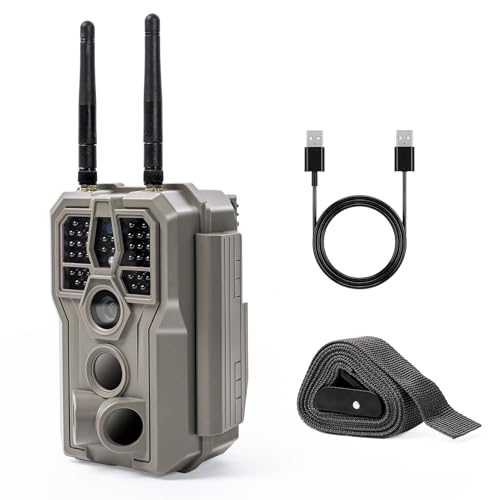
The GardePro E8 2.0 closes the lineup as a balanced backyard and property option. It shoots 4K video, pairs through low-power WiFi and Bluetooth with the GardePro Mobile app, and uses dual antennas to keep the connection stable in real-world conditions. No monthly fee and no router dependency keep the user experience approachable for first-time buyers.
Versus the E8 2.0 Pro, this version drops the bundled 64GB card and keeps the dual-antenna reliability at the core. For someone setting up a single camera near a back porch, garden, or rural driveway, that pairing works well. It also serves as a solid backup body for hunters already running GardePro units on other cameras.
Useful Highlights
- 4K video resolution offers clear footage for reviewing backyard visitors and trail activity.
- Dual antennas hold a steadier Bluetooth and WiFi link through light brush and typical yard conditions.
- GardePro Mobile app provides direct phone-side control with no monthly subscription.
Points To Note
- No bundled SD card means you supply your own storage before first use.
- Connection range is short by design, so this is not a remote-streaming camera.
Feature Overview
Perfect Match For
Homeowners and casual wildlife watchers who want 4K clarity near the house without paying for subscriptions.
Reach For A Different Pick When
Off-grid property monitoring calls for the solar-assisted endurance of the Cadrali cellular camera.
Picking The Right Bluetooth Game Camera Setup
Bluetooth game cameras split into two practical workflows: short-range phone pairing (no fees, no router) and full cellular streaming (remote access, monthly plan). Match the camera to your routine before chasing spec sheets. A hunter who already hikes a stand each week has different needs than someone watching a vacant cabin miles from the nearest road.
Connection type drives daily experience. Short-range Bluetooth plus WiFi cameras pair directly to your phone within roughly 45 to 165 feet, depending on the model and antenna setup. Cellular cameras push images and live video through a 4G LTE connection, which adds convenience and a data plan in equal measure. Solar panels and rechargeable battery packs matter more for long deployments, while standard AA cells remain the simplest swap-and-go option for shorter scouting trips.
Detection range, trigger speed, and night-vision style all shape what you actually capture. PIR (passive infrared) sensors detect body heat and movement, and no-glow IR keeps the flash invisible to wildlife and trespassers alike. For most hunting and property uses, a sub-0.5 second trigger speed prevents the blank-frame problem where animals pass before the shutter fires.
Storage, weather rating, and mounting round out the practical side of ownership. Look for IP66 or higher weather sealing for year-round exposure, and confirm the housing accepts standard SD card sizes you can source locally. A solid strap or threaded mount saves you from re-aiming after windstorms.
What Smart Buyers Weigh Before Clicking Order
Pitfalls Shoppers Hit
Chasing the highest megapixel count often backfires when a camera triggers slowly or misses moving subjects in low light. Resolution helps with identification, but trigger speed and detection reliability capture the moment in the first place. Buyers also overlook monthly cellular fees that quietly inflate total ownership cost past the unit price over a year.
Another common miss is mounting location. Even the best camera produces wasted footage when aimed at a fence line or open field with no wildlife traffic. Scouting the location on foot, looking for tracks and rubs, almost always beats a guess-and-go installation.
Where The Extra Money Goes
Premium tiers typically add live streaming, AI filtering, solar charging, or larger rechargeable batteries. The upgrade makes sense when your camera sits far from home or you scout remotely. For short-range backyard or lease-edge use, mid-range models with strong WiFi and Bluetooth pairing often deliver the experience most people actually need.