
Setting up high in a tree changes the whole hunt, and the right climber makes the climb itself feel routine instead of risky. Mobile hunters, bowhunters chasing tight shot angles, and anyone logging long walks into remote ridges all benefit from a stand that hauls light, stays quiet, and locks in securely. The picks below cover full climbers with seats, compact frame options for smaller hunters, and stick ladders that pair with any hang-on platform. Every option here is built for real woodland conditions, from damp oak flats to windy cottonwood edges.
A Fast Comparison Of The Options

Hawk Ultra-Lite Climber Tree Stand with Memory Foam Seat
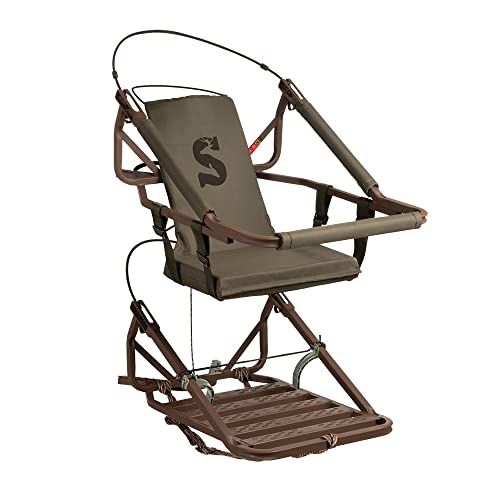
Summit Treestands Viper Steel Climbing Treestand

Summit Treestands Mini Viper SD Climbing Treestand

Summit Treestands Titan SD Climbing Treestand

Summit Treestands Goliath SD Climbing Treestand

Summit Treestands Viper SD Climbing Treestand

Muddy Stagger-Steps Tree Stand Climbing Stick 31″

Guide Gear 20′ Wide Maxi Tree Stand Ladder

Millennium Treestands M210 Stick Climber 20-Feet
A Closer Look At Each Pick
The Hawk Ultra-Lite is built for hunters who measure their day in miles and want a seat that disappears into the climb. The all-welded aluminum frame weighs roughly 26 pounds, which feels reasonable when you are crossing creek bottoms with a pack on. A 20 x 27-inch platform pairs with a memory foam seat and padded armrests, so the gear leans toward long sits rather than quick glassing sessions.
Stealth matters most when deer are already moving, and Hawk loads this stand with quiet touches: auto-latch cables, non-metallic washers, and a fold-flat design that keeps metal from ticking against metal. Compared to the steel-framed Viper covered next, this aluminum build sheds pounds without giving up the 300-pound capacity most hunters need. Setup feels controlled once you have used the latch system a few times, though first-timers may want a practice run on a low tree before heading deep into the woods.
Advantages To Know
- Memory foam seat keeps you settled through midday lulls and late-evening sits
- Auto-latch cable system cuts the noisy fumbling that gives away your entry
- Welded aluminum frame trims weight for the hike in without sacrificing the 300-pound rating
- Fold-flat footprint hauls easier on a framed pack than bulkier steel climbers
Things To Consider
- Aluminum frame, while light, can dent from rough handling more easily than the steel Viper coming up
- Owners commonly report that the memory foam needs a season to fully break in for max comfort
- Platform size favors stand-up or seated shooting styles rather than cross-draw bowhunters
Quick Facts
Made For
Mobile hunters covering long distances who want a comfortable, quiet platform and care more about shaving pack weight than stretching a tight budget.
Consider Something Else When
If you want a tighter, lighter frame for a smaller body, the Summit Treestands Mini Viper SD Climbing Treestand is a better match.
The Summit Viper Steel is a deliberate throwback, and that is part of its appeal. Where most modern climbers chase the lightest possible aluminum frame, this model keeps the original steel construction that made the Viper a fixture in hunting camps decades ago. The powder-coated finish protects against rust and helps the frame blend into bark and shadow.
Quick Draw cable retention and RapidClimb stirrups make the actual climbing motion smoother than older Vipers. This stand is heavier than the aluminum options, so it rewards hunters who are not pushing deep into backcountry ridges. You get the classic Summit feel with quieter hardware than the original Viper generation, and the 2-year limited coverage offers a basic safety net.
What Stands Out
- Steel frame absorbs the bangs and scrapes of real fieldwork better than aluminum
- Powder-coated finish fights rust through wet fall seasons and humid southern hunts
- RapidClimb stirrups save energy on the second and third climb of the day
- Classic Viper geometry feels familiar to long-time Summit owners
Points To Note
- Steel adds noticeable pack weight over the aluminum Viper SD reviewed later
- 2-year limited coverage is shorter than the 5-year terms on Summit’s aluminum climbers
- Storage in tight truck beds takes planning because of the bulkier frame
Who It Suits Best
Hunters working closer to the truck who want a steel frame that shrugs off season-after-season abuse.
Look Elsewhere When
If pack weight is the priority and you want a lighter aluminum option, the Summit Treestands Viper SD Climbing Treestand is the natural next step.
The Mini Viper SD is one of Summit’s lightest climbers at 18 pounds, and that single number changes who it fits. Smaller-framed hunters, youth hunters stepping up from their first treestand, and anyone who counts every ounce on a long walk will feel the difference immediately. The 5-channel aluminum platform frame keeps the build rigid without tipping the scale.
Dead Metal sound-deadening technology lives up to its name by interrupting the metal-to-metal contact that traditionally gives climbers away. The Mossy Oak cover and foam seat with backrest keep the package familiar even though the frame is downsized. For hunters moving through thick oaks where a full-size climber is just too much, this Mini earns its place.
Positive Takeaways
- 18-pound carry weight is easy on knees during mile-long walks to public land
- Sound-deadening tech keeps the cable and frame from pinging at the worst moment
- Foam seat with backrest still delivers all-day comfort despite the smaller frame
- 5-year limited coverage beats the steel Viper’s shorter warranty term
Worth Bearing In Mind
- Smaller seat frame feels cramped for hunters over six feet or wearing bulky cold-weather layers
- Lower weight capacity range than the Goliath SD covered later in the list
- Compact foot platform limits stand-up shot setups for spot-and-stalk archers
Right Fit For
Smaller hunters, youth hunters, and mobile hunters who count pack weight above all else and want quieter cable and frame contact.
Skip It When
You need extra seat and foot room for cold-weather layering or full-size gear, in which case the Summit Treestands Goliath SD Climbing Treestand fits the bill better.
The Titan SD pushes past the Goliath’s footprint with a wider top seat frame and a noticeably longer foot platform. If you have ever felt your boots hanging off the edge of a standard climber during a long sit, the Titan’s expanded deck solves that frustration. The Mossy Oak Country DNA seat adjusts in height, so bowhunters and rifle hunters can tune the platform to their preferred shooting position.
Rated to 350 pounds including gear, this climber welcomes the hunter who packs extra layers, a heavy pack, or both. The 4-point safety harness system, dead-metal sound deadening, and the same Summit cable retention you find on smaller models carry over from the Viper line. Compared to the Hawk Ultra-Lite covered first, this is the roomier, heavier option built for full-day comfort in a fixed setup.
The Good Stuff
- Larger top seat frame gives shoulders and hips room to shift during long sits
- 350-pound capacity with gear leaves headroom for bulky winter setups
- Adjustable seat height suits both bow and rifle shooting styles
- Sound-deadening features carry over from Summit’s flagship Viper SD
Trade-Offs To Consider
- Larger platform hauls heavier than the Mini Viper SD for backcountry pushes
- Bulkier folded profile can be tough to fit in compact ATV cargo racks
- Wide seat frame may feel like overkill for hunters under 170 pounds
Feature Card
Best Suited To
Larger-framed hunters and any hunter carrying heavy gear who wants a platform that does not feel cramped during a full-day sit.
Another Choice May Suit
If you want a similar heavy-duty capacity in a slightly more compact package, the Summit Treestands Goliath SD Climbing Treestand delivers the same comfort focus.
The Goliath SD sits a step below the Titan in Summit’s lineup, but the comfort focus is identical. It shares the engineering DNA of the Viper SD family while opening up a roomier seat frame and a higher 350-pound weight capacity. For bigger hunters who felt squeezed on a standard Viper, this is the move that finally puts the platform at human scale.
The Mossy Oak cover keeps the visual profile subtle in hardwood settings, and the foam seat takes the edge off midday lulls. Sound-deadening features carry over from the rest of the SD line, so the cable and frame stay quiet when deer are already wary. Versus the Titan reviewed just above, the Goliath trims a touch of footprint while keeping the higher weight rating intact.
The Case For It
- 350-pound capacity handles heavier hunters with full kit
- Roomy seat frame is more forgiving during long, cold-weather sits
- 5-year limited coverage matches the rest of Summit’s aluminum SD climbers
- Mossy Oak pattern blends into typical hardwood and oak flat settings
Honest Caveats
- Foot platform is shorter than the Titan’s, limiting stand-up shooting room
- Carries more weight than the Mini Viper SD, which matters on long hikes
- Storage in tight truck boxes takes planning given the wider frame
Who Should Grab It
Larger-framed hunters and gear-heavy hunters who want Summit comfort engineering without stepping all the way up to the Titan’s largest platform.
A Better Fit Elsewhere
Younger or smaller hunters chasing the lightest possible carry should consider the Summit Treestands Mini Viper SD Climbing Treestand instead.
The Viper SD is the climber Summit built its modern reputation on, and it remains the everyday workhorse for hunters across whitetail country. Strong, lightweight aluminum construction makes transporting and climbing feel routine rather than punishing. The foam-padded seat with a cushioned backrest and padded armrests keeps fatigue from creeping in during those long midmorning waits.
Camouflage pattern is selectable, which matters more than people expect when you are matching a specific property or region. The cable system and dead-metal sound-deadening tech keep the platform quiet enough to handle pressured deer that spook at every creak. If you want the safest, most balanced climber in the Summit lineup, this Viper SD is the natural starting point.
What It Does Well
- Aluminum frame balances strength and pack weight for typical whitetail setups
- Suspended foam seat, backrest, and padded armrests reduce mid-sit fatigue
- Sound-deadening features keep entry quiet on already-pressured deer
- Selectable camo pattern lets you match the local environment
Soft Spots
- Standard frame feels tight for hunters who want the extra width of the Goliath SD
- Seat height adjustability is more limited than the Titan SD’s range
- Padding compresses faster than memory foam seats under daily use
Specs Snapshot
Who Will Love This
All-season whitetail hunters who want a balanced, quiet climber and care about a cushioned seat for long sits.
Swap It Out When
You need higher weight capacity or wider foot room, in which case the Summit Treestands Titan SD Climbing Treestand is the better scale match.
The Muddy Stagger-Steps 31-inch stick takes a different approach from full climbers. Rather than a seat, you get a compact stick ladder section that pairs with a hang-on stand, ideal for hunters who already own a platform or who want the lightest possible setup on long walks. The staggered step pattern keeps boots from stacking on the same rung, which improves balance mid-climb.
Quiet operation is the headline feature: silencers at the contact points eliminate metal-on-metal noise, and the Fiber Guard coating reduces glare while protecting the metal. Sections install independently, so you can run one stick or stack several depending on your hang height. Compared to the wider Guide Gear ladder reviewed next, this stick is built around silence and modular flexibility.
Everyday Wins
- Silencers kill the metallic rattle that spookes wary bucks during setup
- Modular sections stack based on the hang height you need
- Fiber Guard coating cuts glare on bright, overcast mornings
- 31-inch stick length hauls easier in a backpack than full ladder sections
Factors To Consider
- Sticks require a separate hang-on stand, which adds to total cost
- Narrower step profile feels less stable than the Guide Gear’s wide two-foot steps
- Single stick covers limited vertical height on its own
Perfect Match For
Stick-ladder hunters and run-and-gun setups who already own a hang-on platform and want quieter, modular climbing sections.
Reach For A Different Pick When
If you want a ladder with wider steps you can stand on with both feet, the Guide Gear 20′ Wide Maxi Tree Stand Ladder is a better match.
The Guide Gear Wide Maxi Ladder is built around a simple idea: give hunters wide steps that accept both feet at once. At 13 inches wide with 12 inches of vertical spacing, the steps feel more like a small staircase than a typical climbing stick, which is a real confidence boost when you are working up to a hang-on platform in the dark.
Three-quarter-inch tube steel construction gives the ladder a sturdy, planted feel underfoot, and stabilizing straps wrap the trunk to keep the assembly tight against the bark. Rated to 300 pounds, the ladder supports most hunters without complaint. Compared to the Muddy stick reviewed earlier, the Guide Gear ladder prioritizes step comfort and load rating over modular portability.
Everyday Advantages
- 13-inch wide steps accept both boots for a more stable climb
- Steel tube build supports up to 300 pounds without flex
- Stabilizing straps secure the ladder tight to the tree
- 12-inch vertical spacing feels natural and less stretched-out
Minor Gripes
- Steel construction adds noticeable carry weight over aluminum stick options
- 20-foot total height takes up significant storage space in a garage or truck bed
- Lacks the silencer-equipped quiet contact found on the Muddy Stagger-Steps
Built With In Mind
Budget-conscious hunters who want wide, stable steps and a 300-pound rating for climbing up to hang-on stands.
Where Another Pick Suits Better
If quiet entry is the priority and you need modular sections, the Muddy Stagger-Steps Tree Stand Climbing Stick is the better fit.
The Millennium M210 Stick Climber brings 20 feet of vertical reach with a focus on safe, controlled entry. Standoffs hold the ladder away from the trunk to give your boots room to find each step, which matters when you are climbing in the dark with a headlamp and a pack. The dual top step adds a final landing platform before you swing onto your hang-on stand.
SteelTOUGH steel construction is paired with a durable powder-coat finish, so the climber shrugs off wet bark and the occasional scrape against limbs. The 7-foot cam buckle strap wraps extra-large trees for setups on mature oaks or open-grown cottonwoods. Compared to the Guide Gear ladder covered above, the M210 emphasizes standoff clearance and a quieter top-of-climb transition.
Points In Its Favor
- Standoffs create natural boot clearance for safer, more confident climbs
- Dual top step adds a final stable platform before stepping onto the stand
- Powder-coat finish holds up through wet and humid seasons
- 7-foot cam buckle wraps extra-large trees securely
Practical Considerations
- Steel construction hauls heavier than aluminum stick alternatives for long walks
- Step width is narrower than the Guide Gear’s two-foot-wide treads
- 20-foot assembled length requires solid storage space at home
Key Attributes
Whose Shelf It Belongs On
Stand hunters with hang-on platforms who climb into mature oaks and want standoff clearance and a stable top-of-climb transition.
Not Your Match When
If you want wider steps you can stand on with both feet, the Guide Gear 20′ Wide Maxi Tree Stand Ladder is a better ladder choice.
Matching Climber Tree Stands To Real Hunting Styles
Picking the right climber starts with the terrain you actually hunt. Mobile hunters pushing public-land ridges benefit from aluminum frames that trim pack weight, like the Hawk Ultra-Lite or the Summit Mini Viper SD. Backyard and food-plot setups, where the truck is a short walk away, can support heavier steel options like the Summit Viper Steel without complaint. For ladder-only hunters, stick systems and wide-step ladders cover very different ground: stick systems like the Muddy Stagger-Steps win on quiet modularity, while wide-step ladders like the Guide Gear Wide Maxi win on stable footing.
Comfort matters as much as weight once you are 18 feet up and waiting for a buck to commit. Foam seats with backrests and armrests keep muscles from locking up during long sits, and wider seat frames help when you are wearing bulky late-season layers. Weight capacity matters too, especially for hunters carrying extra gear, snow boots, or both. The 350-pound ratings on the Summit Titan SD and Goliath SD leave headroom that lighter-rated climbers cannot match.
Quiet operation separates a successful hunt from a busted one. Auto-latch cables, non-metallic washers, and dead-metal sound-deadening tech all attack the same problem: stopping the metallic clinks that warn deer you are arriving. Stick and ladder systems take a different approach, using silencers and coating systems to dampen contact noise. Hunters hunting pressured deer on small parcels get the most out of these quiet features, while hunters in expansive public land may rely less on noise discipline and more on long-distance mobility.
What Most Shoppers Overlook Before Buying
Common Shopping Slip Ups
Many first-time climber shoppers focus on seat comfort and forget to check the trunk size where they plan to hang. Climbers and stick ladders have specific diameter ranges they fit securely, and a trunk that is too small or too large creates a sketchy setup. Measure your most-used trees before settling on a model.
Another trap is underestimating carry weight. Climbers sound light on paper, but ten extra pounds feel very different across a mile of rough ground. Aluminum frames are worth the upgrade for backcountry hunters, even when steel options cost less up front.
Where The Extra Money Goes
Higher-tier climbers spend the budget on quieter hardware, better sound-deadening materials, and more refined seat frames. A premium climber typically earns the difference through longer coverage periods and modular adjustment features that cheaper frames skip. The upgrade pays off for hunters who log dozens of sits a season, while casual weekend hunters can stay comfortable in the value tier.
Frequently Asked Questions
What Tree Diameter Do Climbers Fit?
Most climbers fit trunks between 8 and 20 inches, but exact ranges vary by model. Stick ladders often include cam buckle straps for extra-large trunks, while full climbers rely on their frame geometry to grip the bark.
How Loud Are Climbers During Setup?
Modern climbers use sound-deadening washers, coated contact points, and auto-latch cables to keep setup quiet. Owners commonly report that first-season practice on a low tree drops the noise floor significantly before opening day.
Are Climbers Safe For Solo Hunters?
Climbers are safest with a full-body safety harness attached during every climb. A 4-point harness system is the standard across most options here, and you should never climb higher than you are willing to fall without one.
Can Climbers Be Used On Public Land?
Climbing tree stands are generally allowed on most public hunting land, but specific regulations vary by state and by parcel. Always check the local rules for the property you plan to hunt before hanging a climber.
How Long Do Climbers Last?
With reasonable care, aluminum climbers commonly last many hunting seasons, and steel options can last even longer. Storing them dry, retightening hardware each fall, and inspecting straps before the season extends the working life of any climber.