
Offroading throws curves at communication gear that regular drives never do, and a sensible radio kit bridges the gap between trailhead and wherever the convoy ends up. Trail chatter, NOAA warnings on a stormy mountain run, and a backup band when cellular drops out all matter more once you leave pavement. This list rounds up ten radios and head units that handle those jobs, mixing cab-mounted GMRS (General Mobile Radio Service, a licensed UHF frequency band popular for group trail talk) units, weather-tuned emergency radios, and durable cabin companions so you can match gear to your specific rig and route.
A Snapshot Of The Selections
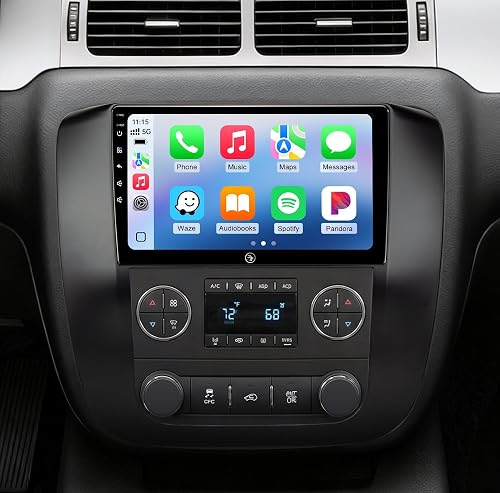
ApexNav CarPlay Radio for Chevy Silverado GMC Sierra 07-13
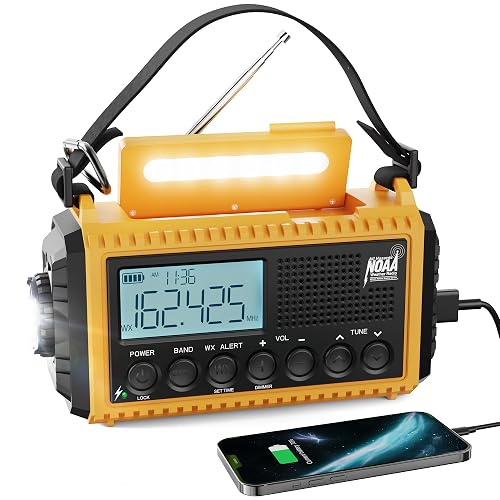
Raynic Emergency Weather Radio with Hand Crank
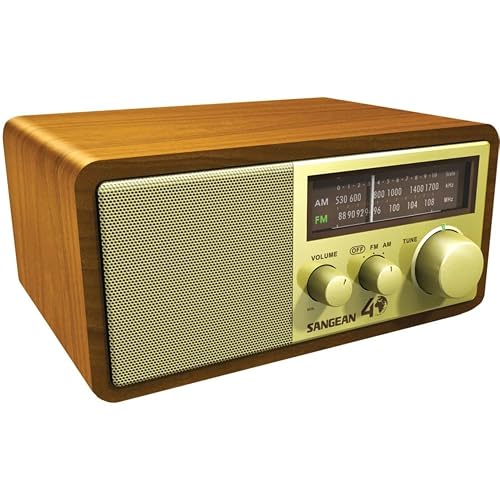
Sangean WR-11SE AM/FM Tabletop Radio (Walnut)

QYT KT-8900D Dual Band 25W GMRS Mobile Radio
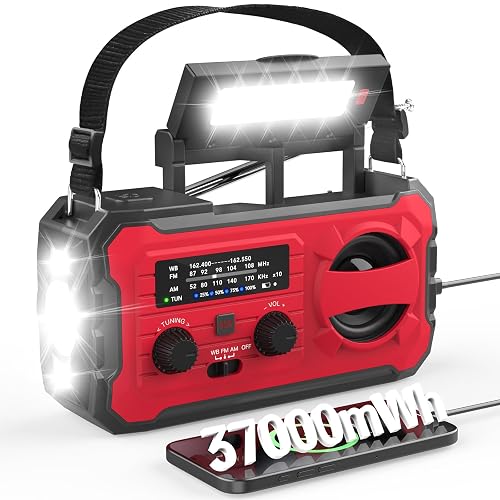
NITIGO 10000mAh Emergency Weather Radio
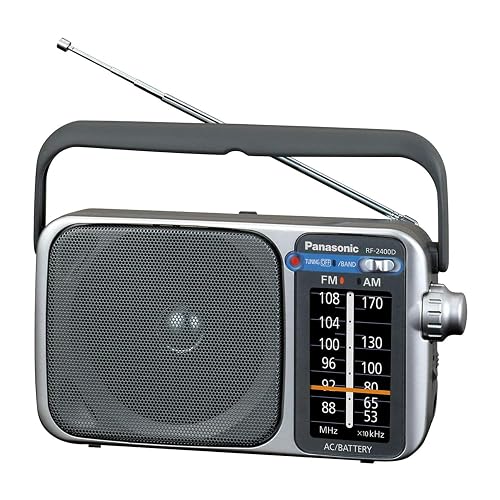
Panasonic RF-2400D Portable AM/FM Radio
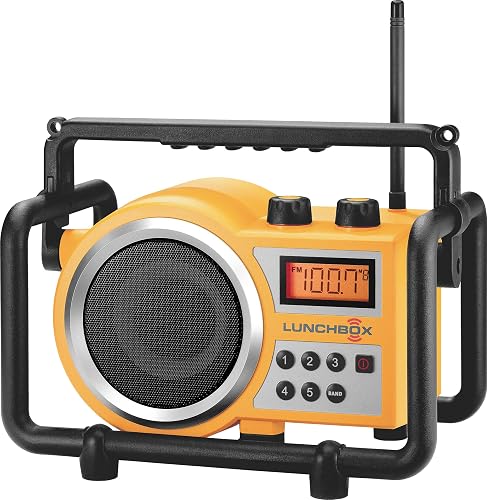
Sangean LB-100 Worksite AM/FM Utility Radio
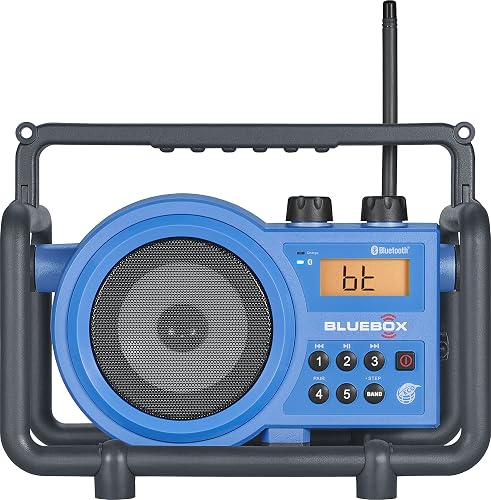
Sangean BB-100 BlueBox Rugged Bluetooth Radio
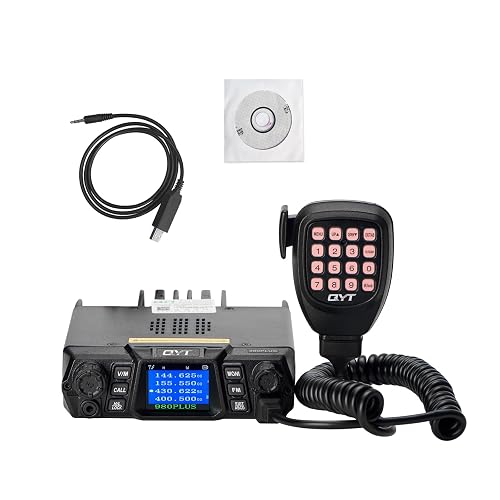
QYT KT-980PLUS 50W Dual Band GMRS Mobile Radio
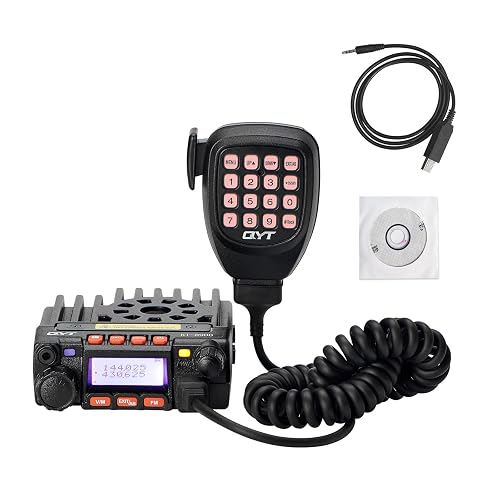
QYT KT-8900 25W GMRS Mobile Radio
The Strengths Of Each Pick
This head unit targets owners of 2007 to 2013 Chevy Silverado, GMC Sierra, Tahoe, and Yukon trucks who want modern smartphone integration without swapping the whole dash. Custom-molded to specific trims, the chassis fits LTZ Silverado (2010 to 2013) and Tahoe or Yukon (2007 to 2012) cabins, sliding into the factory radio slot.
For offroading use, wireless CarPlay (Apple’s in-dash interface for maps, music, and calls) and Android Auto let you pull up offline trail maps, navigation apps, and hands-free calling once you leave cell range, while the Android 13 foundation supports modern apps that older factory radios cannot. Compared to the QYT GMRS units later in this list, this is a different job entirely: cabin infotainment, not trail comms.
Strengths Worth Knowing
- Wireless smartphone projection removes cable clutter on rough trails
- Dual-band Wi-Fi helps maintain a stable link to your phone when the cab is bouncing
- Custom-molded fit preserves the factory look in older GM trucks
- Android 13 base opens up modern navigation and music apps
Worth Noting
- Strict trim fitment excludes WT, LS, and LT models, and trucks with an SRCE button
- Does not pass audio to factory rear-seat entertainment roof screens
- Professional installation is the practical path for most owners
Who It Suits Best
Owners of LTZ Silverado 2010 to 2013 or Tahoe and Yukon 2007 to 2012 who want CarPlay in a factory-styled dash.
Where Another Pick Suits Better
Drivers chasing trail-comms range should step over to the QYT KT-8900D GMRS Mobile Radio for genuine group radio coverage.
Emergency radios earn their place on longer trips where weather can turn dangerous fast, and the Raynic pairs a 5000mAh internal battery with three redundant charging paths. AM, FM, shortwave (SW, long-range international broadcast bands), and NOAA (National Oceanic and Atmospheric Administration weather alert) reception are all built in, so the same box covers local chatter and the federal weather alert network.
On the trail, the flashlight, SOS siren, headphone jack, and hand-crank top-up make this a sensible basecamp or glove-box piece. It auto-scans for NOAA alerts in standby, which matters most when you’re asleep in a tent or focused on a tricky line.
Useful Touches
- NOAA auto-alert keeps you warned during storms without constant monitoring
- Triple charging (USB, solar, hand crank) covers off-grid scenarios
- 5000mAh bank can top up a phone in a pinch
- Headphone jack supports quiet listening in shared camps
Honest Caveats
- Solar charging is slow, so treat it as a backup, not the primary refill path
- Hand-crank top-ups demand real effort for a meaningful battery bump
- Speaker volume can struggle against wind at exposed trailheads
Made For
Overlanders and trail hosts who want one device that handles weather alerts, light, and emergency phone charging.
Consider Something Else When
Drivers focused on inter-vehicle trail talk will get more from the QYT KT-8900D GMRS Mobile Radio than any standalone weather unit.
Where every other pick on this list is built for the cab or trail, the Sangean WR-11SE is at home in the basecamp cabin or garage. A 3-inch full-range driver sits inside an acoustically tuned walnut wood cabinet, with deep-bass compensation to round out the bottom end.
The soft vernier rotary tuning (a fine-precision dial that lets you nudge frequency in tiny increments for cleaner station locking) and a clear LED indicator make station hunting satisfying rather than fiddly, and a 3.5mm AUX-in turns the unit into a powered speaker for phones or MP3 players. For overlanders with a fixed basecamp, this fills downtime between trail days.
The Case For It
- Wood cabinet adds warmth that plastic-cased radios rarely match
- Vernier tuning makes weak-station hunting precise
- 3.5mm AUX-in extends usefulness beyond broadcast radio
- Compact footprint fits a shelf, workbench, or camper counter
Points To Keep In Mind
- Not designed for mobile or rugged use; treat it as a stationary piece
- AM and FM only, with no NOAA, shortwave, or Bluetooth
- Needs an outlet, so it pairs with shore power at basecamp
Best Suited To
Basecamp and cabin listeners who care about audio character more than waterproofing or ruggedness.
Skip It When
Offroaders needing trail-tough gear should pick the Sangean BB-100 BlueBox Rugged Bluetooth Radio instead.
The KT-8900D anchors the trail-comms side of this roundup with real two-way radio muscle. VHF (Very High Frequency) output tops out at 25 watts and UHF (Ultra High Frequency) at 20 watts, dual-band coverage spans the GMRS and adjacent frequencies, and 200 programmable channels give you room to set up dedicated convoy, race, and club channels.
CTCSS (Continuous Tone-Coded Squelch System) and DCS (Digital-Coded Squelch) sub-audible tones cut through interference by filtering out unwanted chatter on shared frequencies, while repeater capability extends range through hilltop repeater stations where line of sight fails. For most weekend trail leaders, that combination is plenty.
Benefits That Matter
- 25W VHF and 20W UHF output give meaningful range over rolling terrain
- 200 channels support separate convoy, event, and club setups
- CTCSS and DCS filtering improve clarity on shared frequencies
- Repeater-capable design opens up longer-haul communication
A Few Limitations
- Programming software has a learning curve for first-time GMRS users
- Antenna choice and mounting location materially affect real-world range
- GMRS use in the US requires an FCC license (Federal Communications Commission permit for transmitting on those channels)
Key Specs
Perfect Match For
Trail-lead drivers running multi-vehicle convoys who want programmable channels and repeater access.
A Better Fit Elsewhere
Casual weekend warriors may prefer the simpler QYT KT-8900 25W GMRS Mobile Radio, which keeps the core experience without the extra programming depth.
The NITIGO takes the emergency-radio formula and doubles down on battery capacity. A 10000mAh cell (roughly double the Raynic above) extends runtime for multi-day overlanding trips where power outlets are scarce. NOAA reception covers the federal weather alert band, and AM/FM lets the unit double as a daily music and news source.
For longer runs, the bigger battery changes the practical math: it can ride along all weekend as a backup phone charger, light, and alert radio without a recharge in sight.
Where It Helps
- 10000mAh battery handles days off-grid without a refill
- NOAA alerts keep you ahead of severe weather windows
- Doubles as a phone power bank in emergencies
- AM/FM mode supports daily music and news use
Trade-Offs To Consider
- Larger battery means a heavier pack than smaller weather radios
- Charging from empty over USB takes several hours
- Some users report the interface takes a session to learn
Right Fit For
Multi-day overlanders who want one device to anchor their emergency and entertainment setup.
Swap It Out When
Light-pack travelers may find the Raynic Emergency Weather Radio with Hand Crank easier to carry and simpler to top up.
The RF-2400D is a deliberately simple analog radio, and that is exactly its appeal. A large analog dial with a fluorescent pointer (a glow-in-the-dark indicator that stays visible without backlighting) makes station tuning obvious even at night, and the dual power design runs from an AC adapter at home or four AA batteries in the field.
It earns a place in this list because every serious overlanding kit benefits from a no-fuss backup radio that works when nothing else does. The 3.5mm headphone jack supports private listening around the campfire.
Notable Gains
- Analog dial needs no menu learning, even in the dark
- AC adapter plus AA battery power gives setup flexibility
- Headphone jack supports quiet listening around camp
- Lightweight body slips into a pack or glove box
Points To Note
- AM and FM only, so no NOAA or shortwave coverage
- Speaker is small and best in quiet environments
- Plastic shell is fine for cabin duty but not for rough drops
Whose Shelf It Belongs On
Anyone who wants a backup cabin or basecamp radio that just works without menus, pairing, or charging routines.
Look Elsewhere When
Offroaders wanting weather alerts in the backcountry should look at the NITIGO 10000mAh Emergency Weather Radio instead.
The LB-100 earns its “Lunchbox” nickname from the chunky roll-cage body built for jobsites and trailhead benches. Rain, dust, and shock resistance come standard, and a 5-inch water-resistant speaker delivers sound that cuts through engine noise at the trailhead. The digital PLL tuner (Phase-Locked Loop, a tuning circuit that locks precisely onto a station for clean reception) pulls in clean AM and FM.
Compared to the cabin-friendly WR-11SE earlier in this list, this is the rig-side companion that handles weather, grit, and the occasional knock without complaint.
Where It Delivers
- Rain and dust resistance suit outdoor and garage use
- 5-inch speaker projects clearly over engine and tool noise
- Roll-cage shell absorbs routine bumps and scrapes
- Digital PLL tuning keeps reception stable
Less-Strong Areas
- AM/FM only, with no Bluetooth or NOAA
- Larger footprint than pocket radios
- No rechargeable battery option, so it leans on outlet or backup cells
Who Should Grab It
Garage tinkerers, trailhead hosts, and overlanders who want a rugged AM/FM unit that survives weather and grit.
Reach For A Different Pick When
Streamers who want Bluetooth alongside ruggedness should pick the Sangean BB-100 BlueBox Rugged Bluetooth Radio.
The BB-100 takes the LB-100’s rugged DNA and layers in modern connectivity. Bluetooth pairs with phones and tablets so you can stream trail-day playlists or podcasts, while the ruggedized shell carries JIS4-level rain resistance (a Japanese Industrial Specification rating for splash protection from any direction) plus dust and shock protection.
A built-in battery charger is a quiet win for overlanders who treat the radio as a long-running campsite companion rather than a constant.
Features That Help
- Bluetooth streaming extends the radio beyond broadcast bands
- JIS4 rain resistance handles real trail weather
- Dust and shock resistance suit jobsite and outdoor use
- Built-in charger simplifies routine maintenance
Small Caveats
- Heavier than typical portable radios at this size
- Bluetooth range is typical of class II devices, not line-of-sight GMRS
- Premium feature set comes at a price above the LB-100
Built With In Mind
Overlanders who want Bluetooth music alongside rugged build and don’t mind the extra weight in the rig.
Not Your Match When
Buyers focused on inter-vehicle trail range should pick the QYT KT-8900D GMRS Mobile Radio for real convoy comms.
The KT-980PLUS pushes output to 75W on VHF and 55W on UHF, which is meaningful headroom over the KT-8900D earlier in this list. Quad-standby with four displays lets you monitor multiple channels and bands at once, a feature that genuinely helps lead vehicles keeping tabs on sub-groups, spotters, and recovery channels during big trail events.
Repeater capability remains, and the unit is compatible with FRS (Family Radio Service, the license-free sibling band) and GMRS radios across brands. The trade-off is power draw, so a healthy electrical system matters.
Positive Points
- 75W VHF and 55W UHF output extend useful range in rolling terrain
- Four displays support monitoring several channels simultaneously
- Repeater-capable for hilltop relay use
- Cross-band compatibility with FRS and GMRS units
Things To Weigh Up
- Higher power draw needs a robust 13.8V supply and good wiring
- Programming complexity exceeds entry-level mobile radios
- Heat and size demand careful mounting in compact cabs
Who Will Love This
Lead-vehicle drivers running large convoy events who need simultaneous channel monitoring and maximum output.
Where A Sibling Pick Shines
Weekend warriors will find the QYT KT-8900D GMRS Mobile Radio easier to mount and tune for typical trail use.
The KT-8900 rounds out the GMRS trio on this list as the most approachable model. It keeps the same 25W VHF and 20W UHF output envelope as the KT-8900D but trims the channel count to 15 GMRS channels plus 8 repeater slots, which is plenty for most convoy work.
For first-time GMRS users, that simpler channel layout means less programming overhead before the first trail day. Range still depends heavily on antenna choice and mounting, but the foundation is the same as the deeper-programming sibling.
A Strong Showing
- 25W output matches the more complex KT-8900D
- 15 channels plus 8 repeater slots cover typical trail needs
- Cross-band compatibility with FRS and GMRS brands
- Licensed GMRS operation for personal and business use
Practical Considerations
- Range varies meaningfully with antenna quality and terrain
- GMRS operation in the US requires an FCC license
- Less future room than 200-channel models for growing fleets
Key Specs
Right Fit For
First-time GMRS installers who want the core experience without committing to deep channel programming.
A Better Fit Elsewhere
Fleet leads who run many separate groups should step up to the QYT KT-980PLUS 50W Dual Band GMRS Mobile Radio.
Picking The Right Setup For Your Rig
Choosing digital radios for offroading starts with defining the actual job. Trail convoys need licensed GMRS range and channel flexibility, while solo overlanders often care more about weather alerts and battery redundancy than peak wattage. Think through the typical trip length, group size, terrain, and weather exposure before locking in a model.
Match the radio type to the cab environment. Hard-mounted GMRS units demand solid antenna placement, clean 12V wiring, and a mental note that GMRS requires an FCC license in the US. Cabin-friendly tabletop and worksite radios only need an outlet or fresh batteries, and weather radios earn their slot when storms or remote camping stretch your trip beyond cell range.
Antenna and mounting matter as much as the radio itself. A modest 25W mobile radio with a well-tuned external antenna will outperform a high-wattage unit with a poor antenna in the wrong spot, so budget for a proper antenna mount, coax, and ground plane if you’re stepping into GMRS. Power supply quality also shifts real-world performance in a bouncy rig.
Common Shopping Slip Ups
A frequent trap is treating wattage as the headline number and ignoring antenna quality. Buyers also sometimes skip the licensing step for GMRS, which can lead to legal headaches and poor channel etiquette. Another slip is buying a rugged worksite radio for the cab and expecting it to perform like a high-end Bluetooth speaker; the priorities are different, and matching the radio to the use case keeps disappointment low.
Where The Extra Money Goes
Spending up in this category typically buys higher output, deeper channel programming, quad-display monitoring, and tougher enclosures. That extra capability pays off when you run large convoys, need simultaneous multi-channel awareness, or push into rougher terrain where entry-level radios fall short. For casual weekend trips, though, the simpler 25W GMRS units and rugged worksite radios cover the core need without overspending.
Frequently Asked Questions
Do I need an FCC license to use a GMRS radio offroad?
Yes, GMRS operation in the US requires an FCC license, which covers you and your immediate family for personal use. The license is straightforward to obtain and removes the legal gray area on shared channels.
How far will a 25-watt GMRS mobile radio actually reach?
Real-world range varies heavily with terrain, antenna quality, and weather, but a well-installed 25W mobile radio typically reaches several miles over rolling trails. Flat, open terrain extends that, while dense forest or deep canyons cut it down without repeater access.
Can a weather radio replace a two-way radio on the trail?
No, weather radios receive alerts but do not transmit between vehicles. For convoy comms you still need GMRS, while weather radios complement that setup by warning you about incoming storms.
Is Bluetooth useful on a rugged cabin radio?
Bluetooth is genuinely useful for streaming trail-day playlists, podcasts, and offline navigation audio without extra cables. It does not, however, extend radio range or replace two-way comms.
Do I need a separate antenna for a mobile GMRS radio?
Yes, mobile GMRS radios rely on an external antenna for usable range, and antenna choice plus mounting location can dramatically change real-world performance. Budgeting for a quality antenna and mount is part of the realistic install cost.
Closing Remarks
Your rig, your routes, and your typical group size drive the real choice between these ten picks. Cab-side GMRS units anchor convoy comms, weather radios buy time when storms roll in, and rugged cabin radios keep the soundtrack going between trail days. Pick the category that matches your most common scenario, mount and antenna properly where applicable, and the right radio quietly does its job for years.