
Fall food plots earn their keep when natural browse thins out and deer shift toward calorie-dense forage. The right seed mix keeps your land productive through late autumn and into the winter stress period, when bucks are rebuilding body condition and does are heading into the third trimester. Brassicas dominate this category for a reason: they thrive in cold weather and stay palatable long after the first frost sweetens them up. Clover and chicory blends play a supporting role in spring and early fall, while mineral supplements fill the nutritional gap when forage alone can’t cover the herd’s needs. The picks below cover a range of plot sizes, climates, and management goals, so you can match seed to soil instead of guessing.
Your Options, Compared
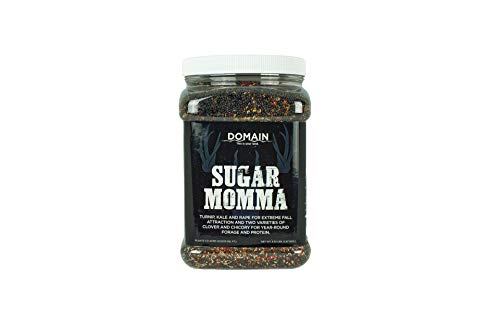
Domain Outdoor Sugar Momma Food Plot Seed 1/2 Acre

Whitetail Institute Imperial Clover Deer Food Plot Seed 2 lbs

Whitetail Institute Imperial Clover Deer Food Plot Seed 18 lbs
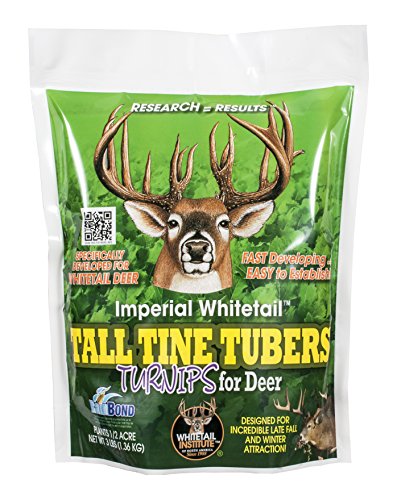
Whitetail Institute Tall Tine Tubers Deer Food Plot Seed

Whitetail Institute Beets & Greens Deer Food Plot Seed 3 lbs

Whitetail Institute Imperial Clover Food Plot Seed 4 lb

Whitetail Institute FUSION Deer Food Plot Seed Clover Chicory
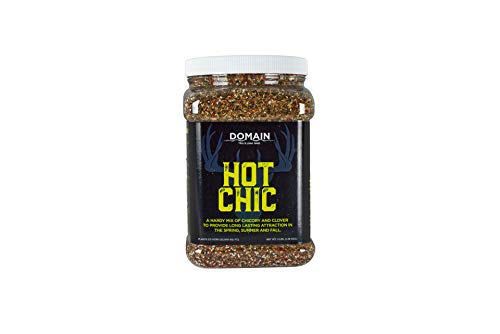
Domain Outdoor Hot Chic Food Plot Seeds 1/2 Acre

Whitetail Institute 30-06 Mineral and Vitamin Supplement 20 lbs
The Strengths Of Each Pick
Most food plots target one season and fade when conditions shift. Sugar Momma is built to outlast that problem, mixing brassicas (the brassica family includes turnips, kale, and rape, all of which sweeten after frost) with clovers and chicory so something is always attractive to deer across the calendar. The 3.25-pound jug covers a half acre, which suits most small hunting properties and food-plot beginners who don’t want to wrestle with bigger bags.
You plant once and the blend works through summer, fall, and winter, which means less re-seeding and more time scouting. Compared to the all-clover Imperial blends further down this list, this one leans harder on cold-weather forage. If your hunting pressure peaks in November and December, the brassica-heavy profile pulls deer when native browse is past its prime.
What It Does Well
- Multi-species blend keeps forage available from summer straight through winter, so you don’t have to replant seasonally.
- Brassica content (turnip, kale, rape) sweetens after the first frost, which typically triggers heavy late-season feeding.
- Half-acre coverage matches standard hunting plot sizes and reduces the risk of overplanting.
- Reusable jug makes storage and leftover seed management simpler than paper bags.
- Annual and perennial components mean stronger total forage yield across the year, depending on your local climate.
Things To Consider
- Brassicas need a firm seedbed and good soil-to-seed contact, so skipping proper ground prep can hurt germination.
- Annual components may need supplemental lime or fertilizer to reach their potential on poor sites.
Right Fit For
Hunters managing half-acre to multi-acre hunting plots who want one seed jug that handles the bulk of a fall and winter attraction strategy without juggling multiple products.
Skip It When
Whitetail Institute Tall Tine Tubers Deer Food Plot Seed is a stronger match if your goal is a pure turnip draw plot with maximum tuber production in a single brassica species.
Small kill plots and tucked-away hunting pockets don’t need 18-pound bags. This 2-pound Imperial Clover pack covers roughly a quarter acre, which fits the kind of secluded clearing that bows and muzzleloaders rely on. The proprietary clover blend is bred specifically for whitetail deer, so you’re not just planting generic forage that deer happen to nibble.
Heat, cold, and drought tolerance mean the plot holds up across the shoulder seasons, which is when deer key on clover between brassica rotations. If you manage several tiny plots instead of one big field, you can stagger seed purchases and plant fresh plots in different microclimates.
A Favorable Mix
- Quarter-acre size fits small kill plots and narrow clearing strips where larger bags would be wasted.
- Clover stays attractive into early fall when brassicas are still maturing, filling the seasonal gap.
- Tolerance to heat and drought helps plots survive dry late-summer stretches.
Points To Note
- Clover-based plots peak earlier in the year, so you may still want a brassica mix for late December hunting.
- Small bags cost more per pound than larger sizes, which adds up if you’re planting multiple plots.
Who Should Grab It
Hunters with a quarter-acre hidey-hole plot or a small property who want a premium clover blend without buying more seed than they can use in one season.
Look Elsewhere When
Whitetail Institute Beets & Greens Deer Food Plot Seed is a better fit if your priority is a diverse brassica blend tuned specifically for late fall and winter attraction.
The 18-pound Imperial Clover bag is essentially the same genetics as the smaller jugs, scaled for serious acreage. Coverage runs roughly 2.25 acres, so it suits properties with broad food-plot fields, lease setups, or club land where multiple hunters share the work. Per-acre seed cost drops noticeably at this size, which matters when you’re planting three, four, or more acres in one season.
Heat, cold, and drought tolerance carry over from the smaller jugs. The biggest practical advantage is logistics: fewer bags means less hauling, fewer empty containers to dispose of, and less time spent loading and unloading.
Notable Upsides
- Covers over two acres per bag, reducing per-acre seed cost compared to smaller Imperial packages.
- Perennial clover comes back for multiple seasons with proper management, lowering annual reseeding expense.
- Drought tolerance keeps larger plots productive when rain shuts off in late summer.
- High protein content supports antler growth and lactation, so the plot keeps paying off year after year.
Honest Caveats
- Bulk size means you need equipment to spread and prepare two-plus acres, so a tractor or ATV implements are a near-must.
- Clover-only plots fade in deep winter, so most managers pair this with a brassica planting for full-season coverage.
Who It Suits Best
Land managers, hunting clubs, and lease holders planting multi-acre clover fields who want the same Imperial genetics in a value-sized bag.
Consider Something Else When
Whitetail Institute FUSION Deer Food Plot Seed is a stronger fit for southern properties that need chicory’s heat and drought resilience layered into the clover base.
Quick Facts
Tall Tine Tubers is a turnip-forward brassica blend that delivers two food phases from one planting: leafy forage early, then high-energy tubers once deer start digging. That dual-purpose design is the main reason hunters plant it specifically for late-season, when deer switch from browsing leaves to rooting out bulbs. Available in 3-pound (half-acre) and 12-pound (two-acre) sizes, so you can scale to your plot without overbuying.
Compared to broader blends like Sugar Momma earlier in this list, Tall Tine Tubers is more focused. There’s less species diversity, but the trade-off is a heavier draw on deer once tubers size up. If your hunting dates cluster around late November through January, that focus pays off.
Notable Gains
- Two-phase food source (greens then tubers) keeps deer returning as the season progresses.
- Turnip-based tubers provide calorie-dense forage during cold weather stress periods.
- Available in half-acre and two-acre sizes to match common plot dimensions.
- Cold-tolerant brassica genetics handle northern winters and late-frost conditions.
Worth Noting
- Single-species focus means less diversity than multi-blend options, so plot rotation matters.
- Turnips prefer firm, prepared seedbeds and may struggle in unworked or rocky ground.
Made For
Hunters targeting late-season bucks who want a dedicated tuber-based draw plot timed for cold-weather attraction.
Another Choice May Suit
Domain Outdoor Sugar Momma Food Plot Seed 1/2 Acre is a smarter pick if you’d rather plant one jug with multiple species than commit to a turnip-only program.
Feature Snapshot
Beets & Greens leans into diversity within the brassica family. Sugar beets, kale, turnip, and radish each contribute a different forage structure and root profile, which spreads the draw across more of the calendar. Where Tall Tine Tubers focuses on turnips, this mix gives deer variety, and variety tends to keep plots attractive longer as different components peak at different times.
The 3-pound half-acre size suits mid-size kill plots and destination fields where you want a single fall planting with broad species representation. For hunters who already rotate Imperial Clover for spring and want a fall partner with similar genetics, this slots in cleanly.
Strengths Worth Knowing
- Four-species brassica blend (sugar beet, kale, turnip, radish) spreads peak attractiveness across fall and winter.
- Sugar beet component adds sweet, high-energy forage that deer seek out during cold snaps.
- Fall planting window fits standard late-summer seed-down schedules.
Soft Spots
- Multiple species mean variable germination, so results depend on soil prep and rainfall timing.
- Half-acre size is small for properties running bigger destination plots.
Best Suited To
Managers who want brassica diversity on a half-acre plot without committing to a single-species turnip focus.
A Better Fit Elsewhere
Whitetail Institute Tall Tine Tubers Deer Food Plot Seed in the 12-pound size is a stronger choice for multi-acre destination plots built around tuber production.
The 4-pound Imperial Clover bag is the Goldilocks option in the lineup. Half-acre coverage hits the most common food-plot size in whitetail country, so very little seed goes to waste. You get the same proprietary Whitetail Institute clover genetics found in the smaller and larger bags, just sized for typical private-land plots.
Plant in spring or fall, and the plot comes back for multiple seasons if you manage it with proper mowing and fertility. Heat, cold, and drought tolerance make this clover work from the Deep South to the upper Midwest. Compared to Sugar Momma’s brassica-heavy profile covered earlier, this is your perennial backbone, not a single-season draw.
Key Advantages
- Half-acre size matches the most common food-plot footprint for private hunters.
- Perennial clover keeps producing for several years, reducing annual seed purchases.
- Tolerates a wide climate range, so the same product works across many regions.
- High-protein forage supports antler growth and herd nutrition through much of the year.
Room For Improvement
- Clover loses attractiveness in deep winter, so pairing with a brassica plot improves year-round use.
- Weed competition can thin stands without proper management during establishment.
Perfect Match For
Private-land hunters managing a half-acre plot who want a perennial clover base that comes back year after year.
Reach For A Different Pick When
Whitetail Institute FUSION Deer Food Plot Seed is a smarter call if you’re south of the Mason-Dixon line and need chicory’s drought tolerance layered into the clover.
Key Product Details
FUSION layers the Imperial Clover genetics with chicory, and that pairing matters more than it sounds. Chicory is a deep-rooted forb (a broadleaf herbaceous plant, not a grass or legume) that punches through hardpan and keeps producing when surface moisture disappears. Southern and mid-southern properties in particular get a longer growing season and more heat stress, so the chicory component holds the plot together when straight clover would slow down.
Available in 3.15-pound (half-acre) and 9.25-pound (1.5-acre) sizes, FUSION covers typical southern plot layouts. Plant in spring or fall depending on your rotation, and you get the protein of clover plus the drought resilience of chicory in one jug.
The Practical Payoff
- Chicory component improves drought performance, which matters in southern and transitional climates.
- Combines two proven species into one blend, simplifying seed purchasing and planting.
- Available in half-acre and 1.5-acre sizes for flexible plot planning.
- Maintains forage quality into early fall when pure clover plots start losing steam.
Trade Offs
- Chicory is a perennial that typically lasts a few years before thinning, so stand renewal is part of the deal.
- Higher species diversity means more variables in establishment than a single-species planting.
Who Will Love This
Hunters in the South, transition zone, or anywhere with hot, dry late summers who need a clover plot that holds up under heat stress.
Not Your Match When
Whitetail Institute Imperial Clover Deer Food Plot Seed 18 lbs is a better fit for northern properties planting multi-acre pure-clover fields without chicory needs.
Feature Rundown
Most clover blends demand a pH-corrected soil (a measure of soil acidity or alkalinity, with most clovers preferring 6.0-7.0). Hot Chic is built for ground that hasn’t been limed, where acidity keeps standard clover from thriving. The pH-tolerant perennials in this mix hold production on rougher sites, which is the exact situation many first-time food plotters face when they don’t want to invest in heavy lime applications before seeding.
The 3-pound half-acre jug covers typical small-plot dimensions, and the multi-year persistence claim means you can establish a plot and let it run for several seasons. Compared to the Whitetail Institute Imperial blends covered earlier, this leans harder on chicory with two clover varieties for diversity, instead of the Imperial single-source clover genetics.
Points In Its Favor
- Tolerates acidic soils, so it works on sites where standard clover struggles.
- Chicory and two clover varieties provide diversity within a half-acre planting.
- Perennial blend can persist for multiple years with proper management.
- Reusable jug simplifies storage and leftover seed handling.
Possible Compromises
- pH tolerance is not the same as peak performance, so liming still boosts results on marginal sites.
- Establishment year may show thinner stands than fully amended plots.
Built With In Mind
Hunters and managers working with acidic, low-maintenance sites who want a perennial blend that establishes without a heavy liming program.
Where A Sibling Pick Shines
Whitetail Institute Imperial Clover Food Plot Seed 4 lb is a stronger fit for properties with corrected pH that want top-tier clover genetics over pH flexibility.
Every other item on this list feeds deer forage. This one feeds deer nutrients. The 30-06 supplement is a granular mineral and vitamin blend (a powdered or crumbled product designed to be spread on the ground or mixed with feed) designed for fall and winter placement, with the Thrive formulation intended to support body condition, muscle maintenance, and bone mass when forage quality declines. The Antler-Up D3 component is included for antler-building support during the mineralization window.
You won’t plant 30-06 like a seed blend. Instead, you pour it into a ground site, a trough, or mix it with feed near an existing plot. Layering it next to a brassica stand covered earlier in this list creates a destination site that pulls deer for both forage and supplementation. The 20-pound size suits properties running multiple mineral stations.
Everyday Advantages
- Mineral and vitamin profile supports fall and winter body condition when forage alone falls short.
- Antler-Up D3 supports antler mineralization during the critical late-summer and fall window.
- Granular form is simple to pour into ground sites or troughs.
- 20-pound size covers multiple stations across a property.
Where It May Fall Short
- Mineral sites require periodic refreshing, which adds to your management workload.
- Weather can leach minerals from above-ground sites, so covered stations last longer.
- Supplement alone won’t replace poor habitat, so it pairs best with established food plots.
Whose Shelf It Belongs On
Land managers already running food plots who want to add a winter nutrition station and antler-support supplement to their existing program.
Swap It Out When
Whitetail Institute Imperial Clover Deer Food Plot Seed 18 lbs is a better fit if your property needs forage first and foremost, rather than supplemental nutrition.
At A Glance
Planning Your Fall Plot Program
Choosing the right seed starts with your property’s size, soil, and hunting calendar. A half-acre kill plot tucked into a hardwood ridge calls for a different strategy than a three-acre destination field along a field edge, and the wrong match shows up fast in poor germination or empty plots come November.
Climate dictates species more than most shoppers expect. Northern properties lean heavily on brassicas because they sweeten with frost and keep producing when clover goes dormant. Southern and transition-zone land benefits from chicory blends, which root deeper and tolerate heat stress that knocks out straight clover stands. Soil pH (a measure of soil acidity or alkalinity on a 0-14 scale, with 7 being neutral) matters too, and acid-soil plots without lime applications may underperform with premium clover genetics. If you haven’t tested your soil, a basic pH and nutrient test runs cheap and saves real money on seed that won’t establish.
Plot rotation matters for long-term productivity. Many food plot managers run a clover-perennial plot through spring and summer, then follow with a brassica planting in late summer for fall and winter. Some skip the rotation and plant brassicas annually on the same ground, which works but can deplete soil over time. Matching seed to season and ground keeps production strong without exhausting the soil.
Species diversity within a blend offers insurance against weather and soil variables. A four-species brassica mix has more peaks and valleys across the season than a single-species planting, so plot use stays steadier. Perennial blends like clover and chicory save money over multiple years but require stand management, while annual brassicas deliver one strong season and need replanting.
Key Considerations Across These Picks
Pitfalls First-Time Planters Hit
New food plotters often skip soil testing and broadcast seed on unprepared ground. Germination drops, weeds take over, and the plot fails before it ever attracts deer. Spending time on ground prep, even with simple methods like a disk or rake, improves seed-to-soil contact dramatically. Another common slip is misjudging acreage, so grab a measuring wheel or use your phone’s mapping tool before buying seed. Buying too much or too little leaves you with wasted inventory or a thin stand that doesn’t pull deer.
Where The Extra Money Goes
Higher-tier blends often include proprietary genetics developed specifically for whitetail deer, with multi-year field testing behind them. That research costs money, and the result is forage that holds up under browsing pressure and produces more tonnage (total above-ground plant material per acre) per acre than generic alternatives. For small kill plots where every bit of attraction matters, premium seed tends to earn its keep. For multi-acre destination plots where you need volume, larger Imperial bags lower per-acre cost without sacrificing the same genetics.