
Hunting for gold rewards patience and the right hardware. The picks below cover pinpointers for recovering tiny targets, full rigs for chasing nuggets across rough terrain, and the accessories that keep a long day on the hill running smoothly. Whether you’re working a riverbed in the off-season or chasing sub-gram pieces in mineralized ground, this lineup spans the gear that matters in 2026.
Your Options, Compared

Garrett Pro-Pointer AT & Edge Digger

Garrett Pro-Pointer AT Waterproof Pinpointer

Nokta USB Charger & Data Cable

Garrett Axiom Pro Gold Detector

Minelab EQX 06 Double-D Smart Coil

CKG Metal Detecting Finds Bag

Minelab Manticore Multi-IQ+ Detector
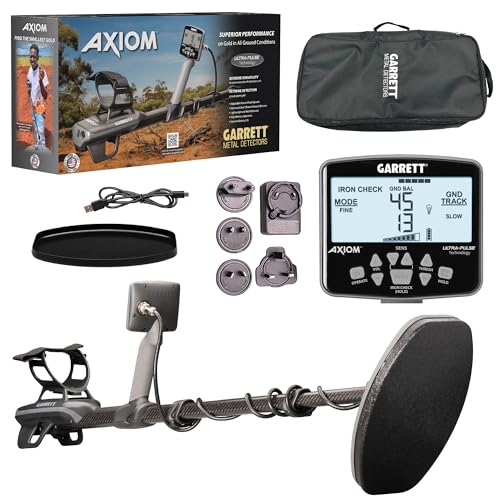
Garrett Axiom Lite Gold Detector
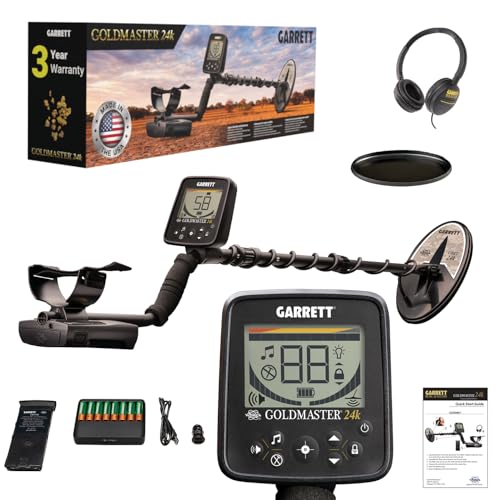
Garrett Goldmaster 24k Detector
A Deeper Look At The Lineup
This two-piece kit pairs a handheld pinpointer with a digging tool, giving you the core accessories most beginners end up buying separately. The pinpointer is rated to 20 feet of submersion, so creek beds, tide pools, and shallow lake work won’t sideline it.
Compared to the standalone Pro-Pointer AT in slot two, this bundle adds the Edge Digger, which removes the hassle of sourcing a compatible trowel on your own. For most casual hobbyists starting out, that’s a real convenience.
Positive Points
- Fully waterproof to 20 feet for serious underwater search capability
- Three sensitivity levels help isolate tiny gold flakes from ground noise
- Fast Retune narrows the detection field on demand, useful in iron-heavy patches
- Single-button operation keeps the learning curve short for first-timers
- Bundle includes the Edge Digger, saving a separate accessory purchase
Things To Consider
- The pinpointer is a locating tool, not a replacement for your main detector
- Owners commonly report the LED indicator aging after heavy outdoor use
Key Specs
Who It Suits Best
New prospectors who want a complete pinpoint-and-dig starter set without piecing it together from different listings.
Consider Something Else When
You already own a quality digging tool and only need a pinpointer, in which case the standalone Garrett Pro-Pointer AT in slot two is the leaner choice.
The standalone Pro-Pointer AT strips the kit down to just the pinpointer, which is exactly what experienced hobbyists usually want. The bright orange shell earns its keep when you drop it in tall grass or leaf litter, a more common mishap than you’d think.
Where the slot-one bundle includes the Edge Digger, this version trusts you to bring your own. Made in the USA and rated to 20 feet of submersion, it handles the same creek and beach work without the extra weight.
Reasons It Performs
- High-visibility orange housing reduces loss in field conditions
- Quick button adjustment cycles through sensitivity on the fly
- Submersible build handles river crossings and tide-zone hunting
- Tuned for nuggets and small targets, where pinpointers earn their keep
Honest Caveats
- No digging tool included, so plan a separate purchase
- Single-button interface can take a session to memorize fully
- Battery life varies widely with sensitivity and retune frequency
Made For
Solo prospectors who already carry a digging tool and want a bright, rugged pinpointer they can spot in rough cover.
Look Elsewhere When
You want the matching trowel bundled in, in which case the Garrett Pro-Pointer AT & Edge Digger from slot one covers both jobs.
This is the unglamorous piece of the kit that prevents a dead detector halfway through a weekend trip. The cable handles both charging and data transfer, useful for the Nokta Simplex Plus, Anfibio, Kruzer, Gold Kruzer, and TMD-101 lines.
Versus the larger detectors earlier in the lineup, this accessory is what keeps those machines in the field day after day. If your detector runs on rechargeable cells, a spare cable pays for itself the first time a port goes bad.
Notable Upsides
- Cross-compatibility across multiple Nokta detector families
- Doubles as a data cable for firmware updates
- Compact form factor stows easily in a finds pouch or pack
Points To Keep In Mind
- Limited to specific Nokta models, not a universal cable
- Wear at the connector is common with daily field abuse
Feature Snapshot
Best Suited To
Nokta detector owners who want a backup cable for travel, vehicle charging, or replacing a worn-out original.
A Better Fit Elsewhere
Prospectors running a Garrett Axiom or Goldmaster should look at those rigs’ own branded charging solutions rather than this Nokta-specific cable.
The Garrett Axiom is built around advanced pulse technology, the same broad family of circuitry that ignores mineralized ground while staying sensitive to small gold. It ships with a 13×11 DD coil for coverage and an 11×7 mono coil for tight, trashy patches.
Compared to the pinpointer picks earlier, the Axiom is a serious step up in capability and weight. The included wireless headphones and battery booster round out a travel-ready kit that suits prospectors heading into remote ground.
Positive Takeaways
- Advanced pulse tech detects both large nuggets and sub-gram pieces in hot ground
- Terra-Scan dual-channel ground balance handles mineralized soil and saltwater
- Two coils included, letting you swap coverage for sensitivity on the fly
- Wireless headphones and battery booster make long sessions more practical
Trade Offs
- Premium pricing puts it out of reach for casual hobbyists
- Heavier than a basic VLF, so fatigue shows up on long walks
- Learning curve is real; menu depth demands time at home before field use
Who Will Love This
Dedicated gold hunters who already understand ground balance and want a travel-ready package for serious outings.
Skip It When
You’re new to the hobby or mostly detecting coins and relics, where the Minelab Manticore from slot seven offers a more forgiving learning curve.
This is a replacement coil, not a stand-alone detector, but the right coil can completely change how your existing Equinox performs. The 6-inch round Double-D design favors trashy sites where target separation matters more than raw depth.
Where the larger Minelab coils sweep wide and pull deep, this one zooms in. For relic hunters working old home sites, that trade-off usually wins.
Good Reasons To Consider
- Double-D pattern separates adjacent targets in cluttered ground
- Strong sensitivity to small jewelry and coin-sized finds
- Waterproof construction handles creek and shoreline work
- Skidplate included to protect the coil face from scuffs
Where It May Fall Short
- Only fits Minelab Equinox-series detectors
- Sweeps less ground per pass than larger coil options
- Less depth on larger targets compared to bigger aftermarket coils
Feature Card
Right Fit For
Equinox owners hunting iron-infested relic sites or working tight spaces where a wide coil is more liability than help.
Another Choice May Suit
Prospectors covering wide-open ground might prefer the larger stock Equinox coil, while full gold hunters should look at the Garrett Axiom from slot four.
The CKG pouch is a simple waist bag with an organized pocket for coins, relics, and small finds. An adjustable strap lets you carry it on the hip or slung across the shoulder, whichever your terrain prefers.
Compared to the high-tech gear elsewhere in this lineup, this accessory solves the most boring problem in the hobby: where to put stuff while you dig. Free hands matter on uneven ground, and jacket pockets get heavy fast.
What It Does Well
- Keeps finds separate from dirt and sand for cleaner recovery
- Adjustable strap adapts to hip or shoulder carry
- Lightweight enough that fatigue never becomes an issue
Practical Considerations
- Capacity is limited for long days with consistent finds
- Zipper quality varies, with snags reported after heavy field use
- Single main pocket offers limited separation of coins and relics
Built With In Mind
Detectorists taking long walks on beaches or plowed fields who want a hands-free way to stash finds between holes.
Reach For A Different Pick When
You’re pulling multiple jewelry finds per outing and need bigger organization, where a dedicated tackle-box style case fits better than this pouch.
The Manticore is Minelab’s high-power Multi-IQ+ flagship, running multiple frequencies simultaneously to find what single-frequency machines miss. The bundle ships with three coils (8, 11, and 15 inches) for low, medium, and high-depth coverage.
Unlike the Garrett Axiom in slot four, which uses pulse induction for hot ground, the Manticore takes a multi-frequency approach. That makes it a versatile crossover for prospectors who also chase coins and relics.
A Few Highlights
- Multi-IQ+ runs more power than previous Minelab generations
- Three included coils cover everything from tight trash to wide sweeps
- 2D target ID map and rich audio help separate good targets fast
- Waterproof build handles rain, creeks, and shallow shoreline
Less Ideal Details
- Top-tier pricing makes it a significant investment
- Multi-frequency power draw shortens battery life versus simpler rigs
- Feature depth rewards practice; expect a real learning commitment
Perfect Match For
All-terrain hobbyists who split time between gold prospecting and coin/relic hunting and want one machine that does both well.
Swap It Out When
You hunt exclusively for fine gold in hot mineralized soil, where a dedicated pulse-induction rig like the Garrett Goldmaster 24k from slot nine offers finer sensitivity to sub-gram targets.
The Axiom Lite is the stripped-down sibling to the Pro model from slot four, with the same Ultra Pulse technology but a single 11×7 mono coil instead of the dual-coil travel pack. The payoff is weight: it’s the lightest rig in the Axiom family.
For prospectors who spend all day hiking to remote patches, that weight savings shows up in the shoulders by hour four. Terra-Scan dual-channel ground balance still handles the same challenging soils.
Useful Highlights
- Lightest detector in its class, easing long-day fatigue
- Ultra Pulse technology with four timing settings for varied gold sizes
- Independent dual-channel ground balance for tough mineralized ground
- Made in the USA construction quality
Small Limitations
- Single coil means swapping to alternate coverage requires a separate purchase
- No wireless headphones or battery booster in this trim
The Right Fit
Prospectors covering serious distance on foot who want pulse-induction sensitivity without the bulk of a full travel kit.
Where A Sibling Pick Shines
Outfits that want both 13×11 DD and 11×7 mono coils included should step up to the Garrett Axiom Pro from slot four.
The Goldmaster 24k runs at a high 48 kHz frequency, the kind of tuning that picks up sub-gram flakes that lower-frequency machines simply miss. Wired headphones come in the box, a small thing that adds up across long detecting days.
Versus the broader Multi-IQ+ approach of the Manticore from slot seven, the 24k is a focused gold specialist. It does one thing, and it does that thing very well.
What Helps Most
- 48 kHz frequency excels at small flake and fine gold detection
- Made in the USA build quality and support
- Wired headphones included for immediate field use
- Tuned specifically for gold rather than as an afterthought mode
Things To Weigh
- Less versatile on coins and relics than multi-frequency rigs
- Wired headphones can snag on brush without a clip or wrap
Key Product Details
Whose Shelf It Belongs On
Dedicated gold prospectors chasing fine specimens in known gold-bearing ground where tiny target recovery matters most.
Where Another Pick Suits Better
Hobbyists splitting time between coins, jewelry, and gold should consider the Minelab Manticore from slot seven for its broader multi-frequency versatility.
What To Think Through Before Choosing Gold Detectors
Gold detecting rewards matching the rig to the ground. Three factors matter more than the rest.
Ground Mineralization. Hot, iron-rich soil blinds basic VLF detectors. Pulse induction and dual-channel ground balance are designed precisely for this, and ignoring it leads to a frustrating day of chatter. Where you’re hunting determines whether you need that extra circuitry or whether a budget-friendly multi-frequency will do the job.
Target Size. Tiny flakes, larger nuggets, and small jewelry each respond to different frequencies. Higher frequencies (think 40+ kHz) catch fine gold, while lower frequencies reach deeper for larger pieces. Picking the wrong one means missing what you’re actually hunting.
Coil Coverage vs. Separation. Wide coils sweep ground fast but blur together adjacent targets in trash. Smaller coils separate targets better but cover less area per swing. Most seasoned detectorists end up owning at least two coils for different sites.
Smart Choices Across The Lineup
Traps First Timers Fall Into
New prospectors often chase the most expensive detector first, assuming cost equals results. In practice, a mismatched detector that ignores your local soil costs more in frustration than any savings on a smarter pick.
Coil compatibility also trips up first-time shoppers. Buying a detector first and then assuming any coil fits is a common mistake, since most brands require their own proprietary connections. Confirm coil fit before any upgrade.
Where The Extra Money Goes
Premium gold detectors earn their price through ground-balance circuitry, multi-frequency processing, and build quality that survives years of field abuse. Higher tiers also tend to ship with more accessories, like the wireless headphones and battery booster bundled with the Garrett Axiom.
The honest read: upgrading makes sense once you know your hunting ground and your typical targets. Beginners benefit more from mastering a simpler rig than from paying for capability they can’t yet use.
Frequently Asked Questions
What frequency works best for gold? Higher frequencies (around 40 kHz and above) catch fine gold and small flakes, while lower frequencies reach deeper for larger nuggets. Many detectors use multiple frequencies at once to cover both ends.
Do I need a waterproof detector? Waterproofing matters most for creek, river, and shoreline hunting. For purely dry-land work, a weather-resistant (not fully submersible) rig is usually enough and lighter on the wallet.
What’s the difference between VLF and pulse induction? VLF (very low frequency) detectors read a wide range of targets and excel at discrimination. Pulse induction pushes through mineralized ground that blinds VLF machines, making it a strong choice for hot gold-bearing soils.
Can one detector do gold and coins? Multi-frequency detectors handle both reasonably well, though dedicated gold rigs usually outperform them on fine flakes. If you split time roughly evenly, a versatile multi-frequency model is a smart pick.
How important is ground balance? Ground balance adjusts the detector to ignore mineralization in the soil. In heavily mineralized ground, automatic or multi-channel ground balance is essential, otherwise the machine chirps constantly and real targets disappear in the noise.