
Heading into the backcountry with the right GPS gear changes how you scout, track, and return home safely. Hunters juggling rugged terrain, long distances, and changing weather need devices that keep position locks tight and batteries stay reliable for the full trip. The picks below cover everything from wrist-worn navigators and dog-tracking handhelds to cellular trail cameras that double as remote scouting stations, so you can match the gear to your hunting style without overspending.
A Side-By-Side Look

Garmin Alpha 200i Dog Tracking Handheld (010-02230-50)

Spartan Camera GoLive3 Live Streaming Trail Camera
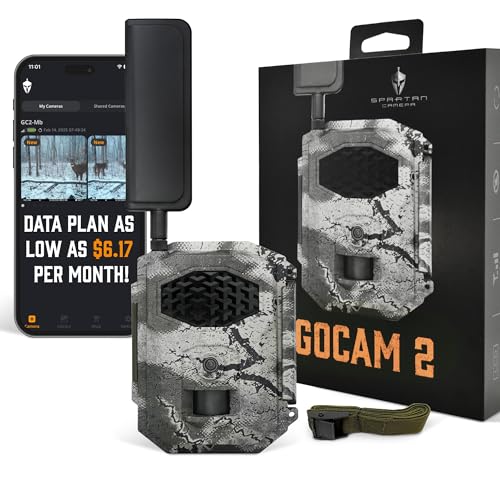
Spartan Camera GoCam2 Cellular Trail Camera (Spartan Areus)

Garmin Foretrex 401 Waterproof Hiking GPS

Garmin Foretrex 701 Ballistic Edition

Spartan Camera GoCam2 Cellular Trail Camera Bundle

Spartan Camera 2 Pack GoLive3 Trail Cameras
Meet The Standout Selections
The Garmin Alpha 200i is built for hunters who run hounds and want one device that tracks the pack and the handler. Its sunlight-readable touchscreen reads clearly at midday, and the inReach satellite technology built into the unit adds a safety layer beyond plain GPS, sending messages and triggering SOS when cell towers stay out of reach.
Compared with the trail cameras later in this list, the Alpha 200i is a real-time tool rather than a passive scout, so it pairs well alongside cellular cameras rather than replacing them. The button-driven design keeps training cues accessible without taking eyes off the screen, which matters when a dog breaks tree and you need to react quickly.
Everyday Wins
- Sunlight-readable 3.5-inch display remains legible in midday glare
- Integrated inReach satellite messaging adds a safety net where cell coverage disappears
- Button-driven interface supports fast training commands during high-pressure moments
- Preloaded topographic mapping reduces setup time on the first outing
- Multi-dog tracking capacity covers most hunting-party configurations
Things To Consider
- Satellite features depend on an active subscription, which adds to long-term ownership cost
- The learning curve is steeper than a basic handheld, so first-time users should plan time on the manuals
Quick Facts
Who It Suits Best
Hunters running multiple dogs who want satellite safety features built into the same unit they already carry for tracking.
Consider Something Else When
Solo still-hunters get more use out of the Garmin Foretrex 401, since wrist-worn simplicity suits that style better.
The Spartan Camera GoLive3 brings live-streaming capability to a category that has long relied on delayed photos. Its 96-degree wide-angle lens covers a broad approach corridor, and the blackout infrared flash stays invisible to deer and other wary wildlife that spook at visible glow.
Where the Garmin Alpha 200i tracks the dogs you already own, the GoLive3 watches the land in your absence and pushes footage straight to your phone. Built-in lithium battery chemistry simplifies charging logistics compared with AA-only models, which is a quiet win during week-long scouting trips.
What Helps Most
- On-demand HD photos plus 1080p video capture both daylight and nighttime movement in detail
- Blackout infrared flash keeps the camera undetected by skittish wildlife
- Built-in lithium battery streamlines recharging between trips
- Weatherproof housing handles extended outdoor deployment
Trade Offs
- Live streaming requires consistent cellular signal, which limits use in deep backcountry
- Camera-specific data plans add to total ownership cost
Feature Snapshot
Built With In Mind
Tech-forward hunters who want near-real-time visibility into a stand location without driving back to check an SD card.
Look Elsewhere When
Hunters working far off-grid with no cell signal should reach for the Spartan Camera GoCam2 Cellular Trail Camera Bundle, which is purpose-built for true remote lease scouting.
The Spartan Camera GoCam2 (Spartan Areus) delivers cellular scouting at a more approachable entry point than the GoLive3. Its multi-carrier design switches between major US networks, which widens the map of viable deployment zones compared with single-carrier alternatives.
No-glow infrared night vision keeps the flash from spooking mature bucks, and the IP65 water resistance rating means a passing storm does not cut a scouting session short. Compared with the GoLive3’s live-streaming focus, this model leans into reliable scheduled image delivery, which works well for hunters who review footage at the end of the day rather than constantly.
The Upside
- Multi-carrier 4G LTE support increases deployment flexibility across regions
- No-glow infrared keeps the camera hidden from cautious game
- IP65 water resistance holds up through rough weather windows
- App-based control simplifies setup and remote image review
A Few Limitations
- Cellular coverage is still required, limiting use in deep canyons or wilderness basins
- Monthly data plans add a recurring cost to ownership
- Lacks the live-streaming capability of the GoLive3 for real-time monitoring
The Right Fit
Hunters on a budget who still want cellular delivery and broad carrier compatibility for standard scouting routines.
A Better Fit Elsewhere
Hunters who want real-time visibility and on-demand live streaming should consider the Spartan Camera GoLive3 instead.
The Garmin Foretrex 401 keeps navigation simple in a wrist-mounted form factor that never asks you to dig into a pack. It runs on a pair of standard AAA batteries, which makes field replacement painless when power runs low far from a charger.
The TracBack feature reverses your outbound route back to the trailhead, a quiet safety net in fog or fading light. Where the Spartan trail cameras scout from a fixed post, the Foretrex 401 is a personal navigation tool, which suits still-hunters and long-distance walkers who prefer minimal gear.
Bright Spots
- Wrist-mounted design keeps hands free for binoculars and gear
- AAA battery compatibility means swaps anywhere, no charger required
- TracBack returns you along your original route with minimal button work
Worth Noting
- Smaller LCD display limits detail compared with newer touchscreen handhelds
- Lacks topographic map detail and satellite imagery of higher-tier Garmin models
Made For
Backcountry walkers and beginner hunters who want basic route tracking without subscription fees or steep learning curves.
Not Your Match When
Long-range shooters needing ballistic solutions should reach for the Garmin Foretrex 701 Ballistic Edition instead.
The Garmin Foretrex 701 Ballistic Edition wraps a wrist-mounted GPS navigator around Applied Ballistics Elite software for shooters who compute long-range holds in the field. The MIL-STD-810G rating for thermal, shock, and vibration means the device tolerates rough handling during heavy recoil sessions.
Compared with the simpler Foretrex 401, this model adds multi-constellation satellite tracking (GPS plus GLONASS plus Galileo) for tighter positional accuracy in challenging terrain. That extra precision matters when a ballistic solution depends on accurate coordinates, especially in canyon country where GPS-only units can drift.
The Helpful Details
- Applied Ballistics Elite integration computes aiming solutions without external devices
- Wrist-mounted form factor keeps both hands free during shooting positions
- Military-grade construction absorbs recoil and weather exposure
- Multi-constellation satellite tracking improves accuracy in tight terrain
Softer Spots
- Ballistic software complexity rewards prior experience with long-range shooting
- Cost runs notably higher than the non-ballistic Foretrex 401
Best Suited To
Long-range precision shooters who want ballistic calculations integrated with their wrist-mounted navigation rather than relying on a separate device or phone app.
Swap It Out When
Budget-focused hunters who only need basic navigation should consider the Garmin Foretrex 401 for a simpler, lower-cost path.
The Spartan Camera GoCam2 Bundle adds a heavy-duty security box and a 32GB SD card to the standard GoCam2 setup, so the camera is deployable on day one. The security box reduces theft risk on shared leases and protects against curious wildlife that occasionally investigate camera mounts.
This bundle makes sense for hunters who set up and forget about a camera for weeks at a time. The included storage card removes the scramble to source compatible media locally, which speeds up the first scouting session in unfamiliar territory.
Key Advantages
- Security box reduces theft and tampering on shared hunting properties
- Included 32GB SD card eliminates a separate purchase before first deployment
- Multi-carrier cellular support matches the standard GoCam2 flexibility
- Water-resistant construction holds up through extended outdoor exposure
Honest Caveats
- Security box adds weight and bulk, so permanent mounting positions work better than frequent moves
- Cellular coverage remains a hard requirement for remote image delivery
Feature Rundown
Whose Shelf It Belongs On
Remote lease hunters who want a complete cellular scouting package ready to mount on a tree without hunting for separate accessories.
Where A Sibling Pick Shines
Hunters who want live-streaming capabilities instead of scheduled image delivery should consider the Spartan Camera GoLive3.
The Spartan Camera 2 Pack doubles up the GoLive3 platform for hunters running pattern-based scouting across multiple entry points or food plots. Two units let you cross-reference deer movement between distant stand locations, which sharpens your understanding of travel corridors on leased or large acreage.
Each camera carries the same 96-degree wide-angle lens, blackout infrared flash, and built-in lithium battery as the standalone GoLive3. Pairing them across a property delivers the same live-streaming capability with redundancy if one location goes offline due to signal loss.
A Few Strong Suits
- Two-camera coverage maps wider hunting areas without rebalancing a single unit
- Per-unit live streaming works independently at each deployment site
- Built-in lithium batteries simplify shared charging routines
- Blackout infrared flash reduces detection across both cameras
Possible Compromises
- Two separate data plans and subscriptions raise ongoing ownership cost
- Initial setup takes longer since each camera needs its own activation
Perfect Match For
Property-line hunters and large-acreage scouts who want simultaneous coverage of multiple stand locations in a single purchase.
Reach For A Different Pick When
Solo hunters running one stand benefit more from the single-unit Spartan Camera GoLive3 without the doubled subscription overhead.
What Matters Most When Picking a Hunting GPS Setup
Match the Tool to the Hunt
Before choosing any GPS device for hunting, identify your primary hunting style. Still-hunters and long-distance walkers get the most from compact wrist-mounted navigators like the Garmin Foretrex 401, since the gear needs to stay out of the way. Hunters running dogs, by contrast, benefit more from a handheld like the Garmin Alpha 200i that delivers real-time dog position updates and on-device training cues.
Decide Between Active Tracking and Passive Scouting
GPS units and trail cameras solve different problems. Handhelds and wrist units track the hunter in motion, while cellular trail cameras scout a fixed location and push images back to the truck. Many serious setups pair a handheld navigator with one or two cellular cameras, covering both moving and waiting scenarios across a season.
Watch for Hidden Recurring Costs
Cellular trail cameras depend on data plans, and satellite features on premium handhelds rely on subscription tiers. Subscription cost is rarely the headline number, so factor it into long-term ownership before committing to a cellular camera or an inReach-equipped handheld.
Prioritize Build Quality for Field Conditions
Hunting gear gets dropped, soaked, and frozen. Look for waterproof ratings, shock-tested construction, and weatherproof housings that match your local climate. Cold-weather hunters should specifically check battery performance, since lithium chemistries handle winter temperatures better than alkaline cells in many trail camera setups.
Things Hunters Often Overlook Before Buying
Common Shopping Slip Ups
The most common slip-up is buying a cellular trail camera without checking carrier coverage at the actual deployment site. Maps showing coverage areas rarely account for terrain shadows, dense canopy, and distance from the nearest tower. Test signal strength at the planned mount spot before mounting, or choose a multi-carrier camera like the Spartan GoCam2 to give yourself fallback options.
Why Top Tier Costs More
Premium hunting GPS units cost more for three main reasons. First, the sensors use multi-constellation receivers (GPS plus GLONASS plus Galileo) that maintain accuracy in challenging terrain where single-system receivers drift. Second, ballistic solvers and onboard mapping add expensive software licensing. Third, military-grade construction costs more than consumer-grade plastics. The upgrade pays off for hunters who navigate in tough conditions, run long-range rifles, or push gear through punishing weather, but recreational weekend hunters may not need that level of capability.
Frequently Asked Questions
Do I need a handheld GPS if I already have a phone?
A dedicated handheld GPS offers better battery life, more rugged construction, and reliable reception in dense canopy where phone signals struggle. Phones work well for casual hikes, but a dedicated unit is the safer pick for multi-day backcountry trips.
Can cellular trail cameras work without a subscription?
Most cellular trail cameras require an active data plan to transmit images and video. SD card storage provides local backup, but remote delivery features stop working once the plan lapses.
How far do handheld GPS units typically track?
Handheld GPS range varies by model and terrain. Open-country models can reach several miles, while dense forest and canyon walls reduce that range. Check the manufacturer’s specified range and read user feedback for terrain similar to yours before relying on stated numbers.
What is the benefit of multi-constellation GPS receivers?
Multi-constellation receivers tap into GPS plus GLONASS plus Galileo satellites at the same time, which improves accuracy and lock speed in tough environments like deep canyons or heavy tree cover. Single-constellation receivers can drift in those same conditions.
Are wrist-mounted GPS units accurate enough for hunting?
Wrist-mounted units like the Garmin Foretrex series offer positional accuracy within a few meters under normal conditions, which is more than adequate for marking stand locations, waypoints, and return trails during a hunt.