
Slogging through wet brush, scree fields, or tall grass can soak your socks and grind debris into your boots before you finish the first mile. Hiking boot gaiters solve that one annoying problem in a single piece of kit, keeping snow, mud, pebbles, and even biting critters away from your ankles and lower legs. The five pairs below cover different terrain and threat levels, from deep-winter mountaineering to quick day-hike dust protection.
A Side-By-Side Look

Outdoor Research Men’s Crocodile Gaiters

Crackshot Men’s Snake Bite Proof Guardz
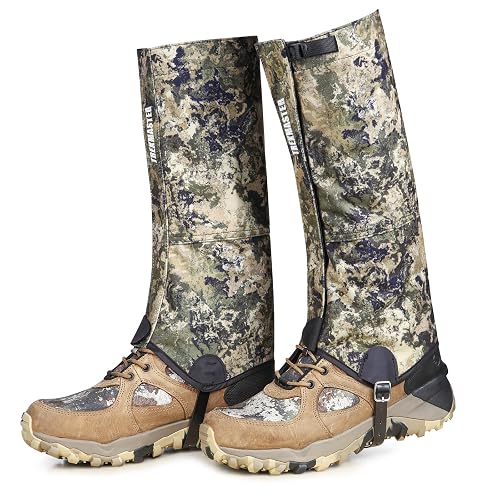
NatureBlend Waterproof Hunting Leg Gaiters

King’s Camo XKG Leg Gaiter

Hikas Ankle Gaiters by gear envie
Taking A Closer Look At The Options
The Crocodile sits at the heavy end of the gaiter world, the kind of kit you pull on when the weather forecast looks grim and the trail still has six miles to go. A Gore-Tex membrane (a waterproof, windproof, and breathable fabric laminate originally developed for rain shells) handles driving rain and wet snow without suffocating your lower legs.
Compared to the taller, hunting-focused NatureBlend and King’s Camo models covered below, this pair is built more for mountaineers and winter backpackers than for still-hunting stalks. Anyone logging long alpine days benefits most from the balance of weatherproofing and rugged construction.
Noteworthy Benefits
- Gore-Tex waterproof and breathable membrane keeps deep snow and slush out without trapping sweat.
- Tough outer fabric holds up to crampon scrapes and rocky trail abuse season after season.
- Cut tall enough to seal the top of most winter mountaineering boots against drifting powder.
- Trusted by serious backcountry travelers who need one gaiter pair for multi-day trips.
Worth Noting
- Heavier than low-cut options like the Hikas, so it can feel bulky on warm-weather day hikes.
- Owners commonly mention the instep strap wearing through faster than the rest of the gaiter.
Feature Snapshot
Best Suited To
Mountaineers and winter backpackers tackling wet snow, slush, and rocky alpine terrain where a lighter gaiter would soak through.
Look Elsewhere When
Day hikers chasing a low-bulk cuff should consider the Hikas Ankle Gaiters instead, since the Crocodile’s full coverage is overkill on dry summer trails.
The Crackshot Guardz earn their slot by solving a problem most other gaiters ignore entirely. They are built to resist fangs from venomous snakes that hunters, ranchers, and wildland crews regularly bump into in southern brush and tall grass.
Where the Crocodile is aimed at snow and the Hikas ankle cuff is meant for trail runners, the Guardz lean hard into one specific hazard. Hikers and hunters moving through rattlesnake or copperhead country benefit most from the added peace of mind.
Good Reasons To Consider
- Targets snake bite resistance, a real risk in southern and southeastern hiking terrain.
- Pulls on quickly over boots when conditions turn brushy without slowing your pace.
- Useful for landowners, surveyors, and field workers who spend long days off-trail.
Trade Offs
- Specialized build means it is overkill for snow-free northern trails with no snake risk.
- Less weatherproofing than the Gore-Tex Crocodile, so deep-snow days call for a different pick.
Who Should Grab It
Hikers, hunters, and field workers who spend time in tall grass and rocky ground where venomous snakes are part of the daily reality.
Consider Something Else When
Backpackers heading into wet snow should pick the Outdoor Research Crocodile Gaiters, which deliver far stronger weatherproofing than the Guardz.
NatureBlend leans into the classic mid-height hunting gaiter with a waterproof build aimed at wet brush and shoulder-season hunting. The upgraded rubber foot strap is the standout detail, replacing the thin nylon straps that snap after one rough season in the field.
Compared to the lighter Hikas ankle cuff further down the list, this pair runs taller and focuses on coverage rather than agility. Hunters and hikers pushing through wet briars, tall weeds, or rain-slick trails benefit most from this design.
Useful Touches
- Reinforced rubber foot strap outlasts standard nylon webbing on rough terrain.
- Waterproof construction sheds rain, sleet, and wet grass during dawn hunts.
- Tall enough to seal out briar scratches and tall-grass seed pods.
- Works across hunting, fishing, and shoulder-season hiking without needing a swap.
Small Caveats
- Heavier than the Hikas cuff, so trail runners and fast-packers may find it overbuilt.
- Lacks the Gore-Tex pedigree of the Outdoor Research Crocodile for true alpine winter use.
The Right Fit
Hunters and shoulder-season hikers who regularly push through wet brush, briars, and tall grass where a thin gaiter would soak through in minutes.
A Better Fit Elsewhere
Trail runners wanting ankle-only coverage should look at the Hikas Ankle Gaiters, since the NatureBlend height and weight are wasted on fast dry-summer miles.
The XKG takes a different angle than the waterproof NatureBlend pair, trading full weather sealing for stretch and quiet movement. The 4-way stretch tri-laminate fabric moves with your knee and ankle so stalks stay silent on still-hunting approaches.
Where the Crocodile goes heavy-duty and the Crackshot Guardz go specialty, this model focuses on hunters who log miles between sits and need a gaiter that won’t bag, sag, or rustle. Whitetail and turkey hunters in cool, dry conditions benefit most from this fit philosophy.
Everyday Wins
- Stretchy tri-laminate fabric follows your stride instead of bunching behind the knee.
- Velcro front closure is quick to adjust with cold fingers on a frosty morning.
- Reinforced lower leg section handles repeated contact against boot buckles and rocks.
- Double-riveted boot lace hook keeps the gaiter anchored through thick cover.
- Available in Large-X-Large sizing, covering taller hunters who often get squeezed out of standard fits.
Honest Caveats
- Not fully waterproof, so heavy rain and wet snow push you toward the NatureBlend or Crocodile instead.
- Less bite protection than the Crackshot Guardz, which matters in rattlesnake country.
Feature Snapshot
Built With In Mind
Still hunters and stalkers who value quiet, flexible gear over full waterproof sealing on cool-season hunts where moisture is moderate.
Swap It Out When
Wet-weather hunters should grab the NatureBlend Waterproof Hunting Leg Gaiters, which seal out rain in a way this stretch-focused model does not.
The Hikas ankle cuff breaks the traditional gaiter mold on purpose, sitting low on the ankle rather than running up to the knee. Worn inside footwear with a thin stirrup and adjustable drawstring, they block trail dust, sand, ticks, and light snow from sneaking over the top of your shoes.
Compared to the heavier Crocodile and NatureBlend picks above, this is the option you forget you have on. Day hikers, trail runners, and dog walkers who just want to keep debris and bugs off their socks benefit most from the minimalist approach.
What Helps Most
- One-size design slips on without fiddling with buckles or straps.
- Ticks, sand, and trail dust stay out of your socks on warm hikes.
- Water-resistant recycled fabric handles light moisture and dry snow.
- Pairs with both hiking boots and casual sneakers for everyday trail use.
Things To Weigh
- Low ankle cut leaves your shin exposed, unlike the full-coverage Crocodile and NatureBlend options.
- Inside-the-shoe stirrup takes a bit of practice to seat correctly on first wear.
- Not a substitute for true snake protection in the Crackshot Guardz territory.
Made For
Day hikers, trail runners, and dog walkers who want ankle-only protection from dust, sand, ticks, and light snow without the bulk of a tall gaiter.
Not Your Match When
Alpine winter hikers should pick the Outdoor Research Crocodile Gaiters instead, since the Hikas ankle cuff cannot handle deep snow and driving rain.
Picking Gaiters That Actually Match Your Trail
Start with terrain, not brand. Deep snow and alpine routes call for tall, waterproof shells like the Crocodile, while tall southern grass points you toward snake-resistant builds like the Crackshot Guardz. Wet brush and shoulder-season hunting pair best with waterproof hunting gaiters such as the NatureBlend or stretch-focused picks like the King’s Camo XKG.
< h3 >Fit and Closure Matter More Than You’d Think< /h3 >
A gaiter that slips down your calf every twenty minutes is worse than no gaiter at all, since it pulls your sock into a bunch and lets debris in anyway. Look for a closure system that matches how often you stop and start: Velcro fronts (like the XKG) for quick adjustments on cold mornings, and adjustable straps for slower, all-day missions.
Material Trade-Offs Across The List
Gore-Tex membranes balance waterproofing and breathability, but cost more and add weight. Stretch tri-laminate fabrics move quietly with your leg but shed less water. Recycled water-resistant cuffs handle light moisture while staying nearly invisible on your ankle. Match the material to your typical weather, not the worst day you can imagine.
Coverage Height Changes Everything
Tall gaiters protect against deep snow, briars, and shin-level scratches on scree. Ankle cuffs trade that coverage for breathability and low bulk on dry trails. You may find one pair in your closet is not enough, since the same gaiter rarely excels across both summer hiking and winter mountaineering.
Key Considerations Across These Picks
Mistakes Worth Dodging
Buying the tallest gaiter you can find for dry summer trails is a common trap, since full-height models trap heat and slow your pace on warm days. Another wrong turn is ignoring closure quality, because a gaiter held together by thin nylon webbing tends to fail on the second or third rough outing. Always match gaiter height and material to your typical conditions, not the worst-case scenario you read about online.
The Case For Spending Up
Premium pairs like the Outdoor Research Crocodile earn their keep through better membranes, tougher outer fabric, and reinforced stress points that survive multiple seasons. The upgrade payoff shows up in deep snow, rattlesnake territory, or wet brush, where cheaper gaiters soak through or tear after a few trips. For casual day hikers, a budget-friendly ankle cuff like the Hikas delivers most of the practical benefit without the bulk.
Frequently Asked Questions
< h3 >Do hiking boot gaiters really keep water out?< /h3 >
Waterproof gaiters like the Crocodile and NatureBlend block rain and wet snow from running down into your boots, though no gaiter is fully sealed if submerged in a deep stream crossing.
Can gaiters stop snake bites?
Specialized snake-proof gaiters such as the Crackshot Guardz add a layer of protection against fangs, though no fabric is a substitute for watching where you step and giving snakes space.
Should gaiters go over or inside boots?
Most gaiters in this roundup are designed to wear over boots, while the Hikas cuff is built to sit inside footwear for a lower-profile feel.
How do I clean my gaiters?
Brush off dried mud, hand-wash with mild soap, and air dry away from direct heat to keep membranes and stretch fabrics in good shape over multiple seasons.
What height gaiter do I need?
Tall gaiters work best for deep snow, briars, and rattlesnake country, while ankle cuffs suit day hikes and trail running on dry or lightly wet terrain.
Bottom Line
The right hiking boot gaiters depend almost entirely on where you walk, whether that means alpine powder, rattlesnake brush, or dusty summer singletrack. Alpine and winter travelers get the most from the Outdoor Research Crocodile, hunters gravitate toward the NatureBlend or King’s Camo XKG, and day hikers chasing a low-bulk option end up happy with the Hikas. Pick the pair that matches your actual trail, and your socks will thank you by lunch.