
A scope that adds weight to your pack quickly turns from a tool into a burden, especially when you’re miles from the trailhead with sore shoulders and a long hike back. Glassing sessions demand patience, and patience fades fast when every step forward costs you energy you wanted to spend on spotting wildlife, reading distant ridgelines, or pulling in crater details on a lunar surface. Compact, well-balanced optics change the entire experience. The picks below were chosen for their portable form, intuitive controls, and optical character that holds up across real outdoor conditions, from alpine ridges to backyard stargazing nights.
The Picks In Brief

Vortex Diamondback HD 16-48×65 Angled Spotting Scope

Vortex Razor HD 22-48×65 Straight Spotting Scope

Vortex Razor HD 27-60×85 Angled Spotting Scope

Vortex Viper HD Spotting Scope

Vortex Crossfire HD 20-60×80 Angled Spotting Scope
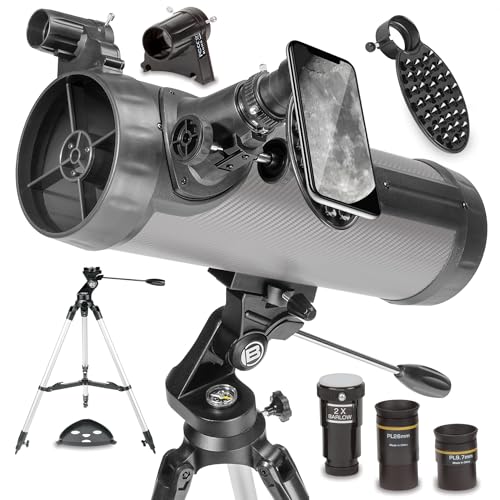
National Geographic 114mm Reflector Telescope
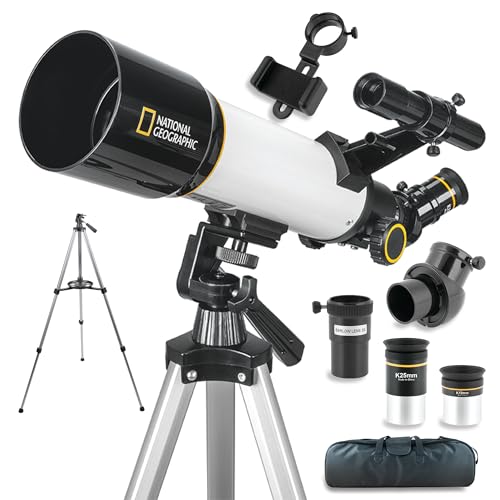
National Geographic Sky View 70mm Refractor Telescope
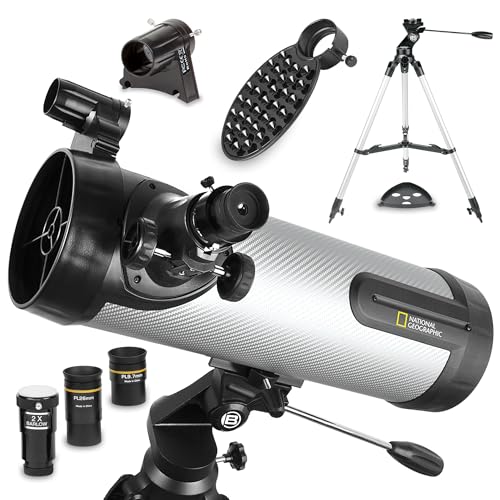
National Geographic NT114CF 114mm Reflector Telescope
Taking A Closer Look At The Options
Pulling the Diamondback HD out of your pack feels different from heavier spotters, and that matters on mile-five of a steep ridge walk. The 65mm objective (the front lens that gathers light) strikes a quiet balance between light-gathering ability and a body you can actually carry without thinking about it. Set up on a tripod at dawn, the angled eyepiece lets you drop your eye naturally to the glass without craning your neck across a slope. Compared to the Razor HD lineup that follows, this scope gives up some edge sharpness but rewards you with a footprint most hikers can stomach.
Glassing for elk along a timbered bench or counting tines on a distant buck becomes a longer, less fatiguing session because the helical focus wheel (a smooth, rotating dial rather than a knob) speeds up fine adjustment when the light keeps changing. You can run this scope on lighter tripods without the whole rig feeling tippy, which is a quiet bonus during mobile hunts. The angled body suits glassing from a seated or prone position, common during long watches.
The Practical Payoff
- The 65mm objective gathers enough light for most dawn and dusk sessions without ballooning pack weight.
- The helical focus wheel speeds up rapid adjustments when subjects move or light shifts.
- The angled eyepiece reduces neck strain during long glassing sessions from a seated position.
- The compact body fits standard backpack side pockets, leaving room for binoculars and a rangefinder.
- The HD optical system trims chromatic aberration (color fringing around high-contrast edges) at the edges of the view.
Honest Caveats
- The 65mm aperture gathers less light than the 85mm Razor HD option further down, so deep-twilight performance drops off sooner.
- Owners commonly report the stock eyepiece cap fits loosely and tends to walk away in pack pockets.
Who It Suits Best
Backpack hunters, ridge walkers, and casual birders who want a scope light enough to carry all day without giving up the angled-body ergonomics that make long sessions bearable.
Look Elsewhere When
You primarily glass at first and last light in open country and want more light-gathering: the Vortex Razor HD 27-60×85 Angled Spotting Scope offers a much larger 85mm objective for that scenario.
The straight-body Razor HD fits naturally into a spotting setup where you spend more time standing at the glass, often from a vehicle window or a tripod on level ground. The 65mm objective keeps the package reasonable for the category, while the optical bench leans hard into edge-to-edge clarity that holds up across the full magnification range. Step up from the Diamondback above and you notice it in subtle ways: less color fringing on antler tips against a bright sky, crisper reading of small details at full magnification.
The straight viewing angle suits quick target acquisition while standing, especially for shooters dialing long-range hits or counting impacts on steel. Owners in competitive shooting circles tend to gravitate to this body style because the eye lands on the reticle without offset. The body is sealed and argon-purged, meaning internal lenses resist fogging across temperature swings you hit when moving between a warm vehicle and a cold ridgeline.
A Favorable Mix
- Premium HD glass elements deliver sharp resolution across the full magnification range.
- The straight eyepiece enables fast target pickup from a standing or shooting-bench position.
- The argon-purged body resists internal fogging in cold-to-warm transitions.
- The build feels substantial in hand without crossing into backbreaking territory at this aperture size.
Trade Offs
- The straight body forces you to stand or use a tall tripod, which is less comfortable during long prone glassing sessions.
- You give up low-light gathering compared to the larger 85mm Razor sibling later in this list.
- The premium optical tier commands a noticeably higher price than the Diamondback or Crossfire picks.
Made For
Long-range shooters, competitive bench-rest users, and serious glassers who work mostly from standing or seated positions on level ground and want edge-to-edge sharpness without stepping up to the heaviest 85mm class.
Consider Something Else When
You mostly hunt from a prone or seated position on uneven terrain: the Vortex Diamondback HD 16-48×65 Angled Spotting Scope keeps the angled ergonomics that suit that style of use.
The 85mm objective on this Razor HD changes the math on what’s possible in low light, pulling usable detail out of shadows at the far end of legal shooting light when smaller scopes give up. That extra aperture adds real weight and pack bulk, which is the trade you accept for meaningful twilight performance. Compared to the 65mm Razor above, this scope doesn’t just gather more light: it produces a brighter, more comfortable image when your eyes are already strained from a long day of glassing. The angled body suits hunters working from a prone or seated setup.
Premium HD glass elements earn their keep across the 27-60x zoom range, holding sharpness even when you push magnification toward the upper end to confirm a distant target. The body is sealed against moisture and argon-purged to fight internal fogging during rapid temperature shifts. Mounted on a sturdy tripod, the scope stays stable enough to read subtle differences in antler architecture or feather detail at extreme range. Anyone walking long distances with this rig should plan for a real pack support system.
Advantages To Know
- The 85mm objective gathers substantially more light than 65mm scopes, extending useful glassing into deep twilight.
- The 27-60x zoom range pulls in detail at extreme distances for long-range shooting and bird identification.
- Premium HD glass elements maintain sharpness across the magnification range, including the upper end.
- The argon-purged, sealed body resists fogging during temperature transitions in the field.
Points To Keep In Mind
- The 85mm objective adds meaningful weight, so this is not a casual pack-along scope.
- You need a stable, heavier tripod to get full value from the high magnification settings.
- The price jumps well above the 65mm Razor and Diamondback options in this list.
Key Advantages
The Right Fit
Western big-game hunters, serious birders, and long-range shooters who mostly glass at first and last light and are willing to carry the extra weight for meaningful twilight performance.
Swap It Out When
You need to keep pack weight honest on multi-day hunts and can live with less low-light performance: the Vortex Diamondback HD 16-48×65 Angled Spotting Scope is a lighter, easier-carrying alternative.
The Viper HD has earned its reputation over years of field use, and reading the spec sheet helps explain why so many serious glassers still reach for it. A multi-position eyecup (the rubber cup around the eyepiece that sets eye distance) lets you dial in proper eye relief whether you wear glasses or not, while a locking collar lets you rotate the eyepiece into a comfortable angle for the shooting position. The HD optical system delivers vivid color and good contrast across the magnification range. The angled body suits hunters, range shooters, and birders who glass from a variety of positions.
XR anti-reflective coatings (multi-layer lens coatings that reduce light loss at each glass surface) on key exterior surfaces boost light transmission, which helps during overcast days when every bit of gathered light counts. Owners commonly report the scope holds its zero-like alignment well over years of travel, which is the kind of long-term detail that doesn’t show up in spec sheets. The build quality sits between the budget Crossfire and the premium Razor, making this a logical mid-tier step.
Notable Upsides
- The multi-position eyecup dials in comfortable eye relief with or without glasses.
- XR anti-reflective coatings improve light transmission during low-contrast lighting.
- The locking collar allows the eyepiece to rotate into different viewing positions without slipping.
- Long-term owners report the optical alignment holds well across years of travel and field use.
Points To Note
- The optical tier sits below the Razor HD lineup, so expect a touch more chromatic aberration at high magnification.
- The body is heavier than the Diamondback and Crossfire options.
Who Should Grab It
Long-time field observers who want proven mid-tier optics, flexible eyepiece positioning, and a scope that has earned its reputation over many seasons of real use.
Not Your Match When
You want the sharpest edge-to-edge image the category offers: the Vortex Razor HD 22-48×65 Straight Spotting Scope delivers a noticeably higher optical tier at a similar size.
The Crossfire HD earns its spot here by offering an 80mm objective at a price point that doesn’t punish newcomers to long-range glassing. The HD optical system reduces chromatic aberration and provides good color fidelity, holding its own against scopes costing notably more. The Arca-Swiss compatible foot (a standardized tripod mounting plate pattern) means out-of-the-box mounting on most tripods without buying extra plates, which is a small but meaningful detail for first-time scope owners. Compared to the 65mm Diamondback above, you trade some portability for meaningful low-light performance.
The angled body works well from seated and prone positions, common during patient western hunts or casual birding sessions. The 20-60x zoom range pulls in detail at distance while staying usable at the lower end for scanning. The build quality is solid enough for vehicle-based hunts and short hikes, though the larger objective does add pack weight. Owners commonly note the value per dollar is hard to beat in this aperture class.
Why It Works Well
- The 80mm objective gathers substantial light at a price below premium-tier scopes.
- The HD optical system trims chromatic aberration and supports good color fidelity.
- The Arca-Swiss compatible foot mounts on most tripods without extra plates.
- The 20-60x zoom range is versatile for both scanning and detailed observation.
Trade-Offs To Consider
- The 80mm objective adds meaningful weight compared to 65mm-class spotters.
- Edge sharpness at the upper magnification range trails the Razor HD lineup.
- You need a sturdier tripod to get the most out of this scope at high zoom.
Key Attributes
Who Will Love This
Newcomers to spotting scopes, casual long-range shooters, and value-focused shoppers who want meaningful low-light performance without the premium-tier price tag.
A Better Fit Elsewhere
You want noticeably sharper edge performance at the same aperture class: the Vortex Viper HD Spotting Scope delivers a clear optical upgrade while staying in the mid-tier price zone.
Stepping into backyard astronomy with a 114mm reflector gives you a meaningful light-gathering jump over smaller starter scopes, and this National Geographic package makes that transition approachable. A 114mm aperture pulls in lunar craters, planetary detail, and brighter deep-sky objects that smaller instruments leave as faint smudges. Two included eyepieces offer 19x and 51.5x magnification (the eyepiece determines magnification by dividing the telescope’s focal length), giving you a useful range from wide-field scanning to closer planetary looks. The included smartphone adapter makes capturing a first lunar image more accessible than with rigs that require separate camera mounts.
Compared to traditional spotting scopes earlier in this list, this is a Newtonian reflector telescope, meaning it uses mirrors instead of lenses, designed for night-sky viewing rather than daytime glassing. The 500mm focal length keeps the tube compact enough to store in a closet and carry to a dark-sky site. The full accessory package reduces the starter-cost anxiety that often pushes newcomers toward complicated decisions. Owners commonly report the setup is straightforward enough for first-time telescope users to get a satisfying view within an evening.
The Case For It
- The 114mm aperture gathers substantial light for lunar, planetary, and brighter deep-sky viewing.
- Two included eyepieces offer useful magnification range out of the box.
- The smartphone adapter enables first astrophotography attempts without buying extra mounts.
- The full accessory package reduces the upfront decisions newcomers face.
Practical Considerations
- Newtonian reflectors require occasional collimation, meaning alignment of the internal mirrors, which is a learning curve for first-time users.
- The open tube design means the mirrors can collect dust over time and need periodic cleaning.
- This is a night-sky instrument, not a daytime spotting scope for hunting or birding.
The Right Fit
First-time astronomers and families exploring night-sky viewing who want a meaningful aperture, included accessories, and an approachable learning curve without a complex setup.
Where A Sibling Pick Shines
You want a lighter, grab-and-go night-sky instrument that needs less maintenance: the National Geographic Sky View 70mm Refractor Telescope offers a sealed-tube refractor design with simpler upkeep.
The 70mm refractor design (a telescope that uses lenses rather than mirrors) keeps maintenance simple, since the sealed tube protects the optics from dust and the alignment stays fixed without user intervention. The panhandle mount gives younger users or first-time adults a tactile way to track objects across the sky without fighting a complicated equatorial setup. Two interchangeable eyepieces plus a 3x Barlow lens (a magnifier that triples the power of any eyepiece) provide magnification options of 16x, 40x, 48x, and 120x, enough range to explore the Moon, bright planets, and some star clusters. For families sharing a scope, the simplicity of use is a real benefit.
The 400mm focal length keeps the tube compact and the whole package light enough to carry to a backyard or out to a darker site without a vehicle. The Moon’s craters, Jupiter’s moons, and Saturn’s rings are all accessible targets that hold attention across a family viewing session. Compared to the larger reflector above, you trade light-gathering for grab-and-go convenience. The straightforward setup means less time aligning and more time observing during short attention windows.
What Makes Sense
- The sealed refractor tube needs no mirror alignment and stays low-maintenance over years of use.
- The panhandle mount makes manual tracking intuitive for adults and kids sharing the scope.
- Two eyepieces plus a 3x Barlow provide four magnification options from one accessory kit.
- The compact, portable design suits backyard use and travel to darker sites.
Where It May Fall Short
- The 70mm aperture gathers less light than 114mm reflectors, so faint deep-sky objects stay muted.
- Higher magnifications (120x) can show optical softness without very stable mounting conditions.
- Like the reflector above, this is a night-sky instrument rather than a daytime spotting scope.
Whose Shelf It Belongs On
Families wanting a shared night-sky instrument, casual observers, and anyone who values low-maintenance simplicity over maximum light gathering for backyard astronomy.
Skip It When
You want meaningful deep-sky performance and don’t mind occasional mirror maintenance: the National Geographic NT114CF 114mm Reflector Telescope delivers substantially more light-gathering for the same general audience.
The carbon-fiber tube on the NT114CF marks a meaningful upgrade over standard steel-tube Newtonians, trimming weight and reducing thermal expansion that can shift focus as the scope adjusts to outdoor temperatures. The f/4.4 focal ratio (focal length divided by aperture, where lower numbers produce brighter, wider-field images) makes this a fast wide-field instrument well-suited for entry-level astrophotography and visual observation of extended objects like star clusters. Two Plössl eyepieces (a classic eyepiece design known for comfortable eye relief) plus a 2x Barlow lens give you flexible magnification choices without buying extras. The red-dot finder simplifies initial target acquisition for newcomers.
The 114mm aperture gathers enough light for detailed lunar views, planetary observation, and brighter nebulae, while the short 500mm focal length keeps the tube compact and the whole rig manageable to transport. Compared to the entry-level reflector above, the carbon-fiber construction is the headline difference, adding durability and reducing weight. The included smartphone adapter opens up basic astrophotography without separate camera equipment.
Bright Spots
- The carbon-fiber tube reduces weight and minimizes focus shifts from temperature changes.
- The f/4.4 focal ratio supports wide-field views and entry-level astrophotography.
- Two Plössl eyepieces plus a 2x Barlow provide flexible magnification options out of the box.
- The red-dot finder simplifies target acquisition for first-time telescope users.
Possible Compromises
- The fast f/4.4 optical design shows optical aberrations at the edges of the field more than slower focal ratios.
- Newtonian reflectors still require occasional collimation (mirror alignment) to perform at their best.
- The 114mm aperture is meaningfully larger than the refractor above, so the tube is bulkier to store and transport.
Feature Snapshot
Best Suited To
Entry-level astrophotographers and visual observers who want meaningful light-gathering in a lighter, more thermally stable package and don’t mind the occasional mirror alignment.
Where Another Pick Suits Better
You want a grab-and-go night-sky instrument with zero mirror maintenance: the National Geographic Sky View 70mm Refractor Telescope offers a sealed tube that needs no collimation at the cost of aperture.
What Matters Most Before Choosing Lightweight Spotting Scopes
Magnification Range and Objective Size
A spotting scope’s two numbers tell most of it. The first number is the magnification range (16-48x on the Diamondback, for example), and the second is the objective diameter in millimeters (65mm in that case). Larger objectives gather more light, which extends usable glassing into dawn and dusk, but they also add weight and pack bulk. For backcountry hunters and long-distance hikers, a 65mm objective often hits the sweet spot. For vehicle-based hunts and twilight observation, stepping up to 80mm or 85mm makes a noticeable difference.
Body Style: Angled vs. Straight
Angled bodies drop the eyepiece to a 45-degree offset, which suits seated and prone glassing positions and reduces neck strain during long sessions. Straight bodies put the eyepiece directly behind the objective, which enables faster target acquisition from a standing or shooting-bench position. If you mostly glass from uneven terrain or spend hours watching a single spot, angled wins. If you dial long-range hits or scout quickly from a truck window, straight tends to feel more natural.
Optical Coatings and HD Glass
HD glass elements and multi-layer anti-reflective coatings reduce chromatic aberration (color fringing around high-contrast edges) and improve light transmission, which matters most during low-light conditions. Premium-tier scopes like the Razor HD lineup justify their cost through noticeably better edge sharpness at the upper magnification range. Mid-tier options like the Viper HD hold their own for most daylight use, while budget picks like the Crossfire HD still deliver solid performance for newcomers.
Weight, Tripod Demands, and Pack Fit
Every additional 100 grams on a spotting scope adds up across a full day of hiking. Beyond the scope itself, higher magnification and larger objectives demand sturdier tripod support, which adds more pack weight. A 65mm scope on a carbon-fiber tripod often travels farther than an 85mm scope on a heavier mount. Plan the full rig, not just the optic, when weight matters.
Key Considerations Across These Picks
Pitfalls Shoppers Hit
Underestimating tripod requirements is the most common mistake. A scope with a 60x top end on a flimsy tripod gives you shaky, frustrating views, no matter how good the glass. People also tend to fixate on maximum magnification without considering how often they’ll actually use it; the middle of a zoom range gets the most use in real field sessions. Choosing a straight body for seated glassing or an angled body for standing shooting leads to discomfort that quietly cuts sessions short.
The Case For Spending Up
Premium tiers earn their price through better edge sharpness at high magnification, more durable sealing against weather, and optical coatings that hold contrast during tough lighting. For users who glass daily across varied conditions, those upgrades translate to less eye fatigue and longer useful sessions. For occasional weekend use, a mid-tier scope like the Viper HD or Crossfire HD delivers most of the practical benefit at a more approachable cost. The jump matters most if you regularly push magnification toward the top of the zoom range.
Frequently Asked Questions
What magnification do I need for a lightweight spotting scope?
A 15-45x or 20-60x range covers most hunting, birding, and general observation scenarios. Pushing beyond 60x typically requires a very stable tripod and benefits from larger objectives.
How important is the angled versus straight body choice?
Body style affects comfort more than optical performance. Angled suits seated and prone positions, while straight suits standing and bench-rest shooting. Pick the style that matches how you’ll use it most often.
Can I use a spotting scope for astronomy?
Traditional spotting scopes work for lunar and basic planetary viewing, but telescopes like the National Geographic 114mm reflectors offer larger apertures that gather significantly more light for deep-sky observation.
What tripod works with these spotting scopes?
The Vortex Crossfire HD includes an Arca-Swiss compatible foot that mounts directly on most modern tripods. Other scopes typically use a standard 1/4″-20 or 3/8″-16 thread, so verify your tripod head matches before purchasing.
How do I clean and maintain a spotting scope?
Use a soft brush to remove loose dust from exterior lenses, then lens-cleaning fluid and a microfiber cloth for smudges. Avoid touching internal optics. For Newtonian reflectors like the NT114CF, occasional collimation (mirror alignment) keeps views sharp.