
A good trail camera earns its keep the first time it catches the buck you’ve been patterning for weeks, or the intruder you never expected on the back forty. Picking the right one matters more than chasing the highest megapixel count, because image quality means little without reliable cellular coverage, decent battery life, and a sensor that fires fast enough to catch moving animals. This roundup focuses on seven current models that solve real scouting and security problems, from solar-powered cellular setups that send photos straight to your phone to rugged scouting units built for harsh weather.
The Main Contenders
Zonetiger 4G LTE Cellular Trail Camera Solar Powered 64MP 4K

Cadrali Solar Trail Camera 4G LTE 4K Live Video
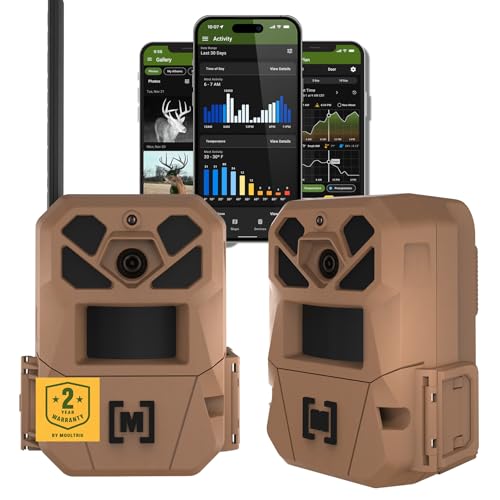
Moultrie Edge 3 Cellular Trail Camera 2-Pack 40MP

Moultrie Edge 3 Cellular Trail Camera 40MP 0.5s Trigger

Moultrie Edge 3 Cellular Trail Camera with Solar Power Pack

MagicEagle Cellular Trail Camera 4G Solar Panel No-Glow Night Vision

REOLINK 4K Solar Security Cameras Wireless Outdoor 4G LTE Cellular
Taking A Closer Look At The Options
Remote acreage, a hunting lease you can’t drive to every weekend, a barn you want to keep an eye on without climbing a ladder to swap SD cards. That is exactly the situation the Zonetiger 4G LTE Cellular Trail Camera is built around, and the year of free photo data baked into the package makes it one of the lowest-friction cellular options on the market right now.
The 64MP sensor and 4K capture give you sharp stills for antler ID, and the auto network switching helps you stay connected across carriers without fiddling with SIM trays. You will mostly interact with this camera through its companion app, which handles setup and remote viewing without needing WiFi at the camera location.
The Good Stuff
- One year of free photo data lowers the upfront cost of going cellular, a real plus for first-time users testing remote access.
- Solar charging means you can mount it and leave it, useful for water plots or food plots hours from your truck.
- Auto network switching picks the strongest available carrier signal at your location, reducing dead zones during scouting season.
- GPS tracking helps you locate and recover a stolen or relocated unit in the backcountry.
Things To Consider
- Video transfer and live view rely on optional paid app services, so video features add to the ongoing cost beyond year one.
- Cellular coverage varies by region, and rural properties with weak signals may experience delayed or missed transmissions.
Who It Suits Best
Hunters and landowners managing one or two remote sites who want photo delivery without committing to a multi-year data plan.
Where Another Pick Suits Better
For live 4K streaming straight from the field, the Cadrali Solar Trail Camera offers a stronger fit for viewers who value real-time observation.
Real-time viewing separates a true observation tool from a simple scouting camera. The Cadrali Solar Trail Camera pushes 4K live video over 4G LTE, so you can watch a water hole in motion from your truck or couch without making the drive. Wildlife watchers and researchers tend to get the most value from this kind of streaming capability.
Motion activation keeps the camera alert without burning battery on empty scenes, and the waterproof housing handles wet conditions common around streams and ponds. A 64MP sensor covers the still-photo side, while the night vision setup helps after dark.
What Earns Its Place
- Live 4K video is rare in this category, and it makes species ID and behavior observation far easier than waiting on stills.
- No WiFi required; the cellular radio works anywhere you have signal, which suits remote cabins and off-grid properties.
- You can share live feeds with family or fellow enthusiasts, a nice touch for group scouting or outdoor education.
Worth Noting
- Live streaming uses more data than static photo delivery, so a solid data plan is worth budgeting for.
- Solar panels need direct sunlight to keep up with heavy video transmission, so shaded placements can shorten battery life noticeably.
Made For
Wildlife enthusiasts and nature observers who want real-time insight into animal behavior rather than a daily photo digest.
Look Elsewhere When
The Moultrie Edge 3 Cellular Trail Camera suits hunters prioritizing fast trigger speeds and proven cellular coverage in low-signal areas.
Most serious scouting operations run more than one camera at a time, and the Moultrie Edge 3 2-Pack lets you cover both ends of a funnel or two separate food plots on day one. The auto-connect feature works across multiple U.S. carrier networks without manual SIM swaps, which is helpful when your hunting land sits on the edge of two coverage zones.
A 0.5-second trigger speed keeps you from missing deer cruising past at a walk, and 40MP stills give you enough resolution to age bucks by antler characteristics. Moultrie has long been a recognized name in the trail camera space, and this generation leans into multi-network reliability.
Real Benefits
- Two cameras in one box covers more ground during early-season scouting without doubling your setup time.
- Four-network auto-connect reduces dead zones by selecting the strongest available carrier at each site.
- 40MP image resolution supports antler scoring and age estimation, useful for harvest planning.
Room For Improvement
- Two-pack pricing puts this above the single-camera Moultrie Edge 3, so solo users may prefer the single-unit version.
- Cellular plans and activation may need to be handled per unit, adding setup steps on first deploy.
Best Suited To
Land managers and hunters running multiple sites who want matched hardware and consistent image quality across locations.
A Better Fit Elsewhere
For a single-camera setup with integrated solar power, the Moultrie Edge 3 with Solar Power Pack offers a more self-sufficient option.
Trigger speed matters more than most buyers expect. A camera with a 0.5s response catches deer, coyotes, and other fast-moving animals before they exit the frame, and the Moultrie Edge 3 single-unit version puts that responsiveness in a more affordable cellular package than the 2-pack we just covered.
The same four-network auto-connect carries over, which is a real advantage when you are deploying across counties with patchy coverage. 40MP stills handle the detail side, and the unit ships ready for app-based scouting.
Strengths Worth Knowing
- 0.5-second trigger speed is competitive for the price tier, capturing movement before animals leave the detection zone.
- Single-unit configuration works for tighter budgets or smaller properties needing only one camera.
- Same reliable cellular coverage as the 2-pack, which is the headline feature for remote scouting.
Points To Note
- No integrated solar panel, so you will need to budget for rechargeable batteries or a separate power source.
- Monthly data plan costs continue after the first year, depending on your chosen carrier and photo volume.
Who Should Grab It
Solo hunters running one or two properties who want the Moultrie platform without the cost of a multi-camera bundle.
Swap It Out When
The Moultrie Edge 3 with Solar Power Pack is a smarter pick if you plan long-term deployments in remote areas without easy battery access.
Long-term deployment is where trail cameras either earn their place or become a maintenance chore. The Moultrie Edge 3 with the 3.4W solar power pack solves the biggest pain point in remote scouting: dead batteries halfway through the season. You mount it, point the panel at the sky, and stop thinking about it.
The core camera carries the same 40MP sensor and 0.5s trigger as the standard Edge 3, plus the four-network auto-connect cellular radio. The solar panel simply extends runtime without changing how you scout.
Why It Works Well
- 3.4W solar panel supports extended deployment, reducing the number of times you hike in to swap batteries.
- Compatible with the same Moultrie app ecosystem as other Edge 3 models, keeping your workflow consistent.
- Reliable 0.5s trigger captures movement at a walk, useful for patterned deer cruising through funnel areas.
Honest Caveats
- Solar panels need direct sun exposure; heavy canopy cover or north-facing slopes reduce charging efficiency.
- Bundled pricing lands above the standard Edge 3, so this is more of a long-term investment.
Built With In Mind
Hunters managing one high-traffic location who want months of uninterrupted coverage with minimal maintenance visits.
Another Choice May Suit
For property-wide coverage on a tighter budget, the Moultrie Edge 3 2-Pack spreads two cameras across two sites instead of upgrading one location.
Battery capacity is the silent killer of trail camera reliability. The MagicEagle Cellular Trail Camera addresses that head-on with a 13,000 mAh internal battery paired with a solar panel, plus audible video capture that lets you hear what triggered the shot. The no-glow infrared setup keeps the unit invisible to animals and trespassers alike.
The IP66 waterproof rating handles heavy rain and dust, and the no-SIM signal technology aims to simplify network setup. The army green housing blends into most woodland settings without drawing attention.
Everyday Wins
- 13,000 mAh battery capacity supports extended deployment, particularly in shaded areas where solar charging is limited.
- No-glow IR keeps the flash invisible, which matters for skittish bucks or stealth property monitoring.
- Audible video adds context to motion events, helping you distinguish people from wildlife in security use cases.
Some Limits To Know
- Larger battery housing adds bulk compared to slim Moultrie or Zonetiger units, so mounting placement matters.
- 2K resolution is solid but not class-leading, so this is a better fit for monitoring than for high-detail antler photography.
The Right Fit
Property owners and hunters prioritizing long runtime and stealth over maximum image resolution in remote or off-grid locations.
Consider Something Else When
The Zonetiger 4G LTE Cellular Trail Camera is a stronger match if your priority is the highest still-image resolution in a similar form factor.
Trail cameras and security cameras increasingly share the same DNA, and the REOLINK 4K Solar Cellular Camera leans into that overlap. Marketed as a security camera, it works well as a property monitoring tool for driveways, equipment storage, and remote buildings where wildlife observation is a secondary goal.
The 4K sensor and continuous solar power make it a strong fit for always-on surveillance, and the 4G LTE radio means no WiFi is required at the install site. Reolink’s app ecosystem handles remote viewing and notifications.
Where It Helps
- 4K resolution supports license plate or facial detail capture at moderate distances, beyond what most hunting trail cams deliver.
- Continuous solar power supports always-on deployment, a plus for property security rather than motion-triggered scouting.
- Reolink’s established app and storage options simplify remote viewing compared to unfamiliar trail camera apps.
Practical Considerations
- Security camera form factor means it is more visible than a camouflaged trail camera, which can affect placement strategy.
- Cellular data consumption runs higher with continuous or frequent streaming, so plan your data plan accordingly.
Whose Shelf It Belongs On
Homeowners and small property managers who want a solar-powered 4G camera that doubles as both security and wildlife observation.
Reach For A Different Pick When
The Moultrie Edge 3 with Solar Power Pack is a better match for hunters who want camouflaged hardware tuned for motion-triggered wildlife capture.
What Matters Most Before Choosing Outdoor Game Cameras
Image Resolution Versus Trigger Speed
Megapixels get the headlines, but trigger speed, the time between motion detection and shutter fire, decides what actually shows up in your gallery. A 40MP camera with a slow trigger catches empty frames; a 20MP camera with a 0.5s trigger catches the buck. Match the spec to your target species: deer and turkeys tolerate slower speeds, while coyotes, hogs, or running wildlife need faster response.
Cellular Coverage and Data Plans
A cellular trail camera is only as good as the signal at your mount site. Models with multi-network auto-connect (like the Moultrie Edge 3 line) help, but rural dead zones still exist. Before buying, check coverage maps for your property and budget for the monthly data plan; most cellular cameras require a paid plan after any included trial period.
Power Source and Battery Life
Solar panels extend deployment significantly, but only with adequate sunlight. Shaded food plots and north-facing slopes reduce charging efficiency, so consider the 13,000 mAh MagicEagle or a hardwired option if your site sees limited sun. Cold weather also reduces battery performance, an important factor for late-season hunters in northern climates.
Form Factor and Concealment
Trail cameras work best when animals and trespassers do not notice them. Camouflaged housings and small form factors (Moultrie, Zonetiger, MagicEagle) suit hunting use, while bulkier security-style units (REOLINK) work better on buildings, gateposts, and visible security mounts. Choose based on your primary use case.
Key Considerations Across These Picks
Pitfalls First Timers Hit
Buying a cellular camera without checking signal coverage at the mount site is the most common mistake. You end up with a premium unit that does not transmit, or with delayed photos that miss the moment. Always test coverage before mounting.
Another trap is assuming “solar powered” means “never charge again.” Solar extends runtime but rarely eliminates battery swaps entirely, especially in heavy traffic areas or shaded locations.
Where The Extra Money Goes
Higher-priced cellular trail cameras typically deliver faster triggers, better low-light sensors, multi-network auto-connect, and longer battery systems. The jump from a basic cellular model to a solar-bundled unit is worth it for hunters who cannot easily hike in for maintenance, and the 4K live video capability commands a premium for wildlife watchers who value real-time observation.
Frequently Asked Questions
Do outdoor game cameras need WiFi?
No, cellular trail cameras use 4G LTE networks to transmit images, so WiFi is not required at the camera location. You only need WiFi or data on your phone to view photos through the camera’s app.
How long do trail camera batteries last?
Battery life depends heavily on traffic and power source. Standard alkaline batteries can last weeks in low-traffic areas, while solar-assisted setups like the Moultrie Edge 3 with Solar Power Pack can run for months with adequate sunlight.
Can trail cameras be used for home security?
Yes, models with fast triggers and no-glow IR, such as the MagicEagle or REOLINK, work well for property monitoring. Security-focused units often offer higher resolution and continuous streaming features.
What is the best trigger speed for deer?
A trigger speed of 0.5 seconds or faster is recommended for deer. Slower cameras may catch empty frames when deer walk past the detection zone without pausing.
Do cellular trail cameras require a monthly fee?
Most cellular trail cameras require a paid data plan after any included trial period. Photo-only plans are typically cheaper than video streaming plans, and pricing varies by carrier and data volume.