
A faded, leaky canopy turns a backyard into a chore. Pick the wrong fabric and you’ll watch colors bleed into a sad tan after one season; pick the right one and the patio feels like an outdoor room from May to October. This roundup covers ten umbrellas spanning patio, pool deck, and beach use, with attention to fabric weight, UV rating, frame materials, and the kind of weather each canopy actually survives.
The Shortlist At A Glance

JOINHOM Large Offset Cantilever Umbrella 11FTx9FT
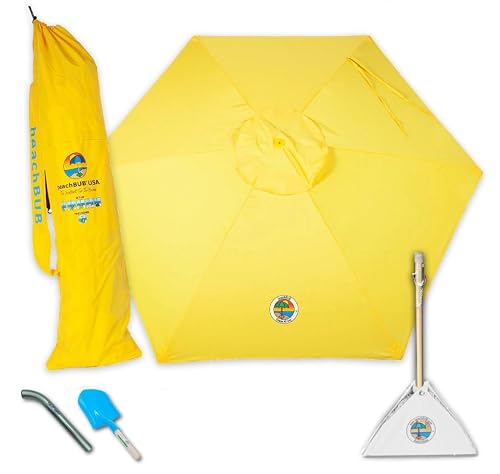
BEACHBUB All-In-One Beach Umbrella System

PURPLE LEAF Patio Umbrella 10Ft Market Round (Cream)
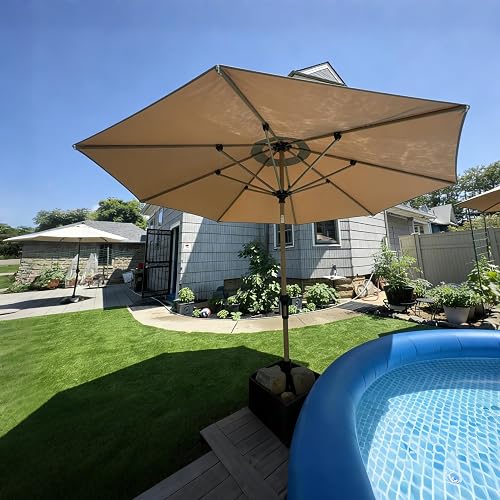
PURPLE LEAF Patio Umbrella 9Ft Round (Taupe)
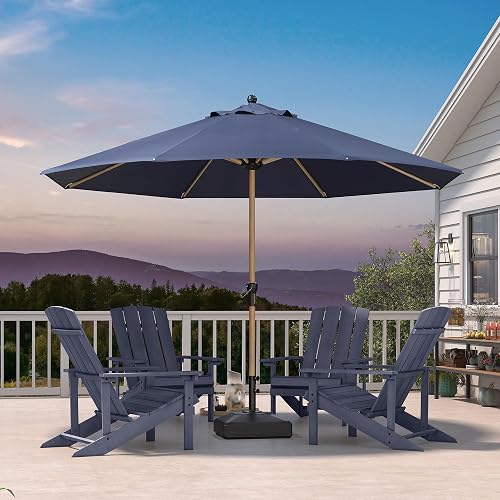
PURPLE LEAF Outdoor Market Umbrella 11Ft Round Navy
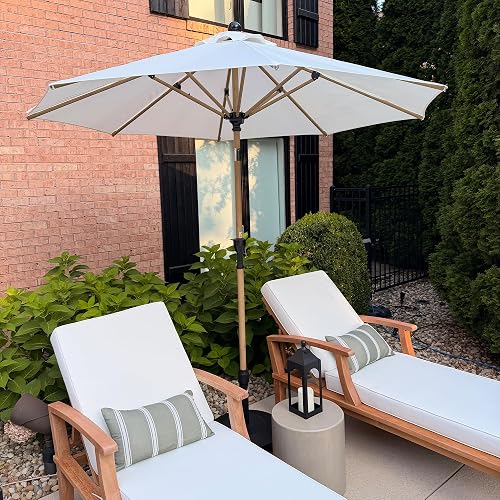
PURPLE LEAF Outdoor Umbrella 8Ft Market (Cream)
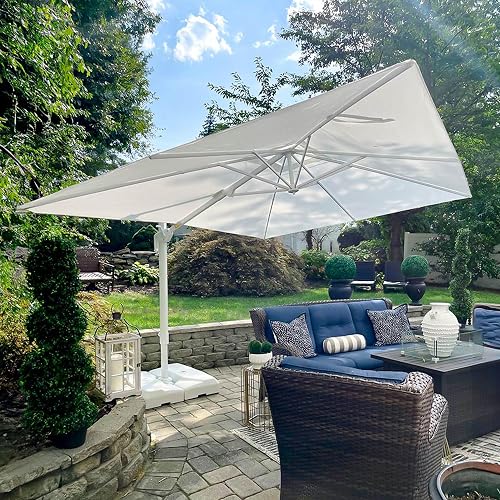
PURPLE LEAF Patio Cantilever Umbrella 9×11.5ft White
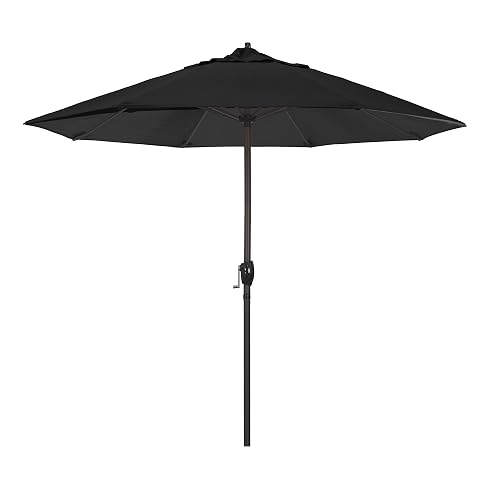
California Umbrella 9ft Sunbrella Acrylic Patio Umbrella
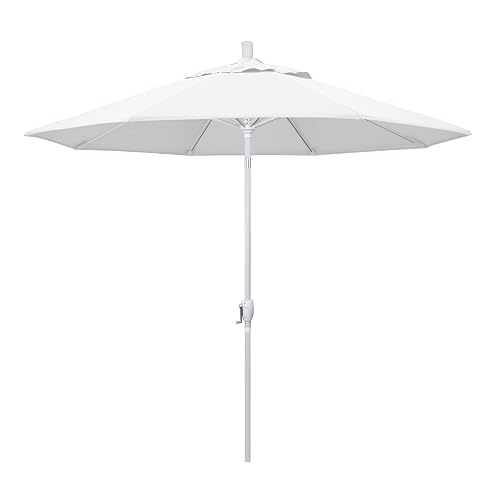
California Umbrella 9ft Round Aluminum Market (White Olefin)
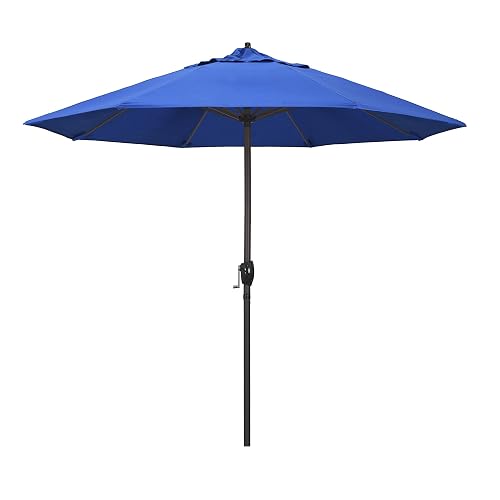
California Umbrella 9ft Round Aluminum (Royal Blue)
The Details Behind The Selections
The JOINHOM anchors this list with a genuine rectangle footprint, not the usual round. At 11 by 9 feet, the canopy covers a six-seat patio table with room for a serving cart on one side, which is the kind of layout most round umbrellas simply can’t shade.
Yarn-dyed fabric (color threads are dyed before weaving, so the hue runs through the weave rather than sitting on top) at 250 GSM (grams per square meter, a fabric weight measure) reads heavier than the 200 GSM polyester used on most of the PURPLE LEAF models later in this list. The base weighs 350 pounds when filled with water or sand, so the offset pole stays planted even on gusty afternoons. For homeowners tired of watching round umbrellas shadow only half the table, the geometry alone makes this one worth a close look.
What Makes Sense
- Rectangle 11 by 9 foot canopy covers a full dining set without overlap gaps.
- 250 GSM yarn-dyed fabric tends to hold color longer than printed polyester.
- Wheeled base lets you reposition the umbrella without dragging patio stones.
- UV protection and fade resistance make it a low-fuss option for sun-drenched decks.
Practical Considerations
- The 350-pound base requires water or sand to reach its rated weight, which adds setup effort.
- Larger canopies catch more wind, so closing it before storms becomes part of the routine.
Best Suited To
Homeowners with a long rectangular dining set who want full-table coverage and don’t mind filling a wheeled base once during install.
Consider Something Else When
Beachgoers should reach for the BEACHBUB All-In-One Beach Umbrella System, since its sand-anchored base handles coastal gusts differently than a water-filled patio base.
Beach umbrellas fail for one reason: the base. BEACHBUB tackles that head-on with an integrated ULTRA Base built to comply with the ASTM F3681-24 beach umbrella safety standard, a 2024 benchmark requiring about 75 pounds of pole resistance to keep a 7.5-foot umbrella anchored in winds up to roughly 30 mph.
The system arrives as a single package, which solves a common pain point where umbrella and base get sold separately. The sun-kissed yellow canopy pops against sand and water for visibility, and the included base buries into the sand rather than sitting on top like a patio umbrella’s wheeled cross. You trade poolside aesthetics for genuine shoreline stability, and for anyone who’s watched a gust flip a standard beach umbrella into the surf, that’s a worthwhile swap.
Everyday Wins
- Base complies with the current ASTM F3681-24 safety standard for beach umbrellas.
- All-in-one packaging removes the guesswork of matching pole to base.
- Sand-anchored design handles onshore winds better than surface-weighted patio bases.
Trade Offs
- Specialized for sand, so it doesn’t double as a backyard umbrella without extra effort.
- After saltwater use, rinsing the base and pole becomes part of the routine to prevent corrosion.
Made For
Families and shoreline regulars who set up on windy coasts and want one tested system instead of piecing together a base separately.
Look Elsewhere When
Backyard diners wanting a static patio centerpiece should choose the PURPLE LEAF Patio Umbrella 10Ft Market Round instead, since its table-hole design suits a stationary dining setup far better than a sand anchor.
UMI and Sunbrella branding aside, the 200 GSM polyester on this PURPLE LEAF is doing real work. The fabric carries a UPF 50+ rating (a UV protection factor where 50+ blocks roughly 98% of ultraviolet rays) plus an AATCC Level 4 colorfastness rating, which is a standardized textile test for how well a fabric holds dye against light and washing.
Combined with eight aluminum ribs, the canopy stays taut through afternoon thermals. The push-button tilt adjusts the angle as the sun tracks across the sky, and at 10 feet the round footprint shades a four-top table with comfortable overhang. For most suburban patios this is the safe, well-rounded choice: a credible fabric spec sheet, a clean cream color that doesn’t fight outdoor furniture, and a tilt that actually moves when you press the button.
Good Reasons To Consider
- UPF 50+ rating offers strong UV blocking for skin protection during long afternoons.
- AATCC Level 4 fade resistance means the cream color holds up through multiple seasons.
- All-aluminum frame and ribs resist rust in humid climates better than steel options.
- Push-button tilt adjusts in seconds as the sun moves, no tools required.
Worth Noting
- 10-foot round needs a properly weighted base, sold separately in most cases.
- Polyester, even at 200 GSM, doesn’t match the fade life of solution-dyed acrylic.
Right Fit For
Suburban households with a standard four-seat patio table who want dependable UV protection and a tilt that follows the sun.
Swap It Out When
Pool owners wanting fade-proof color over many seasons should consider the California Umbrella 9ft Sunbrella Acrylic Patio Umbrella, since Sunbrella acrylic typically outlasts polyester in direct sun.
The 9-foot taupe variant of the PURPLE LEAF market umbrella swaps the cream canopy for a darker, more forgiving color. Pool decks rarely stay clean: sunscreen smears, splash marks, and pollen all land on fabric, and cream shows every fingerprint.
Taupe hides those marks while keeping the same UPF 50+ 200 GSM polyester and aluminum frame as its cream sibling. You get an identical tilt mechanism and rib count, just with a canopy color suited to wet-foot traffic. The 9-foot size also works better over a smaller bistro set than the 10-foot round, and pool owners with a deck-mounted table will appreciate the more contained footprint.
Where It Excels
- Taupe color camouflages sunscreen smears and water spots common near pools.
- 9-foot round fits tighter deck footprints where a 10 or 11-foot canopy crowds the space.
- Same UPF 50+ polyester spec as the larger cream model, so UV protection stays consistent.
- Aluminum ribs reduce sway compared to fiberglass alternatives on competing umbrellas.
Things To Consider
- Darker fabric absorbs more heat, so the shaded area directly under the canopy can feel warmer on still days.
- Requires a weighted base rated for at least 40 pounds to stay planted during storms.
Who It Suits Best
Pool owners who host often and want a canopy that looks clean even when the deck doesn’t.
Where A Sibling Pick Shines
Households wanting a larger shade circle for a full dining set should reach for the PURPLE LEAF Outdoor Market Umbrella 11Ft Round Navy, since the bigger canopy suits a six-top layout.
The 11-foot round version of the PURPLE LEAF steps into the gap between a standard market umbrella and a true cantilever. At 11 feet the canopy covers roughly a 7-foot shaded circle, enough for a six-top dining set or a couple of lounge chairs and a side table.
The wood-grain finish on the pole mimics teak without the maintenance, and the navy blue fabric feels like a deliberate choice for deck aesthetics rather than a default color. Note the manufacturer guidance here: it’s not recommended for use with a table unless the table hole is at least 1.9 inches in diameter, and the table depth stays under 30 inches for the canopy to close properly. Skip the table and set it freestanding with a weighted base in a lawn, and the size pays off.
Where It Delivers
- 11-foot round footprint shades more surface area than most 9 or 10-foot market umbrellas.
- 200 GSM UPF 50+ polyester matches the protection spec of the smaller PURPLE LEAF models.
- Wood-grain pole finish mimics teak without the sealing and oiling routine.
- Eight aluminum ribs support the larger canopy against afternoon gusts.
A Few Limitations
- Not recommended for tables with a hole smaller than 1.9 inches or tables over 30 inches deep.
- Larger canopy means larger wind load, so expect to close it before any named storm.
Perfect Match For
Homeowners with open lawn seating or extra-large patio tables who want a single umbrella instead of two smaller ones.
Not Your Match When
Shoppers wanting an offset pole to clear a sectional should consider the PURPLE LEAF Patio Cantilever Umbrella 9×11.5ft White, since its cantilever design avoids the central pole obstruction.
Small patios, balconies, and bistro sets need shade that fits the space, and that’s where this 8-foot cream umbrella earns its place. The compact size makes it easy to handle, and the same UPF 50+ 200 GSM polyester and aluminum frame spec carries over from the larger PURPLE LEAF siblings.
You get essentially the same fabric performance in a tighter package. For a two-top café table or a narrow balcony, the 8-foot diameter shades the table and chair backs without dominating the floor plan. The cream color matches the 10-foot version, so homeowners with multiple seating zones can mix sizes without clashing.
Where It Helps
- 8-foot diameter fits bistro tables, balconies, and narrow patio corners.
- Identical UPF 50+ and 200 GSM fabric spec to the larger PURPLE LEAF umbrellas.
- Aluminum frame reduces total weight for easier seasonal takedown and storage.
Some Limits To Know
- Smaller canopy covers fewer chairs, so a four-top table will have its corners exposed.
- Fabric still requires a base and storage routine like every other model in this category.
Whose Shelf It Belongs On
Apartment dwellers and small-space owners with a two-seat table who need shade without dominating the deck.
Where Another Pick Suits Better
Anyone hosting a four-seat dining set should grab the PURPLE LEAF Patio Umbrella 10Ft Market Round instead, since the extra 2 feet of canopy keeps shoulder-level sun off all four guests.
Cantilever umbrellas earn their keep when the center of a table needs to stay open. A 9 by 11.5 foot canopy floats over a sectional or chaise lounge with no pole down the middle, and the foot-pedal rotation lets you spin the canopy 360 degrees without dragging the base.
The all-aluminum skeleton keeps the frame light enough to crank but heavy enough to hold a tilt angle in place. The crank adjusts the canopy height, and a foot pedal allows hands-free rotation, which matters when you’re carrying a plate of food out to a lounge chair. The white fabric reflects more light than darker options, brightening the shaded area underneath for late-afternoon reading.
What Works In Its Favor
- Offset cantilever design frees up the entire table or seating area beneath the canopy.
- Foot-pedal rotation spins the canopy 360 degrees without moving the base.
- 9 by 11.5 foot rectangle covers sectionals and chaise lounge arrangements.
- White canopy reflects more light, brightening the shaded space for daytime activities.
Possible Compromises
- Cantilever bases are sold separately in most configurations, so the total cost climbs quickly.
- The offset design requires more clearance space behind the base than a center-pole umbrella.
Who Should Grab It
Pool owners with chaise lounges or outdoor sectionals who want shade without a pole in the middle of the seating area.
Skip It When
Shoppers with a standard dining table and limited clearance should consider the PURPLE LEAF Outdoor Market Umbrella 11Ft Round Navy, since a center-pole design fits a tighter footprint.
Sunbrella fabric is the benchmark in outdoor textiles, and this California Umbrella wraps the 9-foot market shape around a fade-resistant solution-dyed acrylic canopy. In solution-dyed acrylic, the color pigment is added to the liquid polymer before the fiber is spun, so the color runs through the entire thread rather than sitting on the surface.
That process is what gives Sunbrella its reputation for holding color across years of UV exposure. The aluminum frame and reinforced ribs match the spec of the other California Umbrella models, and the auto-tilt mechanism with a crank handle adjusts the angle in one motion. For shoppers who replace a polyester umbrella every two to three seasons and want a longer answer, the fabric choice alone justifies the upgrade.
Everyday Advantages
- Sunbrella solution-dyed acrylic resists fading significantly longer than standard polyester.
- 9-foot round fits standard four-seat patio tables without overhang issues.
- Auto-tilt and crank handle adjust the canopy angle in one smooth motion.
- Aluminum frame with reinforced ribs handles wind loads better than steel alternatives.
Points To Note
- Sunbrella fabric commands a higher price than the polyester canopies on most market umbrellas.
- Base typically sold separately, so factor that into the total project cost.
Feature Snapshot
Built With In Mind
Long-term homeowners in sun-intense climates who replace faded umbrellas every few seasons and want a fabric that holds its color year after year.
Reach For A Different Pick When
Beachgoers setting up on sand should grab the BEACHBUB All-In-One Beach Umbrella System, since its ASTM-rated base handles coastal wind in a way patio umbrellas aren’t designed to.
Olefin fabric sits in the middle of the outdoor textile hierarchy: tougher than polyester, lighter than acrylic, and typically less expensive than Sunbrella. The white olefin canopy on this California Umbrella gives a clean, almost resort-style look that pairs with nearly any deck furniture.
The aluminum pole and frame resist rust, and the push-button tilt plus crank lift handle the basics without extras. For homeowners who want a respectable fabric at a moderate price, olefin is a smart compromise. The white color is the trade-off: it brightens the shaded area but shows pollen and dust sooner than a darker canopy.
Practical Pluses
- Olefin fabric handles UV exposure and mildew better than basic polyester.
- White pole and canopy create a clean, modern look for contemporary decks.
- Crank lift and push-button tilt offer simple, reliable everyday operation.
- Aluminum frame keeps total weight manageable for seasonal takedown.
Things To Weigh
- White olefin shows pollen, dust, and bird droppings sooner than darker options.
- Lacks the multi-season fade reputation of Sunbrella solution-dyed acrylic.
Who Will Love This
Style-focused homeowners who want a bright white patio aesthetic and plan to clean the canopy a few times per season.
A Better Fit Elsewhere
Shoppers prioritizing fade resistance above aesthetics should consider the California Umbrella 9ft Sunbrella Acrylic Patio Umbrella, since its acrylic canopy holds color longer than olefin.
Royal blue canopies add a pop of color that neutral patio umbrellas don’t, and this California Umbrella model pairs the bold hue with a bronze pole for a slightly more dressed-up look. The crank lift and auto-tilt mechanism keep the operation simple.
The aluminum frame construction matches the other California Umbrella models on this list, so you’re choosing between color palettes more than frame quality. Royal blue hides water spots and pollen well, making it a forgiving option for poolside use, and the saturated color stays visible from across the yard, which helps guests find the shaded seating area.
A Strong Showing
- Royal blue color holds visual impact across a yard or deck from a distance.
- Darker hue hides water spots and pollen better than lighter canopy options.
- Auto-tilt and crank lift combine for quick, one-handed angle adjustments.
- Aluminum frame and bronze pole finish resist rust in humid poolside environments.
Trade-Offs To Consider
- Bold color may clash with existing neutral patio furniture and color schemes.
- Like most market umbrellas, requires a separate weighted base for stable setup.
Best Suited To
Pool owners who want a vivid canopy that doubles as a wayfinding marker for shaded seating.
Not Your Match When
Minimalist decorators with a neutral deck palette should consider the California Umbrella 9ft Round Aluminum Market (White Olefin), since the all-white aesthetic disappears into a modern setting more gracefully.
What Matters Most Before Choosing Outdoor Umbrella Fabrics
Fabric Material and Weight
The big three outdoor fabrics are polyester, olefin, and solution-dyed acrylic. Polyester is the everyday workhorse, light on cost, decent on fade resistance, and available in the widest color range. Olefin, a synthetic fiber made from polyolefin, sits a step above in mildew and UV tolerance while staying lighter than acrylic. Solution-dyed acrylic, the category Sunbrella defines, is the longest-lasting against sun exposure. Fabric weight, measured in GSM, indicates thickness. Anything at 200 GSM or above tends to feel substantial; below 180 GSM the fabric reads thin and tends to fade faster.
Frame and Rib Construction
Aluminum frames and ribs resist rust in humid or coastal climates far better than steel. The number of ribs matters: eight-rib canopies distribute wind load more evenly than six-rib models, which is why most of the round market umbrellas here use eight. Tilt mechanisms, whether push-button or crank, are worth checking since the cheaper models often have wobbly tilt joints that drift back to neutral over time.
Canopy Size and Shape
Round canopies in 8, 9, 10, and 11-foot diameters cover most patio tables. Rectangle cantilever designs step in when a center pole would block seating or a sectional. Match the canopy to the table size: a 9-foot round fits a four-top, a 10-foot handles a four-top with some overhang, and 11 feet or more suits a six-top arrangement. Cantilevers trade a smaller footprint for a more complex base and higher cost.
Use Case and Placement
Beach and shoreline use needs a sand-anchored base with a tested safety rating. Patio and deck use calls for a weighted base on a stable surface. Poolside use adds splash and sunscreen exposure, so darker canopies or quick-dry fabrics pay off. Coastal air with salt mist demands aluminum frames and rinse-down routines more than inland climates do.
Key Considerations Across These Picks
Where Shoppers Go Wrong
The most common slip is matching the canopy to the table without checking the table’s hole diameter. Several of the larger PURPLE LEAF models need at least a 1.9-inch hole to fit the pole, and patio tables with narrower holes simply won’t accept the umbrella without an adapter. Another trap: assuming the base is included. Many market umbrellas ship as canopy and frame only, with the base sold separately, so the total cost climbs once you add a weighted stand. Finally, shoppers often underweight wind exposure. A 10-foot round in a gusty open yard behaves very differently than the same canopy on a sheltered patio.
When Paying More Pays Off
The upgrade from polyester to solution-dyed acrylic, like Sunbrella, costs more upfront but typically lasts several years longer before noticeable fading. The upgrade from a four-rib tilt joint to an eight-rib aluminum frame with a smoother crank mechanism shows up in daily use: less wobble, fewer stuck tilt buttons, and a more reliable angle adjustment over time. For anyone replacing a patio umbrella every two seasons because of fading or frame fatigue, those upgrades pay back through the cost of the umbrellas you won’t have to buy.