
A reliable set of walkie talkies for hiking can turn a quiet ridge into a connected group, especially when cell signal drops the moment you cross treeline. Whether you’re shuttling kids between trailheads, splitting up with a partner on a long route, or coordinating a group on a multi-day push, the right pair keeps check-ins quick and emergencies reachable. This roundup focuses on handheld radios that handle weather, distance, and battery life across real backcountry miles.
A Closer Look At The Lineup
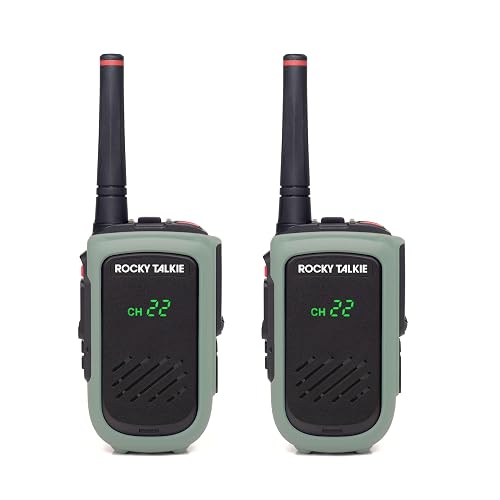
Rocky Talkie Expedition 5 Watt GMRS Radio (2 Pack)
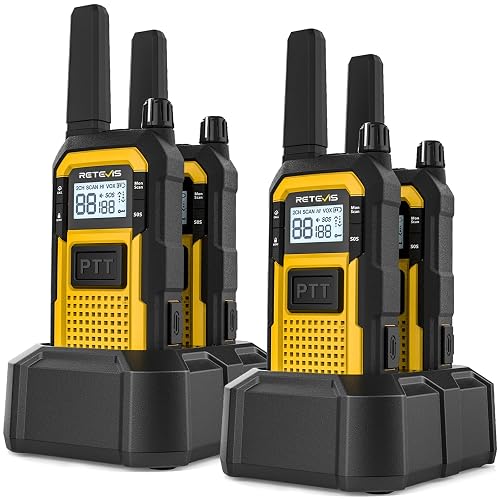
Retevis RB48 Military-Standard IP67 Waterproof Walkie Talkies
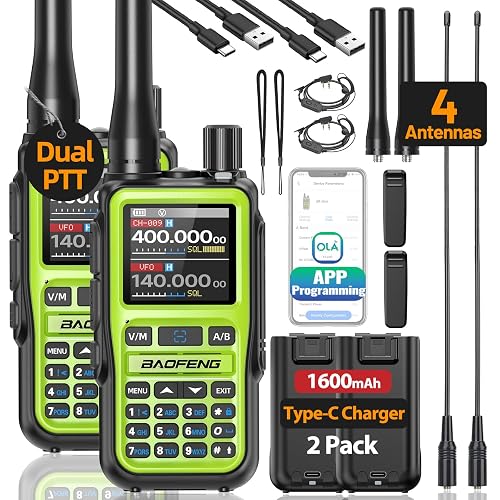
Baofeng UV-5R Mini Ham Radio Handheld NOAA Weather Radio
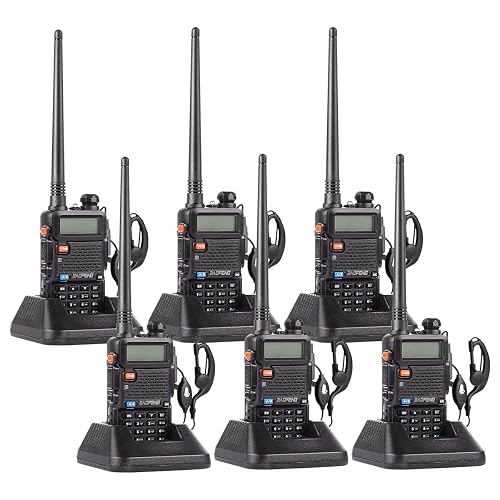
Nicama Baofeng UV-5R Dual Band Two Way Radio (6 Pack)

Retevis RT22 Compact FRS Walkie Talkies (4 Pack)
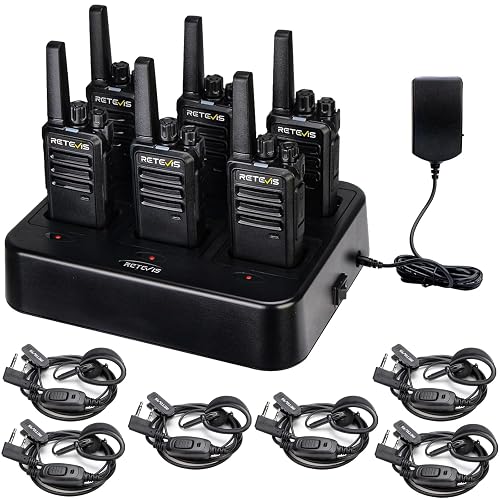
Retevis RT68 Business FRS Walkie Talkies with Earpieces (6 Pack)

Retevis RT22 Commercial FRS Walkie Talkies (6 Pack)

Retevis RT68 Business FRS Walkie Talkies with Earpiece (10 Pack)

Retevis RB48 Heavy Duty 2 Way Radios Long Range
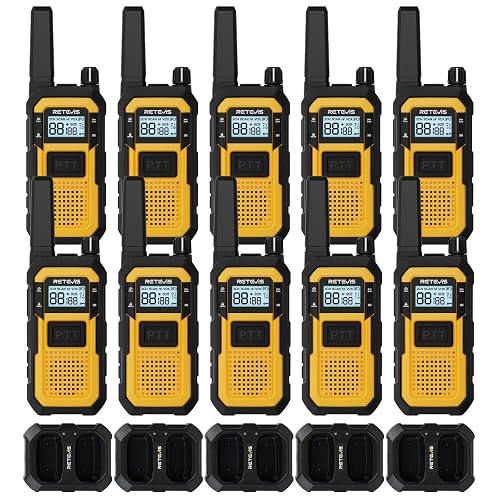
Retevis RB48 Heavy Duty Long Range Two Way Radios
More Details On Our Top Picks
The Rocky Talkie Expedition runs at the legal handheld max for GMRS (General Mobile Radio Service, a licensed UHF band popular for outdoor use), pushing 5 watts through a removable antenna. In dense woods you can realistically expect a couple of miles of clean signal, with a stated ceiling that climbs on open ridgelines. NOAA weather alerts (broadcasts from the National Oceanic and Atmospheric Administration that warn of incoming storms and hazards) keep your group ahead of fast-moving fronts, a real comfort above treeline.
Where this radio sets itself apart from the smaller Retevis RT22 below is in power and battery headroom. The 1800 mAh rechargeable pack is rated for roughly five days of intermittent use, which lines up nicely with a long weekend. IP67 waterproofing (sealed against dust and one meter of immersion for thirty minutes) handles creek crossings and surprise rain without panic.
What Pays Off
- 5-watt GMRS output delivers meaningful range where smaller FRS (Family Radio Service, the license-free UHF band) radios fall short.
- Five-day battery claim covers most multi-day trips without a wall charge.
- NOAA weather alerts warn of incoming storms, useful above treeline.
- IP67 sealing shrugs off rain, splash, and brief drops into water.
- Removable antenna lets you swap for a higher-gain aftermarket option later.
Trade Offs
- GMRS operation requires an FCC license in the U.S., a small paperwork step before your first transmission.
- The 5-watt output drains the battery faster than a 2-watt FRS unit under heavy chatter.
- Larger body than pocket-oriented picks like the Retevis RT22.
Key Specs
Right Fit For
Backpackers tackling multi-day routes who want maximum power, weather alerts, and a battery that holds up across resupply gaps.
Look Elsewhere When
You want a fully license-free setup with slimmer everyday ergonomics, in which case the Retevis RT22 Compact makes more sense.
The Retevis RB48 is built around MIL-STD-810H, a U.S. military testing framework that simulates drops, vibration, temperature shock, and humidity on electronics. That certification is the headline feature, and it shows in the chunky, grippy body. Compared to the slimmer Retevis RT68 covered later, this radio feels like a tool rather than a gadget, which is exactly the point for wet canyons or rocky scrambles.
The IP67 seal matches the Rocky Talkie above, meaning dust and brief immersion are both non-events. Owners commonly report that the shell shrugs off rain and pack-strap abuse, which matters when a radio spends months bouncing against a hipbelt.
Notable Upsides
- MIL-STD-810H certification gives confidence beyond basic splash resistance.
- IP67 sealing handles creek crossings and steady rain.
- Reinforced shell tolerates pack-strap abrasion and minor drops.
- License-free FRS operation gets you on the air with zero paperwork.
Things To Consider
- Bulky form factor isn’t ideal for ultralight setups where every gram matters.
- FRS wattage caps range compared to the 5-watt Rocky Talkie Expedition.
- Charging dock is sold separately in some bundles, so check what’s in the box.
Whose Shelf It Belongs On
Hikers tackling abrasive routes, wet climates, or canyon environments who want a radio that takes abuse without babying.
Reach For A Different Pick When
You’re chasing maximum signal distance over ruggedness, in which case the Rocky Talkie Expedition 5 Watt Radio brings more push.
The Baofeng UV-5R Mini is a ham radio (amateur radio, requiring an FCC license for transmitting on most frequencies) handheld with up to 999 channels and dual PTT (push-to-talk, the button you press to transmit), meaning two frequencies can be monitored side by side. That makes it a curiosity for casual hikers and a workhorse for licensed amateurs who want a single radio to scan repeaters and weather at the same time.
USB-C charging is a small but welcome upgrade over the older MiniUSB jacks on classic UV-5R units, so the same cable that charges your phone or headlamp will top this off. Frequency copy and APP programming lower the learning curve for first-time owners, although the menu structure still rewards patience.
What Stands Out
- Up to 999 programmable channels cover FRS, GMRS, ham, and weather bands.
- Dual PTT lets you monitor two frequencies at once without missing traffic.
- USB-C charging matches cables you already carry on trail.
- Compact body fits a chest pocket or pack lid.
Points To Keep In Mind
- Transmitting on most frequencies requires a ham license, which adds a study step for newcomers.
- Menu programming has a steeper learning curve than the dedicated FRS picks below.
- Antenna performance in dense forest is modest without an aftermarket upgrade.
Feature Snapshot
Made For
Licensed amateurs and curious tinkerers who want channel depth, scanning, and weather on a single device.
Skip It When
You want a license-free grab-and-go radio for casual hikes, in which case the Retevis RT22 Compact FRS Walkie Talkies fit better.
Where the Baofeng UV-5R Mini above is sold as a single handheld, this Nicama bundle arrives as six radios pre-paired and ready to roll. The dual-band design covers 144-148 MHz VHF (Very High Frequency, better for open terrain) and 420-450 MHz UHF (Ultra High Frequency, better through trees), which gives you flexibility to pick the right band for the day’s terrain.
For a club outing, scout troop, or extended family group, the math works out cleanly. Each hiker gets their own radio, the 1800 mAh batteries stretch across long days, and the price per unit lands well below premium single-handheld options.
Good Reasons To Consider
- Six radios in one bundle eliminates per-unit markup for groups.
- Dual-band coverage lets you pick VHF for open ridges or UHF for wooded valleys.
- 1800 mAh Li-ion battery supports full-day use between charges.
- Each unit ships ready to program, which lowers setup friction for group leaders.
Honest Caveats
- Programming software and cable are typically separate purchases, adding to the total cost.
- Bulk charging requires sourcing a multi-bank station separately.
- Licensed frequencies still need paperwork if you intend to use ham bands.
Best Suited To
Group leaders and outdoor clubs outfitting an entire team with radios on a shared budget.
Not Your Match When
You’re a solo hiker who only needs two units, in which case the Rocky Talkie Expedition 2 Pack is a tighter fit.
The Retevis RT22 leans into minimalism. The short, thumb-length stub antenna and slim chassis slip into a jacket pocket without snagging, which is the whole selling point. If you’ve ever bonked your face on a long whip antenna while checking a map, the RT22’s blunted profile is a quiet relief.
USB-C charging and a roughly 10-hour battery life cover day hikes with margin. Compare that to the beefier Retevis RB48 above, and the trade is clear: less range and less ruggedness, much more carry comfort.
A Favorable Mix
- Compact chassis disappears into a pocket or belt clip.
- USB-C charging uses cables you already own.
- License-free FRS operation, no paperwork required.
- Four-unit pack fits a family or small friend group.
Less Ideal Details
- Short antenna caps effective range in dense forest or steep canyons.
- Lacks weather alerts, so you pair it with a phone forecast for storm days.
- Plastic shell is more comfortable than armored, so treat it gently on rocky trails.
Quick Facts
Who Should Grab It
Casual day hikers and families who want a license-free radio that disappears into a pocket until needed.
A Better Fit Elsewhere
You push deep into canyons where range matters more than size, in which case the Rocky Talkie Expedition 5 Watt Radio pulls ahead.
The Retevis RT68 packs six FRS radios and a six-bank charging station into one kit, which removes the usual tangle of separate wall adapters. For an outfitter running multiple trips or a family that wants a radio in every pack, that charging dock is the unsung hero of the bundle.
The included earpieces add a hands-free layer that matters during coordination calls at busy trailheads. Owners commonly use the earpiece mic for short stage directions at group meetups rather than full-day trail use, since ear fatigue is real.
A Few Highlights
- Six-bank charger powers the whole pack from a single outlet.
- Earpieces included for hands-free communication.
- 16 channel combinations work right out of the box.
- License-free FRS, so no setup paperwork.
Small Caveats
- Earpiece cords can snag on pack straps during technical terrain.
- FRS wattage limits clean range compared to the 5-watt Rocky Talkie.
- Dock takes counter space at home, which matters in small apartments.
Who It Suits Best
Trip leaders and event organizers who run coordinated groups and want charging to be one clean routine.
Where Another Pick Suits Better
You need maximum backcountry range, in which case the Rocky Talkie Expedition 5 Watt Radio is a smarter match.
The commercial RT22 bundle scales the slim chassis from the 4 Pack above into a 6-unit kit with the same multi-bank charger included. For a small guiding operation or family reunion group, the slim profile means each hiker forgets they’re carrying a radio at all until a check-in matters.
The charging dock handles six radios at once with overcharge and short-circuit protections, which removes the nightly chore of juggling wall adapters. The 16-channel FRS operation keeps the radio usable with zero licensing overhead.
Practical Pluses
- Slim, pocket-friendly chassis across all six units.
- Multi-bank charger included with safety protections built in.
- License-free FRS operation for instant usability.
- Six-pack pricing lowers per-unit cost for groups.
Things To Weigh
- Short antenna limits range compared to longer-whip designs.
- Plastic shell is comfortable but less impact-resistant than the RB48 series.
- No NOAA weather receiver, so you’ll want a forecast app alongside.
Built With In Mind
Outfitters, instructors, and trip leaders running small groups who want lightweight radios and centralized charging.
Swap It Out When
You want a heavier-duty shell for rocky routes, in which case the Retevis RB48 Walkie Talkies for Adults bring MIL-STD toughness.
This 10-pack version of the RT68 ramps up for larger search-and-train style operations, race crews, or extended guiding teams. Each radio runs on FRS with 16 channel combinations and a palm-sized chassis that survives day-to-day bouncing in a gear bag.
The hardened shell gives more confidence than the slim RT22 chassis, while the simple knob-and-button layout means new users can hand a radio to a volunteer without a training session. For most backyards, the 16-channel count is more than enough to coordinate sub-teams.
Real Benefits
- Ten radios in one kit covers sizable groups without per-unit sourcing.
- Hardened shell tolerates rougher handling than the RT22 series.
- Simple knob interface gets new users on the air fast.
- License-free FRS operation across all ten units.
Possible Compromises
- Larger pack weight makes it less ideal for backpack trips where every ounce counts.
- Charging ten units at once needs the matching multi-bank dock, which is sometimes bundled separately.
- FRS wattage caps signal range compared to the 5-watt GMRS picks.
Who Will Love This
Race directors, training groups, and large volunteer teams who need ten reliable radios with one common interface.
Consider Something Else When
You only need four radios for a family outing, in which case the Retevis RT22 Compact FRS Walkie Talkies (4 Pack) avoids bulk.
The Retevis RB48 is the same MIL-STD-810H platform as pick 2, packaged here as a long-range heavy-duty 2-way radio aimed at guide services and rough backcountry use. The reinforced shell absorbs the kind of pack drops and seat-belt snag incidents that would crack a slimmer unit.
Compared to the more pocket-oriented RT22 series, the RB48 trades carry comfort for impact tolerance. For multi-day routes with rope sections or scree, that trade usually pays off.
Positive Points
- MIL-STD-810H certification for drops, vibration, and temperature shock.
- IP67 sealing handles rain and brief submersion.
- Long-range FRS operation for wooded and obstructed terrain.
- License-free operation skips the FCC paperwork step.
Where It Is Less Suited
- Bulkier chassis is overkill for casual day hikes.
- FRS wattage still falls short of 5-watt GMRS picks for true backcountry range.
- Charging dock is sometimes sold separately, depending on the bundle.
At A Glance
Perfect Match For
Backcountry guides and rugged-route hikers who treat their gear hard and want a radio that takes the abuse.
Where A Sibling Pick Shines
You prioritize range over ruggedness, in which case the Rocky Talkie Expedition 5 Watt Radio offers more signal push.
This second RB48 listing shares the MIL-STD-810H and IP67 credentials of picks 2 and 9, positioned here as an outdoor-ready long-range radio. The combination matters most when a cold front rolls in mid-route, since the sealed shell keeps condensation away from the speaker and mic.
For hikers facing mixed terrain, the ruggedness arrives without forcing you to learn ham programming or carry a license. The trade-off versus the 5-watt Rocky Talkie is range, but the body is built to take whatever the trail throws at it.
What Works In Its Favor
- MIL-STD-810H certification for drops, temperature shock, and dust.
- IP67 sealing holds up against rain, splashes, and brief immersion.
- License-free FRS operation for quick adoption.
- Long-range antenna helps push signal through tree cover.
Trade-Offs To Consider
- Heavier than pocket-oriented picks like the Retevis RT22 Compact.
- Range still trails the 5-watt GMRS Rocky Talkie Expedition on open terrain.
- Charging accessories sometimes require a separate bundle purchase.
Right Fit For
Cold-weather and wet-climate hikers who need a sealed, shock-tested radio without dealing with ham licensing.
Not Your Match When
You’re packing ultralight and want minimal bulk, in which case the Retevis RT22 Compact FRS Walkie Talkies are a smarter carry.
What To Weigh Before Choosing Walkie Talkies For Hiking
Range vs. Real Terrain
Manufacturers quote maximum distances measured on open water or flat plains, not in the canyons where most hikes happen. In dense forest or steep granite, expect a fraction of that headline number. If your route threads through heavy tree cover or sharp ridges, lean toward higher wattage (5 watts on GMRS) and accept the license step, or pair a shorter-range FRS radio with line-of-sight plans like ridge traverses.
License-Free vs. Licensed Bands
FRS radios work the moment you turn them on, which matters for casual trips. GMRS radios push more power through the same general UHF territory but require a simple FCC license, with no exam, just a registration fee. Ham radios open the deepest channel pool but require passing a test. Match the band to how often you’ll actually transmit beyond simple group check-ins.
Battery Life and Charging Style
For day hikes, any modern rechargeable battery should get you home. For multi-day trips, look at radios that charge over USB-C so your existing cable kit covers everything, and check whether the manufacturer publishes a realistic hours-of-use figure. Cold weather saps battery capacity faster than the box claims, so a built-in margin matters.
Durability and Weather Sealing
IP67 sealing is the practical sweet spot for hiking: dust-tight and able to survive brief immersion. MIL-STD-810H ratings add shock and vibration testing on top, which is reassuring on rocky routes but adds bulk. Match the ruggedness to your terrain; an ultralight day-hike kit doesn’t need a tank.
Key Considerations Across These Picks
Pitfalls Shoppers Hit
The most common mistake is chasing the headline range number without checking the band. A 30-mile FRS claim on a tree-heavy trail collapses to a fraction of that distance. Buyers also overlook licensing: a 5-watt GMRS radio is silent on the air until you file the FCC paperwork. Finally, ignoring charging style leaves you juggling proprietary cables on the trail.
Where The Extra Money Goes
Stepping up to a MIL-STD-certified body or a 5-watt GMRS radio buys you real-world survivability: tougher shells, sealed ports, and stronger signal push. NOAA weather receivers add storm awareness that cheaper radios skip. The upgrade pays off most on multi-day routes or wet conditions, where a single failed radio can leave a group split up without comms.
Frequently Asked Questions
How far will walkie talkies actually reach on a hike?
On open ridgelines, 5-watt GMRS radios can stretch several miles, while FRS radios in dense forest often cover one to two miles of usable signal. Terrain, antenna length, and elevation matter more than the box claim.
Do I need a license to use these hiking radios?
FRS radios are license-free in the U.S. GMRS radios require a simple FCC registration with no exam. Ham radio bands require passing a licensing test before transmitting.
Can I mix brands on the same channel?
Yes, as long as both radios share the same frequency and channel spacing. FRS and GMRS share overlapping UHF spectrum, so cross-brand pairing is common.
Are walkie talkies useful in an emergency without cell signal?
They can be, especially for close-group coordination, though they cannot reach 911. Pair your radio with a personal locator beacon or satellite messenger for true backcountry rescue access.
How do I maintain a hiking radio in the field?
Wipe down the shell after wet days, keep the charging port covered until you plug in, and store radios in a breathable pocket to prevent condensation. Battery contacts appreciate an occasional dry wipe.
The Takeaway
Match the radio to your route, not the marketing claim. Casual day hikers get plenty from a slim FRS pick like the RT22, while multi-day backcountry travelers benefit from the 5-watt push and weather alerts of the Rocky Talkie Expedition. Rugged RB48 units cover the middle ground where weather and rough handling are daily realities.