
A wet trail tests your footwear in ways pavement never does. The right pair of water hiking shoes for women keeps your footing steady on slick rock, drains fast after a stream crossing, and stays light enough to forget you’re wearing them. This roundup sorts eight options by terrain, fit, and how much protection you actually need, so the next time the path turns muddy or the shoreline gets rocky, your shoes aren’t the part of the trip that holds you back.
The Picks In Brief

XTRATUF Women’s Slip-Resistant 6-Inch Ankle Deck Boots

Zhuanglin Women’s Quick Drying Aqua Water Shoes
Maxome Barefoot Aqua Swim Water Shoes
ziitop Water Shoes Aqua Socks
NORTIV 8 Water Shoes for Women
LIZRHA Quick Dry Aqua Swim Shoes
KOLILI Women’s Stylish Water Shoes
WHITIN Women’s Lightweight Packable Z21
Taking A Closer Look At The Options
Boots earn their keep when the ground turns to slime, and the XTRATUF 6-Inch Ankle Deck Boot is built for exactly that kind of day. Where the lighter aqua shoes below lean on flexible mesh, this one wraps the foot in a waterproof shell that shrugs off spray and shallow puddles.
Pull them on for early-morning fishing, dock work, or shoreline hikes where ankle stability matters more than breathability. The Chevron-patterned rubber outsole (a wide, angled tread that channels water away from the sole) grips wet fiberglass and algae-slick rock better than most trail runners can. For anyone who spends long hours around brackish water or slippery surfaces, the extra weight is a fair trade.
Everyday Wins
- Waterproof construction keeps feet dry through spray, dew, and shallow crossings
- Slip-resistant Chevron outsole handles wet boat decks and rocky shores
- Six-inch shaft adds ankle support on uneven stream banks
- Durable rubber shell resists scuffs from barnacles, gravel, and trail debris
Trade Offs
- Heavier than the barefoot options further down this list, so long trail miles feel more work
- Limited ventilation means feet can warm up on hot, dry trails without water to cool them
Whose Shelf It Belongs On
Anyone who works on docks, fishes from shore, or hikes wet, rocky coastlines where grip and protection matter more than speed.
Reach For A Different Pick When
Pack-light travelers should look at the WHITIN Women’s Lightweight Packable Z21 instead, since it folds flat in a suitcase and weighs far less on long travel days.
The Zhuanglin Aqua Water Shoe trades the heavy-duty build of the XTRATUF for something much simpler: a stretchy mesh upper that drains in minutes. The first pick above is a boot. This one is closer to a slipper with a sole, which is exactly the point.
It fits nicely on warm-weather outings: tide pooling with kids, walking the length of a beach boardwalk, or padding around a pool deck where you want some protection without the bulk. The barefoot-style sole lets your toes spread naturally, which most wearers find comfortable over short to medium distances. If your hikes rarely leave the sand, the simplicity is a real asset.
What It Does Well
- Breathable mesh upper drains fast after wading, so feet don’t stay soggy
- Lightweight construction barely adds weight to a beach bag
- Flexible sole feels natural on flat, sandy terrain
- Easy slip-on design suits casual water play and quick errands
Points To Keep In Mind
- Minimal arch support means longer walks on pavement can leave feet tired
- Thin sole offers little protection from sharp shells, hot sand, or broken glass
Built With In Mind
Casual beachgoers and poolside loungers who want basic foot protection without paying for serious hiking features.
Consider Something Else When
Trail hikers tackling rocky terrain will find the NORTIV 8 Water Shoes for Women a sturdier step up, since that pair adds more structured support underfoot.
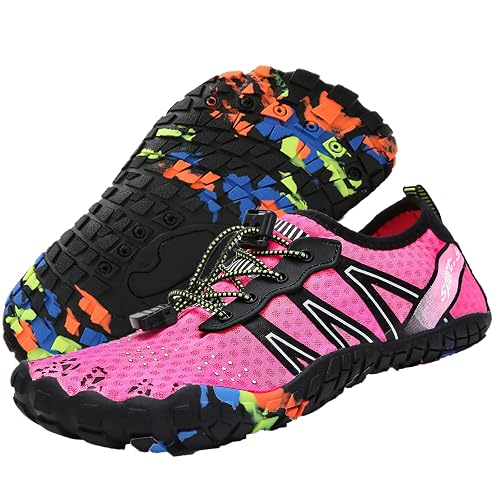
The Maxome Barefoot Shoe keeps the airy, sock-like feel of the Zhuanglin pair but adds a sole tread that grips river rocks. It sits in a useful middle spot: tougher than a pure swim sock, lighter than a hiking sandal.
It’s the kind of shoe that earns its keep on a warm afternoon spent wading across a creek to reach a swimming hole. The stretchy upper dries quickly and the thin sole lets your feet feel the ground, which helps on uneven riverbeds. Note that barefoot-style fits tend to run small, so sizing up a half-step is a sensible move for wider feet.
A Few Strong Suits
- Thin, grippy sole gives solid traction on wet rocks and slick pool tile
- Barefoot design lets toes splay naturally for balance on uneven ground
- Quick-dry fabric sheds water fast after wading
- Light enough to roll up and tuck in a daypack when not in use
Honest Caveats
- Minimal cushioning can wear on the feet over multi-mile rocky hikes
- Open mesh construction lets small pebbles sneak in on gravelly trails
Key Attributes
Best Suited To
Swimmers, kayakers, and casual river hikers who want grippy soles and a barely-there feel for stream crossings and shorelines.
A Better Fit Elsewhere
Anyone needing arch support for longer walking days should consider the KOLILI Women’s Stylish Water Shoes, which add structured cushioning underfoot.
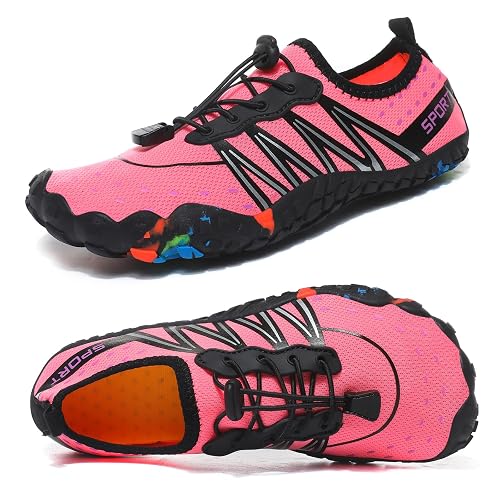
The ziitop Water Shoe is the most stripped-down option here, with a sock-style upper and a basic rubber sole. It doesn’t try to be a hiking boot, and that’s the appeal for casual water play.
Slip a pair on for the resort pool, a hot tub deck, or a sandy cove where the water is calm and the ground is soft. The stretchy fit makes them easy to pull on with wet hands, and they rinse clean in a quick pass under a faucet. Sizing runs across both women’s and men’s ranges, which helps when sharing between family members on vacation.
A Few Highlights
- Sock-style upper slips on quickly with wet or sandy hands
- Light rubber sole protects feet from hot pavement and pool decks
- Universal fit range works for both women’s and men’s sizing
- Packs flat into a beach tote without bulk
Some Limits To Know
- Very thin sole offers little defense against sharp rocks or submerged sticks
- Not built for sustained walking on rough trails
Made For
Travelers and vacationers who want a no-fuss water shoe for pools, sandy beaches, and easy shorelines.
Not Your Match When
Hikers needing real trail traction should pick the NORTIV 8 Water Shoes for Women, which offer a more aggressive outsole pattern for uneven ground.
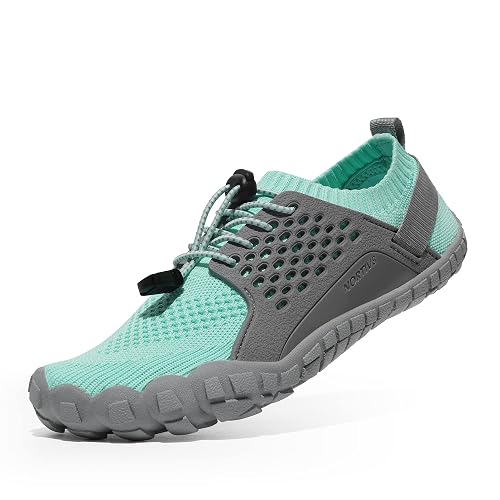
The NORTIV 8 steps up from the lighter aqua socks above with a more structured build aimed at trail use. It borrows the aggressive tread of a hiking shoe and pairs it with mesh panels that still let water drain.
This is the kind of shoe that suits a four-mile loop with two creek crossings and a few stretches of root-covered dirt. The grippier outsole earns its keep on slick log crossings, and the reinforced toe adds peace of mind when the trail hides loose stones underfoot. Compared with the XTRATUF boot, you trade waterproofing for breathability, which matters on warm days with dry trail sections.
What Pays Off
- Trail-style outsole grips mud, loose dirt, and wet roots
- Reinforced toe cap shields against rocks and trail debris
- Mesh-and-synthetic upper drains and dries faster than full rubber boots
- More structured midsole handles miles better than barefoot-style options
Worth Bearing In Mind
- Not fully waterproof, so feet get wet during deep wades
- Slightly heavier than pure aqua socks, which adds up over long days
The Right Fit
Day hikers who want one shoe for mixed terrain: dry trail, muddy patches, and the occasional stream crossing without changing footwear.
Look Elsewhere When
Anyone working on wet boat decks for hours should reach for the XTRATUF 6-Inch Ankle Deck Boots, since that pair handles constant spray and standing water better.
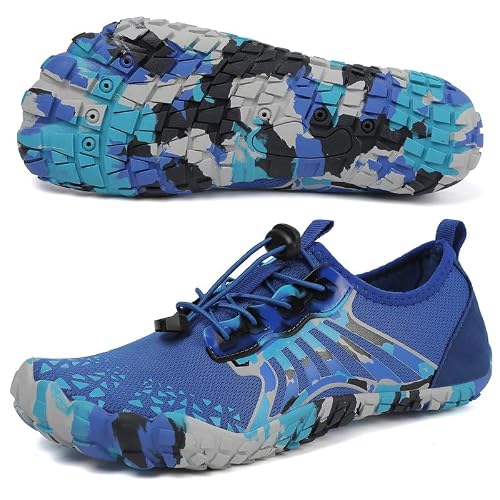
The LIZRHA Quick Dry Aqua Shoe covers a lot of bases without getting locked into one activity. Where the barefoot Maxome above leans minimalist, this pair adds a slightly thicker sole and a stretchier upper that holds its shape after repeated wears.
It handles the messy middle of water footwear: light fishing from shore, a beach volleyball tournament, a water park afternoon, or a river tubing float. The drainage ports at the sole help water escape after wading, and the reinforced toe keeps the shoe from wearing through at common stress points. If you’ve bounced between beach trips and pool days without finding one shoe that covers both, this is a sensible middle-ground pick.
The Upside
- Stretch-and-rebound upper holds shape over a full season of water play
- Sole drainage ports clear water faster than solid-bottomed shoes
- Reinforced toe and heel add durability at common wear spots
- Handles fishing, boating, surfing, and pool use in one shoe
Small Limitations
- Mid-range cushioning doesn’t match true hiking shoes on long backcountry miles
- Upper mesh can snag on rough barnacles or sharp oyster shells
Feature Snapshot
Perfect Match For
Active women who split their weekends between fishing trips, beach days, and casual water sports and want one shoe that handles all of it.
Skip It When
Serious hikers tackling rough terrain will find the NORTIV 8 Water Shoes for Women more supportive underfoot over long miles.
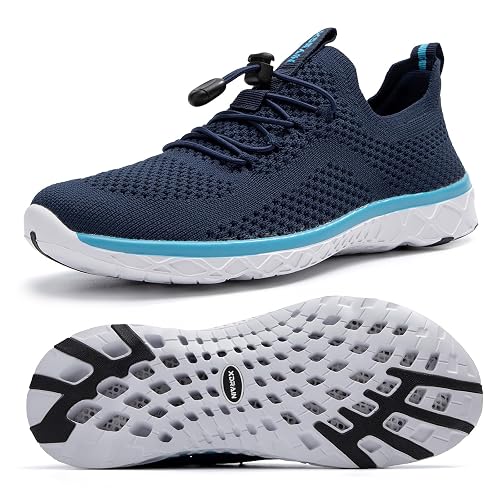
The KOLILI Women’s Water Shoe takes the all-day comfort of a walking shoe and adds water-friendly materials. Compared with the ultra-minimalist picks above, this one looks and feels more like a tennis sneaker that can handle a puddle.
It’s a thoughtful match for travel days built around walking tours, city strolls by the harbor, and casual lunches by the marina. Built-in arch support helps when you’re on your feet for hours, and the closed styling protects toes in busy tourist areas where dropped hazards hide in the sand. The trade-off is less breathability than a fully open mesh shoe, so feet can warm up on hot, dry pavement.
Reasons It Performs
- Arch support handles long walking days on hard surfaces
- Closed-toe design protects against drops and debris
- Walking-shoe styling fits city wear and casual dinners
- Drains and rinse clean after beach or pool segments
Trade-Offs To Consider
- Less breathable than fully open aqua socks in high heat
- Heavier than minimalist barefoot options for travelers counting ounces
Who Should Grab It
Travelers who want one water-friendly shoe that looks at home in town and feels supportive over full days of walking.
Swap It Out When
Hikers wanting pure trail performance should pick the NORTIV 8 Water Shoes for Women, which trade casual styling for grippier outsoles.
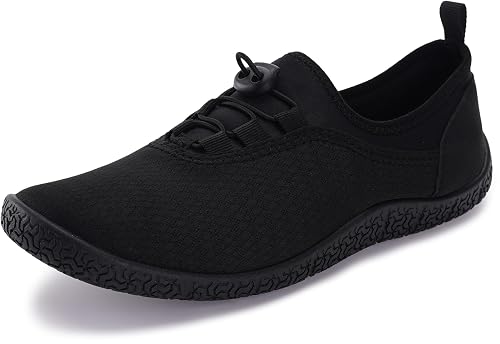
The WHITIN Z21 wraps up this roundup with the most packable option in the lineup. It folds flat, weighs almost nothing, and slips into a carry-on without complaint, which is the whole reason it exists.
Throw a pair in a suitcase for a beach vacation, a cruise with port stops, or a weekend at a lake cabin where luggage space matters. The flexible sole handles sandy shorelines and pool decks, and the stretchy upper dries fast between dips. Compared with the heavier XTRATUF boot at the top of the list, you trade serious protection for portability, so this is the shoe for travel, not for rough water work.
The Practical Payoff
- Packable construction folds flat into luggage and daypacks
- Lightweight build barely registers in a carry-on weight budget
- Stretch upper dries quickly between water sessions
- Comfortable for casual walking on boardwalks and resort paths
Some Limits To Know
- Minimal structure means less protection on rocky or rooty trails
- Not suited for cold water or extended submersion
Quick Facts
Who It Suits Best
Frequent travelers and cruise-goers who want a secondary water shoe that lives in a suitcase and handles beach and pool days on arrival.
Where A Sibling Pick Shines
Anyone working around standing water should reach for the XTRATUF 6-Inch Ankle Deck Boots instead, since they handle spray and slippery surfaces far more aggressively.
What Matters Most Before Choosing Water Hiking Shoes For Women
Traction Across Wet Surfaces
Outsole rubber and tread pattern matter more than people expect. Chevron-patterned soles (the angled, wave-like grooves you see on the XTRATUF boot) channel water away from the contact patch, which keeps grip strong on wet rock and algae-covered docks. For trail use with creek crossings, look for lugs that bite into mud rather than smooth tread designed for boats.
Drainage Speed and Drying Time
Quick-dry mesh uppers shed water in minutes, while waterproof boots hold it in and can feel swampy on warm hikes. Drainage ports at the bottom of the sole, which a few options like the LIZRHA use, speed things up further. For travel days, fast-drying fabric matters because you can’t always lay shoes out in the sun.
Fit, Foot Protection, and Packability
Sizing varies widely across barefoot-style shoes. Stretchy aqua socks often run small, so a half-size up is a sensible hedge for wider feet. Heavier boots and structured hikers protect toes better but take up suitcase space, while packable options like the WHITIN sacrifice protection for portability. Match the build to the trip, not the other way around.
Cushioning and Arch Support
Barefoot-style shoes keep you connected to the ground, which helps balance on uneven riverbeds but tires feet on long paved walks. Arch support, like the structured footbed on the tennis-style KOLILI pair, makes multi-hour days easier. If your outings mix water and walking, prioritize a midsole over a thin barefoot sole.
Key Considerations Across These Picks
Pitfalls Shoppers Hit
The biggest mistake is picking a pure swim sock for serious hiking, or a heavy deck boot for a beach vacation. Match the shoe to the dominant activity, not the occasional one. Sizing is the second trap. Barefoot-style aqua shoes frequently run small, and trying them on with the sock thickness you actually plan to wear saves returns.
Where The Extra Money Goes
Higher-tier models like the XTRATUF add waterproofing, reinforced shells, and dedicated slip-resistant outsoles, which cost more because the rubber compounds are denser and the construction is layered. Cheaper aqua shoes cut costs with thinner mesh and simpler soles. For occasional pool use, the budget tier holds up fine. For frequent wet conditions, the upgrade pays off in longer life.
Frequently Asked Questions
Do water hiking shoes need to be waterproof?
Not always. Waterproof boots like the XTRATUF keep feet dry through spray and puddles, but they trap heat and take longer to dry once soaked. Quick-dry mesh shoes get wet immediately but drain and recover fast. Choose waterproof for cool conditions and standing water, breathable for warm hikes with shallow crossings.
How should water hiking shoes fit?
Snug around the heel and midfoot with room to wiggle toes. Barefoot-style options often run small, so sizing up helps wider feet. A thumb’s width of space at the front of the shoe keeps toes safe on downhill stream crossings where feet slide forward.
Can I use water hiking shoes for regular hiking?
Light trail use is fine on dry days, especially with the NORTIV 8 or KOLILI options that blend hiking-shoe structure with water-friendly materials. Long backcountry miles still call for a traditional hiking shoe or boot with stiffer midsoles and better rock protection.
How do I clean and store water hiking shoes?
Rinse mesh and fabric shoes with fresh water after salt or chlorine exposure, then air-dry away from direct heat. Shake out small stones from drainage ports, and avoid machine drying, which warps rubber soles. Store loosely stuffed or flat to keep shape.
Are water hiking shoes and water socks the same thing?
No. Water socks, like the ziitop pair, are thin, sock-like shoes with minimal soles for casual water play. Water hiking shoes add structured midsoles, protective uppers, and trail-capable outsoles. The difference shows up most on rough terrain and longer days.
Wrap Up
The right water hiking shoes depend on where the path leads. Heavy-duty boots earn their weight on slick docks and rocky shores, barefoot aqua shoes shine on warm river crossings, and packable options handle travel days where luggage is the constraint. Match the build to the dominant activity, size up if you’re between barefoot-style ranges, and the next wet trail won’t slow you down.