
Spotting a buck bedded in a cottonwood at first light, or picking out a coyote on a far ridge before the dogs go out, comes down to the optics in your hands. Long-range hunting pushes glass harder than most outdoor uses, and the right pair makes the difference between guessing at a silhouette and reading antler shape with confidence. The picks below cover daytime binos, pocket-friendly monoculars, and thermal units for after dark, so you can match the tool to your terrain and budget.
Your Options, Compared

Vortex Diamondback HD 10×42 Binoculars
Nocs Provisions Standard Issue 10×25 Binoculars
Nocs Provisions Field Issue Compact 10×32

Bushnell 10x42mm Trophy XLT Binoculars

Vortex Crossfire HD 10×42 Binoculars

Nocs Provisions Zoom Tube 8×32 Monocular

RIX Pocket K2 Portable Thermal Monocular
RIX Titan-T6 Thermal Monocular with LRF

RIX Stride ST3 Lite 384 Thermal Monocular
Meet The Standout Selections
The Diamondback HD earns its spot at the top because it delivers real long-range performance without forcing you into flagship pricing. The 10×42 setup pulls in plenty of light at dawn and dusk, which matters most for the first and last hour of the hunt, and the fully multi-coated lenses help you pick apart a buck’s rack across a canyon when the light gets thin.
Compared to the compact Nocs pairs coming up, this is a heavier full-size chassis built for steady, tripod-friendly glassing from a ridge or a truck window. It suits hunters who cover serious country on foot or from a stand and want a single pair that handles almost any daylight condition.
What Earns Its Place
- 42mm objective pulls enough light for low-light glassing on open ground
- Fully multi-coated optics help reduce chromatic aberration, the colored fringing that softens edges at long distances
- 10x magnification gives you the reach to read antlers and posture from across a canyon
- Rubber armor holds up to scuffs when you are crawling into a ground blind
- Worth considering as a do-it-all pair that can move from a deer hunt to a fall turkey scouting trip
Things To Consider
- Full-size weight gets noticeable on all-day stalks
- No built-in rangefinder, so distance calls stay estimate-based
Quick Facts
Who It Suits Best
Hunters who cover big western country and want a single all-day binocular that handles dawn to dusk glassing without compromise.
Consider Something Else When
Reach for the Vortex Crossfire HD 10×42 Binoculars instead if you want a friendlier price and an included harness for fast glassing on the move.
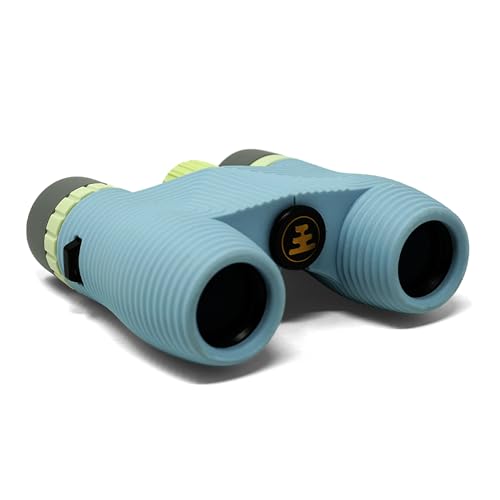
The Standard Issue 10×25 is the pair you forget is in your jacket until you need it. Around 11.85 oz and small enough to live in a chest pocket, these binos go anywhere you go and still pull enough magnification to scout a hillside at first light.
Compared to the full-size Vortex units earlier in the list, these trade raw light-gathering for packability. The fully multi-coated optics and Bak4 prism keep the image bright enough for typical dawn glassing, and the waterproof, fog-proof, scratch-resistant housing shrugs off the kind of abuse a hike-in hunt dishes out. They suit hunters who glass-and-move all day rather than parking on a tripod.
Real-World Strengths
- Pocketable 11.85 oz build disappears in a pack or chest pocket
- 10x magnification is rare for a compact, helping with long-distance reads
- Waterproof and fog-proof seal handles wet mornings and stream crossings
- Scratch-resistant exterior suits rough hunters who toss gear in a truck
Trade Offs
- 25mm objective gathers less light than a 42mm, so the very last hour of legal shooting time gets tough
- No mounting point for a tripod adapter on long sessions
Whose Shelf It Belongs On
Spot-and-stalk hunters who climb ridges, glass briefly, and keep moving want this kind of carry-anywhere reach.
Look Elsewhere When
The Nocs Provisions Field Issue Compact 10×32 is a smarter call when you want the same portability but with stronger low-light performance.
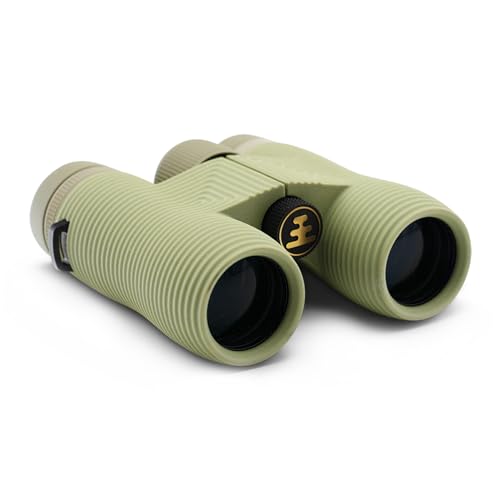
The Field Issue Compact 10×32 splits the difference between the pocket-size Standard Issue and a full-size hunting binocular. At 16.7 oz it is heavier than a true pocket pair, but the 32mm objective pulls noticeably more light, which matters when the sun is hanging low and the game is on the move.
The oversized focus wheel is the underrated feature here, because it lets you snap from a nearby branch to a far ridge with one finger while wearing gloves. The shockproof, waterproof, fog-proof housing pairs with HiFi fully coated optics and a Bak4 prism, so it holds its own on a wet alpine hunt where gear takes a beating.
The Good Stuff
- 32mm objective is a real upgrade for low-light sessions over a 25mm
- Oversized focus wheel adjusts quickly, even with cold fingers
- Shockproof body holds up to slips on wet rock or truck-bed drops
- Bak4 prism keeps colors and contrast close to true at the edges
Honest Caveats
- Heavier than the 10×25, so it lives in a pack rather than a pocket
- 10x can exaggerate handshake on long sessions, so owners tend to brace against a tree
Feature Snapshot
Made For
Backcountry hunters on multi-day trips want a binocular that balances reach, weight, and toughness without dragging down a pack.
Swap It Out When
Step up to the Vortex Diamondback HD 10×42 Binoculars if your glassing happens from a stationary spot and light gathering matters more than weight.
The Bushnell Trophy XLT 10×42 lands as a long-running workhorse for hunters who want full-size reach at a budget-friendly cost. The wide 6.2-degree angle of view is the standout number, because it gives you more sky and more ridge per glance than tighter binoculars, which speeds up the kind of sweep you do from a high vantage.
Where the Vortex pairs lean on premium glass and armor, the Trophy XLT focuses on the basics: a 10×42 platform with a familiar feel and a waterproof housing that shrugs off rain. It fits budget-conscious hunters who would rather put dollars into tags than flagship glass, and who mostly hunt in good light from a fixed spot.
Points In Its Favor
- Wide 6.2-degree field of view helps you cover ridges faster
- 10×42 platform is the proven sweet spot for long-range daylight hunting
- Waterproof housing handles drizzle and stream crossings without worry
- Often friendlier on the wallet than the HD-tier competition
Worth Noting
- Glass clarity trails HD models at the edge of the frame
- Bulkier body than compact Nocs pairs, so it stays on a harness or pack strap
Best Suited To
New and budget-focused hunters who want a dependable full-size binocular without paying for premium HD glass.
Not Your Match When
Pick the Vortex Crossfire HD 10×42 Binoculars if you want sharper edge-to-edge clarity and a harness included for glassing on the move.
The Crossfire HD 10×42 is the pair many hunters start with and keep using for years. The HD optical system pushes the image quality above what the price tag suggests, and the included GlassPak harness makes it easy to carry the binos at the ready on a spot-and-stalk.
Set side-by-side with the Diamondback HD above, you give up a small step in optical refinement, but you get a complete carrying setup out of the package. For most folks new to long-range hunting, that trade makes a lot of sense, since the harness alone tends to be the upgrade you wish you had bought on day one.
Where It Excels
- HD optical system delivers better edge sharpness than older Crossfire versions
- GlassPak harness included, so glassing on the move is comfortable from the first hunt
- 10×42 platform balances reach and light for typical daylight hunts
- Rubber armor protects against typical field abuse
Some Limits To Know
- Not the brightest option in heavy overcast or deep timber
- Heavier than the compact Nocs pairs for long, fast hikes
Right Fit For
First-time and intermediate hunters who want a complete binocular-and-carry setup they can trust season after season.
Reach For A Different Pick When
The Bushnell 10x42mm Trophy XLT is a sensible swap if you prefer a wider field of view and want to spend less on the glass itself.
The Zoom Tube 8×32 is the smallest optic in this lineup at roughly 9.5 oz, and that is the whole point. A monocular (a single-barrel spotting scope) slips into a coat pocket and rides on your chest strap, so it tends to come out more often than a heavier binocular buried in a pack.
Compared to the binocular picks above, you give up the second barrel, which makes depth perception a touch trickier on distant game. In exchange you get an ultralight carry, fully multi-coated optics, a Bak4 prism, and a 384 ft field of view at 1000 yards that covers ridges fast. This one fits hunters who glass constantly on the move and rarely set up a tripod.
Practical Pluses
- Around 9.5 oz, so it rides on a lanyard without bouncing
- Fully multi-coated optics and Bak4 prism keep the view bright
- 384 ft field of view at 1000 yds helps you sweep quickly
- Scratch-proof, water-resistant housing for trail wear
Points To Note
- Single-eye view can miss subtle movement a binocular would catch
- 8x magnification is shorter reach than the 10x binocular options above
Who Should Grab It
Hunters who move fast on long stalks and want an optic that is always within reach without weighing down a chest pack.
A Better Fit Elsewhere
Pick the Nocs Provisions Standard Issue 10×25 Binoculars if you want true two-eye depth perception for spotting at first light.
The RIX Pocket K2 is the size of a chunky flashlight but reads heat instead of light. A 256×192 thermal sensor at 50Hz (50 screen refreshes per second, which keeps moving animals from smearing across the screen) is plenty to spot a coyote’s heat signature against a cold hillside, even through light brush that hides shape from regular binoculars.
Where the daytime binoculars earlier in this list struggle after dark, the Pocket K2 thrives. The onboard Wi-Fi lets you stream what the optic sees to a phone, which is handy for sharing a sighting with a buddy at the truck. It suits hunters who scout fields and feed lots after sundown for hogs, coyotes, or predators.
Benefits That Matter
- Pocketable body fits a jacket or chest pouch
- Thermal sensor reads body heat through light cover and brush
- 50Hz refresh keeps fast-moving targets visible
- Wi-Fi streaming to a phone helps record sightings or share in real time
Less Ideal Details
- 256×192 resolution is entry-level thermal, so small details at distance stay soft
- Battery life on thermals tends to be shorter than daytime binoculars, so plan to top off before each scout
Who Will Love This
Predator hunters and property owners who scout fields after dark want a thermal that disappears in a pocket until needed.
Where A Sibling Pick Shines
The RIX Titan-T6 Thermal Monocular LRF pulls much farther range and adds a built-in rangefinder if you need long-distance identification.
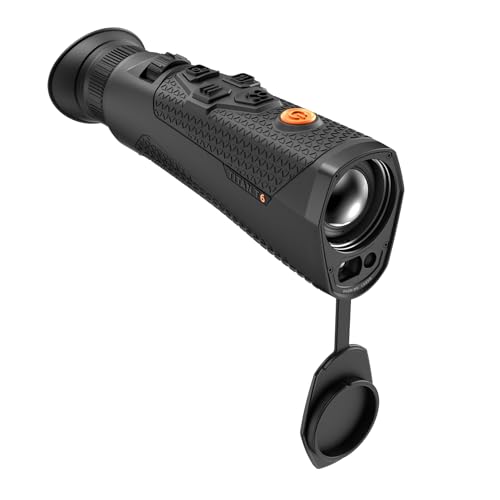
The Titan-T6 is the long-range thermal in the lineup, and the numbers back it up. A 640×480 sensor with a 35mm objective, a 1920×1080 OLED display, and detection out to roughly 1818 yards gives you enough reach to spot and identify a heat signature across open country long after sundown.
The standout feature is the built-in laser rangefinder paired with a ballistic solver (a calculator that converts distance plus environmental data into a holdover for your rifle), which turns the optic into a true long-range night tool. It suits serious night hunters who already know their rifle’s dope (the elevation and windage corrections for known distances) and want to confirm distances in the dark before sending rounds downrange.
Reasons It Performs
- 640×480 thermal sensor pulls fine detail from heat signatures at distance
- Built-in laser rangefinder confirms exact distance in the dark
- 35mm lens with detection to roughly 1818 yd for wide-open country
- 1920×1080 OLED display keeps the image sharp at the eyepiece
Possible Compromises
- Higher thermal class commands a serious budget
- Heavier and larger than the pocket thermal, so it rides on a pack, not a pocket
- Rechargeable batteries need planning for multi-night trips
Spec Overview
Built With In Mind
Experienced night hunters running long-range rigs want a thermal that confirms distance and identifies targets beyond a couple hundred yards.
Skip It When
The RIX Pocket K2 makes more sense for short-range predator scouting and quick property checks if budget matters.
The Stride ST3 Lite is the only optic in this roundup that mounts to a helmet for hands-free scanning. A true 1x base magnification keeps the scene natural rather than zooming in, which means your walking depth perception stays intact while the thermal overlay shows where the heat is.
For predator, hog, or property hunters who want to glass while carrying a rifle or working a dog, that matters. The 384 sensor with a wide field of view is built for moving through country, not for staring down one distant ridge. Owners commonly pair this with a handheld scan and then bring up a higher-magnification optic when they need to identify what they found.
Key Advantages
- True 1x helmet-mounted setup leaves hands free for rifle or dog
- Wide field of view suits moving through country at night
- Works handheld, helmet-mounted, or mounted on a vehicle
- Compact and lighter than full-size thermal units
Potential Drawbacks
- 384 sensor trails the 640 in the Titan-T6 for fine detail at distance
- 1x base magnification is wide, so it complements rather than replaces a long-range optic
- Helmet mount and accessories usually sold separately, so factor that into the total cost
Perfect Match For
Night hunters running and gunning, or property owners on ATV patrols, want thermal that stays out of the hands when needed.
Another Choice May Suit
Pick the RIX Pocket K2 if you want thermal in your pocket for quick scouting without committing to a helmet setup.
What Matters Most Before Choosing Binoculars For Hunting Long Range
Magnification Versus Field of View
Magnification (how much closer the optic makes distant objects appear) is the headline number, but field of view (how wide an area you see at a given distance) matters just as much. A 10x binocular pulls distant shapes into focus, but a wider field lets you find them faster on a crowded ridge. Most long-range hunters land on 10x as a sensible balance: enough reach without so much handshake (the wobble from small body movements magnified by the optic) that the image blurs without a brace.
Objective Lens Diameter And Light
The second number on a binocular, the objective lens diameter in millimeters, controls how much light the optic gathers. A 42mm lens pulls in significantly more light than a 25mm, which matters in dawn and dusk when most big game is on its feet. The trade-off is weight and bulk, which is why compact pairs in the 25 to 32mm range exist for hunters who move all day.
Coatings, Prisms, And Glass Quality
Fully multi-coated optics (every glass surface treated with anti-reflective coatings) brighten the image and reduce color fringing at the edges. A Bak4 prism (a high-grade glass prism that transmits a clean, round exit pupil) keeps the exit pupil round and contrast strong. None of these features jump out on a spec sheet alone, but they decide whether you spot the buck at 800 yards or wonder what moved in the trees.
Thermal Sensor Resolution And Lens
For thermal units, sensor resolution and lens diameter decide how far you can detect and how small a detail you can identify. A 256×192 sensor handles close-range predator work. A 640×480 sensor with a 35mm lens reads heat signatures across open country. Higher resolution generally costs more, so match the sensor to your typical shooting distance.
What Trips Shoppers Up In This Category
Common Shopping Slip Ups
A common mistake is buying too much magnification for the way you actually hunt. 12x or 15x sounds powerful on paper, but without a tripod the image wobbles into uselessness on a long hike. Another trap is underweighting the harness and carry system. A solid binocular worn badly on a chest strap is more useful than a flagship pair swinging from a neck strap all day.
When Paying More Pays Off
Spending up tends to pay off in three places: edge-to-edge sharpness, low-light performance, and durability. HD glass keeps the corners crisp when you pan across a hillside, which means you are not losing detail in the part of the frame you use most. For long-range work after sunrise, that upgrade tends to make the difference between a confident read and a guess.