
Spotting a mature buck before it spots you comes down to how cleanly your glass pulls in color and edge detail at first light. Whitetail hunters scanning brushy woodlines, open ag fields, and creek bottoms all share the same problem: low light, long distances, and the need to keep both hands free. The right pair turns a guess into a confident read on antler points, body posture, and exact range before you decide to move.
A Quick View Of The Lineup

Vortex Diamondback HD 10×42 Binoculars

Gogogo Sport Vpro GS06 Hunting Rangefinder 1200 Yards
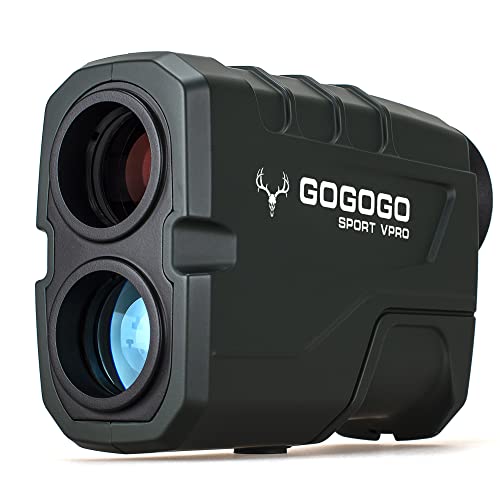
Gogogo Sport Vpro Green Hunting Rangefinder 1200 Yards

Bushnell 10x42mm Trophy XLT Waterproof Binoculars

Gogogo Sport Vpro Golf Range Finder 900 Yards

Gogogo Sport Vpro Range Finder with Slope 1500/2500 Yards

Vortex Crossfire HD 10×42 Binoculars

Gogogo Sport Vpro GS24 Golf & Hunting Rangefinder 1200 Yards

Gogogo Sport Vpro Rangefinder Binoculars 1500/2500 Yards 8×42
Meet The Standout Selections
The Diamondback HD sits in the sweet spot where optical quality and field-ready toughness meet a price most weekend hunters can justify. Fully multi-coated lenses and select glass elements work together to cut chromatic aberration, the colored fringing that softens branch edges and antler tips when you glass into backlit hardwoods. The 10×42 pairing is the classic whitetail configuration: enough reach to count tines across a cut bean field, and enough objective lens diameter (42mm) to gather useful light at dawn and dusk.
For hunters who spend long mornings in a ladder stand or methodically walk ridgelines, the rubber-armored chassis and O-ring sealing handle cold fingers and damp mornings without complaint. Compared to the Vortex Crossfire HD coming later in this lineup, the Diamondback pushes image fidelity a step further while keeping the same familiar chassis feel.
Advantages To Know
- 10x magnification reaches across ag fields and clear-cuts to confirm antler count before a stalk
- 42mm objective pulls in enough light for legal shooting windows at first and last light
- Fully multi-coated optics reduce glare when glassing toward open sky or water
- Rubber armor over a metal chassis holds up to brush, saddle scuffs, and cold-metal handling
- Argon purging helps internal lenses resist fogging during temperature changes
Trade Offs Worth Weighing
- 10x magnification amplifies shake, so steady hands or a monopod help in extended sessions
- Heavier than compact 8x models for all-day pack carry on still-hunts
- Lens coatings benefit from routine cleaning after dusty field use to keep image contrast sharp
Right Fit For
Whitetail hunters who mostly glass from a fixed stand or blind at dawn and dusk, and who want sharper color and edge detail than entry-level binoculars deliver.
Look Elsewhere When
You want a lighter 8x configuration for long still-hunts on foot; the Vortex Crossfire HD in this list offers a similar feel in a more pack-friendly build.
The GS06 opens up laser rangefinding to hunters who have been getting by on guesswork and holdover charts. Six-times magnification gives a steadier view than bare-eye ranging, and the 1200-yard ceiling covers most eastern whitetail shots and plenty of western mulie encounters. Three target modes let you toggle between standard distance, scan, and pin-lock behavior so the unit adapts to open fields, brushy edges, and lone trees.
First-time rangefinder owners often worry about complexity, and the GS06 keeps the interface to a single button for most tasks. Where the Diamondback HD focuses on optical clarity at distance, this unit focuses on feeding you accurate yardage quickly, which is exactly the missing piece for archery hunters picking a release point.
What Pays Off
- 1200-yard reach handles the vast majority of whitetail shot opportunities
- 6x monocular is steady enough for offhand ranging from a treestand
- Three modes cover single target, continuous scan, and pin-seeking behavior
- Compact pocket-friendly form slips into a cargo pocket or chest pouch
Points To Keep In Mind
- Class 1 laser performance can vary on dark or angled surfaces at full distance
- Battery life depends on cold temperatures, so spares belong in the pack
- Lacks slope compensation that mountain hunters may want
Who It Suits Best
New rangefinder owners and budget-conscious hunters who mainly shoot at known distances across flat to rolling ground.
Skip It When
You routinely shoot across steep terrain where angle compensation matters; the Gogogo Sport Vpro Green Hunting Rangefinder in this list covers that need.
Whitetail hunters who set up on ridges, creek bluffs, and below-road food plots routinely deal with steep shooting angles that fool basic rangefinders. The Green Hunting model leans into that with a dedicated hunting mode that delivers straight-line distance, horizontal distance, and angle all on one screen. That trio is the difference between a clean ethical shot and a low miss when a buck steps broadside 32 yards below your stand.
Compared to the GS06, this rangefinder trades a touch of simplicity for terrain-aware data. For archery hunters shooting steep down or up angles, the horizontal distance readout is the number you actually need for a true hold.
What Works In Its Favor
- Hunting mode outputs horizontal distance so uphill and downhill shots read true
- Angle readout helps confirm tree stand pitch and lean angles before climbing
- LCD display stays readable in low light common to dawn hunts
- 905nm Class 1 laser is eye-safe for repeated ranging during scouting walks
Honest Caveats
- Accuracy can dip beyond 800 yards on dark or angled surfaces
- Display refresh rate is slower than premium flagships for very fast panning
Feature Snapshot
Built With In Mind
Hunters working uneven terrain and creek-bottom setups who need angle-aware distance to make confident shots on steep slopes.
Reach For A Different Pick When
You mostly hunt flat farmland where the standard GS06 rangefinder already handles your distances without paying for slope data you won’t use.
The Bushnell Trophy XLT is the binocular you grab when the forecast is sketchy and the hunt goes forward anyway. The waterproof sealing shrugs off weather that sends cheaper binos straight into a dry bag, and the textured rubber armor stays grippy with wet gloves or cold hands. The 10×42 format matches the Diamondback HD’s reach-to-gathering-light balance, so it works in the same dawn and dusk windows.
One spec that often earns attention from whitetail hunters is the wide 6.2-degree angle of view. That wider field makes it easier to find a moving buck and stay on it as it walks through timber, which is a different problem than long-range open-field spotting.
Real-World Strengths
- Waterproof construction handles rain, sleet, and stream crossings
- Wide 6.2-degree field of view tracks moving deer in close timber
- 10x magnification handles mid-range field edges and food plots
- Long eye relief helps glassing comfort with or without glasses
Some Limits To Know
- Chassis weight trends up versus compact roof-prism designs for long pack hikes
- Lens coatings need regular wipe-downs to maintain edge sharpness
Quick Facts
Whose Shelf It Belongs On
Hunters who push into cold, wet, late-season conditions and need a binocular that doesn’t quit when the weather turns ugly.
Consider Something Else When
You want the sharpest possible optical image at distance; the Diamondback HD earlier in this list pushes slightly further on resolution.
The 900-yard model leans into crossover use between the golf course and the deer woods, but the feature that hunters actually appreciate is the magnetic mount strip. If your truck, ATV, or UTV has a steel panel or rail, the rangefinder clicks into place and stays put. That sounds small until you have clambered into a blind with two rangefinders rolling around under your seat.
The built-in rechargeable 750mAh battery with USB-C charging also takes rechargeable batteries off your checklist, which means no more fumbling for CR2s in a dark truck before the hunt. The slope toggle makes it legal for tournament golf on the days you’re not chasing deer.
Well-Handled Touches
- Magnetic mount sticks to steel cart rails for hands-free carry
- Rechargeable battery cuts disposable battery cost and waste
- Pin lock with haptic vibration speeds up flagstick confirmation
- 0.5-second readings keep scanning quick on long walk-up stalks
Less-Strong Areas
- 900-yard reach is shorter than dedicated hunting rangefinders in this list
- Magnetic strip requires steel contact, so aluminum rigs don’t benefit
- Slope mode must be toggled off for tournament-legal golf play
Best Suited To
Hunters who ride ATVs or drive side-by-sides to their stands and want a grab-and-go rangefinder that stays put on a metal rail.
Swap It Out When
You need longer reach for western spot-and-stalk work; the 1500/2500-yard Gogogo Vpro range later in this list covers that gap.
For hunters chasing muleys across big western basins or glassing huge cutovers on leased property, yardage reach matters. This unit pushes the distance ceiling up to 1500 yards for reflective targets and 2500 yards for highly reflective surfaces, which is more than most whitetail hunters will ever need but exactly the kind of margin that helps when a buck appears on the far edge of a basin.
The 7x magnification is a small but real upgrade over the 6x baseline of most rangefinders at this tier. More magnification on a tripod-supported rest makes identifying distant antler configuration possible before deciding whether to close the gap.
Where It Helps
- 1500-yard measuring range handles long-field whitetail encounters
- 7x magnification improves distant target identification
- Slope switch toggles for tournament-legal play and back
- Fast 0.38-second readings keep up with quick target acquisition
A Few Limitations
- Reflective-target ratings assume ideal conditions rarely seen in real hunts
- Slope compensation should be turned off where tournament rules apply
The Details At A Glance
Who Should Grab It
Open-country hunters running spot-and-stalk in big country, where confident distance reads at the edge of a basin decide whether to commit to a stalk.
A Better Fit Elsewhere
Eastern whitetail hunters working woodlots under 200 yards gain nothing from the extra range; the Gogogo GS06 earlier in this list is a smarter match.
The Crossfire HD is the binocular that lives in the truck year-round because it does everything well. The 10×42 configuration matches what the Diamondback HD offers, and while image quality is a half-step behind, the included GlassPak harness makes the Crossfire more practical for hunters who bounce between truck, stand, and trail. A binocular on a harness sits at your chest, ready in seconds, which matters when a buck shows up while you are still climbing into the stand.
For first-time binocular shoppers, this kit covers glass, case, strap, and harness in one box. Compared to buying components separately, that simplifies a first whitetail setup.
What Stands Out
- GlassPak harness keeps binos at chest level for quick deployment
- Fully multi-coated lenses hold their own against entry-level competitors
- 10×42 format suits both dawn glassing and midday scouting
- Rubber armor adds drop resistance on ladder stands and truck floors
Where It May Fall Short
- Low-light performance trails the Diamondback HD’s premium coatings
- Harness adds bulk that some still-hunters prefer to skip
Technical Highlights
Who Will Love This
New whitetail hunters building a first kit, and anyone who wants a no-fuss, all-in-one binocular package ready to hang in a truck or stand.
Not Your Match When
You already own a quality binocular harness and want the sharpest possible image; the Diamondback HD earlier in this list offers better glass for the same money.
The GS24 is the crossover pick for hunters who also chase birdies. Angle range compensation, ARC for short, handles both golf and hunting contexts by adjusting for uphill or downhill angles. The slope toggle is the practical detail: with slope on, you get compensated yardage for treestand shots; with slope off, the same unit reads like a tournament-legal golf rangefinder.
Continuous range readings also help when panning across a hillside, letting the GS24 keep updating as you sweep the glass. That real-time feedback helps when scanning a brushy slope where a buck might appear and disappear in seconds.
Points In Its Favor
- Angle Range Compensation handles angled hunting and golf shots
- Slope toggle keeps the unit legal for golf tournaments
- Continuous range readings track targets during panning scans
- 1200-yard ceiling covers mid-range hunting and fairway golf
Minor Gripes
- Display layout can take a few hunts to learn for first-time users
- Slope data adds slight latency versus basic distance-only modes
Made For
Hunters who split their weekends between deer woods and golf courses and want one rangefinder that handles both sports with the right compliance.
Where Another Pick Suits Better
Pure deer hunters with no interest in golf save money with the Gogogo Green Hunting Rangefinder earlier in this list.
The hybrid rangefinder binocular merges glassing and lasering into one unit. The 8×42 optics deliver a steady, wide image ideal for scanning, and the integrated rangefinder feeds the distance read into the same view so you never break glassing posture. For run-and-gun hunters who spot, range, and decide in a single fluid motion, that one-motion workflow is the real pitch.
Compared to the dedicated Diamondback HD, this unit trades a step of pure optical quality for built-in laser ranging. The trade makes sense for hunters who would otherwise carry both a binocular and a rangefinder in the field.
Notable Upsides
- One unit replaces two pieces of gear for pack-light hunters
- 8x magnification steadies the image for offhand glassing
- 1500-yard reach handles most spot-and-stalk encounters
- Fully multi-coated optics keep image contrast respectable
Practical Considerations
- Heavier than dedicated rangefinders for all-day carry
- Optics are a step behind dedicated binoculars like the Diamondback HD on pure image quality
- Battery and laser components add maintenance compared to passive binoculars
Essential Details
Perfect Match For
Spot-and-stalk hunters who want to spot and range in one motion and prefer to carry a single unit instead of two.
Another Choice May Suit
Stand hunters who already have a fixed position and want the sharpest possible glass; the Vortex Diamondback HD earlier in this list is the better image-first choice.
What Matters Most Before Choosing Binoculars For Hunting Deer
Magnification and Objective Lens Balance
The two numbers stamped on every binocular tell most of the story. Magnification (the first value, like 10x) determines how far you can resolve detail. Objective lens diameter (the second value, like 42mm) determines how much light the binocular gathers. For most whitetail hunting, 8×42 or 10×42 is the practical pairing: enough reach to count tines, enough light to function at dawn and dusk. Higher magnification sounds tempting, but it amplifies hand shake and trims the field of view, which makes tracking moving deer harder.
Low-Light Performance and Coatings
Dawn and dusk are legal shooting hours for deer in most states, and they are also when antler detail is hardest to read. Fully multi-coated optics improve light transmission through every glass surface, which directly affects how bright the image looks in dim conditions. Cheaper coatings let light escape at every air-to-glass boundary, leaving you with dim, low-contrast images right when you need them sharpest.
Rangefinder Integration and Slope
Rangefinders fall into three practical groups. Basic units give straight-line distance only. Hunting-specific models add horizontal distance and angle for steep terrain. Slope-switchable models let you toggle that feature off for tournament golf play. Hunters who only set up on flat ground can skip slope data, but anyone shooting from a ridge, ravine, or elevated blind benefits from horizontal-distance reads.
Weight, Armor, and Field Handling
A binocular that lives in the truck is wasted gear. Weight, rubber armor, waterproof sealing, and harness compatibility all decide whether the unit actually makes it into the field. Light, well-armored, fog-proof glass earns its keep; heavy, fragile glass stays home on cold mornings.
Key Considerations Across These Picks
Common Shopping Slip Ups
The most frequent mistake is chasing magnification without considering objective lens size and image stability. A 12x binocular that shakes in your hands delivers a worse image than a steady 8x. The second common slip is buying a rangefinder with no slope compensation for mountain hunting, which leads to missed shots on steep angles. Match the tool to the terrain rather than to the spec sheet.
Where The Extra Money Goes
Spending up in hunting binoculars and rangefinders usually buys three things. Premium glass coatings sharpen low-light contrast, which matters most at legal shooting hours. Argon or nitrogen purging plus O-ring sealing prevents internal fogging across temperature swings. Better ergonomic chassis and harness systems keep the gear in your hands instead of in the truck. For hunters who glass daily, those upgrades compound quickly; for occasional weekend hunters, the mid-tier often hits the sweet spot.
Frequently Asked Questions
What magnification is best for deer hunting?
8x and 10x are the practical range for most whitetail hunting. 8x steadies the image and widens the field for tracking, while 10x reaches farther for open-field glassing. Higher magnification amplifies hand shake and narrows the view.
Do I need a rangefinder if I already have binoculars?
A rangefinder removes guesswork on holdover and pin selection, especially for archery shots at angled distances. A binocular identifies the buck, but a rangefinder confirms the yardage before you commit.
What is slope compensation and when does it matter?
Slope compensation adjusts distance for uphill or downhill angles and gives a horizontal-distance readout. It matters for treestand and ridge hunters who shoot at steep angles, where straight-line distance over-reads the shot.
Are waterproof binoculars worth the extra cost?
For hunters who push into late-season weather or wet timber, waterproof and fog-proof construction pays for itself by preventing internal lens fogging and water intrusion. Casual fair-weather hunters can skip the upgrade.
How do I keep binoculars clean in the field?
Lens caps on between scans, soft brush or microfiber for dust, and breath fogging followed by a clean cloth for stubborn smudges. Avoid rough clothing or paper products that can scratch coatings.