
Picking a hunting rangefinder used to mean sorting through a wall of glass and lasers with no clear winner. The good news is the 2026 lineup offers real options at nearly every price, from lightweight pocket units to thermal scopes built for night work. Hunters logging miles on public land, beginners buying their first optic, and weekend scouts dialing long shots all benefit from understanding what each category actually delivers. This roundup focuses on affordable rangefinders for hunting, comparing seven solid picks that span laser rangefinders, thermal monoculars, and hybrid scopes so you can match the tool to your terrain and game.
The Lineup, Simplified
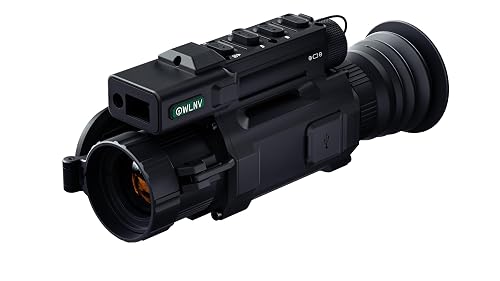
OWLNV T2-256 Thermal Imaging Scope 25mm Lens

Vortex Crossfire HD 1400 Laser Rangefinder

Vortex Diamondback HD 2000 Laser Rangefinder
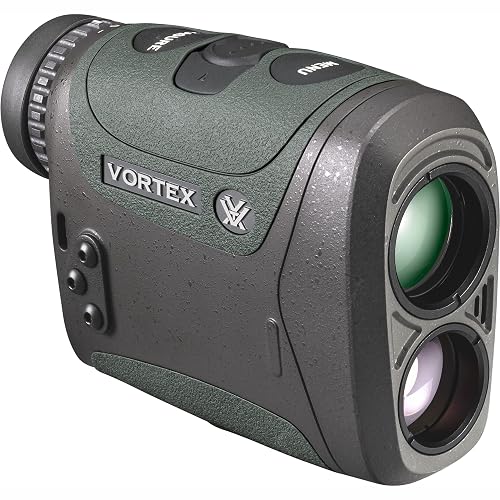
Vortex Razor HD 4000 Laser Rangefinder
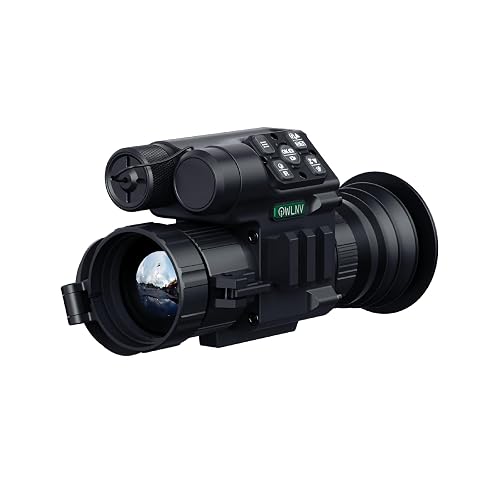
OWLNV T3 Thermal Imaging Scope 384 Sensor
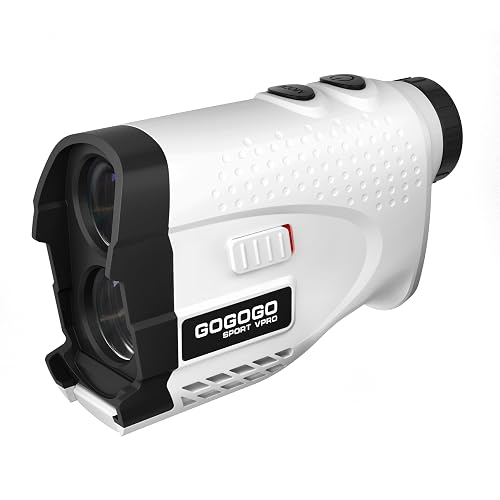
Gogogo Sport Vpro GS24 Golf & Hunting Rangefinder

OWLNV C2 Thermal Imaging Monocular 256×192
The Strengths Of Each Pick
The OWLNV T2-256 sits in a sweet spot for hunters stepping into thermal optics without paying flagship prices. Its 256×192 sensor with 12μm pixel pitch (the size of each sensor pixel, where smaller values mean crisper detail) pulls heat signatures out of fog, rain, and full darkness at up to 1200 meters, which is roughly three-quarters of a mile, plenty for most public-land setups. The 1024×768 OLED display renders those targets with enough clarity that you can tell a coyote from a feral hog at a glance.
Compared to laser rangefinders like the Crossfire HD 1400 covered below, this unit tells you something those lasers cannot: whether anything is out there at all. For night-hog hunters and coyote callers working fields after sundown, that capability is the entire reason to consider thermal over traditional glass. The 50Hz refresh rate keeps moving targets smooth on screen, and the option to add an LRF (laser rangefinder module) means you can combine distance and detection later.
Where It Excels
- Sub-25mK NETD (noise-equivalent temperature difference, a sensitivity rating where lower is better) reveals subtle temperature differences, helping you spot cooler animals in dense cover.
- Five thermal color palettes let you tune the image to terrain, switching between white-hot for open fields and black-hot for shaded edges.
- 1024×768 OLED resolution keeps edges crisp so a bedded deer reads as a deer rather than a blob.
- Optional LRF upgrade path means you start with detection and add ranging later without replacing the whole optic.
- Built for handheld or rifle-mounted use, which suits both spot-and-stalk and stationary calling setups.
Honest Caveats
- Owners commonly report the menu has a learning curve; plan a couple of dry-fire sessions at home to get comfortable before opening day.
- Battery life varies with ambient temperature and palette use, so a spare power bank in the truck is a smart move on cold mornings.
- At 256×192, the sensor trails higher-res thermal cores in fine detail at long range.
Key Specs
Who It Suits Best
Night-hog hunters, predator callers, and anyone patterning deer after dark on warm southern leases benefits most from this optic’s detection-focused design.
Where Another Pick Suits Better
Daylight-only whitetail hunters in tight timber will find the Vortex Crossfire HD 1400 a more practical, lighter carry.
The Crossfire HD 1400 is what most hunters actually need: a compact laser rangefinder that hits 1400 yards on reflective targets and roughly 750 on game. With 5x magnification and a 21mm objective lens, it pulls double duty as a quick glass and a ranging tool, which matters when you are trying to spot a bedded buck and figure out the yardage in one motion. At roughly 4.8 ounces, the rangefinder disappears in a chest pack.
The HD optical glass and XR anti-reflective coatings (a multi-layer treatment that brightens the image in low light) brighten low-light scenes, making last-legal-light shots more honest. Compared to the bulkier Razor HD 4000 covered later, the Crossfire trades extreme reach for portability and a price that does not sting. For most public-land whitetail hunters and eastern turkey hunters, this is the kind of tool you grab without thinking twice.
What Stands Out
- 1400-yard max range with 750 yards on game covers the realistic distances most hunters encounter in the field.
- 5x magnification pairs nicely with binocular scouting, so you can spot and range in a single look.
- Lightweight chassis at 4.8 ounces sits comfortably in a pack for all-day carry.
- HD optical system with XR coatings brightens low-light scenes for dawn and dusk sits.
Trade-Offs
- Range tops out well short of the Diamondback HD 2000, which limits usefulness on western spot-and-stalk hunts.
- No angle-adjusted ranging mode listed, so steep uphill and downhill shots need a mental adjustment.
Right Fit For
Backcountry tree-stand hunters and eastern whitetail hunters needing a lightweight, reliable laser for everyday ranging benefit most.
Look Elsewhere When
Hunters chasing pronghorn across wide prairie basins will want the Vortex Diamondback HD 2000 instead for its longer reach.
The Diamondback HD 2000 stretches the laser rangefinder formula in a useful direction: 7x magnification, a 24mm objective, and a 2000-yard maximum range with 1400 yards on deer-sized game. That combination makes the rangefinder genuinely useful for wide-open country where a quick read on a buck at the back of a stubble field makes the difference between a shot and a story. The HD optical system uses select glass elements with XR coatings, cutting chromatic aberration (color fringing around high-contrast edges) and improving color fidelity in the late-evening light that defines most spot-and-stalk hunts.
Two target modes (Normal and Last, which holds the reading on the farthest target) and two range modes, including HCD (Horizontal Component Distance, which compensates for uphill and downhill angles) and LOS (Line of Sight, which gives the straight-line distance), cover most of the scenarios a public-land hunter will see. The red OLED display stays readable in low light, and the tripod-mountable body adds flexibility for long glassing sessions. Compared to the Crossfire HD 1400 above, this is a noticeable step up in optical quality and range, without crossing into premium pricing territory.
Key Advantages
- 2000-yard reflective range with 1400 yards on deer covers the realistic span of plains and prairie hunting.
- HCD and LOS modes give honest yardage for angled shots, reducing guesswork on hill-country stalks.
- ArmorTek coatings (a scratch-resistant lens layer) protect exterior lenses from brush and grit on rough hunts.
- Waterproof and shockproof construction holds up to rain, dust, and the occasional drop from a saddle.
- Tripod-adaptable body makes long glassing sessions easier on your arms and steadier on distant targets.
Points To Keep In Mind
- Bulkier than the Crossfire HD 1400, so it does not pack quite as neatly into a chest holster for run-and-gun hunts.
- Owners commonly note the red OLED display, while clear, can wash out in bright direct glare; shading with a hand helps.
Spec Overview
Whose Shelf It Belongs On
Hunters working the Great Plains, the Dakotas, and wide-open Midwestern cornfields where shots regularly stretch past 400 yards will appreciate the extra reach.
Swap It Out When
Eastern whitetail hunters in thick cover rarely range past 200 yards and will get more use from a compact Crossfire HD 1400.
The Razor HD 4000 sits at the high end of the laser rangefinder category, built for hunters who measure shots in miles rather than yards. Its angle-compensated design and four targeting modes (Normal, First, Last, and Extended Laser Range) cover every ranging scenario a western hunter will encounter, from a close-range muley buck to a pronghorn a half-mile away across a sage flat. The HD optical system delivers the image quality serious glassers expect from the Razor name.
This is the optic for hunters who already own a precision rifle chambered in something like 6.5 Creedmoor or 28 Nosler and need a rangefinder that can keep up with their ballistic solver. Compared to the Diamondback HD 2000 covered above, the Razor extends reach significantly and adds an Extended Laser Range mode for those rare, hair-raising long shots. The honest read is that most hunters do not need 4000 yards of range; you specifically need it if you hunt open basins with extreme terrain.
The Helpful Details
- Four targeting modes handle every ranging scenario, from close brush to extreme distance across open country.
- HCD mode provides angle-compensated range for uphill and downhill shooting on hill-country stalks.
- HD optical system delivers sharp resolution for confident identification of game at distance.
- Premium build quality with ArmorTek lens protection, suitable for hard-use hunting conditions.
- Tripod-adaptable for steady glassing sessions when extreme distance demands stability.
Factors To Consider
- Premium pricing puts it beyond casual budgets, especially for hunters who rarely range past 800 yards.
- Larger and heavier than the Crossfire HD 1400, which can wear on a hunter during long stalks.
Built With In Mind
Western big-game hunters and serious long-range shooters who routinely engage targets past 1000 yards will find this rangefinder matches their setup.
Reach For A Different Pick When
Hunters on tighter budgets or those working short-range whitetail terrain will get more value from the Vortex Crossfire HD 1400.
The T3 Thermal Imaging Scope brings a 384×288 sensor (higher resolution than the T2-256 above) and a feature set that reads more like a precision riflescope than a handheld thermal. The built-in ballistic calculator lets you enter load data and let the scope compute holds for the ranged distance, which is genuinely useful for long-range night hunting. PIP (Picture-in-Picture) mode displays a zoomed window inside the main view, helping you confirm target detail while keeping situational awareness.
The IP67 weatherproof construction (a rating meaning full dust-tight sealing and water-submersion resistance to 1 meter for 30 minutes) handles rough weather, and WiFi video recording lets you save footage of successful stalks. 3.5X optical zoom gives a useful base magnification for scanning, and the 1440×1080 display keeps the image sharp. Compared to the more basic C2 monocular covered later, this is a more complete night-hunting rig with the tools to take a shot.
A Favorable Mix
- Built-in ballistic calculator removes the need to do mental math on long night shots.
- 384×288 sensor with ≤25mK NETD (noise-equivalent temperature difference, where lower is better) detects subtle heat differences in heavy cover.
- PIP mode balances magnification with field of view for confident target ID.
- WiFi video recording captures hunts for review or sharing.
- IP67 weatherproofing handles rain, snow, and dusty western environments.
Room For Improvement
- Ballistic calculator requires entering load data correctly; setup takes patience before opening day.
- WiFi and recording features drain battery faster, so spares are a must on multi-day trips.
Feature Snapshot
Best Suited To
Tech-forward night hunters running a precision rifle who want range data, video recording, and detection in a single rifle-mounted unit will benefit most.
Skip It When
Hunters on a strict budget or those who only occasionally hunt at night will find the OWLNV C2 monocular a more economical handheld option.
The GS24 from Gogogo Sport Vpro is the rangefinder for shoppers watching their wallet but still wanting functional gear. It reaches 1200 yards and offers slope-adjusted ranging (called ARC, or Angle Range Compensation, in the product literature), a feature usually reserved for pricier units. Continuous range readings let you scan a hillside and pick up the closest target without re-pressing the button every time.
Where this rangefinder separates itself is dual-purpose use: golfers and hunters both find it useful, which makes it a smart pick for households with one rangefinder budget covering two hobbies. Compared to the Vortex Crossfire HD 1400 covered earlier, the GS24 trades some optical quality and weatherproofing for a noticeably lower entry cost. For a first rangefinder that teaches you what features actually matter to your hunting style, the GS24 is a reasonable starting point.
Bright Spots
- 1200-yard maximum range covers most archery and centerfire scenarios at a friendly price.
- Slope-adjusted ranging helps with honest yardage on angled treestand and hill shots.
- Continuous range readings speed up scans of brushy edges and food plots.
- Dual-sport usability (golf and hunting) stretches the value across multiple hobbies.
Small Caveats
- Optical clarity trails Vortex’s HD glass systems, especially in low-light dawn hunts.
- Owners commonly report the chassis feels less rugged than premium units, so a protective case is wise.
Who Should Grab It
First-time rangefinder shoppers, occasional hunters, and households splitting one rangefinder between golf and hunting get the most from this dual-sport value.
Consider Something Else When
Hunters who glass extensively in low light or chase western big game will want the sharper glass of the Vortex Diamondback HD 2000.
The OWLNV C2 is the thermal monocular for hunters who want detection without the bulk or the price of a scope. The 256×192 sensor at 12μm pixel pitch reveals heat signatures in total darkness, fog, and brush where standard night vision falls short. Hot spot tracking automatically highlights the warmest point in view, which speeds up finding a bedded animal in cluttered terrain.
The 8X digital zoom lets you push in for ID confirmation, and video recording captures whatever you point at, useful for documenting a sighting for a game camera or sharing. Compared to the more involved T3 thermal scope covered above, the C2 stays pocket-friendly and is best suited for scouting and tracking rather than taking a shot. For blood-trailing wounded game after dark or scouting a new lease, the unit earns its place.
Good Reasons To Consider
- Pocket-friendly handheld form factor fits in a pack pocket for run-and-gun scouting.
- Hot spot tracking helps you find the warmest point in view quickly, useful for scanning brushy edges.
- Video recording documents sightings for later review or for sharing with hunting partners.
- 8X digital zoom provides flexibility to push in for ID confirmation at distance.
Where It Is Less Suited
- Not rifle-mounted, so it cannot replace a scope for taking the shot; it pairs with a separate optic.
- Digital zoom at high magnification reduces image quality; staying at lower zoom gives a better picture.
- Owners commonly report battery life shrinks in cold weather, so keeping it warm until use helps.
Feature Rundown
Made For
Scouts, trackers, and hunters needing a portable thermal unit for blood-trailing and pre-hunt scouting benefit most from the C2’s handheld design.
A Better Fit Elsewhere
Hunters who plan to take night shots with a rifle will want the OWLNV T3 thermal scope for its ballistic calculator and mounted design.
What Matters Most Before Choosing Affordable Rangefinders For Hunting
Matching the Tool to Your Game and Terrain
Start with what you hunt and where. Whitetail hunters working tight eastern timber rarely need more than 800 yards of effective range, so a compact unit like the Crossfire HD 1400 makes more sense than a long-reach optic with capabilities you will not use. Western hunters chasing mule deer and elk across sage flats need every yard they can get, and that is where the Diamondback HD 2000 and Razor HD 4000 earn their place. Predator and hog hunters chasing animals after dark operate in a different category entirely, where thermal scopes like the T2-256 and T3 shine because they detect rather than just measure distance.
Laser vs. Thermal: A Real Trade-Off
Laser rangefinders measure distance to a known target in daylight or low light, and they do it cheaply and accurately. Thermal scopes and monoculars detect heat signatures regardless of light, which lets you find game in total darkness, fog, or thick cover where glass alone fails. Thermal costs significantly more per feature, and the learning curve runs higher, so beginners often start with a solid laser and add thermal once they know what features they actually use.
Key Specs That Actually Matter
Magnification affects how confidently you can ID a target before ranging, with 5x to 7x covering most hunting scenarios. Objective lens diameter (the size of the front lens, where larger values gather more light) governs low-light performance, and anything 24mm or larger handles dawn and dusk well. Range mode options like HCD (Horizontal Component Distance) and LOS (Line of Sight) matter for hill-country hunting where angled shots would otherwise mislead your hold. For thermal, sensor resolution and NETD rating together determine how clearly you can pick animals out of background clutter.
Build Quality and Real-World Use
Hunting gear gets dropped, soaked, and frozen, so weather sealing and chassis durability matter as much as the spec sheet. ArmorTek and rubber-armor coatings protect optics from brush and shock, and IP-rated thermal units survive rain and dust. Battery life varies wildly with temperature and feature use, so carrying spares or a power bank is standard practice on multi-day trips.
Key Considerations Across These Picks
Mistakes Worth Dodging
The most common error is buying more rangefinder than your hunting style demands. Western long-range shooters need the Razor HD 4000; whitetail hunters in oak flats do not. The flip side happens too: shoppers choosing the cheapest laser without slope adjustment find themselves guessing on angled shots. Match the features to the terrain, not to the spec sheet bragging rights.
Where The Extra Money Goes
Higher-tier laser rangefinders buy better optical glass, longer range, and more rugged construction, with ArmorTek coatings and magnesium chassis replacing plastic and basic glass. Thermal upgrades move you from 256 sensors to 384, and from bare detection to integrated ballistic calculators and video recording. You are paying for clarity in tough conditions, and the right time to spend up is when you hunt enough days in those tough conditions to notice the difference.
Frequently Asked Questions
What range do I actually need for hunting?
For most whitetail and eastern big game, 800 to 1000 yards of laser range covers every realistic shot. Western hunters chasing pronghorn and sheep across open country benefit from 1500 yards or more, and a few hunts push past 2000. Buying more range than your terrain offers is wasted money; buying less leaves you guessing on the occasional flat shot.
Are thermal rangefinders worth it for hunting?
Thermal optics detect animals in darkness and thick cover where regular glass fails, which makes them genuinely useful for predator hunting, hog control, and night scouting. Daylight whitetail hunters rarely need thermal, so the cost rarely makes sense for that style of hunting.
What is angle compensation in a laser rangefinder?
Angle compensation (HCD mode) adjusts the displayed yardage for uphill and downhill shots so you can use the horizontal distance for ballistic calculations. Without it, you would overestimate range on a steep hillside and hold too high.
How important is magnification on a rangefinder?
Magnification lets you confirm what you are ranging, and 5x is the practical minimum for confident game ID at hunting distances. 7x helps on longer shots and improves target acquisition, though it can make the image shakier without a steady hand or tripod.
Can I use one rangefinder for both golf and hunting?
Yes, dual-sport rangefinders like the GS24 handle both. The shared core function is distance measurement, with slope adjustment helping both golfers and hill-country hunters. The optical quality needed for golf is generally lower than hunting, so a hunting-first unit works well for casual golf rounds.