
Keeping tabs on what matters to you shouldn’t feel like guesswork. Whether your dog bolts out the front gate, your teen takes the family car out for the night, or you simply want a quiet way to locate a parked vehicle in a crowded lot, the right tracker turns anxiety into a quick phone notification. The cellular GPS tracker category has grown fast, and the gap between a subscription-based live tracker and a simple Bluetooth tag has never been wider. These nine picks cover the spread, from pet-specific hardware to magnetic vehicle units and low-cost key finders, so you can match the tool to the job.
A Fast Comparison Of The Options

Life360 Pet GPS Tracker for Dogs
Life360 Smart QR Code Pet ID Tag

ZT-100 GPS Tracker for Vehicles

Life360 Tile Bluetooth Tracker

Family1st No Monthly Fee GPS Tracker

Car Tracker Device No Subscription 2 Pack

GPS Tracker for Vehicles, Hidden

Family1st GPS Tracker for Vehicles

Family1st Portable Automobile GPS Tracker
Why These Options Stand Out
The Life360 Pet GPS is built for the dog owner who wants more than a Bluetooth tag’s last-seen radius. It uses live GPS over LTE (a cellular data standard that allows the device to send its location over mobile networks), so you see your pet moving on the map, not just where the signal last pinged. Escape Alerts turn a quiet afternoon into a fast heads-up the moment your dog crosses a safe-zone boundary, which is the kind of feature that pays for itself the one time it actually fires.
Pair it with the Life360 app and you also tap into a community Pet Finder Network, so neighbors running the app can flag a sighting. The hardware includes a 12-month subscription for new accounts, which softens the usual sticker shock of cellular pet gear. Charging and pairing tend to be straightforward in most households, though active dogs may push battery life shorter than the 14-day ceiling depending on signal coverage.
Good Reasons To Consider
- Real-time LTE tracking shows actual movement, not just a static last-known pin
- Escape Alerts send a phone notification the moment your dog leaves a defined zone
- Community finder network adds a layer of human eyes during the critical first hours
- 12-month subscription included lowers the up-front cost of going cellular
Worth Noting
- Battery life drops faster in low-coverage areas where the modem works harder
- Requires an active subscription after the first year to keep live features
- Collar attachment hardware varies, so check fit for very small or very thick collars
Right Fit For
Dog owners with escape-artist pets who want live tracking and a community safety net beyond a basic Bluetooth tag.
Where Another Pick Suits Better
Shoppers who want a one-time hardware purchase with no subscription should look at the Family1st No Monthly Fee GPS Tracker instead.
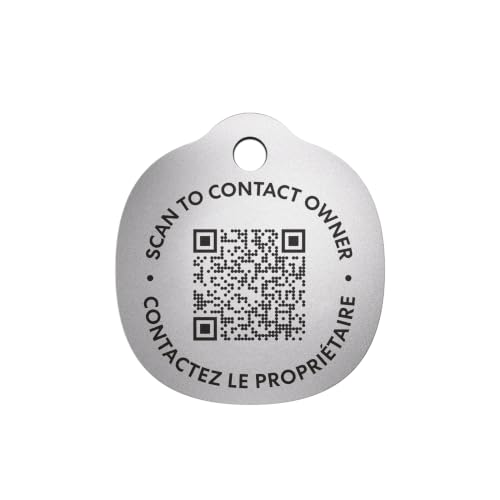
The Life360 Smart QR Tag is the opposite philosophy from the live GPS unit above. There’s no battery, no SIM (the small subscriber-identity chip that gives a device a cellular connection), and no subscription. A finder scans the stainless-steel tag with any phone camera, your contact info pings back through the Life360 app, and they can reach you without downloading anything. It’s a passive solution that only works once a person physically finds your pet, but in most lost-pet stories, that’s exactly how it ends.
The build is a simple stainless disc meant to clip onto a collar, so it holds up to weather and a curious mouth. Shared care reminders through the app let a partner or pet sitter see the same pet profile. Compared to the cellular Life360 GPS Tracker, this tag trades real-time visibility for zero ongoing cost, which is a fair swap if your pet rarely slips out and you mainly want a safety net.
What It Does Well
- No subscription, no battery, no app required for the person who scans the tag
- Stainless steel holds up to weather and daily wear better than plastic tags
- Care reminders keep pet routines synced across family members
Points To Note
- Only useful after someone physically finds and scans your pet
- No live location, so it won’t help you track a runaway in real time
Built With In Mind
Pet owners who want a one-time-purchase backup plan and don’t mind that it only activates when a stranger finds their animal.
Consider Something Else When
Anyone needing active monitoring of a wandering dog should choose the Life360 Pet GPS Tracker for Dogs instead.
The ZT-100 is built for the long haul. Its 10,000mAh battery and sleep-mode power management mean weeks of standby rather than days, which matters for fleet-style use cases where constant recharging is impractical. The magnetic, waterproof housing sticks to a chassis or trailer frame and stays out of sight, which is exactly what most vehicle owners want from a security tracker.
It runs on 4G LTE with a 2G fallback, using GPS, Beidou (a Chinese satellite-navigation network similar to GPS), and LBS (cell-tower-based location) to keep location fixes steady across urban and remote stretches. Multi-system positioning helps when one constellation gets patchy. A subscription is required for live data, and the ZT-100 is heavier than the keychain-style units, so it’s really a “leave it on the car” tool rather than a daily-carry device.
What Earns Its Place
- 10,000mAh battery supports up to four months of standby per charge
- Multi-system positioning holds accuracy where single-constellation units drop
- Magnetic waterproof case installs in minutes without wiring
- Multi-alert system covers speed, vibration, and geo-fence events
Trade Offs
- Subscription is mandatory for any live tracking
- Bigger and heavier than pocket-sized trackers
- Sleep mode can delay updates when the vehicle sits idle for long stretches
Feature Snapshot
Whose Shelf It Belongs On
Small fleet operators, road-trippers, and vehicle owners who want long-battery live tracking with minimal maintenance.
A Better Fit Elsewhere
Shoppers who refuse ongoing fees should pick the lulaven 2-Pack Car Tracker, which runs without any subscription.
The Tile is the household name in Bluetooth trackers, and its Life360-owned version plays nicely with both iOS and Android. You clip it to keys, slip it in a laptop bag, or loop it on a backpack, then ring it from your phone when the inevitable “where did I put it” moment hits. Double-pressing the Tile also fires your phone’s ring, even on silent, which solves the reverse problem.
Compared to the cellular units further down this list, the Tile works only over Bluetooth, so range is limited to wherever your phone can hear it. That’s fine for keys left under a couch cushion or a bag dropped in the next room. For far-flung items, you’d want the Life360 network’s crowd-sourced last-seen pin, which works when other Tile users pass nearby. In most apartments and offices, you may find the basic Bluetooth ring does the heavy lifting.
Standout Benefits
- Loud built-in speaker helps locate items in another room quickly
- Reverse-ring feature finds a silenced phone from the Tile itself
- Works on both iOS and Android without splitting into two ecosystems
Things To Consider
- Bluetooth range means no real-time tracking across a city
- Battery is sealed, so the unit itself is replaced rather than recharged
Made For
Anyone who frequently misplaces keys, wallets, or daily-carry bags and wants a quick audible ping rather than a full GPS trail.
Skip It When
Vehicle or pet owners needing live location should choose the Family1st GPS Tracker for Vehicles instead.
Family1st markets this as a no-monthly-fee tracker, and the trick is that one year of service comes bundled in the box. After that, you decide whether to renew. It’s a soft entry into cellular tracking for people who want the hardware now but want to postpone any cost conversation. Updates arrive as often as every five seconds on 4G LTE, which is more frequent than most consumer units in this bracket.
The unit is compact enough for a backpack or glove box and supports geo-fencing (virtual boundary alerts) and location history through both desktop and phone apps. Compared to the larger magnetic vehicle units, this one trades bulk for portability, so you may find it more useful clipped to a teen’s backpack than hidden under a chassis. The bundled year makes it a reasonable starter for shoppers testing the waters.
The Helpful Details
- First-year subscription is included to soften the entry cost
- Up to five-second updates for near-real-time tracking
- Geo-fencing and history features available on desktop and mobile
Honest Caveats
- Service after year one carries an ongoing fee
- Smaller battery than the magnetic ZT-100, so charge cycles come more often
Key Attributes
Best Suited To
First-time tracker shoppers who want cellular live tracking without committing to long-term subscription terms on day one.
Look Elsewhere When
Vehicle owners wanting zero ongoing fees at any point should consider the lulaven 2-Pack Car Tracker instead.
The lulaven 2-Pack leans on the same crowd-sourced networks that power Apple’s Find My and Google’s Find Hub. There’s no SIM card, no subscription, and the CR2032 coin-cell batteries (common small watch-style batteries) last up to a year before you swap them yourself. That makes this set appealing for households that don’t want another monthly line item.
The two units ship in different shapes so you can tell them apart by feel, and each can be paired to a different family member’s phone. A built-in speaker helps you pinpoint a tracker in a packed lot. The catch: each unit connects to one platform at a time, so a mixed iOS and Android household can split coverage between two vehicles. Compared to the cellular units above, this one delivers location only when another compatible phone passes nearby.
Positive Points
- No subscription, no SIM, no app beyond Find My or Find Hub
- Battery swap takes seconds with the included spare CR2032
- Two-pack design suits a two-vehicle household on a budget
Where It Is Less Suited
- No real-time pings in low-traffic areas where few phones pass by
- Each unit pairs to only one platform at a time
Perfect Match For
Mixed iOS and Android households wanting two-vehicle coverage with zero subscription fees and minimal maintenance.
Swap It Out When
Anyone needing continuous live tracking in remote areas should pick the ZT-100 GPS Tracker for Vehicles instead.
This vexrKaey unit is built around one promise: no subscription, ever. It runs SIM-free and connects through a free service layer, which keeps the long-term cost at zero. The IP67 rating (a standard meaning full dust protection and temporary water immersion resistance) keeps it alive through heavy rain, snow, and the occasional puddle, so mounting it on a trailer or under a chassis won’t void your peace of mind.
The replaceable battery runs over a year per swap, which beats nearly every other option on this list for raw uptime between charges. Privacy gets a mention too, with encrypted, anonymous communication and no stored location history on the device itself. Compared to the lulaven 2-Pack, this unit is a single-device pick focused more on rugged permanence than crowd-sourced coverage.
Strengths Worth Knowing
- IP67 rating handles rain, snow, and brief submersion
- Battery lasts over a year before a quick user swap
- Subscription-free design keeps long-term cost at zero
Practical Considerations
- Single-unit packaging means buying two for two vehicles
- Encrypted layer may add a slight delay to location updates
Who Should Grab It
Vehicle owners in wet or unpredictable climates who want a long-life, low-maintenance tracker with no recurring fees.
Reach For A Different Pick When
Households tracking multiple vehicles at once should pick the lulaven 2-Pack Car Tracker instead.
The Family1st vehicle tracker leans on 4G LTE coverage throughout North America, which is the network backbone most drivers actually rely on day to day. It pairs with iOS and Android apps, so multiple family members can check in on a shared vehicle. The waterproof magnetic case slips under a chassis or behind a panel without tools, which makes installation a one-minute affair for most people.
Battery life stretches up to 30 days, which is more than most consumer-grade units manage, and geo-fence alerts kick in the moment the tracker crosses a set boundary. A subscription is required, and the unit is heavier than the pocket-friendly options, so it’s really a “leave it on the car” tool. Versus the Family1st No Monthly Fee unit covered earlier, this one prioritizes a longer battery and magnetic mount.
Reasons It Performs
- Up to 30 days of battery between charges handles most month-to-month schedules
- 4G LTE delivers steady connectivity across North American coverage zones
- Waterproof magnetic case installs without any tools or wiring
Small Caveats
- Ongoing subscription required for live features
- Bulkier than pocket-sized trackers, so it isn’t a daily-carry item
The Right Fit
Family drivers who want a shared, real-time view of a primary vehicle and prefer app-based alerts over SMS.
Another Choice May Suit
Shoppers avoiding any monthly cost should pick the vexrKaey GPS Tracker for Vehicles, Hidden instead.
This Family1st portable tracker rounds out the list with a similar real-time, 4G LTE experience to the magnetic model above, but in a form factor that’s easier to swap between vehicles. Theft protection is the headline use case, since you can pull the unit from one car and drop it into another when needed. The 30-day battery ceiling matches its sibling, so most owners won’t think about charging between routine drives.
Geo-fence alerts fire the moment a vehicle crosses a set boundary, which matters most when a teenage driver is out past curfew or a fleet vehicle strays from a route. Like the magnetic Family1st model, this one requires a subscription to operate. You may find its portability more useful than the magnetic mount if your tracking needs shift between vehicles, equipment, or even a teenager’s backpack.
Points In Its Favor
- Portable design moves easily between cars, gear, or bags
- Up to 30 days of battery per charge suits typical monthly use
- Geo-fence alerts notify the moment boundaries are crossed
A Few Limitations
- Subscription required, adding a recurring line to the budget
- No magnetic mount, so it sits loose rather than hidden on metal surfaces
Who Will Love This
Owners of multiple vehicles, parents of teen drivers, and anyone wanting a tracker they can move around without rewiring.
Not Your Match When
Drivers wanting a permanent hidden mount should choose the Family1st GPS Tracker for Vehicles with magnetic case instead.
What Matters Most Before Choosing A Cellular Gps Tracker
Battery Life Versus Real-Time Cadence
A tracker that updates every five seconds drains faster than one that pings every few minutes. If you’re watching a teen driver in real time, frequent updates matter more than longevity. If you’re guarding a parked trailer, a long-life sleep-mode unit like the ZT-100 stretches further between charges. Match the cadence to the use case rather than picking the spec that looks biggest.
Subscription Versus One-Time Cost
Cellular trackers split into two camps: live units with monthly fees (most Family1st and ZT-100 models) and no-fee crowd-sourced units (lulaven, vexrKaey). The fee-based side buys you a real-time pin anywhere cellular reaches. The no-fee side relies on nearby phones to relay a location, which works in cities and falls apart in low-traffic areas. Your tolerance for a recurring bill should drive this choice.
Mounting Style And Environment
Magnetic waterproof cases slide under a chassis in seconds but only stick to metal. Portable trackers can ride in a glove box or backpack but may shift around. Pet-focused units attach to collars, where weight and bulk matter more than ruggedness. Think about where the tracker will live day to day before picking a form factor.
Platform Compatibility
iOS-only or Android-only tags lock you into one ecosystem. Crowd-sourced trackers like the lulaven 2-Pack work across platforms but require each unit to be paired separately. If your household mixes phones, double-check whether the tracker supports both before you commit, or you’ll end up re-pairing later.
Key Considerations Across These Picks
Common Buying Slip Ups
Many shoppers grab the cheapest no-subscription tracker and expect it to work like a live GPS pin. Crowd-sourced units only update when other phones pass nearby, so rural drivers often see weeks-old data and assume the device is broken. Reading the network type before checkout saves that frustration. Likewise, picking a heavy magnetic unit for a small dog wastes money on bulk your pet won’t wear comfortably.
Where The Extra Money Goes
The jump from a Bluetooth Tile to a cellular LTE tracker buys you a real-time pin across wide areas, plus escape alerts and geo-fences. The jump from a budget cellular unit to a longer-battery model like the ZT-100 buys weeks of unattended runtime. Paying more generally means better battery, stronger networks, and richer alert logic. If your tracker only needs to find keys under couch cushions, the extra spend is wasted.
Frequently Asked Questions
Do cellular GPS trackers work without cell service?
No. Cellular trackers rely on LTE or 4G networks to relay their position to your phone. Bluetooth-only units like the Life360 Tile work without cellular data but only within Bluetooth range. Crowd-sourced no-fee trackers use other people’s phones as relays, so they need compatible devices nearby.
How long do tracker batteries actually last?
Real-world battery life depends heavily on signal strength and update frequency. The ZT-100 stretches up to four months in standby with sleep mode active, while compact LTE units typically last two to four weeks. Bluetooth trackers like the Tile run on sealed cells that get replaced rather than recharged.
Are no-subscription GPS trackers reliable?
They work well in cities and suburbs where many compatible phones pass nearby. In rural areas with sparse foot traffic, updates can be slow or absent. For continuous real-time tracking in remote zones, a subscription cellular unit is the more dependable choice.
Can I use one tracker for multiple vehicles?
Yes, portable units like the Family1st Portable Automobile GPS Tracker move easily between cars. Magnetic units stick to one chassis at a time. Multi-pack options like the lulaven 2-Pack give you dedicated units per vehicle without the swap hassle.
What is geo-fencing on a GPS tracker?
Geo-fencing lets you draw a virtual boundary on a map, and the tracker pings your phone when the device crosses that line. It’s useful for teen drivers, fleet routes, and pet safe zones. Most cellular trackers on this list include geo-fence alerts as a standard feature.