
Feeding deer well is less about tossing out a bucket of corn and calling it done, and more about understanding what your herd actually needs across the changing seasons. The right feed keeps antler growth strong, supports healthy does through fawning, and pulls more activity to your favorite viewing or hunting spot. With so many options on the market, though, choosing between protein blocks, supplements, food plot seed, and the hardware to dispense it all can feel overwhelming. This guide sorts through six solid picks that cover the full feeding setup, from attractants and supplements to digital feeders and food plot blends, so you can build a program that matches your property and goals.
The Main Contenders
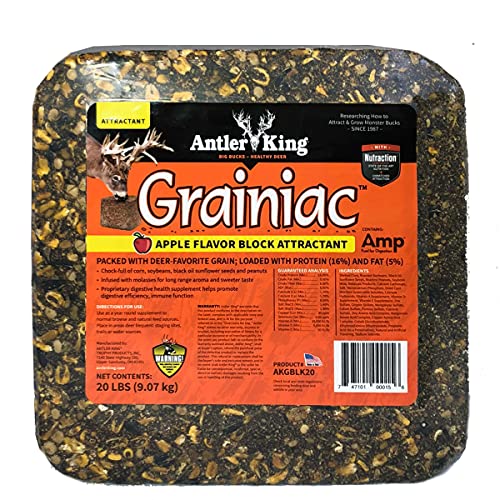
Antler King Apple Flavored Grainiac Block for Deer, 20 lb

Tomaki Game Feeder Digital Timer 6V/12V Kit

Tomaki 6V Deer Feeder Kit Motor and Timer

Banks Outdoors Feedbank 300 lb. Capacity Deer Feeder

Pure Whitetail Power Munch High Protein Deer Feed Supplement

Pure Whitetail Shady Patch No Plow Food Plot Seed
More Details On Our Top Picks
Setting out a 20-pound compressed block is about as close to effortless as deer feeding gets. You drop it near a trail or a stand, walk away, and the apple-scented aroma does the rest of the work, drawing local whitetails back day after day without you hauling scoops of grain.
The 16% protein and 5% fat numbers land in a comfortable middle ground for warm-season holding and early fall conditioning. Compared with the loose supplements covered later in this list, this format weathers rain better and stays put when raccoons and hogs show up, which matters on properties with heavy varmint pressure.
Real Benefits
- Drop-and-go convenience, no scooping or measuring required
- Compressed block form sheds rain and resists being scattered by nuisance wildlife
- 16% protein supports antler growth during spring and summer
- Apple scent acts as an attractant while delivering daily caloric density
Worth Noting
- Hard block format means deer consume it slowly, so results feel less dramatic at first
- Scent fades over time once the outer layer is weathered, so expect to replace it during long feeding windows
Who It Suits Best
Landowners who want a hands-off protein source that survives weather and nuisance animals without daily attention.
Consider Something Else When
If you need a complete hardware setup with a programmable timer, the Tomaki 6V Deer Feeder Kit covered below makes more sense.
A digital timer is the brain of any spin feeder, and this 6V/12V unit offers up to 8 feed windows per day for hunters who want a tight feeding pattern. The kit form factor means it slots into most existing barrel and bucket feeders without a rewiring project, which matters if you already own a barrel but want smarter scheduling.
Running on either 6V or 12V battery power, it covers the voltage range that most DIY setups already use. For a landowner who only needs a brain swap rather than a full kit, this is a practical middle step before committing to the complete feeder assembly covered next.
Useful Strengths
- Eight programmable feed windows give precise control over timing patterns
- Compatible with both 6V and 12V battery systems, fitting most existing setups
- Standalone timer lets you upgrade older feeders without replacing the barrel
- Digital interface removes the guesswork that comes with analog dials
Trade Offs
- Battery is not included, so plan to source that separately
- Timer only: no motor, spinner plate, or mounting hardware bundled in
Made For
DIYers with an existing feeder barrel who want to swap out a worn analog timer for digital scheduling.
Look Elsewhere When
Tomaki 6V Deer Feeder Kit Motor and Timer is the smarter starting point if you need the motor and mount included from day one.
Where the previous timer handles the brain, this full metal kit covers the whole feeding mechanism. The 6V motor spins a feeder plate, the digital timer programs up to 8 daily dispenses, and the mounting bracket threads onto a barrel without buying extra adapters. It’s a build-it-once approach for a landowner starting from scratch.
You can tune both feed duration and motor speed from low to high, which is genuinely useful when you’re dialing in patterns for cautious deer versus a hungry post-rut herd. Compared with the standalone timer above, the tradeoff is more parts to assemble, but you skip sourcing each component separately and end up with matched, weatherproof hardware.
The Helpful Details
- Feed duration adjustable from 1 to 30 seconds for tight or generous pours
- Three motor speed settings let you tune spin rate to feed weight
- Mounting bracket included, simplifying barrel attachment
- Weatherproof construction designed for outdoor siting in rain and sun
Honest Caveats
- Requires a 6V battery sold separately, adding to the total cost
- Installation takes more time than a pre-assembled gravity feeder
Feature Snapshot
Best Suited To
Landowners building a complete spin feeder from a barrel who want matched components instead of piecing a kit together.
Skip It When
Banks Outdoors Feedbank 300 lb. Capacity Deer Feeder makes more sense if you’d rather skip the build and buy a finished station.
Some hunters want a finished station rather than a build project, and the Feedbank answers that call. Mounted on a single 4×4 post, the 300-pound capacity swallows enough corn or protein pellets to last weeks between fills, which is the main draw for anyone managing a remote property where trailering feed every weekend gets old fast.
The single-post layout is the clever part, since it keeps the feed ports at the 42-inch sweet spot while staying out of the way of growing antlers. Adjustable ports let you dial flow from a trickle to a steady stream, and the watertight cover keeps feed dry through long stretches of fall rain. If you want fewer trips to the woods, this hardware-heavy approach simply outlasts lighter spin rigs.
Where It Delivers
- 300 lb capacity cuts refill trips, useful on remote or hard-to-reach leases
- Single-post mount minimizes contact with antler growth during the velvet stage
- Adjustable feed ports control pour volume based on herd size
- Watertight cover preserves feed freshness across rainy weeks
Points To Keep In Mind
- Requires an 8-foot 4×4 post (sold separately) and a 3-foot ground setting, so installation is more involved
- Heavier initial setup than spin feeders; you’ll want a helper to position it
Perfect Match For
Landowners with a permanent stand location who want low-maintenance feeding and minimal refill trips.
Reach For A Different Pick When
Pure Whitetail Power Munch High Protein Deer Feed Supplement suits you better if your priority is concentrated feed rather than the dispenser hardware.
Where the Antler King block earlier in this list relies on slow release, Power Munch is the loose supplement that hits harder and faster. Built around roasted soybeans, cracked corn, and seeds, it lands in troughs or spin feeders as a calorie-dense snack that whitetails key in on quickly, especially during late summer when does are feeding fawns.
The added probiotics are the differentiator here, since gut health quietly drives how efficiently a deer converts feed into body condition and antler mass. Formulated specifically for whitetails, the 10-pound bag is sized for smaller properties or for layering on top of a base ration. You’ll see faster intake than the block format, but you’ll also go through it quicker.
The Good Stuff
- Roasted soybeans and cracked corn deliver immediate caloric impact
- Probiotic support helps deer convert feed efficiently across seasons
- Specially formulated for whitetail nutritional needs
- Versatile format works in troughs, spin feeders, or scattered broadcast
Less Ideal Details
- 10 lb bag runs out faster than a 20 lb block, especially with active herds
- Loose format is more vulnerable to moisture and nuisance wildlife than compressed blocks
Whose Shelf It Belongs On
Managers who want a fast-acting supplement that pairs with a base ration or trough program during peak nutritional demand.
A Better Fit Elsewhere
Antler King Apple Flavored Grainiac Block for Deer is the smarter pick if your priority is a longer-lasting, weather-tolerant block.
Most food plot blends demand a tractor, a disk, and a sunny opening, which is exactly what most woodlot owners don’t have. Shady Patch skips all of that, built for the dim, partially cleared edges where sunlight is limited and tillage would damage tree roots. The no-plow approach means you can broadcast seed into a roughed-up soil bed and walk away.
The blend pulls from forage brassicas, rye, white clover, and rape, giving deer a varied buffet that holds attraction through fall and into winter. The 5-pound bag covers a small plot, so it suits someone starting a new hidey-hole food source rather than managing acreage. Compared with the supplements above, this is the long game: once established, a plot feeds itself.
The Upside
- No-till formula works in shaded or hard-to-reach woodlot plots
- Diverse blend of brassicas, rye, clover, and rape extends attraction across seasons
- Suitable for areas where soil disturbance would damage tree roots
- Once established, the plot becomes a self-sustaining food source
Practical Considerations
- 5 lb bag suits smaller plots only; larger clearings need multiple bags
- Establishment takes longer than tossing out a supplement, so patience is required
Who Should Grab It
Hunters with shaded woodlots or hidey-hole plots who want a year-round natural food source without heavy equipment.
Swap It Out When
Pure Whitetail Power Munch High Protein Deer Feed Supplement fits your program better if you need instant attraction rather than a season-long plot.
Picking Deer Feeds For Feeders That Match Your Property
Start with your actual herd and habitat before chasing the shiniest product on the shelf. A small property with two or three visitors does fine with a single protein block or a compact spin feeder, while a 200-acre lease with a mature buck population demands larger capacity and harder schedules.
Match the Feed Format to Your Climate
Blocks, loose supplements, and food plot seed each behave differently in wet, dry, or unpredictable weather. Compressed blocks like the Antler King Grainiac shed moisture well and resist scattering by hogs, raccoons, and crows. Loose supplements, including Power Munch, get eaten faster but spoil in standing water. Food plot seed needs a soil prep window and reliable rainfall to germinate, so timing matters more than product choice there.
Understand Protein and Fat Numbers
Protein content drives antler growth and fawn development, while fat content adds calories for cold-weather survival. Anything in the 16% to 20% protein range handles most of the annual cycle for whitetails. A supplement with added probiotics supports digestion, which quietly affects how much of that feed a deer actually converts into body condition.
Decide Between Hardware and Feed
Buy hardware once and feed every month, so the right setup reduces long-term work. Spin feeders with digital timers cost more upfront but automate the schedule. Gravity feeders and protein blocks cost less but require more attention. Food plot seed is a long-game investment that complements rather than replaces supplemental feed.
Size Capacity to Your Refill Schedule
A 300-pound capacity feeder lasts weeks between fills on a small lease, while a 50-pound spin feeder needs weekly attention. Match capacity to how often you actually visit the property. Remote leases benefit from bigger capacity; close-to-home setups can run smaller.
What Smart Buyers Watch For
Traps First Timers Fall Into
The most common slip is buying feed before confirming the herd actually visits the location. Setting out expensive supplements without first establishing a pattern with cheap corn wastes money. Start with a low-cost attractant, watch the traffic, then upgrade. Another mistake is skipping weatherproofing, since uncovered loose supplements mold fast and drive deer away instead of pulling them in.
The Case For Spending Up
Higher-tier feeders earn their keep through reliability and reduced refill trips. A metal spin feeder kit costs more than a plastic gravity model but lasts years longer in rain and sun. Probiotic-supported supplements convert more efficiently than plain corn, meaning a smaller bag goes further. Paying up front usually saves both time and feed over a full season.
Frequently Asked Questions
What is the best protein level for deer feed?
Most whitetail managers aim for 16% to 20% protein during spring and summer to support antler growth and fawn development. Lower protein feeds work for maintenance, but bucks benefit from higher numbers during the growth window.
How often should I refill a deer feeder?
Refill frequency depends on capacity and herd size. A 300-pound feeder on a small property may last several weeks, while a 50-pound spin feeder on a busy lease can empty in days. Check feeders weekly during peak seasons.
Can I mix corn and protein blocks in the same area?
Yes, mixing formats often pulls more deer since it offers variety. Corn acts as a quick attractant, while protein blocks support long-term nutrition. Just space the feeders apart enough to prevent crowding.
Do I need a timer for a gravity feeder?
Gravity feeders do not require a timer because feed is always available. Timers are useful for spin feeders that broadcast feed at scheduled intervals, which conditions deer to show up at predictable times.
When should I plant a no-plow food plot?
Fall planting works well for rye and brassica blends, while spring suits clover and chicory. Aim for a rain forecast within a week of broadcasting and avoid planting during summer drought windows.