
Hitting the trail with your dog is a joy until sharp rock, scorching asphalt, or surprise ice turns every step into a negotiation. The right booties let your pup move freely across rough ground, hot pavement, and snowy switchbacks without limping or stopping mid-hike. Whether you’re training for a multi-mile route or just protecting paws on neighborhood walks, four picks cover the most common hiking conditions you’ll actually face this year.
The Shortlist At A Glance
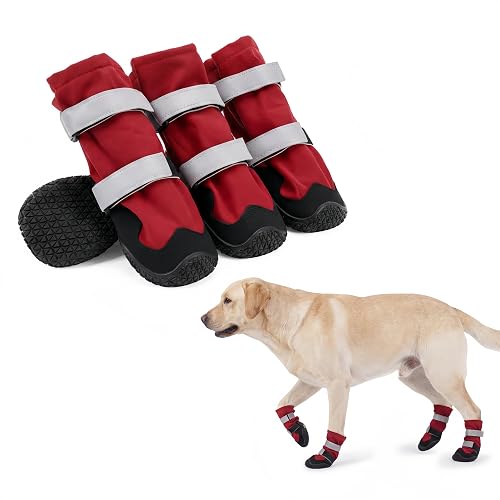
PAWsay Dog Hiking Boots with High Top Non Slip Shoes
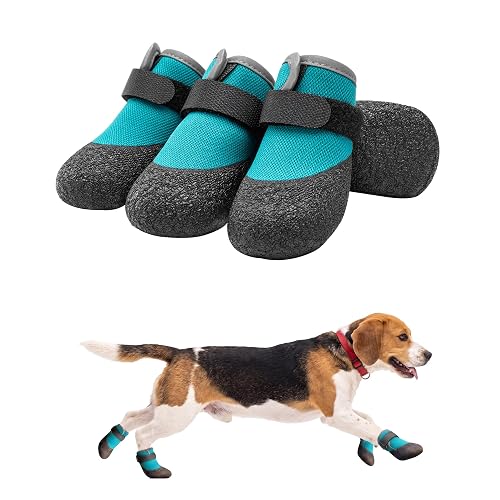
Puspaw Breathable Dog Boots for Summer Heat Protection
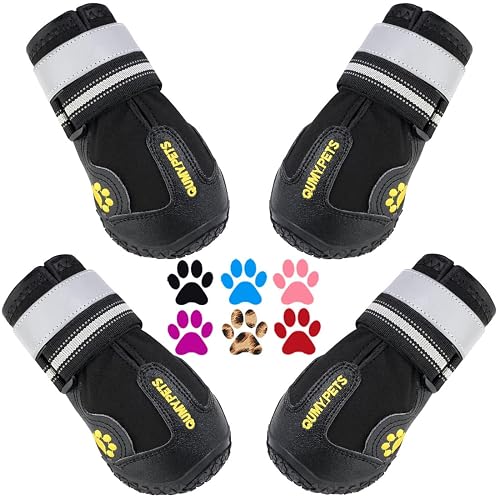
QUMY Dog Shoes for Hot Pavement and Snow

QUMY Dog Shoes for Large Medium Dogs Paw Protectors
Why These Options Stand Out
The PAWsay booties lean into the messy reality of trail hiking rather than sidewalk cruising. The high-top design climbs higher up the leg than most budget options, which helps keep rain runoff, slush, and trail grit from sneaking inside the cuff mid-hike.
A polyurethane toe cap (PU leather, a coated synthetic that mimics the feel of soft leather while resisting water) adds a layer of scrape protection against granite edges and root tangles. Reflective straps wrap around the ankle for low-light visibility on early-morning starts, and a fleece-lined interior keeps paw pads from going numb on cold ground.
Features That Help
- Water-resistant polyester upper paired with a PU toe cap, which keeps paws dry through damp grass and shallow puddles without adding heavy bulk.
- Anti-slip rubber sole grips slick hardwood, tile, and icy sidewalks as well as loose trail gravel, reducing post-hike limping.
- Reflective straps stitched along the closure improve visibility on dawn and dusk walks when headlights catch the trailhead.
- Adjustable hook-and-loop closure lets you dial tension around narrow or fluffy paws, which reduces the boot-trotting-shake-off reflex.
- Interior fleece lining cushions paws against hot pavement, cold asphalt, and road salt that often irritates pad skin after long routes.
Things To Consider
- Built for medium-to-large breeds, so small terrier paws may swim inside the shaft and rub.
- Owners commonly report a short break-in period during which dogs walk stiff-legged before adjusting to the sole weight.
Key Specs
Who It Suits Best
Medium and large breed owners tackling wet, cold, or mixed-terrain routes who want a tall, weather-blocking boot built for full trail days.
Where Another Pick Suits Better
For warm-weather pavement walks, the Puspaw breathable mesh booties keep paws cooler and lighter than the fleece-lined PAWsay design.
Puspaw takes the opposite approach from PAWsay, skipping insulation entirely and leaning on airflow instead. The breathable air mesh upper vents heat away from the pad, which matters when summer pavement climbs past 130°F and insulated boots turn into saunas.
The flexible rubber sole bends with the paw rather than fighting it, so the boot feels closer to a sock than a hiking shoe. Dual hook-and-loop straps let you tighten across the ankle and the wrist of the paw, which tends to keep them on during zoomies around the backyard sprinkler.
Practical Advantages
- Breathable mesh upper releases trapped heat, keeping paws cool on scorching sidewalks where burns happen fast.
- Flexible rubber sole bends naturally with the paw, reducing the stiff-legged shuffle dogs do in rigid boots.
- Wide opening with dual adjustable straps slips on quickly, which helps during squirmy puppy fittings or post-bath paw checks.
- Available in M (2″ x 1.7″) and L (2.4″ x 2″) dimensions for medium through large paws, covering a wide breed range.
Worth Noting
- Mesh construction is not built for deep snow or icy creek crossings, so cold-weather hikers should look elsewhere.
- Owners commonly report mesh snagging on rough brush and brambles during off-trail exploration.
- Sizing runs closer to small-to-medium paws despite the “large dogs” framing, so measure paw width carefully before committing.
Made For
Warm-climate dog owners walking urban routes, pool decks, and sun-baked park paths where heat shielding matters more than waterproofing.
Consider Something Else When
For deep snow and icy winter conditions, the PAWsay high-top booties offer the weather-blocking shaft the Puspaw mesh design cannot match.
QUMY’s classic four-pack covers the two extremes most dog owners actually face: scorched July pavement and frozen January sidewalks. The same boot handles both shifts, which removes the guesswork of swapping gear between seasons.
Size 1 (1.8″ x 2.3″) and Size 2 (1.9″ x 2.4″) sit at the small end of the spectrum, ideal for compact breeds between roughly 11 and 27 pounds. The four-piece count covers all paws from a single order, which keeps spares handy when one disappears into the underbrush.
Benefits That Matter
- Year-round versatility handles summer pavement burns and winter snow exposure without swapping wardrobes.
- Four-pack configuration means a lost boot mid-hike does not end the adventure; replacements stay in the daypack.
- Lower price per pair than single-pack competitors, useful for first-timers testing whether your dog tolerates paw wear.
- Wide sizing ladder beyond Size 2 extends up through larger paws for breeds up to 55 pounds.
Trade Offs
- Smaller listed dimensions (Size 1, Size 2) skew toward petite breeds; measuring paw width matters more than weight alone.
- Owners commonly report the rubber sole wearing smooth after heavy trail mileage, reducing grip on wet rock over time.
Right Fit For
First-time boot owners with small-to-medium dogs who want a budget-friendly four-pack that covers both summer heat and winter chill.
Not Your Match When
For a heavier medium or large breed with wider paws, the QUMY Large Medium listing (Pick 4) offers the broader fit this smaller-size lineup lacks.
This QUMY sibling solves the gap left by Pick 3, opening up the same all-season protection to dogs above 30 pounds. Larger paws need more material, and the wider fit here prevents the toe-squish that ruins a hike before it starts.
Where Pick 3 is the entry point for smaller paws, this version stretches the sizing ladder up through chunkier Labs, Shepherds, and standard Bulldogs. The same dual-strap closure system keeps the boot anchored when a 60-pound dog kicks up dirt on a trail sprint.
Key Advantages
- Wider mid-to-large breed fit accommodates chunkier paws without compressing the toes during long walks.
- Reuses QUMY’s tested all-season build, meaning hot pavement and cold snow coverage in a single boot design.
- Adjustable straps maintain tension on bigger paws that generate more pulling force during trail running.
Honest Caveats
- Higher per-pack price than the smaller QUMY listing, so sizing accuracy matters before ordering.
- Owners commonly report the inner lining compressing over time, which reduces insulation on multi-day winter trips.
- Bulky shaft can feel awkward on dogs unaccustomed to paw wear, requiring a patient first-walk indoors.
Best Suited To
Owners of medium-to-large dogs who want QUMY’s all-season versatility but need the broader sizing the smaller four-pack cannot deliver.
Look Elsewhere When
For genuinely waterproof trail use in deep snow or creek crossings, the PAWsay high-top booties offer a taller water-blocking shaft than this QUMY design.
Factors To Consider When Choosing Dog Booties For Hiking
A bootie that slips off mid-trail is worse than no bootie at all, because a loose boot tangles legs and turns dogs against wearing them again. Prioritize a secure closure first: hook-and-loop straps that cinch above and below the paw wrist hold far better than a single band around the ankle, especially on narrow, deep-chested breeds.
Sole material matters more than most shoppers expect. A flexible rubber compound grips wet rock, tile, and asphalt without the rigid clomp that makes dogs walk like cardboard statues. Rigid plastic soles may last longer on pavement but slip more on mossy trail sections.
Height of the shaft (the boot’s cuff that climbs above the paw) decides what conditions the boot handles. Low-cut designs suit dry summer pavement, mid-height boots cover most trail work, and high-tops block snow, slush, and trail debris from migrating inside the cuff. Match shaft height to the roughest condition your dog actually faces, not the worst-case fantasy hike.
Sizing accuracy is the single biggest predictor of success. Measure paw width on a flat piece of paper with the dog standing, then match against the manufacturer’s chart. Weight ranges serve as secondary guidance at best, since paw shape varies wildly within a breed. Most boots allow a brief break-in trot indoors before the real hike, which also helps dogs accept the new feel on their paws.
Picking The Right Boot For Your Trail
Pitfalls Shoppers Hit
The most common slip-up is buying by weight alone rather than paw width. A 40-pound dog can have paws closer to a 25-pound breed or a 55-pound breed, depending on bone structure and breed mix. Always measure first.
Another trap is assuming one boot handles every season. The Puspaw mesh design excels in summer heat but leaks cold straight into paws during winter. Match the boot to the worst condition you actually face, not the mildest.
Where The Extra Money Goes
Premium pricing typically buys taller shafts, thicker rubber soles, and tighter strap systems that survive repeated trail wash cycles. For dogs hiking multiple times per week on abrasive terrain, that upgrade pays off through longer service life and fewer mid-hike failures.
For casual weekend walkers on neighborhood pavement, the entry tier delivers the same core protection without the extra material cost. Spend up only when the boot earns it through heavy use.
Frequently Asked Questions
How do I measure my dog’s paw for booties?
Stand your dog on a piece of paper, lift the opposite paw, and mark the widest points of the loaded paw. Measure that width against the manufacturer’s chart before ordering.
Will my dog actually walk in booties?
Most dogs walk stiffly for the first few minutes, then normalize. Short indoor sessions with treats help build tolerance before hitting the trail.
Can booties stay on during swimming or creek crossings?
Most booties handle brief water exposure but few are built for extended submersion. Check the shaft height and material before planning a wet-route hike.
How long do dog booties typically last?
Trail mileage, surface roughness, and how often dogs chew them off all affect lifespan. Rotating between two pairs doubles useful life.
Do booties help with paw injuries or allergies?
Booties block contact with grass allergens, hot pavement, and road salt that often irritate pads. They also protect stitches and bandage work during recovery.
Bottom Line
Trail conditions vary, but the right bootie keeps your dog moving comfortably across all of them. Match the boot to the harshest surface your pup faces most weeks, measure paws carefully, and give your dog a few short sessions to accept the gear before the real hike begins.