
A leaking dry bag can ruin a weekend fast. Whether you’re kayaking whitewater, commuting by bike in the rain, or fishing on a windy shoreline, water finds every weak seam. A roll-top dry bag with a purge valve solves the everyday problem of trapped air and water intrusion that ruins phones, sleeping bags, and extra layers. This list covers five genuinely different options, from ultralight organizers to a 45-liter hauler, so you can match your gear to your trip.
A Side-By-Side Look

Sea to Summit Big River Dry Bag 13L
Sea to Summit Lightweight Dry Bag 3-Piece Set
Sea to Summit Lightweight Dry Bag 1.5L
Sea to Summit View Dry Bag See-Thru
Malo’o 45L Waterproof Dry Bag Backpack
Why These Options Stand Out
The Big River earns its name from the heavier fabric choices under the hood. A 13-liter capacity hits a useful middle ground, big enough for a day of paddling layers, electronics, and a first-aid kit, but compact enough to lash inside a kayak hatch or strap to a motorcycle rack without overpacking. Compared with the featherweight options that follow, this one trades grams for grit.
You notice the rugged feel the moment you load it down for a rough stretch. Owners heading into rocky river landings or bike tours over washboard gravel benefit most from the denser shell and reinforced bottom panel, which spreads abrasion across a wider zone rather than letting a single seam take the hit.
What Works In Its Favor
- Reinforced base layer helps the bag survive repeated slide-ins onto gravel, sandbars, and boat floors.
- Mid-sized 13L capacity swallows a lunch, dry base layers, and a phone pouch without bulging.
- Stiffer fabric profile means the bag holds its shape when half-empty, making packing at the trailhead faster.
- Roll-top closure tucks tight enough to shrug off rain squalls on long commutes and bike-to-work routes.
Things To Consider
- The denser fabric adds weight over the Lightweight series, so ultralight backpackers may feel the penalty on long miles.
- Larger body can feel bulky inside a small daypack, where the 1.5L Lightweight fits more naturally.
Who It Suits Best
Paddlers, motorcyclists, and bikepackers who need one tough roll-top that survives rough handling and frequent loading.
Consider Something Else When
Thru-hikers counting every ounce should look at the Sea to Summit Lightweight Dry Bag 1.5L instead, which trims weight at the cost of abrasion resistance.
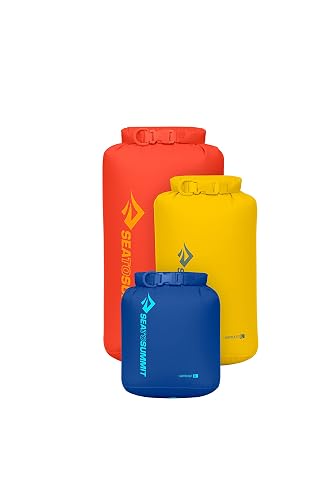
Buying a single dry bag often leads to a color-coded mess inside a pack. The three-piece bundle solves that by handing you a small, medium, and large bag in one purchase, which lets you split sleeping layers, electronics, and lunch into clearly separate compartments. The sizing mix covers most weekend trip profiles without forcing you to guess what each bag will hold.
For people running group camping kits or shared boat stowage, the staggered volumes keep everyone organized. You get the same roll-top simplicity across all three, so loading stays consistent even when you swap bags between paddlers mid-trip.
The Helpful Details
- Three coordinated sizes remove guesswork when packing mixed loads on one trip.
- Lighter build than the Big River keeps the bundle comfortable inside a backpack or pannier.
- Color separation across the three bags makes grabbing the right one at camp easy without unpacking.
- Stackable shapes nest neatly inside each other when stored, freeing up shelf space at home.
Worth Noting
- Lighter fabric means rougher handling will scuff the outer shell faster than the Big River’s tougher body.
- Three bags at once can be overkill for short day trips where a single pouch would do the job.
- If two of the included sizes match what you already own, the bundle offers less new value.
Made For
Campers and paddlers organizing a full kit into separate dry categories for a weekend or a guided group trip.
Look Elsewhere When
You mostly need one small waterproof pocket, in which case the Sea to Summit Lightweight Dry Bag 1.5L delivers the same protection without the extra bulk.
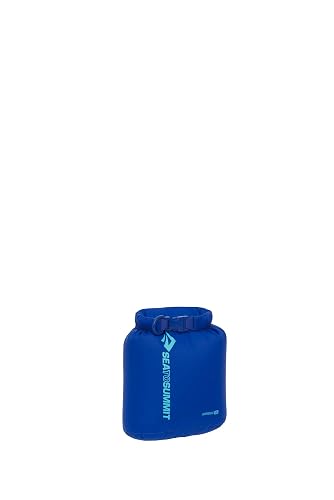
Not every dry bag needs to swallow a sleeping bag. At 1.5 liters, this option is sized for the small essentials that always seem to get soaked first: a phone, a wallet, a snack bar, or a backup battery. It slips into the lid pocket of a pack, the mesh holster on a bike frame, or the map pocket of a kayak without demanding extra real estate.
For ultralight hikers and fast-pack travelers, the low-weight fabric profile matters more than the larger body of the Big River. You trade a chunk of abrasion resistance for a barely-there footprint on long approaches.
The Upside
- Sub-2L capacity protects phones and documents without wasting pack space.
- Lighter fabric keeps the bag’s contribution to your base weight under an ounce, ideal for gram counters.
- Compact roll-top doubles as a handle for clipping to a harness or carabiner.
- Bright interior tone helps you spot small items before they disappear into the corners.
Trade Offs
- Not large enough to replace a primary dry bag for clothing layers on a wet weekend.
- Thinner shell can wear faster than mid-weight models when dragged over rough surfaces.
- Small size means it disappears inside a large duffel, so you’ll want a tether to locate it quickly.
Best Suited To
Fast-packers, day hikers, and bike commuters who want a featherweight pouch for valuables on damp days.
Reach For A Different Pick When
You need a single bag to carry a full clothing kit, in which case the Sea to Summit Big River Dry Bag 13L handles the load with more structural support.
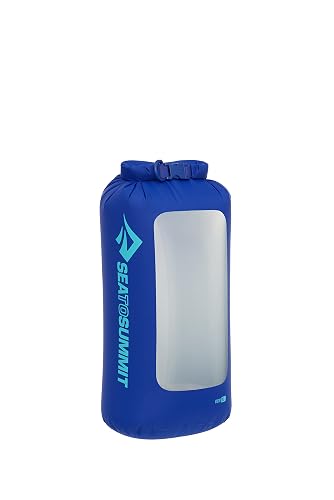
The View flips the script on dry bags by adding a transparent window along the body. At a busy camp kitchen or on a shared raft, the see-through panel saves you from opening four bags to find the headlamp. The roll-top stays familiar, so the muscle memory you’ve built on other Sea to Summit pieces still applies here.
This option shines when you want fast visual inventory more than rough-duty performance. Cooking crews, instructors, and boat guides benefit most because they manage shared gear and need to confirm contents without unrolling every closure.
Key Advantages
- Transparent panel cuts the time spent hunting through shared camp or boat gear.
- Same roll-top closure as the rest of the Sea to Summit line keeps loading consistent.
- Useful in guided-trip settings where guests need to identify their own bag quickly.
- Helps you confirm a waterproof seal without opening it, by checking for visible moisture inside.
Honest Caveats
- The clear panel is more vulnerable to scuffing than a solid fabric panel over time.
- Visibility is a double-edged feature in public spots where you might prefer a low-profile look.
- Like most dry sacks, it isn’t a substitute for a hard case if you plan to submerge it.
Feature Snapshot
Perfect Match For
Outdoor instructors, camp cooks, and paddlers managing shared gear who need fast visual access to bag contents.
A Better Fit Elsewhere
Solo travelers roughing it solo might prefer the Sea to Summit Big River Dry Bag 13L, whose opaque, reinforced shell handles rougher abuse without the see-through vulnerability.
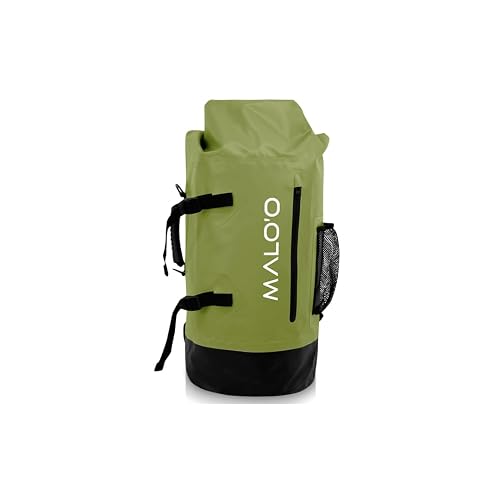
The Malo’o is the only entry on this list built like a backpack rather than a sack, and that difference reshapes how you carry it. Padded shoulder straps free up your hands on the hike from the parking lot to the launch, and the roll-top opens wide enough to drop in a rolled towel, tackle box, or wetsuit without a fight. At IPX6, the rating covers powerful spray and brief immersion, which fits surf, kayak, and beach scenarios.
Beach anglers and surf travelers benefit most, since they often carry a full kit across open sand rather than a short portage. The 45-liter volume is generous, so packing lighter kit into it works fine, but the bag shines when it’s loaded near capacity.
What Pays Off
- Backpack straps leave both hands free for kayak launches, surf entries, and beach walks.
- 45L main compartment handles towels, layers, and electronics for a full day on the water.
- IPX6 rating covers sustained spray and brief dunking, which suits surf and fishing scenarios.
- Front zip pocket keeps keys and phone reachable without unrolling the main closure.
- Wide roll-top opening simplifies dropping in bulky items like a packed lunch cooler.
Points To Note
- Bulkier frame than the Sea to Summit sacks makes it overkill for fast day hikes.
- Empty or half-empty, the bag can sag under the shoulder straps without careful packing.
- Larger seams need a careful post-trip rinse to clear sand and salt from stitching.
Product Snapshot
Who Should Grab It
Surf travelers, beach anglers, and paddlers carrying full kits over open ground who want hands-free carry and generous volume.
Skip It When
Your kit is small enough to fit in a 13L sack, in which case the lighter Sea to Summit Big River Dry Bag 13L handles day-trip loads without the extra bulk.
Picking The Right Roll-Top For Your Trips
A dry bag with a purge valve earns its keep by letting trapped air escape before the roll-top seals. That valve matters most on trips where temperature swings, altitude changes, or compression inside a pack would otherwise balloon a sealed sack. Most paddlers and hikers notice the difference the first time they open a bag after a descent and find everything still dry rather than misty.
Match capacity to the trip, not the gear closet. A 1.5L pouch makes sense for phone and document protection, while a 13L sack covers a day of clothing. The 45L backpack fits surf and fishing loads where you carry everything in one go.
Fabric weight drives most of the trade-off. Lightweight 70D nylon cuts ounces for fast hiking, while a heavier 420D shell survives rocky landings and motorbike vibration. If your trips involve hauling the bag over rough surfaces, heavier fabric earns its weight back in lifespan.
Carry style changes everything on long approaches. A simple sack straps to a deck or fits in a pannier, while a backpack-style dry bag frees your hands for surf entries and long beach walks. Pick the carry shape that matches how you move, not how the bag looks in a photo.
Key Considerations Across These Picks
Wrong Turns To Avoid
Choosing the smallest size that fits your gear today often backfires on a wetter, longer trip. Aim for one size up so you have room to seal the roll-top with three full folds, since a loosely folded closure is the most common leak point.
Ignoring fabric denier leaves bags vulnerable on rough landings. Lightweight 70D nylon is great for trails but scuffs fast on gravel boat ramps, where 420D shells outlast thinner builds by seasons.
The Case For Spending Up
Higher-priced dry bags justify the cost through heavier fabric, welded or reinforced seams, and better purge-valve designs. For multi-day paddling or saltwater fishing, that extra durability pays back in gear that stays dry over years rather than months. Budget picks still serve casual day hikers well, but frequent users usually replace them sooner.
Frequently Asked Questions
What does a purge valve actually do on a dry bag? A purge valve releases trapped air as you roll the top closed, which lets the bag compress tighter and seal more reliably under changing altitude or temperature.
Can I fully submerge any dry bag on this list? None are rated for indefinite submersion. The Malo’o handles brief dunks under its IPX6 rating, while the Sea to Summit pieces are built for spray and rain rather than swimming with them.
How do I clean a dry bag without damaging the coating? Rinse with fresh water, mild soap, and a soft cloth, then air-dry fully before storage. Salt and sand left in the seams shorten the life of the coating over time.
Will a 1.5L bag actually fit a modern smartphone? Yes, most modern smartphones slip into a 1.5L roll-top without forcing the closure. Check the bag dimensions against your phone plus any case you use.
How long do roll-top dry bags typically last? With reasonable care and post-trip rinses, quality roll-top bags tend to last several active seasons before the coating or seams show meaningful wear.