
A good pair of folding hiking poles changes the rhythm of a long day on the trail. You plant, push off, and suddenly your knees, hips, and lower back carry less of the load. After a few miles, the difference is hard to give back. The picks below cover everyone from weekend walkers chasing pavement to thru-hunters counting every ounce in their pack.
The Shortlist At A Glance
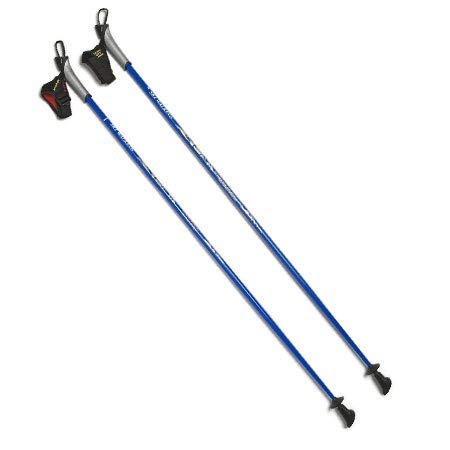
American Nordic Walking System Custom-Fit 1-Piece Poles
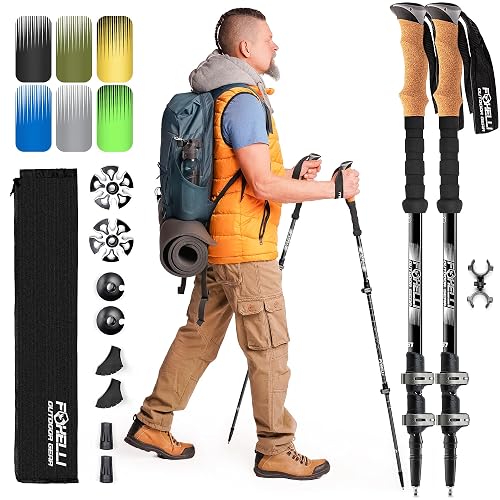
Foxelli Lightweight Collapsible Aluminum Hiking Poles

Hiker Hunger 100% Carbon Fiber Trekking Poles
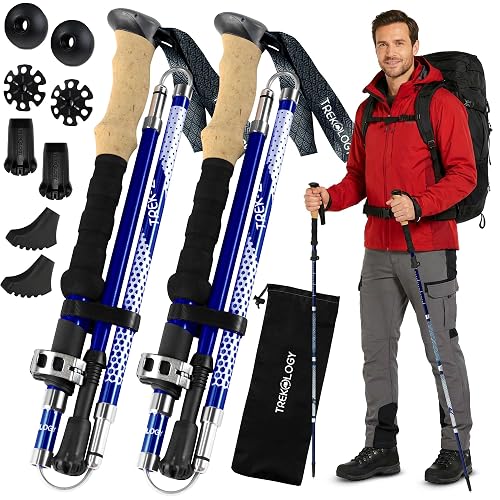
Trekology Trek-Z Collapsible Hiking Poles (2-Pack)

LEKI Ultratrail FX.One Trekking Poles
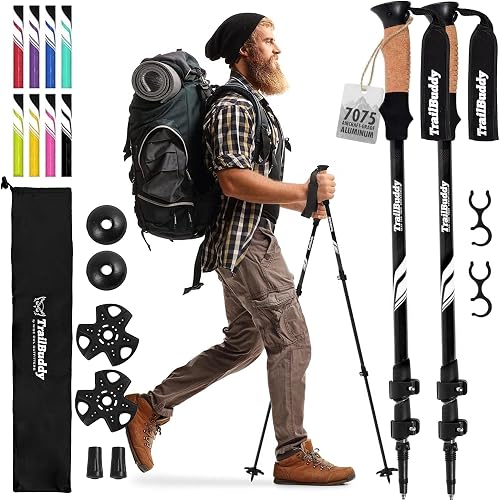
TrailBuddy 7075 Aluminum Collapsible Hiking Poles
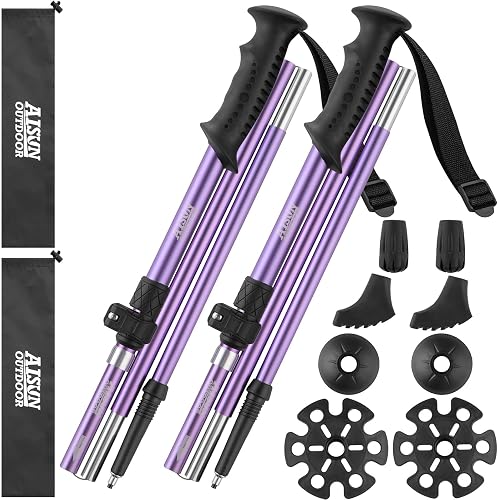
AISUNOURDOOR Aluminum Collapsible Trekking Poles
Taking A Closer Look At The Options
Where most of the picks in this roundup collapse into your pack, the American Nordic Walking System poles stay rigid and full-length. They’re built in genuine ski pole factories rather than assembled from generic twist-lock tubing, which gives them a planted, ski-like feel under power. That one-piece construction rules out backpackers, but opens the door for fitness walkers, pavement pounders, and anyone using poles for physical therapy.
The trade-off is size. You can’t shorten them for a day pack, and they ship in 32 length options matched to your barefoot height. If your goal is upright posture on a local trail or a long city loop, that custom fit is genuinely worth the extra planning.
Features That Help
- One-piece ski-factory shaft eliminates wobble at the joint
- Custom-cut length from 32 sizes matches your barefoot height
- Real Nordic straps cradle the wrist instead of slipping off
- Removable rubber paws and carbide metal tips cover both pavement and trail
Things To Consider
- Cannot collapse for transport, so storage and travel require more space
- Ordering process requires sharing your barefoot height for the cut
Who It Suits Best
Fitness walkers, therapy users, and pavement hikers who want a custom-fit pole they can leave by the front door.
Look Elsewhere When
Backpackers counting every liter of pack space should reach for the Hiker Hunger 100% Carbon Fiber Trekking Poles instead, since those collapse down to a much smaller size.
Foxelli has staked a quiet reputation on being the approachable aluminum pole for travelers. The shaft uses aircraft-grade aluminum, the cork grips keep sweaty palms from sliding, and the whole assembly telescopes from 24 inches up to 54 inches depending on your height. That range covers most adults in a household without forcing two separate purchases.
Each pole weighs roughly 9.4 ounces, which lands on the lighter end of aluminum without crossing into carbon pricing. Quick flip locks rather than twist locks mean you adjust length in seconds, even with cold fingers. For a weekend trip where your poles live in a carry-on, the pack-down size is the real win.
Where It Excels
- Wide 24 to 54 inch adjustment range fits most users
- Disassembles to roughly 21 inches for stashing in luggage
- Cork grips absorb sweat and feel cooler than hard plastic
Worth Noting
- Aluminum is sturdier under impact but heavier than carbon alternatives like the Hiker Hunger 100% Carbon Fiber Trekking Poles
- Flip locks can loosen mid-hike if not checked at the start of a long descent
Quick Facts
Made For
Casual hikers, travelers, and anyone sharing a single pair between different height ranges.
Consider Something Else When
Long-distance backpackers who count every gram should consider the Hiker Hunger 100% Carbon Fiber Trekking Poles for a noticeable weight savings.
Hiker Hunger Outfitters built these around 3k carbon fiber, the same weave pattern found on higher-end cycling and ski gear. Each pole lands at around 7.6 ounces, which is meaningfully lighter than the Foxelli aluminum pair. On a multi-day section hike that weight compounds in your wrists, shoulders, and feet.
The grips combine moisture-wicking cork with EVA foam extensions underneath, so you can choke down on the pole when climbing a steep grade without fumbling. Compared with the Trekology Trek-Z below, the construction feels stiffer under hard push-off. You give up some impact forgiveness, but you gain a more direct energy transfer on every plant.
Strengths Worth Knowing
- 3k carbon fiber shaft at roughly 7.6 oz per pole
- Cork and EVA foam grips handle both casual walking and steep climbs
- Flip locks adjust quickly between ascents and flat sections
Trade Offs
- Carbon fiber can crack on hard rock strikes, while aluminum bends
- Carries a premium over most aluminum picks in this list
At A Glance
Right Fit For
Backpackers and long-distance hikers tracking total pack weight on every trip.
A Better Fit Elsewhere
Heavier users who worry about carbon cracking on hard impact may prefer the TrailBuddy 7075 Aluminum Collapsible Hiking Poles, where aluminum dents rather than snaps.
The Trek-Z has become something of a default recommendation for first-time pole shoppers, and for good reason. The Z-fold design pulls the three sections together with an internal cord, so setup is closer to unfolding a tent pole than threading twist locks. For a new hiker, that ease matters more than a marginal weight savings.
It packs down short enough to strap to the outside of a daypack, and the EVA foam grips stay comfortable in cooler weather. Compared with the LEKI Ultratrail FX.One further down the list, you give up carbon-grade weight, but the trade is a much lower entry point. Most casual users won’t notice the difference on a five-mile loop.
The Good Stuff
- Z-fold design deploys in seconds without fiddly adjustments
- Ships as a complete two-pack ready to use
- EVA foam grips stay comfortable in cooler weather
Honest Caveats
- Heavier than carbon alternatives, which matters on long days
- Internal cord tension can stretch over years of use, and may need inspection
Feature Snapshot
Who Will Love This
Weekend hikers, beginners, and anyone who wants a fuss-free pair of poles that deploy in seconds.
Skip It When
Thru-hunters who log dozens of miles per day should reach for the lighter Hiker Hunger 100% Carbon Fiber Trekking Poles instead.
LEKI built the Ultratrail FX.One with a different user in mind: trail runners and racers. At roughly a quarter pound per pole, the carbon shaft almost disappears in your hand, and the push-button deployment splits the pole into three 14.5-inch sections for stashing in a running vest. That’s a meaningful shift from the broader folding picks above, where pack-down is just convenient. Here it’s a race-day requirement.
The Trail Trigger Shark grip is shaped for a running stride, narrower and angled to fit a fast cadence. Foam construction keeps it light and absorbs vibration better than hard rubber. You’re paying for the LEKI name and the engineered grip, but for serious ultrarunners, that fit is the whole point.
What Makes Sense
- Three-section push-button breakdown to roughly 14.5 inches
- Carbon shaft keeps weight near a quarter pound per pole
- Trail Trigger Shark grip suits a running cadence
Points To Keep In Mind
- Specialized running shape is less comfortable for casual walking than the Trekology Trek-Z grip
- Premium construction carries a higher price than the rest of the field
Quick Facts
Perfect Match For
Trail runners, ultralight enthusiasts, and racers training on technical terrain.
Reach For A Different Pick When
Casual hikers on flat terrain should save money with the Trekology Trek-Z Collapsible Hiking Poles, which handle walking just as well for less cost.
TrailBuddy markets to a wide audience, and the 7075 aluminum construction is the reason. This aluminum alloy is stiffer and tougher than the more common 6061 grade, so the shaft tolerates the kind of off-angle plant that happens on rocky or rooty trails. For seniors or anyone who leans hard on their poles for balance, that confidence matters.
The flip locks and EVA grips mirror what you find on the Foxelli pair above, so this lands as a sturdier sibling rather than a radical redesign. It doesn’t fold as short as the Trekology Z-fold, and it weighs more than carbon, but the durability story is the strongest in the roundup for shared household use.
The Case For It
- 7075 aluminum alloy is stronger than standard 6061 tubing
- Adjustable range fits both shorter and taller users in the same household
- Setup is straightforward, with no learning curve for first-time users
Soft Spots
- Heavier than carbon-fiber picks, which may tire out smaller users on long days
- Doesn’t pack down as short as Z-fold designs, so it’s less suitcase-friendly
Best Suited To
Seniors, balance-focused walkers, and households sharing one pair between different height ranges.
Where Another Pick Suits Better
Travelers packing for flights should pick the Foxelli Lightweight Collapsible Aluminum Hiking Poles, which telescope shorter for luggage.
The AISUNOURDOOR pair rounds out the list as a clear entry-level pick. The aircraft-grade aluminum shaft and roughly 11-ounce per-pole weight keep the construction familiar and forgiving, which is the right call for someone still learning pole technique. The included disposable raincoat is a small touch, useful for a sudden shower on a beginner hike.
Height adjustment runs from 43 to 51 inches, which suits most adults and many older kids, though it may fall short for users above six feet. Compared with the TrailBuddy 7075 above, the alloy and lock system feel a step less refined, but the value proposition makes sense for a first pair you might replace once technique improves.
What Pays Off
- Aircraft-grade aluminum at a low entry-level cost
- Height range from 43 to 51 inches fits most users
- Bundled raincoat adds value for first-time hikers
Things That May Matter
- Not tall enough for users above six feet, where the Foxelli or TrailBuddy ranges fit better
- Lock system feels less refined than mid-tier picks, so check tension before long descents
Who Should Grab It
First-time pole shoppers, casual day hikers, and anyone testing the waters before committing to a premium pair.
Not Your Match When
Taller hikers or anyone planning multi-day trips should step up to the TrailBuddy 7075 Aluminum Collapsible Hiking Poles, which offer a wider adjustment range and tougher alloy.
What To Weigh Before Choosing Folding Hiking Poles
Material Matters More Than Marketing
The shaft is the single biggest decision. Aluminum alloys like 7075 bend on impact rather than crack, which makes them forgiving on rocky trails where poles take abuse. Carbon fiber is stiffer and lighter, which translates to less fatigue over many miles, but it can fracture under sharp rock strikes. Aluminum is heavier; carbon costs more. Pick the one that matches your terrain, not the one that sounds more advanced.
Lock And Grip Mechanics
Flip locks adjust in a second with a single lever, while twist locks thread a collar to set tension. Twist locks are slightly more secure under heavy load, but flip locks win on cold mornings when you don’t want to wrestle with frozen fingers. Grips also vary: cork absorbs sweat and softens over time, EVA foam stays consistent in cooler weather, and basic plastic is light but slippery. For sweaty palms or hot climates, cork tends to age into a custom fit.
Collapsed Length And Packability
A pole that telescopes to 21 inches fits inside most carry-ons. Z-fold designs that split into short sections, like the Trekology Trek-Z, pack even smaller but add a cord-tensioning element to maintain. Measure your pack before assuming a given pole will fit, and consider how often you’ll be stashing versus planting.
Length Range And User Fit
Most adults need a pole that extends to somewhere around their chin height for a 90-degree elbow angle. A 24 to 54 inch range covers most households, but kids and very tall users should double-check the spec sheet. An undersized pole forces a hunched posture; an oversized one jams the shoulder on every plant.
Common Pitfalls And Upgrade Payoffs
Where Shoppers Go Wrong
The classic mistake is choosing a pole based on folded length without checking the maximum extended length. A short pack-down size means nothing if the pole tops out below your chin and forces you to lean. Another common miss is ignoring grip material. Plastic grips can get slick with sweat on a summer climb, and cork softens over time into a custom fit. Test the grip in a store when you can, and consider the climate you’ll hike in most.
What The Higher Tier Buys
Premium poles like the LEKI Ultratrail FX.One command higher prices for three real reasons. The carbon layup is engineered for a specific flex pattern, the grip geometry is shaped for a particular stride, and the locking mechanism is precision-machined rather than cast. For weekend walkers, those upgrades are mostly invisible. For long-distance runners and thru-hunters, they’re the difference between poles you carry and poles you forget you’re holding. The upgrade pays off when your miles per trip climb into double digits.