
A great radio can quietly shape every flight you take. The right grip, the right gimbal feel, the right protocol match to your receiver: they add up fast when you’re flying FPV, whether that’s a backyard cinewhoop session or a long-range cruiser out past the tree line. Pick a controller that fights you, and even a careful pilot ends up chasing stick corrections instead of the shot.
This roundup is for hobbyists stepping into their first serious radio, multirotor pilots upgrading from a toy transmitter, and anyone building a BNF (Bind-and-Fly) who needs a reliable, programmable controller that won’t hold them back. The list mixes pocket-friendly ExpressLRS (a popular open-source low-latency radio link) options with broader hobby-grade transmitters, so you can match features to your airframe and budget without second-guessing the protocol.
A Side-By-Side Look
A Side-By-Side Look

RadioMaster Pocket Remote Controller (ELRS Charcoal Mode 2)
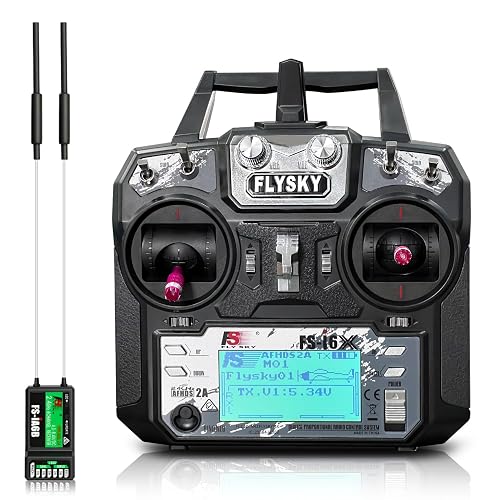
HAWK’S WORK FS-i6X 10Ch Transmitter 2.4GHz RC Controller
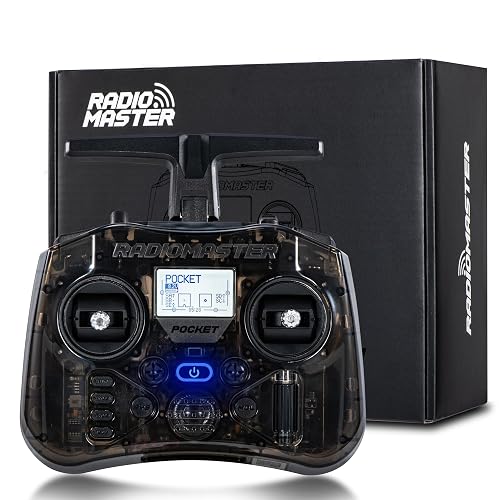
STARDRONE Radiomaster Pocket ELRS Transmitter (LED, Battery Sold Separate)
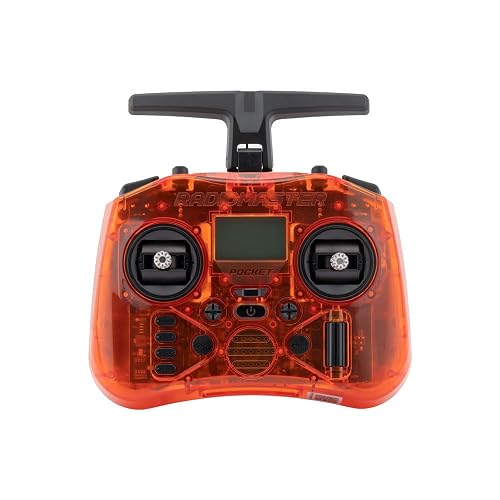
RadioMaster Pocket Portable Remote Controller (Orange, ELRS Mode 2)
Radiomaster Pocket Hall Gimbal Transmitter (ELRS Charcoal)
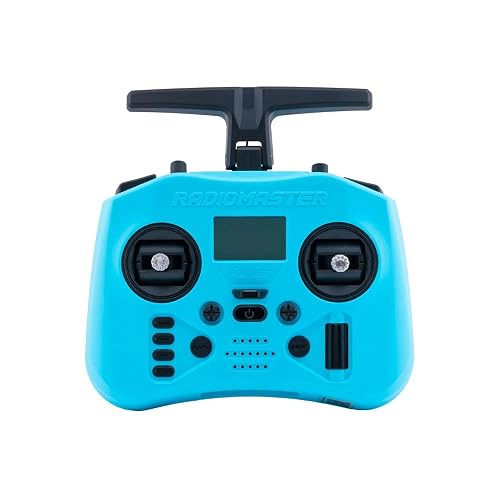
RadioMaster Pocket Crush ELRS Remote Controller (Blue, Mode 2)

Flysky FS-I6S 10ch AFHDS 2A RC Transmitter with FS-iA6B

Radiomaster Pocket Crush ExpressLRS Controller (Cherry Red, 18650 Battery)
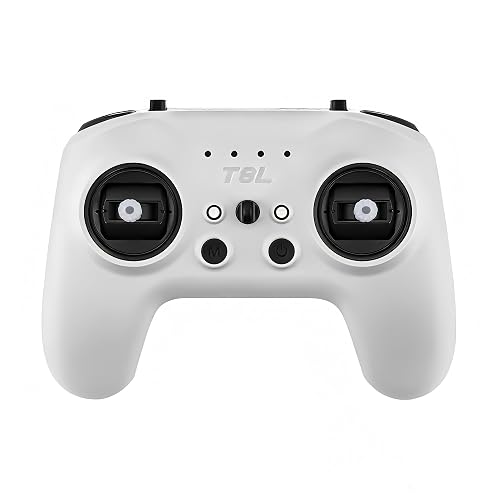
Radiomaster T8L ELRS 2.4GHz Radio Transmitter (White, Hall-Effect)
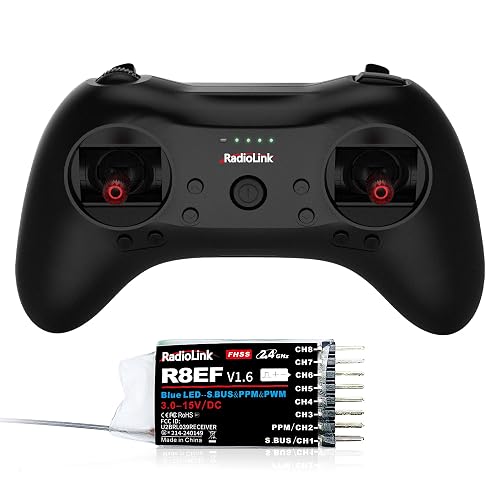
Radiolink T8S 8-Channel 2.4G Pocket Transmitter with R8EF RX
Meet The Standout Selections
The RadioMaster Pocket has earned its reputation as the go-anywhere FPV radio, and the Charcoal Mode 2 ELRS version is the most balanced take in the lineup. It runs EdgeTX firmware (an open-source, deeply customizable radio operating system favored by FPV pilots), which means you can build model setups, mixes, and switch logic without proprietary walls. Hall-effect gimbals (sensors that read stick position magnetically rather than via physical potentiometers, so they don’t wear out) keep the sticks smooth and consistent through long sessions.
Compared with the toy-class transmitters many beginners start on, this one fits in a jacket pocket yet still feels grown-up in the hand. Pilots who carry their gear to a flying spot, a race meet, or a friend’s house will appreciate the foldable antenna and removable stick ends. Pre-loaded with EdgeTX, the learning curve is real but pays off quickly.
Noteworthy Benefits
- Hall-effect gimbals deliver precise, drift-free centering for smoother line work in cinematic shots.
- Compact shell slips into a small daypack without giving up the screen, switches, and trims you need for daily flying.
- Open EdgeTX firmware gives pilots room to build custom mixes, voice alerts, and per-model profiles.
- Removable stick ends and foldable antenna make transport and storage painless between flights.
- ELRS protocol support pairs cleanly with the wide range of affordable ELRS receivers on the market.
Trade-Offs To Consider
- 18650 cells are not included, so you’ll need to source batteries separately before the first flight.
- EdgeTX is powerful but the menu structure can overwhelm anyone coming from a simpler toy transmitter.
Who It Suits Best
Intermediate and advanced FPV pilots who want a pocket-friendly radio that still runs an open-source firmware stack.
Skip It When
Total beginners who want plug-and-fly simplicity should reach for the HAWK’S WORK FS-i6X instead, since its menu flow is more forgiving on day one.
Few radios have introduced more people to the hobby than the FS-i6 lineage, and this 10-channel refresh keeps that tradition alive. The HAWK’S WORK FS-i6X ships with the FS-iA6B receiver, so you can bind a quadcopter, an RC car, or a small fixed-wing trainer without buying extras. Two joysticks, four switches, and two knobs give you a familiar physical layout that’s easy to map.
This is a workhorse, not a showpiece. Pilots who fly multiple airframes from a single transmitter will appreciate being able to switch the channel count between 6 and 10 depending on the model. Compared with the edge-first ExpressLRS picks above, this one sticks to AFHDS 2A (Automatic Frequency Hopping Digital System, Flysky’s 2.4 GHz protocol), which has a longer track record in the toy-grade and hobby-grade market.
Practical Advantages
- User-configurable channel count (6 or 10) lets you match the radio to simpler or more advanced aircraft.
- Two joysticks, four switches, and two knobs cover most fixed-wing and multirotor setups without an upgrade.
- Includes an FS-iA6B receiver in the box, so binding a quadcopter or trainer plane is a same-day project.
- AFHDS 2A protocol support broadens compatibility with a wide range of budget receivers and BNF models.
Honest Caveats
- Potentiometer-based gimbals (traditional resistive sticks that can develop slight wiggle over time) tend to feel looser than the Hall-effect sticks on the RadioMaster Pocket.
- It runs Flysky firmware rather than EdgeTX, so deep model programming is more limited than open-source alternatives.
Made For
Hobbyists flying mixed fleets, including quadcopters, RC cars, helicopters, and small planes, who want one dependable radio across all of them.
Look Elsewhere When
Pilots chasing low-latency long-range ELRS links should consider the STARDRONE Radiomaster Pocket ELRS Transmitter, which pairs better with modern FPV receivers.
This Pocket-branded variant leans into the cross-vehicle appeal of the radio. STARDRONE markets it for FPV drones, RC helicopters, fixed-wing models, RC cars, boats, and multirotors, all from the same transmitter. That’s a meaningful pitch for hobbyists who rotate through airframes and surface rigs. EdgeTX is pre-installed, so the open-source workflow is identical to other Pocket models.
The physical footprint is the same pocketable shell as the standard Pocket, but the LED indicator makes switch state easier to read in low light. For pilots who want the ELRS protocol without picking up RadioMaster’s standard colorways, this is a sensible alternative with the same firmware muscle.
What Earns Its Place
- Broad vehicle compatibility covers FPV quads, helis, fixed-wing, cars, and boats from one radio.
- EdgeTX firmware means the same scripting, mixes, and per-model profiles as other Pocket variants.
- Hall gimbals provide smooth, repeatable stick feel across long indoor or outdoor sessions.
- Built-in LED indicators help confirm switch positions without squinting at the LCD.
Things To Weigh Up
- 18650 batteries are not included, so first-day setup requires a separate battery purchase.
- Brand-name recognition is smaller than RadioMaster’s own listings, which may matter for warranty peace of mind.
Right Fit For
Hobbyists who fly multiple RC disciplines and want a single transmitter to span FPV quads, surface vehicles, and winged models.
Consider Something Else When
Pilots who prefer a brighter colorway for field visibility should consider the RadioMaster Pocket Crush ExpressLRS in Cherry Red, which offers the same Pocket DNA in a bolder finish.
Sometimes the practical decision is the boring one: which color is least likely to vanish into a grassy field. This orange Pocket variant delivers the same feature set as the charcoal original, including Hall gimbals, EdgeTX firmware, ELRS support, and a backlit LCD screen, but in a high-visibility shell. Pilots who fly from parks and open fields often lean toward bright cases for exactly this reason.
It also supports an external module bay for Nano-size modules, which means you can swap radio protocols later without buying a new radio. Compared with the heavier hobby-grade transmitters in this guide, the form factor stays travel-friendly.
Features That Help
- Bright orange shell improves field visibility and reduces lost-radio headaches on tall grass.
- External module bay allows future protocol expansion without replacing the radio.
- Backlit LCD screen keeps the interface readable in dim pre-dawn or dusk sessions.
- Hall gimbals keep stick feel consistent across long flying days.
Room For Improvement
- Batteries are not included, so plan to budget for 18650 cells at the same time as the radio.
- The feature set is identical to other Pocket variants, so the color is the only differentiator.
Best Suited To
Pilots who frequently fly outdoors in grass or natural terrain and want a radio that’s easier to spot at a distance.
Not Your Match When
Pilots wanting a gimbal upgrade path should look at the RadioMaster Pocket Crush ELRS in Blue, which can move up to AG01 gimbals down the road.
This listing sits at the heart of the Pocket family: same compact shell, same EdgeTX firmware, same ELRS protocol, just branded under RadioMaster itself in the classic charcoal color. It’s the safest bet for pilots who want the canonical configuration without surprise third-party variations. Hall gimbals, foldable antenna, and removable stick ends carry over unchanged.
If you’ve spent any time on FPV forums, the charcoal Pocket is the radio most reviewers reference when describing the line. That familiarity counts when you’re searching for setup guides, gimbals tuning tips, and model templates.
Where It Excels
- EdgeTX firmware gives you access to the deepest library of community setup guides and templates.
- Hall gimbals provide smooth, repeatable stick feel for both cinematic flying and casual freestyle.
- Foldable antenna and removable stick ends make the radio field-friendly and bag-friendly.
- Charcoal finish hides scuffs and dirt from regular outdoor flying better than lighter colorways.
Points To Keep In Mind
- Batteries are not included, so plan ahead for 18650 cells.
- EdgeTX has a steeper learning curve than simpler menu systems, especially for first-time programmable radio users.
Who Will Love This
Everyday ELRS pilots who want the canonical Pocket configuration backed by a wide community knowledge base.
A Better Fit Elsewhere
Pilots who want a color-forward case should check the Xiangtat Radiomaster Pocket Crush in Cherry Red, which shares the same internals with a bolder look.
The Pocket Crush refines what made the original Pocket popular. It adds X5 Hall-effect nano gimbals with quad bearings (small ball-bearing carriers that keep the gimbal centered without slop) as standard, and there’s a documented upgrade path to AG01 NANO CNC Hall-effect gimbals for pilots who want a more premium stick feel down the road. The blue colorway is a small thing, but it gives the radio a fresh identity on a crowded shelf.
For pilots who already know they want to invest in gimbals eventually, that upgrade path matters. EdgeTX is still the firmware backbone, so the workflow doesn’t change as the hardware does. It’s a radio you can grow into rather than out of.
Well-Handled Touches
- Quad-bearing Hall gimbals give smoother, more precise stick travel out of the box.
- Upgrade path to AG01 NANO CNC gimbals lets pilots invest further without buying a new radio.
- EdgeTX firmware carries the same model setup and scripting depth as other Pocket variants.
- Built-in LED indicators make switch state easier to read on bright, sunny flying fields.
Points To Note
- AG01 gimbal upgrades add to the overall cost, so factor that into long-term budget planning.
- The Crush line is newer than the original Pocket, meaning fewer third-party accessory options on day one.
Perfect Match For
Pilots who want a Pocket-class radio today with a clear hardware upgrade path for tomorrow.
Reach For A Different Pick When
Pilots happy with stock gimbals and no near-term upgrade plans will find the same core experience in the standard RadioMaster Pocket ELRS in Charcoal, often at a lower entry cost.
The Flysky FS-I6S is the radio many pilots learned on, and the AFHDS 2A (Flysky’s 2.4 GHz frequency-hopping protocol) version is the most capable expression of that lineage. The system is built around low-power components that maintain receiver sensitivity while drawing a fraction of standard FM power, which matters for hobbyists running small quads on single-cell LiPos. Bidirectional communication means telemetry (data sent back from the aircraft to the radio, such as battery voltage or signal strength) flows back to the radio for monitoring flight data.
It includes an FS-iA6B receiver, so binding a quadcopter or trainer plane is a same-day affair. Compared with the RadioMaster Pocket family, this one trades EdgeTX depth for a simpler menu flow that’s friendly to first-time hobbyists.
Advantages To Know
- Low-power AFHDS 2A architecture extends receiver runtime on small battery packs.
- Bidirectional communication enables telemetry feedback for battery, signal, and altitude data.
- Includes an FS-iA6B receiver in the box for same-day binding with a quad or trainer.
- Simpler menu flow makes the radio approachable for hobbyists new to programmable transmitters.
Potential Drawbacks
- Potentiometer gimbals tend to feel less precise than the Hall-effect sticks on the RadioMaster Pocket.
- No native EdgeTX support, so deep customization options are more limited than open-source alternatives.
- AFHDS 2A is solid, but ELRS has become the protocol of choice for low-latency long-range FPV links.
Who Should Grab It
First-time hobbyists flying small quadcopters or trainer planes who want an affordable radio with a gentle learning curve.
Swap It Out When
Pilots chasing ELRS-range performance should consider the STARDRONE Radiomaster Pocket ELRS, which offers a more modern protocol at a similar price tier.
The Pocket Crush lineup is known for color variety, and this Cherry Red variant stands out the most on a flying field. Underneath the finish, it carries the same internals as other Crush models: EdgeTX firmware, Hall gimbals, ELRS protocol, and 16 channels for advanced mixes. The big practical difference here is that an 18650 battery ships in the box, so you can bind and fly the same day the radio arrives.
For pilots who’ve been eyeing the Crush line but didn’t want to chase down compatible cells separately, this bundle removes that friction. The bold color also helps prevent the classic lost-radio-in-grass problem.
The Practical Payoff
- Includes an 18650 battery, removing the most common first-day setup hurdle.
- Cherry Red shell improves field visibility and gives the radio a distinctive look.
- 16-channel capacity supports advanced mixes for complex multirotor and fixed-wing setups.
- EdgeTX firmware and ELRS protocol match the wider Pocket Crush family for setup continuity.
Where It May Fall Short
- A single included 18650 battery means you’ll likely want to buy a second cell for rotation.
- Cherry Red finish shows scuffs and scratches more readily than darker colorways over time.
Built With In Mind
Pilots who want a Crush-class radio ready to use out of the box and prefer a high-visibility colorway for outdoor sessions.
Another Choice May Suit
Pilots wanting a lighter, screenless radio for tiny drones should look at the Radiomaster T8L ELRS in White, which trims weight by dropping the LCD.
The T8L is a deliberate departure from the Pocket family. At roughly 204 grams, it shaves weight by dropping the LCD screen entirely and adding a USB-C port for both charging and simulator connectivity. That makes it especially attractive for pilots who fly with FPV goggles and don’t need a screen on the radio at all. Quad-bearing X5 Hall-effect nano gimbals keep the stick feel smooth and free of mechanical drift.
For indoor micro-drone pilots or anyone who treats the radio as a long-distance stick-and-switch device, the lighter shell and smaller footprint win daily. Compared with the more feature-rich Pocket Crush, the T8L is more focused: fewer menus, faster setup, fewer distractions mid-flight.
The Upside
- 204-gram shell is meaningfully lighter than most Pocket-class radios for travel-heavy pilots.
- Quad-bearing Hall-effect gimbals stay smooth and free of drift over long-term use.
- One-click ExpressLRS binding speeds up pairing with compatible receivers.
- USB-C charging and simulator compatibility let you practice without burning pack cycles.
Less-Strong Areas
- No LCD screen means model setup and trim changes rely on companion software or memory of button combos.
- Smaller form factor leaves less room for extra switches, so very complex mixes may feel cramped.
The Right Fit
Pilots flying tiny whoops, micro-drones, and fixed-wing models who want the lightest possible radio with quality Hall gimbals.
Where Another Pick Suits Better
Pilots who prefer a screen for in-field setup changes should reach for the RadioMaster Pocket ELRS in Charcoal, which keeps the LCD workflow intact.
The Radiolink T8S leans toward surface-vehicle control, particularly RC cars, trucks, and crawlers, while still handling 8-channel aircraft setups if needed. It uses FHSS communication (Frequency-Hopping Spread Spectrum, a method that rapidly switches channels to avoid interference and maintain stable control links) with a pseudo-random algorithm designed to hold a stable signal across long-range conditions. Pair that with the included R8EF receiver and you have a tidy, ready-to-bind package out of the box.
The 8-channel layout is more than enough for most RC car functions and basic aircraft mixes. Compared with the FPV-first Pocket line, this radio skips EdgeTX and sticks to a simpler interface that surface hobbyists tend to prefer.
A Few Strong Suits
- FHSS protocol with pseudo-random hopping helps maintain a stable signal for outdoor RC car driving.
- 8-channel capacity covers most surface vehicle functions plus entry-level aircraft mixes.
- Includes the R8EF receiver, removing the need to source a compatible RX separately.
- Low voltage alarm, signal alarm (RSSI), and fail-safe add safety layers for both cars and aircraft.
Some Limits To Know
- Plastic shell construction feels less premium than the aluminum-edge Pocket Crush radios.
- Not optimized for low-latency FPV use, so multirotor pilots should look at the ELRS-focused picks instead.
Whose Shelf It Belongs On
RC car, truck, and crawler hobbyists who want a compact 8-channel radio with a stable FHSS link and a bundled receiver.
A Better Fit Elsewhere
FPV drone pilots flying multirotors will get more from the STARDRONE Radiomaster Pocket ELRS, which pairs the Pocket platform with the protocol modern quads expect.
What Matters Most Before Choosing Fpv Drone Controllers
The first decision is protocol. ExpressLRS (ELRS) has become the default choice for low-latency FPV links because it delivers reliable range at a low cost, but AFHDS 2A and FHSS radios still hold value for surface vehicles and casual fixed-wing flying. Match the radio’s protocol to the receivers already in your fleet, since mismatched protocols simply won’t bind.
The next decision is gimbal type. Hall-effect gimbals use magnetic sensors rather than physical potentiometers, so they resist drift and stay smooth through years of use. Potentiometer gimbals are cheaper and perfectly serviceable, but they can develop slight wiggle over time. For pilots who fly daily or who care about precision stick work, Hall gimbals are worth the small step up.
Firmware is the third pillar. EdgeTX radios give you deep customization, scripting, and community model templates, which is why most FPV pilots gravitate there. Closed firmware like Flysky’s or Radiolink’s keeps menus simpler and the learning curve shorter, which is genuinely better for total beginners who just want to bind and fly. Choose the firmware you’d actually enjoy learning, not the one with the most features on paper.
Finally, factor in physical layout. Compact Pocket-class radios travel well but have fewer switches; full-size hobby transmitters offer more physical controls but take up room in a backpack. Pilots who fly from a car trunk or a dedicated flight bench won’t mind either form factor, but backpack-and-goggle pilots usually lean pocket.
Key Considerations Across These Picks
Common Buying Slip Ups
The most frequent miss is buying a radio whose protocol doesn’t match the existing receivers in the shop. An ELRS radio can’t bind an AFHDS receiver and vice versa, so confirm before checkout. Another common slip is skipping the battery math: many Pocket-class radios ship without 18650 cells, and budgeting for those separately prevents a frustrating first-day wait. Pilots also tend to overlook switch count, picking a radio with only two switches when their airframe needs four for arming, flight modes, and a buzzer.
When Paying More Pays Off
Stepping up from a budget Flysky or Radiolink radio to a Hall-gimbal EdgeTX Pocket usually buys three things: noticeably smoother stick precision, an open firmware you can grow into, and broader protocol support via external module bays. For pilots who fly more than once a month or who plan to add more airframes, that upgrade typically pays back quickly. For casual hobbyists flying a single RC car or trainer plane, the simpler radios remain a perfectly rational choice.