
Getting into FPV flying usually starts with the same quiet frustration: you watch a handful of beautiful first-person clips, order something cheap, and watch it disappear behind the garage in three seconds. The right plane or quad makes the difference between learning a skill and abandoning a hobby. This roundup covers six options across beginner trainers, camera-equipped flyers, and lightweight FPV quads, so you can match your budget and your tolerance for repairs to something that actually flies.
The Choices Worth Comparing

SoloGood HEE Wing T-01 Fixed Wing RC Plane 730mm EPP Foam

APEX FPV Drone Kit Brushless RC Quadcopter
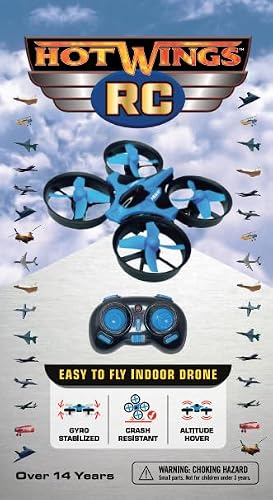
Hot Wings RC Gyro Stabilized Mini Drone

LM19-A Drone with HD Camera for Beginners

APEXFPV VR70-Pro FPV Drone Brushless Quadcopter
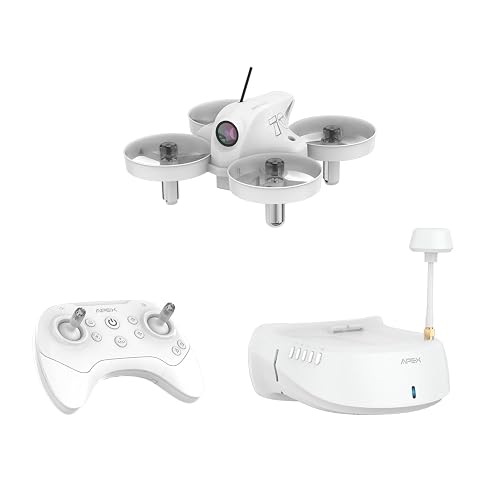
APEX FPV Drone Kit with 120° Wide FPV Goggles
The Strengths Of Each Pick
Fixed-wing trainers behave nothing like the multirotors that dominate beginner lists. The SoloGood HEE Wing T-01 leans into that difference with a 730mm wingspan and a foam-and-carbon build that survives the rough touchdowns a first pilot will inevitably make. EPP foam (expanded polypropylene, a flexible closed-cell foam that bends on impact rather than cracking) absorbs grass-strike energy, so a bad landing usually ends with a bent tip and not a box of replacement parts.
This is a PNP (plug-and-play) airframe, meaning the airframe, motors, and electronics arrive installed while you supply your own transmitter, receiver, battery, and charger. Anyone coming from a simulator or already owning a radio will appreciate that head start. The twin motors deliver enough thrust for short rolling takeoffs from a flat park field, and depending on your field length, you may find yourself launching by hand on tighter strips.
Strong Points
- EPP foam construction that flexes on impact instead of snapping
- Carbon-fiber reinforcement keeps the wings rigid in flight but light on the bench
- Twin-motor layout gives enough thrust for short-field launches in calm air
- External camera mount opens the door to basic aerial recording as skills grow
- Plug-and-play electronics cut setup time for pilots who already own a radio
Things To Consider
- Battery, charger, transmitter, and receiver are not included, which adds to the real cost
- Fixed-wing models need open space; tight suburban yards simply do not work
- EPP foam is tough, but prop strikes against pavement can still crease leading edges
Made For
First-time fixed-wing pilots with a radio and a wide-open field who want a forgiving foam trainer.
Consider Something Else When
The Hot Wings RC Gyro Stabilized Mini Drone suits younger flyers or apartment dwellers who do not have room for a 730mm wingspan.
Brushless motors (motor designs that use electronic commutation instead of physical brushes, lasting far longer and producing more power per gram) set this APEX kit apart from the toy-grade brushed quads most beginners start with. The kit comes with three batteries and arrives already tuned, so the first afternoon can be spent flying instead of binding, soldering, or scrolling through forums. For teens and adults stepping into FPV for the first time, that matters more than the spec sheet suggests.
The advertised communication protocol focuses on stable signal transmission, and pairing is described as straightforward. In practice, you may find the indoor positioning behaves best in rooms without strong window glare, and outdoor range depends heavily on the surroundings. The kit form factor keeps everything in one box, which is exactly the point when you are buying for someone who does not yet own a radio or a charger.
Useful Touches
- Brushless motors handle the small bumps new pilots dish out without burning out
- Three batteries extend the learning session without waiting on a recharge
- Out-of-the-box pairing removes the intimidating binding step that scares newcomers
- Self-developed link protocol targets fewer dropouts in typical residential areas
Worth Noting
- Small propeller guards are not always included for tight indoor flights
- Replacement propellers and frames can be hard to source for this specific model
- Wind above 10 mph quickly exposes the limits of a lightweight FPV quad
Best Suited To
Teens and adults stepping into FPV for the first time who want a brushless platform that arrives ready to fly.
Look Elsewhere When
The APEXFPV VR70-Pro FPV Drone is a better match for pilots who already own a compatible APEX controller and want a lighter whoop-style flyer.
Hot Wings RC built this mini drone after flight-testing more than 50 designs, and the design choices reflect that. There is no app to download, no Wi-Fi pairing, and no assembly. The instructions are printed on the back of the box, which sounds trivial until you watch a child try to fly something that requires a phone and a tutorial video. The onboard gyro stabilization keeps the airframe level when the sticks go loose, which is the entire point.
Three batteries are included along with a multi-charger that tops them up at the same time. That kind of accessory detail is rare at this tier and changes how the drone gets used. A 20-minute flight window across three packs turns a single afternoon into something closer to a real hobby session. Compared with the SoloGood trainer above, this one trades fixed-wing realism for indoor convenience and a much shorter learning curve.
Strengths Worth Knowing
- Gyro stabilization keeps the drone level even when the pilot is not
- No app or Wi-Fi requirement means it works straight out of the box
- Multi-charger fills all three batteries at once for longer sessions
- Lightweight frame handles indoor bumps against furniture and walls
Trade Offs
- No camera, so this is a pure flyer with no aerial photography upside
- Lightweight build struggles in any breeze stronger than a gentle indoor draft
Feature Card
Right Fit For
Younger flyers and total beginners who want a no-setup quad that flies indoors or in a calm backyard.
A Better Fit Elsewhere
The LM19-A Drone with HD Camera suits pilots who actually want aerial photos and video, since this Hot Wings model skips the camera entirely.
The LM19-A is built around a 720P camera and Wi-Fi live view, which means the flight experience starts on a phone screen rather than through goggles. For someone who has never flown before, that visual link is often the difference between guessing where the quad is and actually steering it back. Two batteries come in the box, and a fitted display stand protects the airframe when it is not flying.
The airframe reads as a casual flyer rather than a precision FPV rig, and that is the point. Real-time transmission to a phone lets the pilot frame shots and review footage without a separate monitor. In our view, the included stand is a small but appreciated detail that prevents the battery bay from getting scratched between flights. It is a comfortable middle ground between the toy-grade Hot Wings and the more committed FPV kits further down this list.
The Upside
- Onboard 720P camera captures usable aerial clips without extra gear
- Live FPV feed to a phone lowers the entry barrier for first-time pilots
- Dedicated display stand protects the airframe between sessions
- Two included batteries double the flight time before a recharge is needed
Points To Keep In Mind
- Wi-Fi video link introduces a small delay that experienced FPV pilots will notice
- 720P footage is fine for casual sharing but falls short for serious video work
Quick Facts
Who Should Grab It
Casual flyers aged 14 and up who want aerial photos and video without investing in goggles or a separate monitor.
Swap It Out When
The APEX FPV Drone Kit with Goggles fits a pilot who wants the immersive headset experience this LM19-A skips entirely.
The VR70-Pro weighs around 35 grams, which is the sweet spot for indoor whoops (sub-250g micro quads designed for tight indoor spaces and slow, cinematic flight). It carries a brushless J0802 motor and a 5.8GHz analog video transmitter at 100mW, which is enough to push a clean signal across a typical living room or small yard. Range is listed at 200 meters, though in our view that is an outdoor, line-of-sight figure that drops fast behind walls.
Important detail: this airframe only works with an APEX remote control. Pilots running a different radio should look elsewhere. On the upside, optical flow positioning (a downward-facing camera that helps the drone hold position over textured surfaces) and one-key takeoff simplify the first flight, while the anti-loss beeper makes it easier to track the tiny frame down after a deep landing behind the couch.
A Favorable Mix
- 35g ultralight frame is forgiving in tight indoor environments
- Brushless motor delivers stronger thrust than brushed equivalents at this size
- Anti-loss beeper speeds up retrieval after off-camera landings
- Optical flow positioning helps the drone hold hover over patterned floors
Honest Caveats
- Only compatible with APEX remote controls, limiting cross-brand use
- 4 to 5 minutes of flight time per pack is short for outdoor sessions
- Analog 5.8G video picks up snow and scan lines in low-signal areas
Feature Snapshot
Whose Shelf It Belongs On
Indoor whoop fans who already own an APEX remote and want an ultralight practice platform.
Where Another Pick Suits Better
The APEX FPV Drone Kit makes more sense for pilots who do not yet own a transmitter and want a complete starter package.
This APEX kit pairs a pre-tuned RTF (ready to fly) quad with 120° wide FPV goggles, which is the classic FPV experience most newcomers are chasing. Everything arrives calibrated, with three batteries in the box and analog 5.8G video that prioritizes low latency over image clarity. That tradeoff is deliberate: near-zero lag helps pilots react in time, even if the picture shows the occasional scan line.
The wide 120° field of view sits between standard-definition goggles and the more cinematic digital headsets higher up the price ladder. Pilots upgrading from a phone screen will notice the difference immediately. For a household starting from scratch, this kit removes the awkward first-month shuffle of buying a drone, then a radio, then goggles, then discovering the components do not talk to each other.
The Helpful Details
- Pre-tuned out of the box, so no soldering or parameter tweaking is required
- 120° field of view gives a wider picture than entry-level goggles
- Analog 5.8G link keeps video latency near zero for responsive control
- Three batteries cover a full practice session before recharging
Where It May Fall Short
- Analog video shows inherent snow noise and scan lines that digital goggles avoid
- Standard-definition image is serviceable but not sharp for recording purposes
Feature Rundown
Who Will Love This
First-time FPV headset pilots who want drone, goggles, and batteries in one box with no extra purchases required.
Reach For A Different Pick When
The APEXFPV VR70-Pro FPV Drone is a better match for indoor pilots who already own an APEX remote and prefer a lighter whoop-style frame.
What To Weigh Before Choosing Your First Fpv Plane
Match The Airframe To Your Flying Space
Fixed-wing trainers like the SoloGood HEE Wing T-01 need a wide, open field, while indoor whoops like the APEXFPV VR70-Pro fit a living room or small yard. Before choosing, picture where you will actually fly most often. Apartment dwellers should default to lightweight brushless quads with prop guards; suburban homeowners with a park nearby have the option of foam fixed-wing trainers.
Decide Between Screen-Based And Headset FPV
A phone-screen experience, like the LM19-A offers, is the gentlest introduction to FPV and keeps cost down. Goggles deliver the immersive feel most FPV pilots chase, and the APEX kit with 120° goggles is the most accessible headset option on this list. For casual sharing, screen-based works. For real stick-time progression, headsets help.
Look At The Battery And Charger Situation
Three-battery kits (APEX, Hot Wings, APEX with goggles) effectively triple your session length and remove mid-flight recharge anxiety. Single-battery configurations can work, but you will spend more time on the charger than in the air. If the package does not include a multi-charger, factor that into your setup.
Plan For Replacement Parts
Brushless motors and foam airframes both crash. Before buying, check that propellers, frames, and motors for your chosen model are available separately. This is the unglamorous part of the hobby, and the kits that hide it best tend to keep you flying longer.
Smart Shifts Before You Commit
Where Shoppers Go Wrong
The biggest slip-up is buying a fixed-wing trainer for a small yard or a tiny whoop for an open field. Both will fly poorly in the wrong space and may push the pilot out of the hobby entirely. A second common mistake is skipping goggles to save cost, only to upgrade three months later anyway. Buying the complete kit upfront usually works out cheaper than two-step purchases.
Where The Extra Money Goes
Higher-tier FPV kits typically invest in better video transmission (digital over analog), more durable frames, and longer flight times. The APEX kit with goggles sits in that upgrade path, and pilots who stick with the hobby eventually migrate there. Paying more up front makes sense when you know you will fly often; it is wasted money if the drone sits in a closet after a few weekends.
Frequently Asked Questions
What Is The Difference Between An FPV Plane And An FPV Drone?
An FPV plane is a fixed-wing airframe flown from a first-person camera view, while an FPV drone is a multirotor (usually a quadcopter) flown the same way. Planes glide longer and cover more ground; drones hover, turn on a dime, and fly indoors more easily.
Do I Need Goggles To Fly FPV?
No. Phone-screen FPV, like the LM19-A offers, works for beginners and casual flyers. Goggles deliver the immersive feel most FPV pilots prefer, but they add cost and a steeper learning curve for the very first flights.
Are Brushless Motors Worth It For A Beginner?
Yes, in most cases. Brushless motors last longer, run cooler, and tolerate small crashes better than brushed equivalents. The slight cost premium usually pays back through fewer replacements.
How Long Does An FPV Beginner Drone Typically Fly Per Battery?
Most lightweight beginner quads fly 4 to 7 minutes per pack. Real session length comes from having multiple batteries and a charger that handles all of them at once.
Can I Fly FPV Drones Indoors Safely?
Lightweight whoops under 50g, like the APEXFPV VR70-Pro, fly indoors with minimal risk to people and furniture. Heavier fixed-wing trainers should stay outside where they have room to glide and land.
The Takeaway
Your first FPV plane should match where you fly, what you want to record, and how much gear you want to own on day one. Foam trainers suit wide fields, whoops suit living rooms, and complete kits suit households starting from scratch. Pick the airframe that fits your real space, and the rest of the hobby will follow.