
Long miles across rough country teach you quickly what a hunting pack actually has to do. It has to ride steady on your back, stay quiet when a deer is fifty yards out, and swallow a day’s worth of gear without turning into a wobbling tower of pain. A solid frame is the spine that makes all of that possible, whether you carry meat out on a hauler, scope a basin with a compact day pack, or mount optics on a low-profile harness.
The nine packs below run the full range, from internal-frame lightweights to burly external-frame haulers and a dedicated binocular harness. Each earns its place for a specific kind of hunt, and each comes with the trade-offs worth weighing before you commit.
The Leading Options At A Glance
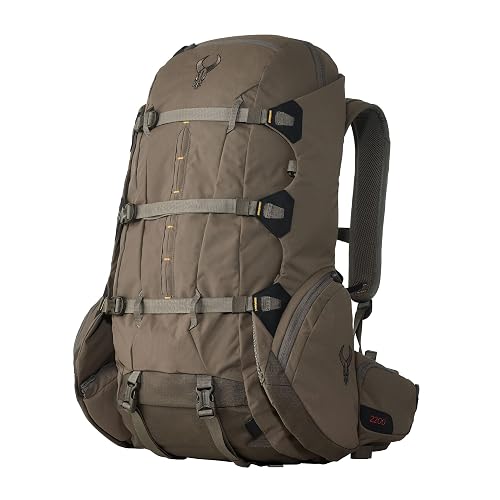
Badlands 2200 Hunting Pack with Meat Hauler
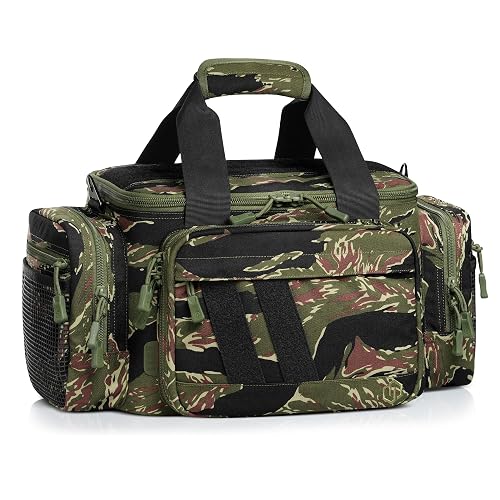
Savior Specialist Series Triple Pistol Range Bag
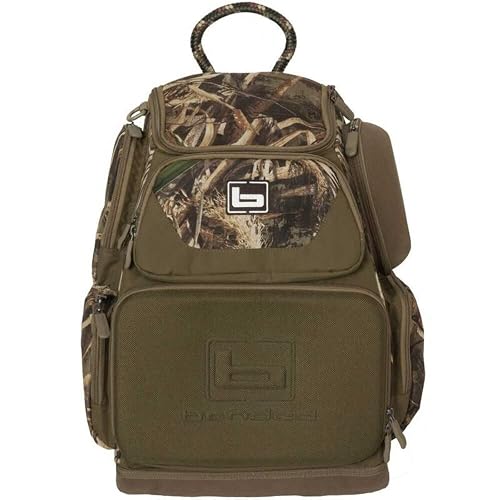
Banded Avery Air Hard Shell Backpack MAX7
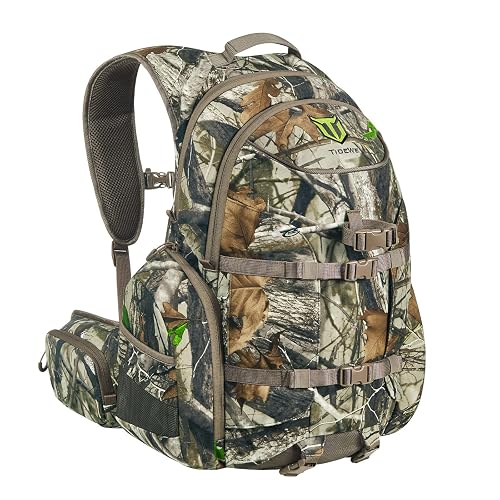
TIDEWE 40L Camo Hunting Backpack
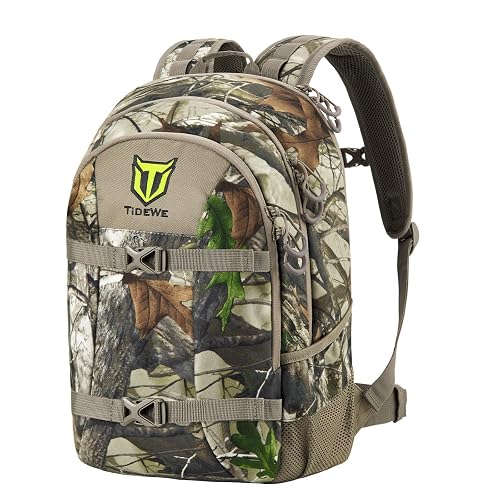
TIDEWE 25L Lightweight Day Pack
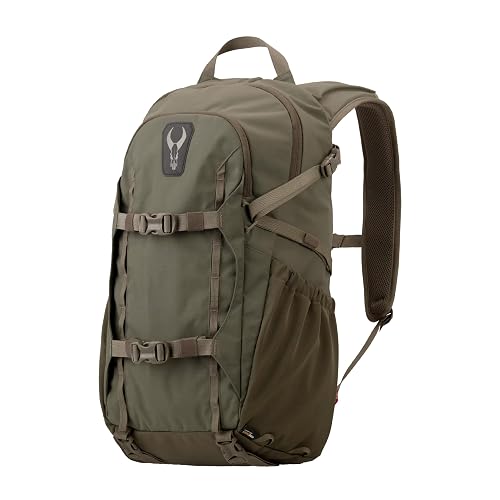
Badlands ATX All-Terrain Xtreme Tactical Pack
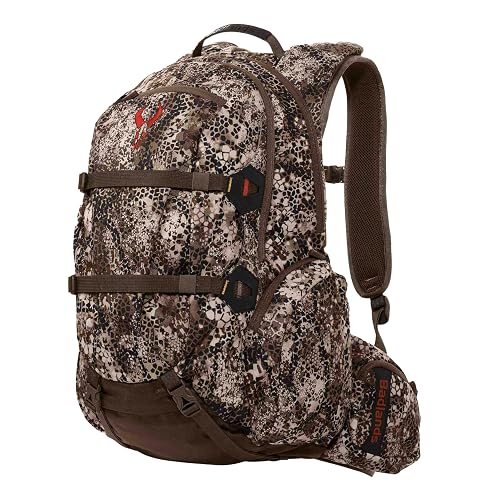
Badlands Superday Hunting Backpack
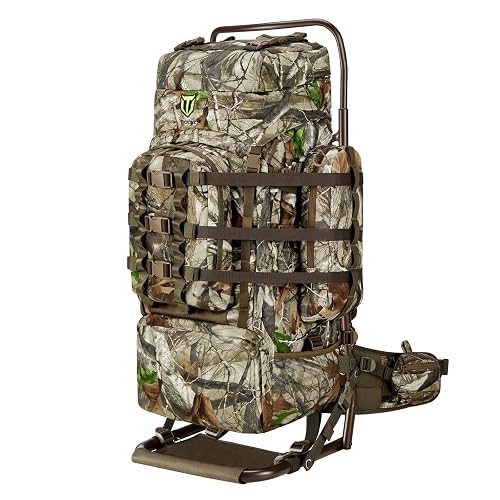
TIDEWE 90L External Frame Hunting Pack
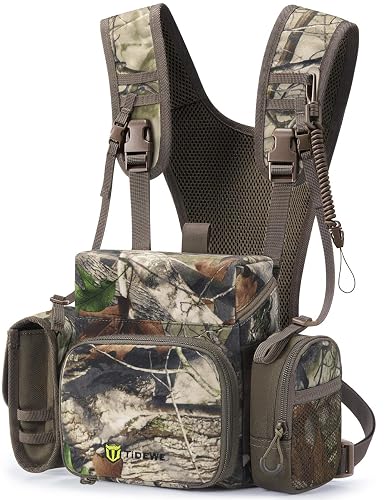
TIDEWE Binocular Harness Chest Pack
Why These Options Stand Out
The 2200 sits at the heavier end of the spectrum, and that’s the point. Built around a rigid internal frame with aircraft-grade aluminum stays, it’s designed for hunters who pack deep into elk country and expect to come out loaded. A molded memory foam suspension (foam padding shaped to cradle your hips and shoulders) wraps the load across your hips, and the reverse-tightening waist belt pulls inward instead of out, so you can really crank it down under load.
The standout feature is the built-in meat hauler, a zip-down cradle that lets you strap quarters to the outside of the frame and walk them out without a separate pack. Layer in the KXO fabric (a proprietary polyurethane-coated textile Badlands uses across its lineup for abrasion and weather resistance), and you’ve got a pack that’s been on more successful wall hangs than most.
Notable Gains
- Built-in meat-hauler attachment saves you from buying a second pack for pack-outs.
- Memory foam suspension molds to your body the more you wear it, improving comfort on long hauls.
- Aircraft-grade aluminum frame supports heavy meat and gear loads without flexing.
- Reverse-pull waist belt lets you cinch tight under load, which matters when you’re carrying sixty pounds out of a canyon.
- KXO-rugged fabric resists abrasion and weather, useful for hunters who don’t baby their gear.
Things To Consider
- The pack runs heavier and bulkier than minimalist day packs, so it’s overkill for short sits.
- Zippers and webbing occasionally need a once-over after thorn-choked brush, based on how the load rides against fabric.
Key Product Details
Made For
Western big-game hunters running multi-day trips who expect to pack out meat and want one rig that does it all.
Where Another Pick Suits Better
Lightweight spot-and-stalk hunters chasing whitetails will be happier carrying the TIDEWE 40L, which is quieter and lighter for short days.
The Savior Specialist Series isn’t a frame pack in the backcountry sense, but it earns a spot on this list because it solves a very specific problem: getting three pistols to the range without scratching them. A rigid internal frame holds the bag’s shape even when it’s empty, so your handguns stay protected instead of sliding around loose. Lockable zipper sliders on the main compartment let you padlock it shut for transport.
Three included gun sleeves with reflective ID patches keep each firearm separated and easy to identify at a glance. The 600D PVC shell (a heavy denier polyester, the “D” stands for denier, a measure of thread thickness, with a PVC coating for water resistance) shrugs off the kind of scuffing range bags usually pick up. Side pockets handle magazines, eye and ear protection, and the rest of your range-day kit.
Everyday Perks
- Rigid internal frame keeps the bag’s shape and protects firearms from impact and sliding.
- Lockable main-compartment zippers add a layer of security during vehicle transport.
- Three individual gun sleeves with reflective ID patches prevent finish wear and speed up grab-and-go.
- 600D PVC shell resists scuffs and light weather on the way to the range.
Worth Noting
- This is a range bag, not a backpack, so it won’t suit hunters carrying gear into the field.
- The structured shell means it doesn’t pack flat for storage in a vehicle trunk when empty.
Right Fit For
Range-day shooters who haul multiple pistols and want organized, protected, lockable transport from vehicle to lane.
Consider Something Else When
Hunters needing a true field pack for miles of terrain should reach for the Badlands 2200, which carries optics, layers, and meat instead of handguns.
Most hunting packs are fabric, and fabric soaks through eventually. The Banded Avery Air Hard Shell is built differently, with a molded hard-shell exterior that shrugs off rain, snow, and the occasional dunk in a marsh. A shock-resistant molded base protects gear when you set the pack down on wet ground or rocky boat decks.
Inside, the layout is dialed for waterfowl hunters: side zippered compartments, a large front dropdown storage section, and an integrated protective sunglass case with its own zipper. MAX7 camo (a RealTree-style marsh pattern) keeps the look matched to flooded timber. Compared to fabric packs in this list, this one trades quiet softness for absolute weather sealing.
A Few Strong Suits
- Hard-shell exterior keeps contents dry in heavy rain or accidental submersion.
- Molded shock-resistant base lets you set the pack down anywhere without crushing gear.
- Integrated sunglass case protects optics that usually get scratched in a stuffed main compartment.
- Front dropdown compartment gives you one-motion access to bulkier layers or shells.
Honest Caveats
- Hard shell is louder brushing against branches than a fabric pack, which can spook game at close range.
- Less forgiving on overloaded hauls than a soft, body-conforming frame pack.
Quick Facts
Best Suited To
Waterfowl hunters slogging through marshes, flooded timber, and rain-heavy days where dry gear is the difference between a safe hunt and a miserable one.
Look Elsewhere When
Still-hunters who need silence above all else should reach for the TIDEWE 40L, which uses a quiet polyester shell for stealthy approach.
TIDEWE built this pack for hunters who notice every noise they make. The shell is a quiet, long-lasting high-performance polyester that doesn’t crackle when you shoulder the pack or brush through laurel. At 3.7 pounds empty, it stays out of your way on stalks where every ounce matters, and the 40-liter volume covers a full day of layering, food, water, and a deer hauler sling.
Multi-pocket design keeps gear separated and within reach, which is the kind of feature you only appreciate after fumbling for your rangefinder with a deer thirty yards out. The camo pattern blends into most whitetail terrain without screaming “synthetic.” It’s the sort of pack you forget you’re wearing, which is the highest praise a day pack can earn.
Good Reasons To Consider
- Quiet polyester shell resists the rustle and crackle that gives hunters away at close range.
- 3.7-pound empty weight keeps fatigue low on long spot-and-stalk days.
- Multi-pocket layout organizes gear so you can grab what you need without rummaging.
- 40L capacity fits layers, food, water, and a hauler sling for a full day afield.
Points To Keep In Mind
- Polyester shell isn’t fully waterproof, so a pack cover helps in sustained rain.
- Less supportive than aluminum-frame packs when you load up heavy meat or gear.
Feature Snapshot
Whose Shelf It Belongs On
Whitetail spot-and-stalk hunters who need a quiet, lightweight pack for full-day outings and don’t plan to haul meat on it.
Skip It When
Hunters packing deep into elk or sheep country with heavy loads will do better with the Badlands 2200, which carries weight much more comfortably.
The 25L is TIDEWE’s answer to hunters who mostly hunt from a stand or blind and don’t need to carry much beyond a snack, water, and a layer. Smaller than the 40L sibling above, it disappears on your back during morning sits, which matters when you’re glassing a clearing for two hours without shifting the load.
The trim profile also suits hunters covering ground on short stalks where a big pack catches branches and broadcasts movement. For most half-day hunts, the 25-liter capacity is plenty, and anything larger just becomes dead weight on a sit. It’s a focused tool, not a do-it-all pack, and that’s exactly why it works.
The Case For It
- Compact 25L capacity keeps the profile low for stand and blind hunting.
- Trim shape doesn’t snag on brush during short stalks.
- Lightweight build reduces fatigue on short morning or evening sits.
- Quiet exterior, like other TIDEWE packs, suits whitetail hunters.
Trade-Offs
- Not enough volume for full-day hunts with extra layers, food, and water.
- Limited frame support means it carries weight poorly if overloaded.
Who Should Grab It
Hunters running short stand sits or quick stalks who only need to carry the basics and want a pack that stays out of the way.
Reach For A Different Pick When
You regularly spend full days afield with layers, food, and water, in which case the TIDEWE 40L offers more breathing room without much weight penalty.
The ATX is the lightest, smallest pack in Badlands’ All-Terrain Xtreme series, but “light” here is relative. It’s still a fully featured tactical hunting pack with a water-resistant build and a modular ecosystem: SWAP optics, hydration reservoirs, and the Bino Connect harness all dock into it.
That’s the real selling point for hunters who already own Badlands accessories or plan to build out a kit over time. Compared to the larger 2200 above, the ATX trades capacity for agility, which is the right call if you’re hiking fast in steep terrain and only need to carry overnight-plus essentials. The compatibility with the wider Badlands ecosystem means you’re buying into a system, not just a pack.
A Favorable Mix
- Compatible with Badlands SWAP optics, hydration reservoirs, and Bino Connect harness for modular expansion.
- Compact size in the ATX lineup suits hunters who want agility over capacity.
- Water-resistant build sheds light rain and morning dew.
- Tough Badlands construction handles rocky terrain and dense brush.
Some Limits To Know
- Smaller volume than the Badlands 2200, so it’s less suited for serious meat hauls.
- Modular ecosystem only shines if you actually use the compatible accessories.
Perfect Match For
Backcountry hunters who want a moderately sized Badlands pack with room to grow into the SWAP optics and hydration ecosystem.
A Better Fit Elsewhere
Hunters prioritizing maximum volume for big-game pack-outs should consider the TIDEWE 90L External Frame Pack, which swallows whole-tent loads.
The Superday is what Badlands built for hunters who don’t want to feel like they’re wearing a pack. It trims the bulk out of a hunting-specific day pack so that on long glassing sessions, you’re noticing the buck on the skyline rather than the strap digging into your shoulder.
You still get the brand’s typical build quality and the modular compatibility that makes Badlands packs a long-term investment, just in a more compact silhouette than the 2200 or ATX. For hunters who primarily chase with binos in hand and a tripod slung over one shoulder, this pack stays out of the way. It’s the kind of pack that earns its place after a full season of use, when you realize you never once wished it were bigger.
Practical Advantages
- Trim silhouette keeps the pack out of the way during active glassing.
- Lightweight construction suits full-day hunts where fatigue adds up.
- Badlands build quality means it survives brush and bad weather.
- Compatible with Badlands modular accessories for future expansion.
Possible Compromises
- Smaller volume won’t carry overnight gear or meat.
- Less supportive than larger frame packs when you need to haul out a heavy load.
Who Will Love This
Hunters who spend long days behind binoculars and want a comfortable, low-profile pack that complements rather than competes with their optics.
Swap It Out When
You regularly need to pack meat or full camp gear on the same hunt, which calls for the Badlands 2200 instead.
When you need to move a whole camp, a meat haul, and a rifle, internal-frame packs hit their ceiling. The TIDEWE 90L solves that with an external aluminum frame that stands the bag off your back, allowing air to flow and letting the load ride high and stable. At 31.5 by 21.7 by 11.8 inches and 5,500 cubic inches of main-compartment volume, it swallows a three-day load without breaking a sweat.
The two-in-one bow/rifle carry keeps your weapon secure against the frame, and Hypalon-reinforced frame connections (Hypalon is a rugged synthetic rubber used to dampen abrasion and noise at stress points) cut down on the clatter that gives hunters away. Next Camo G2 fabric rounds out the quiet package. The extension bag on top adds capacity when you need to bring home a whole moose quarter, which is when a pack like this earns its keep.
Useful Touches
- External aluminum frame carries heavy loads high and stable, keeping your back cooler.
- Two-in-one bow/rifle carry secures your weapon across the frame during long approaches.
- Hypalon-reinforced frame joints reduce noise and resist wear at stress points.
- Extension bag on top adds capacity for extra meat or bulky camp gear.
Where It Is Less Suited
- External frame snags more on tight brush than internal-frame packs, so it loves open country more than jungled woods.
- Bulky on short hunts where a 25L would do the job.
Feature Rundown
Built With In Mind
Big-game hunters running multi-day backcountry trips who need to pack in a full camp and pack out meat on the same frame.
Where A Sibling Pick Shines
Day hunters chasing whitetails will find the TIDEWE 40L much easier to carry and won’t use the 90L’s capacity on a typical outing.
Strictly speaking, the TIDEWE harness isn’t a frame pack. It’s a binocular harness chest pack, but it pairs with every frame pack on this list. At 16.6 ounces, it carries mid-to-large binoculars up to 10×42 without adding noticeable weight, and six adjustment points let you dial in the fit.
The standout feature is the silent magnetic closure on the main compartment. No more Velcro ripping the silence apart at the worst possible moment. MOLLE webbing on the sides (the stitched rows of loops that let you clip on pouches and accessories) accepts rangefinder pouches and other accessories, and the system stays put during running, hiking, or fast movement across a clearing. It’s the kind of gear you wonder how you lived without once you’ve used it on a quiet morning.
Advantages To Know
- Silent magnetic closure keeps your reveal quiet when a buck appears at close range.
- Fits most mid-to-large binoculars up to 10×42, covering the most common hunting glass.
- Six adjustment points lock the harness in place during running or fast stalks.
- MOLLE-compatible webbing accepts rangefinder pouches and accessories.
What To Weigh
- It’s an accessory, not a standalone pack, so you’ll still need a backpack for other gear.
- Bigger binoculars than 10×42 may not fit, so check dimensions before committing.
The Right Fit
Hunters who spend long stretches glassing open terrain and want quick, quiet access to their binoculars without the Velcro screech.
Not Your Match When
You need a full pack for hauling gear and meat, in which case the Badlands 2200 or TIDEWE 90L covers the carrying side of the equation.
Matching The Pack To The Hunt
Choosing the right frame hunting pack starts with how you actually hunt, not the spec sheet. A still-hunter in a treestand needs a different rig than a sheep hunter crossing talus, and a waterfowl slogger has yet another set of demands. The frame is the structural backbone that decides how a pack rides, breathes, and carries load, so it pays to think about it before you think about pockets.
Capacity First, Comfort Second (Or Vice Versa). Day hunters chasing whitetails rarely need more than 25 to 40 liters, and any bigger pack just becomes dead weight on a half-day sit. Backcountry hunters running multi-day trips into elk or sheep country should plan on 65 liters and up, with an external frame that can shoulder meat on the way out. The middle ground, 40 to 65 liters, covers most western deer hunters who layer up and stay mobile.
Frame Type Drives The Load. Internal-frame packs ride close to your body, snag less in thick cover, and suit still-hunters and spot-and-stalkers who move through brush. External-frame packs carry heavier loads higher on your back, breathe better on hot climbs, and dominate open-country work and pack-out trips. Within those two camps, aluminum stays (rigid metal rods that give the pack its shape) give you the most support under load, while removable frames let you strip weight when you don’t need them.
Quiet Fabrics And Closures. Velcro and crinkly nylon will get you busted by sharp-eyed game at close range. Look for quiet polyester shells, magnetic closures, and Hypalon reinforcement at stress points if stealth matters to your style of hunting. Waterfowl hunters in flooded timber need the opposite priority: waterproof hard shells that laugh off submersion.
Fit And Suspension Are Where Comfort Lives. A pack with 70 percent of its weight on your hips feels nothing like one that hangs off your shoulders. Molded memory foam suspension, reverse-pull waist belts, and adjustable torso lengths make multi-mile days possible. If you can’t try a pack on in person, measure your torso length first.
Getting The Most From Your Pack
Common Shopping Slip Ups. The biggest mistake is buying for capacity you’ll never use. A 90-liter external frame on day hunts is just dead weight, and a 25-liter pack on a backcountry trip leaves you strapping gear to the outside. Match the pack to the longest realistic hunt day you’ll run, not the most extreme scenario you’ll see once a decade. Another trap is ignoring torso length, which determines where the hip belt sits and whether the load actually transfers to your legs.
What The Higher Tier Buys. Premium packs earn their keep through suspension systems, weather-resistant fabrics, and modular ecosystems that cheaper packs can’t match. A Badlands or Banded pack at the top of the line uses materials that survive a decade of abuse, plus frame geometry that makes 60-pound loads feel like 40. Mid-tier packs can carry the same weight but transfer it less efficiently, which means more fatigue by mile five. If you hunt fewer than ten days a year, mid-tier usually does the job. If you hunt hard and often, the upgrade pays back in saved energy and gear that doesn’t fail mid-season.
Frequently Asked Questions
What size frame hunting pack do I need for a single-day deer hunt? A 25 to 40-liter pack covers most single-day deer hunts. That holds a layer, snacks, water, a headlamp, and a basic first-aid kit without forcing you to strap extras to the outside. For spot-and-stalk days where you might add a rangefinder harness and tripod, lean toward the upper end of that range.
Are external frame packs better for hauling meat? External frame packs carry weight higher and farther from your back, which improves airflow and makes heavy loads feel more stable over long pack-outs. For elk, moose, and multi-day trips where meat weight matters, an external frame is the safer choice. For day hunts, internal frames keep the profile low and snag less in brush.
How do I keep my pack quiet in the field? Quiet comes down to fabric, closures, and care. Choose a quiet polyester or brushed shell over crinkly nylon, replace Velcro panels with magnetic or buckle closures when possible, and avoid stuffing noisy loose gear into outer pockets. Brush against trees instead of dragging your pack through them, and tighten loose straps that flap in the wind.
Can a binocular harness replace a chest rig? A binocular harness replaces the chest rig portion of your carry system only. It carries optics, a rangefinder pouch, and small accessories, but you’ll still need a backpack for layers, food, water, and any pack-out. Most hunters run both: a backpack on their back, a harness on their chest.
How long should a frame hunting pack last? A well-built frame pack from a major brand typically lasts five to ten seasons of regular use, longer with light care. The frame itself, especially aluminum-stay internal frames, usually outlasts the fabric, so don’t be afraid to repair zippers, re-sew webbing, and replace worn straps to extend the pack’s working life.
Wrap Up
A good frame pack is the kind of gear that quietly shapes every hunt you take it on. It decides how far you can push, how much you can carry, and whether you hear that buck before he hears you. Match the pack to the way you actually hunt, lean into quiet fabrics and proven suspension, and reach for external frames when the meat weight climbs. The nine picks above cover most of the hunting styles you’ll run into, from tight whitetail woods to wide-open sheep basins, so the right rig is somewhere on this page.