
You know the moment: you’re two miles in, the trail forks, your shoulders are already barking, and your pack rides like a sack of bricks. The wrong hiking day backpack makes a short loop feel long, while the right one nearly disappears on your back. Anyone heading out for a few hours to a full day needs a pack that carries water, layers, snacks, and a rain shell without turning the hike into a chore.
Below are seven packs worth considering right now, covering ultralight travel-friendly folders, mid-volume technical haulers, and one big-capacity option for ambitious day outings.
An Overview Of The Picks
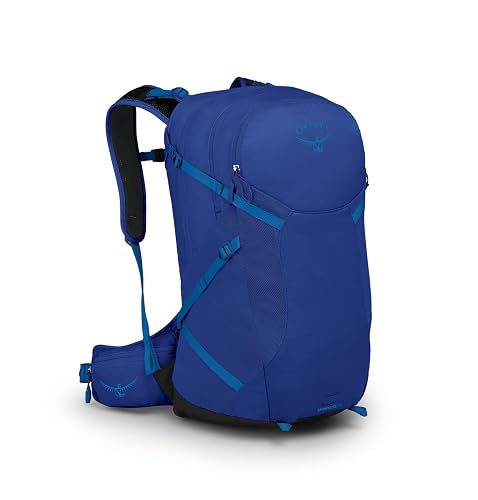
Osprey Sportlite 25L Lightweight Hiking Backpack (Blue Sky)

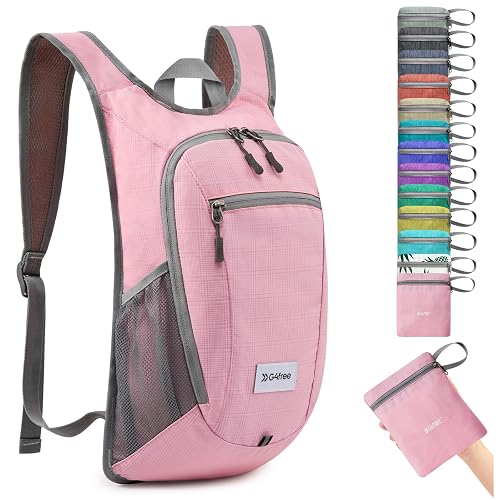
G4Free 10L/15L Lightweight Packable Hiking Daypack
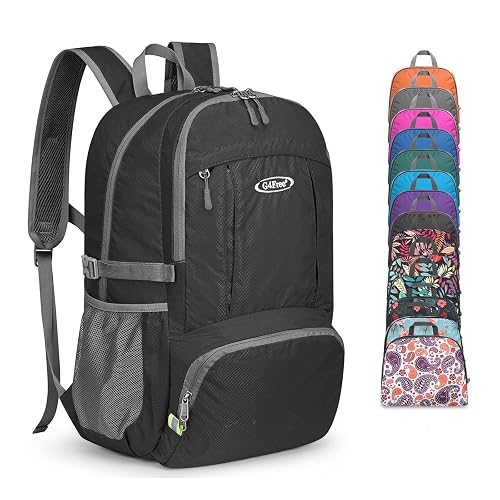
G4Free 40L Lightweight Packable Hiking Backpack (Waterproof)
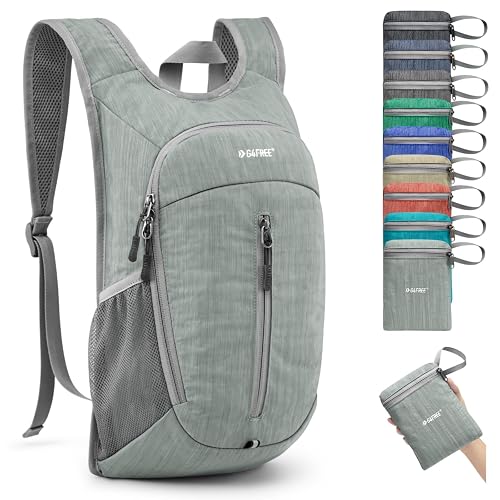
G4Free 10L Lightweight Packable Hiking Daypack
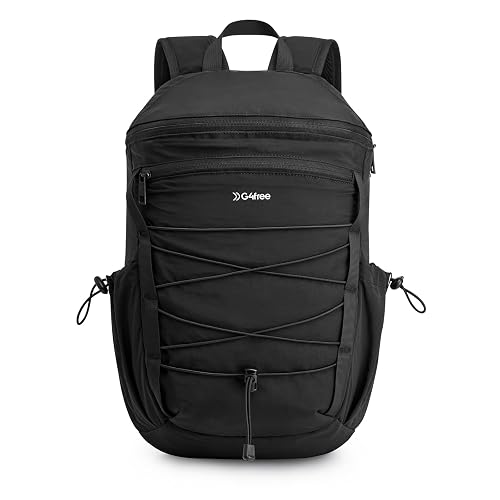
G4Free 20L Hiking Travel Backpack

CARPDIM 10L Small Lightweight Hiking Daypack
More On The Choices That Made The List
The Sportlite 25 sits in that sweet spot between stripped-down ultralight folder (a pack that folds into its own pocket for stashing) and a real trail hauler. Osprey’s AirScape backpanel uses ridged foam covered in mesh to let air circulate against your spine, which matters when you’re grinding up a switchback on a 75-degree afternoon. The 25-liter capacity swallows a 2-liter reservoir, an extra midlayer, a rain shell, and a packed lunch without feeling overloaded.
Compared to the cheaper folders further down this list, the Sportlite trades a folding feature for actual hiking credentials: a proper hipbelt, trekking pole attachments, and panel-loading (a wide U-shaped zip that opens like a suitcase rather than only through a top hole) so you’re not diving into the bag like a magician. You might find the minimalist harness a bit slim under a heavy load, but for typical day hikes under 15 pounds of cargo, it carries comfortably.
Features That Help
- AirScape ridged backpanel that keeps airflow moving across your back
- 25-liter main compartment opens panel-style for easy packing
- Built-in reservoir sleeve for hands-free hydration on the trail
- Trekking pole attachments let you stow poles without removing the pack
- Lightweight frame that doesn’t punish you on longer mileage days
Things To Consider
- Sits at the heavier end of the daypack category, so weight-conscious hikers may want lighter
- Minimal external pockets compared to commuter-leaning options like the YETI Crossroads
Feature Snapshot
Made For
Active hikers logging real mileage who want a pack that handles trail duty without weighing them down.
Consider Something Else When
You mostly need a packable backup for travel days; the G4Free 10L Lightweight Packable Hiking Daypack collapses far smaller for suitcase storage.
The Crossroads splits the difference between a hiking daypack and a commuting workhorse. YETI built it for people who leave the house with a laptop, a change of clothes, and a packed lunch, then expect the same bag to handle a weekend trail. The clamshell opening (a hinged design that unzips flat like a suitcase) is the standout feature: you can pack the bag the way you’d pack a carry-on, then flip it open at a trailhead without emptying it.
Where the Sportlite leans technical, the Crossroads leans durable. Owners commonly report that the thick shell fabric shrugs off abrasion and rough treatment, though that toughness adds noticeable weight. For trail-only duty you may find it overkill, but for hybrid days where you want one bag that does both jobs, it’s tough to argue with the build quality.
Strong Points
- Clamshell zip that opens flat for suitcase-style packing
- 35-liter capacity absorbs work gear plus full-day hike supplies
- Robust shell fabric built to handle rough daily use
- Padded laptop sleeve that doubles as a hydration reservoir pocket
Worth Noting
- Heavier than most dedicated trail daypacks
- Lacks the ventilated backpanel found on the Osprey Sportlite
- Overbuilt for hikers who only carry a water bottle and a snack
Whose Shelf It Belongs On
Gear-heavy commuters and hybrid users who want one pack for office and trail in the same week.
A Better Fit Elsewhere
Pure trail hikers will be happier with the Osprey Sportlite 25L, which breathes better under load and trims weight.
This G4Free entry is the kind of pack you stuff in your luggage “just in case” and then end up using more than your main bag. The two-size format (10L and 15L) lets you pick a tiny day-trip version or bump up for a longer outing, and the entire bag folds into its own pocket when you’re not using it. Polyamide construction keeps the weight low, and the SBS metal zipper feels sturdier than you’d expect at this level.
Versus the bigger 40L G4Free later on this list, the tradeoff is capacity: there’s room for water, a snack, and a thin layer, but not much more. For travelers who want a featherweight backup that lives in their suitcase, though, this hits the brief.
Positive Takeaways
- Packs down small enough to fit in a coat pocket or luggage compartment
- Two size options (10L and 15L) for different outing lengths
- Adjustable shoulder straps accommodate varied body sizes
Honest Caveats
- Lightweight fabric won’t take the same abuse as the YETI Crossroads
- No real frame or hipbelt for carrying anything substantial
Best Suited To
Travelers and casual strollers who want a near-zero-footprint backup daypack.
Skip It When
You regularly haul a reservoir, a tripod, or a packed lunch; the G4Free 40L Lightweight Packable Hiking Backpack handles much more cargo.
The 40L version is G4Free’s biggest folder, and it pushes the category into territory most packable bags don’t reach. The rear wet pocket is the genuinely useful piece: a sealed compartment for damp swimwear, a towel, or anything you want kept dry, which makes this a strong choice for lake hikes or sudden weather. Forty liters is enough room for a change of clothes, food for a long day, and a lightweight hammock if you’re going ambitious.
The trade-off shows up in the carry system. There’s no frame, no hipbelt, and very little padding, so loading 40 liters to capacity means you’re hauling weight mostly on your shoulders. For shorter walks and travel days that’s fine; for an all-day summit push you’ll feel every pound.
What Stands Out
- Sealed wet pocket on the back panel for dry storage separation
- 40-liter capacity handles long-day or overnight-light loads
- Folds into a small carry pouch for travel storage
- Multiple compartments help separate clean and dirty layers
Points To Note
- Bare harness with no hipbelt means heavy loads pull on shoulders
- Heavier unloaded than smaller G4Free folders due to size
Spec Overview
Perfect Match For
Travelers and lake hikers who need a high-capacity packable bag that handles wet-and-dry separation.
Look Elsewhere When
You plan to load it heavy and hike far; the Osprey Sportlite 25L carries heavier loads far more comfortably.
G4Free’s 10L version leans even harder into the “fits in your pocket” angle than its 10L/15L sibling. When folded, the whole pack shrinks down to roughly 7.5 by 6 inches, small enough to live inside a coat pocket, suitcase, or even a large handbag. Unfolded, you get 15.5 by 9 by 3.5 inches of usable space, which is genuinely useful for a quick museum run, a city stroll, or a short trail loop where you only need water and a snack.
Compared to the larger G4Free 40L, this one is about convenience over capacity. You won’t fit a laptop or a reservoir, but you probably weren’t planning to. The reinforcement at the stitching points is what keeps it from feeling disposable, and the breathable strap helps during longer wear on warmer days.
Notable Gains
- Tiny folded footprint that disappears into luggage or coat pockets
- Reinforced stitching adds durability for an inexpensive folder
- Breathable shoulder strap stays comfortable on warm days
Small Caveats
- 10L volume won’t handle anything beyond snacks, phone, and a light layer
Built With In Mind
Travelers packing light who want a backup daypack that takes up almost no space.
Reach For A Different Pick When
You need to carry more than the basics; the G4Free 20L Hiking Travel Backpack steps up capacity while staying compact.
The 20L lands in the middle of G4Free’s packable lineup and probably the most useful single size for everyday users. It’s roomy enough for a tablet, a water bottle, a packed lunch, and a change of clothes for after the gym, yet small enough to wear comfortably on a moderate trail. Think of it as the do-most-things option when you don’t want to commit to either a tiny folder or a 40L beast.
Versus the Osprey Sportlite, this one keeps the budget-friendly folder concept but trades trail-specific features (like the ventilated backpanel) for a more generalist carry. For casual users who want one bag for commuting, the gym, and weekend walks, that trade feels fair.
Where It Excels
- 20L capacity hits the sweet spot for daily multi-purpose carry
- Lightweight construction won’t slow you down on casual hikes
- Packable design for storage between uses
Some Limits To Know
- Basic harness lacks the hipbelt support of true trail packs
- Less weather protection than the waterproof G4Free 40L
Feature Card
Right Fit For
Casual trail users and commuters who want one bag that flexes between weekday and weekend.
Not Your Match When
You regularly hike in heavy rain; the G4Free 40L Lightweight Packable Hiking Backpack is sealed against wet weather.
CARPDIM’s 10L pack rounds out the list as a no-frills compact option aimed at short outings. Ten liters is enough for water, snacks, a phone, a thin shell, and a few small accessories, which covers the typical two-hour hike. The build skews toward simple: no frame, no hipbelt, just a clean, lightweight carry that won’t get in your way.
It’s worth noting that the 10L size competes directly with the G4Free 10L options earlier in this roundup. The differentiator tends to come down to styling, strap comfort, and small touches like pocket layout. For shoppers choosing between compact folders, those small details often tip the scale.
Key Advantages
- 10L compact size suits short trail loops and casual outings
- Lightweight construction minimizes fatigue during shorter wear
- Suitable for hiking, daily commuting, and brief trips
- Durable fabric holds up to regular use
Possible Compromises
- Capacity is limited for anything beyond a couple hours out
- No technical trail features like trekking pole loops or hipbelts
- Owners commonly report the basic harness is best for lighter loads
Quick Facts
Who Should Grab It
Short-trail hikers and casual commuters who want a compact bag for quick outings.
Swap It Out When
You regularly carry more than a water bottle and a layer; the G4Free 20L Hiking Travel Backpack adds capacity without much extra weight.
What Matters Most Before Choosing Hiking Day Backpacks
Match Capacity To Your Trip Length
Volume is the first filter. A 10L folder handles a quick loop with water and a snack, while 20L covers a full day with food, layers, and a tablet. Larger 40L folders step into overnight-light territory but lose the carrying comfort of a frame-equipped daypack. For most hikers, 20L to 25L is the sweet spot for full-day versatility.
Look At The Carry System
A backpanel with mesh or ridges keeps airflow moving across your back, which matters more than people expect on warm days. A hipbelt takes weight off your shoulders when the load climbs above ten pounds. Packable folders skip both to stay light, which works for casual use but not for loaded hiking.
Decide If Folding Matters To You
Folding packs earn their keep in luggage and small apartments. For pure trail duty, you usually trade durability and structure for that packability. Many hikers end up owning one of each: a folding bag for travel, a structured pack for the trail.
Consider Weather And Wet Storage
A wet pocket sounds like a niche feature until you finish a swim or get caught in rain. Sealed compartments keep damp gear away from electronics and dry layers. Regular water-resistant fabric handles drizzle, but a dedicated wet pocket is the right call for water-heavy activities.
Key Considerations Across These Picks
Mistakes Worth Dodging
The most common slip is choosing volume over carry comfort. A 40L folder sounds generous until you wear it on a six-mile loop and feel every pound on your shoulders. Match the bag to the trip, not the other way around. Another trap is buying a folding pack expecting it to perform like a framed hiking pack; they’re built for different jobs.
What Separates Premium From Basic
Premium daypacks like the YETI Crossroads invest in tougher shell fabric, better zippers, and a more refined carry system. That matters when you load the bag daily with a laptop and books, or when you want one pack that handles commute and trail. Budget folders work well for occasional, light use, but the upgrade pays off if you’re wearing the bag most days of the week.
Frequently Asked Questions
What size hiking day backpack do most people need?
For most full-day hikes, 20L to 25L strikes a useful balance between carrying capacity and weight. Shorter outings or travel days work well with a 10L folder, while longer adventures may push toward 30L or more.
Are packable daypacks actually durable enough for hiking?
For light loads on easy trails, yes. Reinforced stitching and decent fabric hold up well. They fall short on heavy loads or rough terrain compared to framed packs.
Do I need a ventilated backpanel?
If you hike in warm weather or sweat heavily, yes. Mesh and ridged foam backpanels keep airflow moving and noticeably reduce back dampness over a few hours.
Can I use a hiking daypack for commuting?
Many work fine for daily carry, especially models with a padded laptop sleeve like the YETI Crossroads. Pure technical packs may lack organization for office gear.
What’s the difference between a hiking daypack and a backpacking pack?
Hiking daypacks are smaller (usually under 35L) and built for single-day outings without overnight gear. Backpacking packs are larger, with frames and hipbelts designed to carry heavier loads over multiple days.
Wrap Up
The right hiking day backpack comes down to where you’re going and how much you’re carrying. Trail-focused hikers will appreciate the Osprey Sportlite, while travelers gravitate toward the G4Free folders for their packability. Anyone splitting time between the office and the trail gets the most versatility from a hybrid build like the YETI Crossroads. Pick the one that matches your most common outing, and your shoulders will thank you on the climb.