
Steady footing matters more than speed on the trail, especially when joints need a little help. The right pair of hiking sticks eases pressure on knees and hips, steadies your balance on uneven ground, and turns a tough climb into a manageable one. These seven options cover one-piece Nordic builds, folding travel-friendly pairs, and aluminum all-rounders worth a closer look.
The Shortlist At A Glance
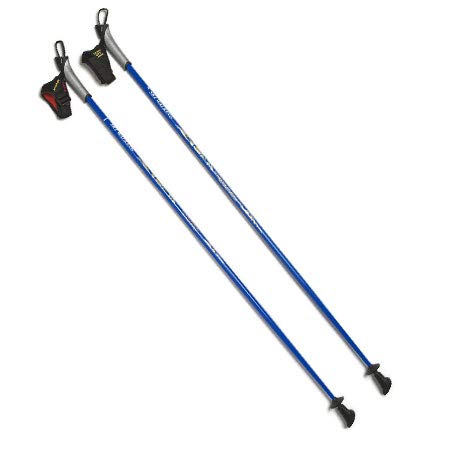
American Nordic Walking System 1-Piece Poles (32 Lengths, Custom Fit)
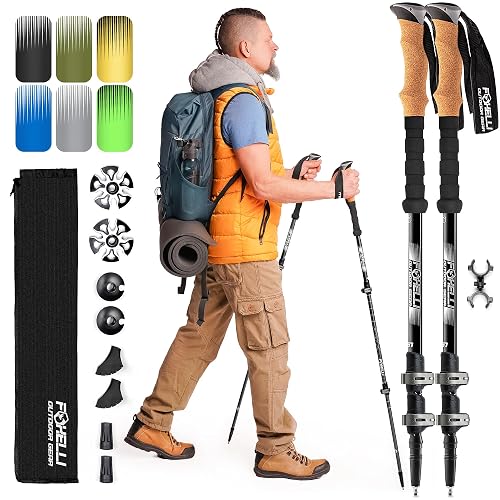
Foxelli Trekking Poles Aluminum Collapsible w/ Cork Grips

Hiker Hunger Carbon Fiber Trekking Poles (Cork & EVA Grips)
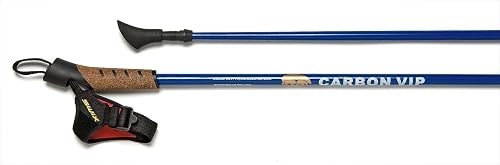
American Nordic Walking System Carbon VIPs (1-Piece, Cork Grips)
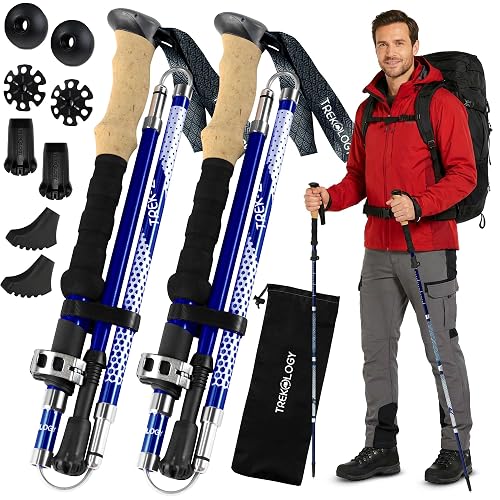
Trekology Trek-Z Collapsible Hiking Poles (2-Pack)
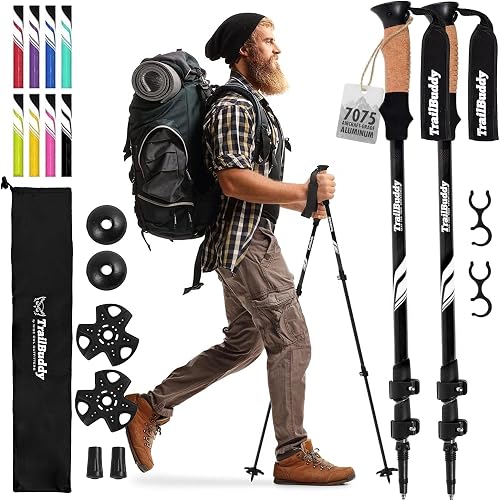
TrailBuddy 7075 Aluminum Trekking Poles (Collapsible)
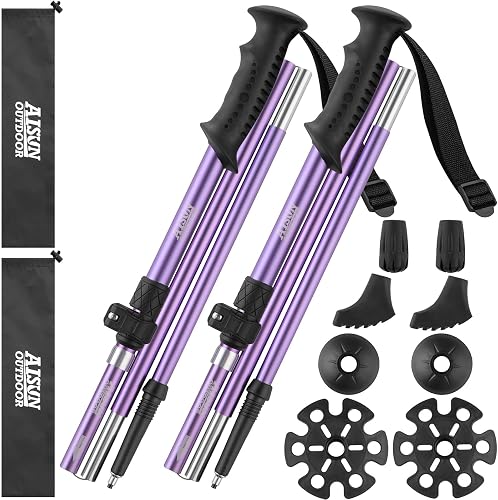
AISUNOUTDOOR Aluminum Adjustable Trekking Poles
What Each Pick Brings To The Table
These poles come out of real ski-pole factories and skip the telescoping design entirely, which means no flip-lock rattle or twist-lock surprise collapses mid-stride. You order by your barefoot height and they ship in one of 32 lengths, so the fit lands close to dial-in for most frames. Carbide metal tips bite into trail, sand, and snow, with snap-on rubber feet that swap in for pavement, tile, or a treadmill at the gym.
For seniors walking daily on sidewalks or rehabbing after a joint issue, that quiet, solid feel matters more than ultralight specs. The Nordic straps (wrist loops designed for the Nordic walking technique, not just a place to rest your hand) take a session or two to learn, but they offload wrist pressure once you get the rhythm.
What Pays Off
- One-piece construction removes the rattle and slack common in telescoping poles
- 32 length options let you dial in height to within a centimeter for proper elbow angle
- Removable rubber tips let the same pair handle neighborhood pavement and forest trail
- Carbide metal tips hold up on rocky, sandy, or snowy ground where rubber would skid
- Genuine Nordic straps spread load across the palm, easing wrist strain over long walks
Trade Offs
- Fixed length means they cannot collapse for suitcase packing
- Heavier than carbon folding models, a real factor on long uphill miles
Whose Shelf It Belongs On
Anyone who walks the same routes and wants a no-fuss daily pair sized to their exact height.
Look Elsewhere When
The Foxelli Trekking Poles suit you better if you fly often and need a pair that folds into a carry-on.
Aircraft-grade aluminum keeps these light enough at roughly 9.4 ounces per pole that your forearms do not feel the difference between walking with and without poles. The flip-lock system telescopes from about 24 inches collapsed to 54 inches extended, so the pair collapses down small enough to ride in a suitcase or strap to a daypack. Cork grips absorb sweat better than hard foam or plastic, so your palms stay drier on a humid afternoon.
Compared with the one-piece Nordic pick above, these travel better and adjust on the fly when you hand them to a taller walking partner. The trade-off is some flex in the shaft under heavy downhill pressure, which is worth knowing if you lean hard on the sticks for stability.
The Case For It
- Collapses to roughly 21 inches for stashing in luggage or carry-on bags
- Flip locks make height adjustments tool-free between users or terrain
- Cork grips wick moisture and soften vibration on long descents
- Comes as a complete kit with several tip and basket options
Honest Caveats
- Flip locks can loosen over time and need a periodic twist-tight check
- Slightly more shaft flex than a one-piece pole under hard downhill loads
Made For
Seniors who split time between home, gym, and trips and want one pair that travels easily.
Swap It Out When
The American Nordic Walking System 1-Piece Poles suit you better if you want rock-solid feel and rarely travel by air.
3K carbon fiber (a tight, layered carbon weave that balances strength and low weight) drops each pole to around 7.6 ounces, which is the kind of weight you stop noticing after the first mile. The cork-and-EVA grip stack gives you a soft top zone for casual walking and a firmer EVA lower section when you choke down for a steep uphill push. Flip locks let you shorten or lengthen the shaft mid-hike without tools.
Carbon fiber costs more than aluminum, and you trade some impact toughness for that low weight. A sideways knock against a sharp rock can nick carbon where aluminum would shrug it off. For seniors on groomed or moderate trails, the weight savings help a tired wrist more than the dent resistance matters.
Useful Touches
- Carbon fiber construction shaves ounces versus aluminum competitors
- Cork grip top molds to your hand shape over time for a custom feel
- EVA foam lower grip offers a secure hold on steep uphill sections
- Quick flip locks adjust length on the fly between ascents and descents
Points To Note
- Carbon shafts can crack from sharp rock impacts where aluminum would dent instead
- Carrying case and accessory set may be slimmer than the Foxelli bundle
Key Specs
Right Fit For
Active seniors tackling longer day hikes where every ounce on the wrist adds up over hours.
Consider Something Else When
The TrailBuddy 7075 Aluminum Trekking Poles suit you better if you hike rugged, rocky terrain where aluminum’s dent tolerance matters.
Think of these as the upgraded sibling of the first pair: same custom-fit 32-length system, same one-piece no-rattle construction, but with carbon fiber shafts and cork grips for a lighter, more comfortable feel. The patented Nordic straps are the real hook, though, spreading push force across the back of your hand so your wrist does not take a beating on long walks. Carbide tips handle the rough stuff and rubber feet swap in for the smooth stuff.
Carbon costs more and the one-piece format still rules out suitcase travel, so this is a daily-use pole, not a vacation rental. Owners commonly report that the cork grip takes a few outings to break in to hand contour.
Everyday Perks
- Carbon fiber construction lowers weight versus aluminum one-piece designs
- Custom-fit 32 lengths eliminate the height guesswork of adjustable poles
- Patented Nordic straps reduce wrist strain during the push phase
- Carbide tips plus rubber feet handle mixed surfaces without buying extras
Softer Spots
- Premium price point compared with budget aluminum pairs
- One-piece format will not collapse for air travel or small car trunks
Feature Snapshot
Best Suited To
Seniors committed to daily Nordic walking who want a premium feel and do not need to fly with their gear.
Not Your Match When
The AISUNOUTDOOR Aluminum Adjustable Trekking Poles suit you better if you want an accessible adjustable pair at a friendlier cost.
The Trek-Z fold-down design collapses shorter than most telescoping poles, which is the whole reason it lives in this roundup. When folded, the pair stows in a daypack side pocket or rides under an airline seat without taking up walking-stick real estate. The compact format does not mean flimsy: the shafts use a folding joint that locks firmly once deployed.
Where it differs from the Foxelli above is the fold mechanism, which some users find quicker than flipping three separate locks in cold hands. The trade-off is fewer length increments to dial in fit, since the telescoping range is shorter than a full flip-lock design.
Positive Takeaways
- Folding design collapses smaller than standard telescoping poles for tight storage
- Single-deployment joint is faster to set up than multi-section flip locks
- Light enough to carry all day without arm fatigue
- Pair ships ready to use with basic tip and basket accessories
Room For Improvement
- Shorter telescoping range means fewer height stops for precise fit
- Limited published spec detail compared with the Foxelli listing
Perfect Match For
Seniors who want the smallest possible packed size for travel days and short local walks.
Where Another Pick Suits Better
The TrailBuddy 7075 Aluminum Trekking Poles suit you better if you want more length adjustment range and a beefier aluminum build.
7075 aluminum is the same alloy family used in higher-end bike frames and aircraft components, so it lands in the sweet spot between weight savings and dent resistance. TrailBuddy leans into this with a telescoping three-section build that packs down small enough for a suitcase or a hiking-pack side pocket. The brand markets the pair across the senior-walker, hiker, and travel crowds, and the spec list reflects all three: foam grips, wrist straps, and several tip options.
Versus the Hiker Hunger carbon pair above, this one weighs more but takes more abuse, which matters on rocky scrambles or shared gear between grandkids. Versus the Foxelli, the adjustment mechanism feels similar but the accessory bundle skews slightly different. Either pair will get you out the door; the choice comes down to how much weight you want on your wrist.
Positive Points
- 7075 aluminum balances low weight with rugged dent resistance
- Collapses compact for stowing in luggage, car trunks, or packs
- Adjustable length fits a wide range of heights and stride lengths
- Foam grips stay comfortable in cool or damp conditions
Small Caveats
- Heavier than the Hiker Hunger carbon pair for all-day mileage
- Aluminum shaft conducts cold, which can chill bare hands in winter
- Lock mechanism needs periodic tightening to prevent shaft slip
Feature Card
Who Should Grab It
Seniors who want one reliable aluminum pair for neighborhood walks, weekend trails, and the occasional trip.
Skip It When
The Hiker Hunger Carbon Fiber Trekking Poles suit you better if every ounce matters on long-distance days.
Aircraft-grade aluminum at roughly 11 ounces per pole keeps these in the light-aluminum category without trying to compete with carbon fiber builds. The telescoping range runs from about 43 inches collapsed up to 51 inches extended, which covers most adult heights for casual walking. The package also includes a disposable raincoat, a small bonus that does not show up in most competitors’ bundles.
Compared with the TrailBuddy pair, this one runs a touch lighter and shorter, with a narrower adjustment range that may leave very tall users wishing for extra inches. For seniors in the average height range who want an accessible entry-level pair, the package makes sense.
Real Benefits
- Light aluminum construction at roughly 11 oz per pole for easy carrying
- Adjustable height range covers most adult walkers
- Includes a disposable raincoat as a small travel bonus
- Accessible price point for first-time trekking pole shoppers
Practical Considerations
- Maximum length tops out around 51 inches, limiting very tall users
- Lock hardware is simpler than premium pairs and benefits from occasional checks
- Accessory bundle is lighter than the Foxelli kit
Quick Facts
Who Will Love This
Casual seniors stepping into trekking poles for the first time without committing to a premium pair.
Another Choice May Suit
The Trekology Trek-Z Collapsible Hiking Poles suit you better if a smaller folded footprint matters more than the included raincoat.
## What To Weigh Before Picking Up A Pair### Matching Pole Height To Your FramePole height sets the elbow angle, which decides whether the pole supports your stride or fights it. A common starting point is bending your arm at a 90-degree angle while standing, then adjusting from there based on terrain. Steeper climbs call for shorter poles; flat pavement calls for taller poles. One-piece custom-fit designs nail this on the first try, while telescoping pairs let you experiment across a range.### Grip Material And Hand FeelGrip choice shapes how the pole feels after an hour of walking. Cork molds to your hand over a short break-in period and absorbs sweat well. EVA foam stays softer in cool weather and resists wear on rough handling. Hard plastic and basic rubber run cooler but can feel slippery once your hands warm up. Seniors with arthritis or sensitive hands usually prefer cork or EVA, depending on climate.### Lock Mechanisms And Joint TypeTelescoping poles use either flip locks ( levers you flip open to adjust) or twist locks (collars you twist to tighten). Flip locks adjust faster but can loosen over time. Twist locks stay tighter but take longer to set up in cold hands. One-piece poles skip the lock entirely, which removes rattle and slip risk at the cost of folding convenience.### Tips, Baskets, and Surface MatchCarbide metal tips bite into trail, dirt, sand, and snow. Rubber feet or “paws” spread load on pavement and protect indoor floors. Mud or snow baskets keep the pole from sinking in soft ground. Many pairs include a few tips in the bundle; budget builds may skimp, so check what ships before you commit.## Key Considerations Across These Picks### Where Shoppers Go WrongThe most common slip is choosing pole length based on total height alone, instead of testing elbow angle with the actual pole in hand. A pole that’s two inches too long flattens your stride and pushes your shoulder out of alignment; one that’s too short crouches your posture and adds knee load. The other trap is buying telescoping poles for the fold feature without checking the lock type, since twist locks and flip locks feel very different in cold, stiff fingers.### What Separates Premium From BasicPremium poles earn their higher cost through three upgrades: tighter tolerance on the lock hardware (no wobble or slip mid-stride), better grip materials (cork over foam), and more accurate length sizing across a wider height range. For casual weekend walkers, mid-range aluminum pairs cover the bases well. Daily Nordic walkers or anyone rehabbing a knee or hip usually feel the upgrade payoff in the first few weeks.