
A heavy pack, uneven ground, and a long day ahead: that’s the daily reality of hunting on foot, and your knees absorb every one of those steps. A solid pair of hunting trekking poles changes the math, shifting load off your joints and giving you two extra points of contact on slippery slopes. The right pair also collapses small enough to strap to a pack without becoming a nuisance. This roundup covers eight models built for that balance of support, weight, and packability, ranging from ultralight carbon setups to rugged fixed-length Nordic poles. Each pick fits a different kind of hunter, from glass-and-go stalkers to multi-day backcountry trekkers.
The Leading Options At A Glance
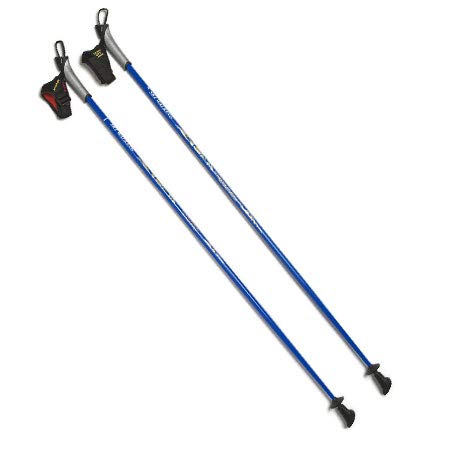
American Nordic Walking System 1-Piece Custom-Fit Walking Poles
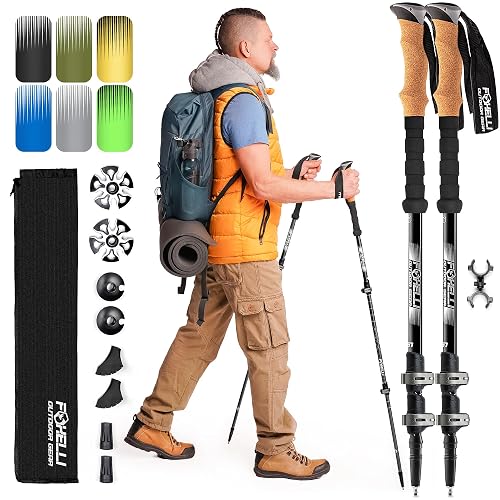
Foxelli Collapsible Aluminum Trekking Poles With Cork Grips

Hiker Hunger Outfitters 100% Carbon Fiber Trekking Poles
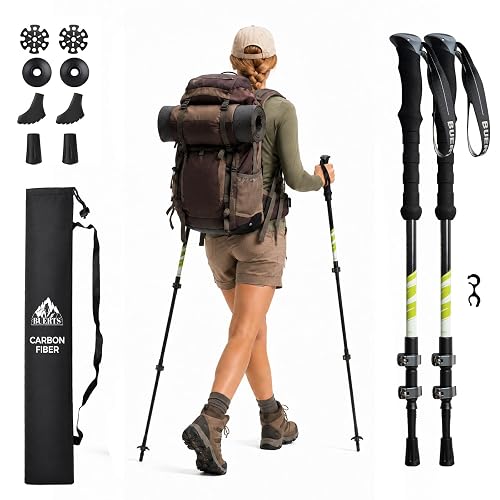
BUERTS Ultralight 3K Carbon Fiber Trekking Poles
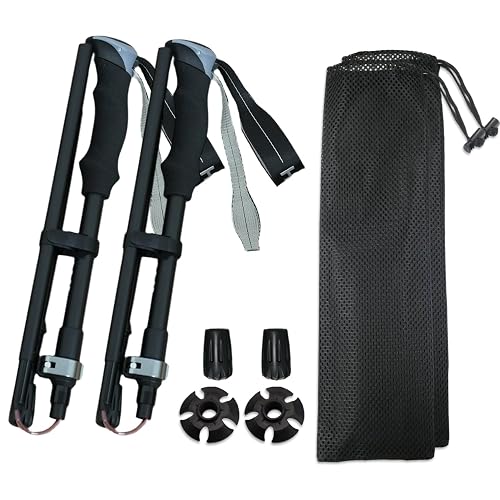
NexusOutdoor 7075 Aluminum Trifold Hiking Poles

LEKI Ultratrail FX.One Carbon Trekking Poles
NexusOutdoor 3K Carbon Fiber Telescopic Hiking Poles
NexusOutdoor 7075 Aluminum Compact Folding Hiking Poles
The Details Behind The Selections
These fixed-length poles come from SWIX and EXEL, the Norwegian and Finnish ski-pole manufacturers, and they cut out every moving part in exchange for stiffness you can lean on. Sizing is genuinely custom, with 32 length options matched to your barefoot height, which means no slippage, no rattling, and no mid-hike tightening when the terrain tilts. The brand notes real Nordic straps rather than basic loops, and the rubber paw tips handle pavement while the carbide metal tips dig into trail, sand, or snow.
For hunters who walk before they shoot, that rigidity translates to a more stable platform when glassing from a slow walk or bracing a rifle. The trade-off is real: at 32 length options these are non-collapsible, so you cannot stow them on a pack the way the others in this list fold down. Hunters covering long miles on a fixed route get the most from them; runners and bushwhackers will want a folding design instead.
Positive Takeaways
- One-piece shafts from ski-pole factories offer noticeably less flex than twist-locked knockdowns
- Custom fit in 32 lengths gives you a precise match to your barefoot height, dialing in posture and stride
- Genuine Nordic straps distribute load across the wrist rather than pinching between thumb and forefinger
- Rubber paw tips and carbide metal tips cover everything from gym floors to scree and snow
- Final assembly in the USA adds a layer of quality control you do not always see in budget poles
Things To Consider
- Non-collapsible means you cannot pack them on the outside of a daypack without dedicated straps
- No height adjustment, so sharing between hunters of different heights is not realistic
- Heavier pack-and-go logistics versus the folding carbon options further down this list
Specs
Made For
Hunters who stick to fixed routes, value a planted stance over portability, and want the stiffest platform in this lineup for glassing and slow stalks.
Look Elsewhere When
The Foxelli Trekking Poles suit you better when packability and a low stowed size matter as much as shaft stiffness.
Foxelli’s poles are a familiar sight at trailheads, and for good reason: the aircraft-grade aluminum shaft is light enough at roughly 9.4 oz per pole, yet it bends rather than snaps on hard cross-grain loads. The cork grips soften in the hand over time and absorb sweat, which is the kind of small detail that adds up across a long sit or a long walk. Flip locks adjust the length quickly, and the kit ships with mud, snow, and rubber feet for swapping between terrain.
Unlike the fixed-length American Nordic Walking System opening this list, these collapse to a packable 21 inches, so they slide into a duffel or strap to the side of a hunting pack without complaint. For most hunters logging a season of mixed hikes, that balance of weight, durability, and price is hard to argue with. If your priorities lean more toward ultralight fastpacking, the Hiker Hunger carbon option ahead is worth a look instead.
What Earns Its Place
- Aircraft-grade aluminum handles abuse better than carbon for hunters brushing through dense brush
- Cork grips mold to the hand and stay grippier when wet than basic foam
- Multi-terrain tip kit covers mud, snow, and rock out of the box
Trade Offs
- Aluminum weighs more per pole than the carbon options later in the list
- Flip locks can loosen mid-hike if not snugged properly, a widely reported maintenance habit
Right Fit For
Weekend hunters who want a forgiving, all-around pole that handles scrapes with rocks and brush without babying it.
A Better Fit Elsewhere
The BUERTS 3K Carbon Fiber Trekking Poles suit hunters who count every gram on longer days in the backcountry.
At about 7.6 oz per pole, these full-carbon shafts take real weight off the shoulders on multi-day pushes. The 3k carbon weave (a tight, glossy braided carbon pattern) stiffens the lower section while keeping the swing lively, and the cork-and-EVA blend grip gives you a soft landing for the palm plus a firmer section lower down for choking up on sidehills. Quick flip locks let you change length on the fly when you drop into a drainage or climb a saddle.
Where this set pulls ahead of the Foxelli pair is sustained effort: less arm fatigue over a full day and noticeably more packable when you collapse them. You give up some of the dent-resistance of aluminum, though, and carbon can crack under sharp impacts that aluminum would just dent. Hunters running a light kit and covering long miles notice the difference most.
Key Advantages
- Full 3k carbon shaft drops weight noticeably over the aluminum Foxelli set
- Cork and EVA dual-density grips work in both dry and sweaty hands
- Quick flip locks make on-trail length changes fast and repeatable
Honest Caveats
- Carbon is more vulnerable to hard rock strikes than aluminum, so care around scree matters
- Premium pricing puts them well above the budget NexusOutdoor aluminum picks
Specs
Who It Suits Best
Backcountry hunters covering serious elevation gain who care more about weight savings than rock-bang durability.
Swap It Out When
The LEKI Ultratrail FX.One is a better match when you also want a foam-trigger grip built for trail-running style movement.
BUERTS leans into the same carbon-fiber story as the Hiker Hunger pair but packages it for hunters on the move. The 3K woven shaft cuts arm fatigue on the long push and absorbs vibration better than aluminum, so the poles feel less harsh through your wrists on rocky descents. EVA extended handles give you a second gripping zone when the slope steepens, and the adjustable wrist strap keeps the poles attached when you need a free hand for a binocular, a sidearm, or a tricky scramble.
Compared with the Hiker Hunger poles earlier, the BUERTS set leans toward a longer EVA handle section, which is genuinely useful when terrain changes between flat timber and steep faces. The flip locks are simple to operate cold or gloved, though they need a snug fit at the joint to keep the shaft from slipping under heavy load. For spot-and-stalk hunters who want to cover ground fast, this set hits a useful middle ground.
Good Reasons To Consider
- 3K carbon shaft trims weight while keeping the lower section stiff for confident plants
- Extended EVA handles offer a second grip lower on the shaft for steep terrain
- Moisture-wicking foam keeps hands drier than cork on warm mid-season hunts
Points To Keep In Mind
- Flip locks require a firm hand-tightening habit to prevent gradual slippage
- Same carbon fragility trade-off as other ultralight options when rocks come into play
Best Suited To
Spot-and-stalk hunters who value a low-swing pole with a longer handle for quick grip changes on changing terrain.
Another Choice May Suit
The American Nordic Walking System poles are worth choosing when you prioritize maximum stiffness and fixed-length consistency over foldable weight savings.
The 7075 aluminum alloy used here is a step up from the basic 6061 alloy you find on many budget poles, with a higher strength-to-weight ratio that handles heavier packs and steeper loads without complaint. The trifold design combines telescoping with a Z-fold layout, so the poles fold down to under 35 cm and pack into most daypack side pockets. Quick locks let you change length in seconds, and the brand markets 7075 as tougher under impact than carbon, which is the kind of reassurance you want when scrambling over downed timber.
For hunters carrying a meat-loaded pack down a mountain, that durability is a real-world win. The flip side is added weight compared with the carbon sets, plus the trifold joint adds a small rattle some owners notice until the connection wears in. If your priority is load-bearing reliability over gram-counting, this pair earns the slot.
A Strong Showing
- 7075 aluminum is stiffer under load than 6061 alloy and tolerates sharp rock contact
- Trifold Z-fold design stows under 35 cm for tight pack spaces
- Quick-lock system adjusts in seconds, even with cold hands
Worth Bearing In Mind
- Heavier than the carbon picks on this list, so noticeable on long climbs
- Trifold hinge points need occasional cleaning after muddy or sandy days
Specs
Who Will Love This
Hunters hauling heavy loads over rough ground who prioritize impact resistance and a quick-lock system over ultralight performance.
Reach For A Different Pick When
The Hiker Hunger Carbon Fiber Trekking Poles make more sense for hunters counting every gram on a long backcountry day.
LEKI builds the Ultratrail FX.One for hunters who move like trail runners. The carbon shaft keeps total weight at roughly a quarter-pound per pole, and the three-section design collapses to about 14.5 inches per section at the press of a button. The Trail Trigger Shark grip is a foam design that fits the contour of a relaxed hand, which is exactly how you want to hold a pole when you are also carrying a rifle or a bow. Press-fit construction keeps the swing tight and predictable.
This is a more specialized tool than the all-around Foxelli pair: the foam Shark grip rewards loose-handed use rather than heavy loads, so it really shines for hunters who run ridges and glass from elevation rather than wrestle through thick cover. If your style is fast and mobile, the upgrade makes sense; if you are packing out meat, the NexusOutdoor 7075 aluminum set is a calmer choice.
Points In Its Favor
- Carbon construction keeps the swing light enough for running-style movement
- Trail Trigger Shark foam grip fits a relaxed hand position on the move
- Three-section collapse to roughly 14.5 inches per section packs into a small daypack
Factors To Consider
- Specialized grip is less comfortable under heavy downhill braking than a hard cork handle
- Premium pricing compared to generalist poles with similar weight
Perfect Match For
Mobile hunters and ridge-runners who want a pole that disappears in the hand during sustained movement.
Skip It When
The NexusOutdoor 7075 Aluminum Trifold poles are a stronger pick when your day involves heavy packs and rough handling.
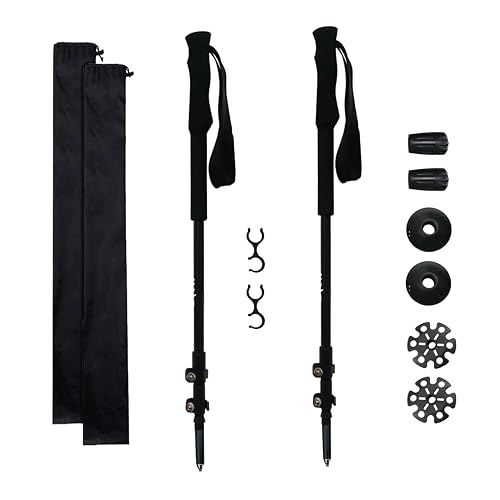
This NexusOutdoor pair uses the same 3K carbon-fiber construction as the brand’s aluminum siblings, with each pole tipping the scales at roughly 157 grams and breaking down into three telescoping sections. The marketing targets day hikes, backpacking, and fast-paced movement, and the included accessories (snow baskets, mud tips, and rubber feet) cover the kind of mixed terrain hunters run into from late-season scouting to early-season glassing trips.
Where this set differs from the BUERTS and Hiker Hunger carbon options is the accessory bundle: more out-of-the-box versatility, especially if you hunt in areas with late-season snow. The trade-off is that the telescoping sections create a small amount of wobble at full extension compared with a single-shaft fixed-length design. For most hunters that wobble is well within acceptable range.
Where It Helps
- 3K carbon shaft keeps each pole at roughly 157 grams for fast-paced movement
- Telescoping three-section design compacts well for stashing in a pack
- Included snow baskets, mud tips, and rubber feet cover multi-season terrain
Practical Considerations
- Telescoping joints can develop a slight wobble over time and may need re-tensioning
- More parts to keep track of in your pack compared to the one-piece American Nordic option
Specs
Built With In Mind
Hunters who travel across multiple terrain types in a single trip and want one pole kit that covers all of them.
Not Your Match When
The American Nordic Walking System poles suit hunters who prefer a one-piece, no-moving-parts build over telescoping convenience.
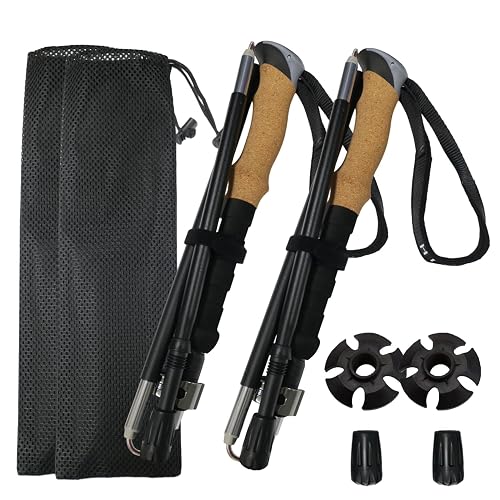
The headline here is the folded length: about 13.7 inches, which is small enough to slide into carry-on luggage or a hunting pack’s side pocket without hogging space. The 7075 aluminum alloy (roughly 9.88 oz per pole) keeps the swing light while handling the kind of in-transit abuse that happens when you are hauling gear through airports or truck beds. The adjustable height range covers most adult users, and the compact fold pattern means setup at the trailhead takes seconds.
Compared with the brand’s larger trifold set earlier, this one prioritizes pack size over adjustability, which makes it a smart pick for hunters who fly to their hunt or share gear between trips. The trade-off shows up in the slightly less cushioned grip over long hours compared to cork-equipped models, and the shorter folded frame means fewer extension choices for very tall users.
Positive Points
- Folds to about 13.7 inches, small enough for carry-on luggage and small packs
- 7075 aluminum alloy balances strength and weight for travel-friendly durability
- Quick setup at the trailhead with a clean folding joint
Less-Strong Areas
- Less grip comfort over very long days compared to cork-equipped models
- Maximum height may run short for very tall hunters who want extra extension
Specs
Whose Shelf It Belongs On
Hunters flying to a destination hunt or packing poles into a tight carry-on who value a tiny folded footprint above all else.
Where A Sibling Pick Shines
The NexusOutdoor 7075 Aluminum Trifold Hiking Poles are a better pick when you want a longer extension range for taller hunters.
Field-Tested Wisdom For Choosing The Right Pair
A trekking pole is a tool with a job, and the job changes depending on how you hunt. Most of the decisions that matter come down to four attributes: weight, material, packability, and grip.
Weight And Material Tradeoffs
Carbon fiber wins on swing weight and is a friend to your shoulders over a full day, though it can crack under sharp impact rather than dent. Aluminum takes more abuse and shrugs off the kind of rock-strike that ends a carbon pole, but every gram shows up over multi-mile climbs. The Hiker Hunger and LEKI carbon sets are your ultralight picks; the NexusOutdoor 7075 aluminum pair absorbs punishment without complaint. The American Nordic fixed-length pole adds real heft but rewards you with the stiffest platform in the lineup.
Packability And Length
Folding Z-style or telescoping poles collapse small enough to slide into a daypack side pocket, which matters when you spend part of the day stowed and part of the day planted. Fixed-length poles trade that convenience for rigidity and consistency. The NexusOutdoor 13.7-inch fold is your travel-friendly pick, while the 35 cm NexusOutdoor trifold and 14.5-inch LEKI sections both fit a typical hunting pack.
Grip And Comfort
Cork molds to your hand and absorbs sweat, which is genuinely noticeable on long sits. EVA foam stays grippier in the cold and dries faster, and the LEKI Trail Trigger Shark foam fits a relaxed hand position during sustained movement. Match the grip to your hunting style: cork for slow stalks, EVA for active movement, and foam for running-style hunts.
Adjustment Mechanism
Flip locks are fast and glove-friendly; twist locks are more compact but slower in cold weather. Either works, so focus on how reliably the lock holds at full extension. A habit of snugging locks before descents pays off regardless of which mechanism you choose.
Key Considerations Across These Picks
Pitfalls Shoppers Hit
A common mistake is buying poles that are too long for your height, which forces you to raise your shoulders with every plant and tires out your traps before lunch. Another is choosing carbon fiber for a heavy, rough-use hunt when aluminum would have survived the same trip. Skipping wrist-strap sizing is a smaller error, but it changes how the load transfers, so dial it in before your first long day. Finally, many shoppers forget to match the tip to the terrain: carbide metal tips work on trail but chatter on pavement, while rubber paws are quiet and gentle on hard surfaces.
Where The Extra Money Goes
Premium tiers buy lighter materials (full 3K carbon instead of aluminum), better grip ergonomics (cork and EVA blends over basic foam), and tighter tolerances on the locking mechanism so the shaft does not slip under heavy loads. For day-trip hunters on a tight budget, an aluminum pick covers the essentials well. For multi-day backcountry hunters counting ounces and pushing through unpredictable terrain, the upgrade typically pays off in reduced fatigue and longer service life. The honest read is that the mid-tier picks in this list cover most hunting situations without compromise, and the premium sets earn their cost for the most demanding users.
Frequently Asked Questions
What height trekking pole do I need for hunting?
A common starting point is a pole that hits your forearm when your elbow is bent at 90 degrees, and the American Nordic Walking System’s 32-length custom sizing takes the guesswork out of the equation. The adjustable picks in this list let you tune length on the trail, which is helpful when you shift from flats to steep climbs.
Are carbon fiber trekking poles better than aluminum for hunting?
Carbon is lighter and dampens vibration, which is great for long days, while aluminum is more impact-resistant and less expensive. The Hiker Hunger and LEKI carbon sets are the lightweight leaders; the NexusOutdoor 7075 aluminum pairs are the tougher, more forgiving options.
Do I need locking or folding trekking poles for hunting?
Folding designs are easier to stow on a pack, and the NexusOutdoor compact fold collapses to roughly 13.7 inches. Locking (telescoping) poles offer more fine-grained length adjustment, which is helpful when terrain changes mid-trip, and the BUERTS and NexusOutdoor telescoping carbon options handle that well.
Can I use trekking poles with a rifle or bow?
Yes, as long as you keep one hand free or use a wrist strap that lets you drop the pole quickly. The LEKI Shark grip and the NexusOutdoor EVA grips both support a relaxed hold that releases fast when you shoulder a weapon.
How do I maintain trekking poles in the field?
Wipe down the shafts after muddy days, snug flip locks before long descents, and rinse the tip threads before swapping baskets. The telescoping and trifold models benefit from a quick check of the joint tension every few trips to keep wobble from creeping in.
Wrap Up
Hunting trekking poles earn their keep the moment you set off with a loaded pack, and the right pair turns an all-day grind into a manageable push. Match the pole to the way you hunt: stiff one-piece for glassers, folding carbon for runners, and tough aluminum for pack-haulers. The honest read across this list is that any of these picks will outwork a bare-handed hike; the rest comes down to fit, weight tolerance, and how you pack them. Trust the build that matches your terrain, and the miles take care of themselves.