
A solid pair of camo pants decides whether a quiet sit in a treestand actually stays quiet, or whether a slow stalk through October brush ends with soaked knees and a long ride home. Hunters shopping for new legwear this year face a wide spread, from ultralight spring turkey pants to heavily insulated late-season bib-style bottoms. The picks below cover that spectrum, balancing fabric weight, weather resistance, mobility, and noise level so you can match the pant to the conditions you actually hunt.
A Snapshot Of The Selections

SITKA Gear Equinox Midi Insulated Hunting Pant

SITKA Gear Dakota Pant

Drake Tech Stretch Turkey Hunting Pants

BASSDASH Invis Stretch Hunting Pants

KUIU Guide PRO Fleece-Lined Hunting Pant

BASSDASH Invis 170 Lightweight Hunting Pants

KUIU Guide PRO Hooded Soft Shell Jacket
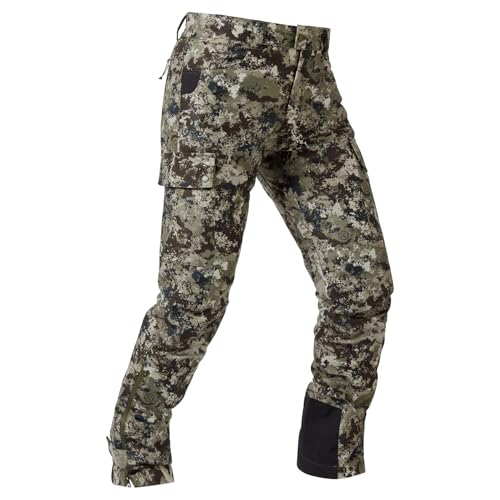
BASSDASH Walker-Lw Waterproof Hunting Pants
More Details On Our Top Picks
The Equinox Midi slots into the mid-season window where mornings are cold and afternoons warm up fast, which is exactly the stretch that ruins a lot of layering systems. Built around a quiet, brushed-face fabric and a low-profile insulation package, it acts as a stand-alone bottom layer on cool sits and tucks cleanly under a shell when the weather turns.
For hunters who prefer fewer pieces and less noise in the woods, the design philosophy here favors stealth over rugged abrasion resistance. Compared to the heavier SITKA Dakota Pant covered below, the Equinox trades raw toughness for a softer hand and noticeably quieter draw on branches and dry leaves.
A Favorable Mix
- Brushed face fabric cuts noise against brush and shells
- Midi insulation handles frosty mornings without overheating on the hike in
- Layering-friendly cut that sits well under rain shells
- Transitions easily from a still hunt to a coffee shop stop
Worth Noting
- Not built for crawling through briar patches or rough rock scree
- Sizing runs closer to a slim, athletic cut
The Right Fit
Still hunters in whitetail country and eastern woodlands who walk short distances and value silence over armor.
Look Elsewhere When
You need a tougher waterfowl shell, in which case the SITKA Gear Dakota Pant is the more rugged sibling worth a closer look.
The Dakota Pant was designed for waterfowlers working the marsh through the back half of the season, when cold, wind, and wet ground are the norm. The build leans toward a tough outer face with enough interior loft to function as either a primary layer on calmer afternoons or a mid-layer when the mercury really drops.
It is meaningfully burlier than the Equinox covered above, and that extra mass shows up where you need it most: marsh grass, decoy bags, and wet layout blinds. The trade-off is reduced breathability on long hikes, so this is more of a set-up-and-stay pant than a stalk pant.
Useful Touches
- Tough outer shell handles abrasion from marsh grass and decoy lines
- Doubles as a mid-layer beneath a shell when true winter arrives
- Cut accommodates base layers without binding at the knee
- Suited to long, cold sits in layout or blind setups
Trade-Offs To Consider
- Heavier on the leg than early-season pants, so warm-weather hikers may overheat
- Follow the manufacturer care instructions closely, as improper washing can degrade water-shedding treatments over time
Built With In Mind
Duck and goose hunters who spend long hours in cold blinds and need a single pant that bridges late fall and early winter.
Swap It Out When
Your season is built around spring turkey hunting, where the Drake Tech Stretch Turkey Hunting Pants will feel far less bulky on the move.
Spring gobbler hunting is a different game, and the Drake Tech Stretch was clearly built around it. The fabric is a lightweight, four-way stretch woven with moisture-wicking treatment, so a wet morning in a dewy strutter field does not soak straight through to your baselayer.
The adjustable waist is a quiet but useful touch for hunters whose layering changes week to week as spring warms. Where the SITKA Dakota Pant above leans toward heavy marsh duty, this Drake piece leans toward long walks and silent repositioning.
The Practical Payoff
- Four-way stretch lets you drop to one knee or crawl without binding
- Moisture-wicking finish keeps damp mornings from chilling the skin
- Adjustable waist adapts to changing baselayer thickness
- Lightweight build suits long, glassing-heavy morning stalks
Honest Caveats
- Not a cold-weather pant, so early March hunters in northern states will want a baselayer underneath
- Lightweight construction sacrifices abrasion resistance for breathability
Right Fit For
Spring turkey hunters who walk miles before dawn and need a quiet, breathable pant that moves with the body.
Consider Something Else When
You hunt later in the year or in wet uplands, where the BASSDASH Walker-Lw Waterproof Hunting Pants deliver more weather protection.
The Invis line from BASSDASH is built around a low-visibility camo print designed to break up the human silhouette without screaming “tactical” on the trail. The stretch fabric is light enough for spring fishing trips, which is a smart crossover given the brand’s water-side roots.
Water resistance on a lightweight pant is rarely a full submersion shield, but it does bead light rain and morning dew effectively. Compared to the heavier SITKA Dakota Pant covered earlier, this BASSDASH piece feels closer to active-wear than armor.
Standout Benefits
- Low-profile camo pattern works for hunting and casual wear
- Stretch construction suits stalking and stream wading
- Lightweight enough to pack as a backup layer on backcountry hunts
Small Caveats
- Water resistance is light-duty, so heavy rain will eventually soak through
- Limited insulation, meaning cold-weather hunters will need thermal baselayers
Who It Suits Best
Anglers and hunters who split time between water and woods and want a versatile, mobile pant for shoulder seasons.
Reach For A Different Pick When
You face real cold, in which case the KUIU Guide PRO Fleece-Lined Hunting Pant adds insulation under the same mobile fit.
The Guide PRO name signals KUIU’s professional-grade tier, and the fleece-lined soft shell is aimed at hunters who push into elevation and weather where a regular soft shell would fall short. A bonded fleece interior adds warmth without the bulk of a separate mid-layer, while the wind and water resistant face handles the gusts that roll off a ridge.
For mountain elk and sheep hunters logging serious vertical, the streamlined fit layers well under a hard shell. Compared to the Drake Tech Stretch covered earlier, this KUIU piece is heavier, warmer, and far more weather-capable, but lacks the spring-turkey breathability.
Real-World Strengths
- Bonded fleece lining traps warmth without adding bulk
- Wind-resistant face fabric blocks gusts on exposed ridges
- Water-resistant treatment sheds light precipitation and snow
- Articulated cut suits long days with a heavy pack
Practical Considerations
- Too warm for early-season hunts in southern states
- Higher price tier than most stretch-only options on this list
Feature Snapshot
Made For
Backcountry hunters covering elevation in cold, windy conditions who want insulation and weather defense in one garment.
Skip It When
You mainly chase spring gobblers in mild weather, where the BASSDASH Invis 170 Lightweight Hunting Pants will breathe better on the move.
The Invis 170 sits on the lightest end of the BASSDASH line and targets early-season turkey hunters specifically. The 170 gram fabric weight (a mid-range spec for spring hunting pants) keeps the pant airy on a midday roost hunt, while four-way stretch supports the kneeling, crouching, and slow crawling that gobbler hunting demands.
Breathable construction is the headline here, with light water resistance as a backup. Next to the heavier KUIU Guide PRO above, the Invis 170 trades warmth and weather defense for cooling airflow, which is the right swap for an April morning in the southern states.
Benefits That Matter
- Breathable weave prevents overheating on active stalks
- Four-way stretch supports kneeling and crawling setups
- Light water resistance handles dew and brief showers
- Lightweight enough to pack as a camp layer on longer trips
A Few Limitations
- Not a standalone cold-weather option
- Light fabric will not brush off heavy thorn cover without snagging
Perfect Match For
Early-season turkey hunters in mild climates who want a cool, mobile pant that disappears during long stalks.
Where A Sibling Pick Shines
Wet-weather upland hunters get more reliable rain defense from the BASSDASH Walker-Lw Waterproof Hunting Pants covered further down.
Strictly speaking, this is the upper-body partner to the Guide PRO pant covered above, but it earns its spot here because no legwear system is complete without a matching top. The hooded soft shell adds wind and water resistance plus a fitted hood that seals out the breeze without flopping in your peripheral vision.
For hunters building out a kit piece by piece, pairing this jacket with the Guide PRO pant creates a coordinated system with matched fabrics. Compared to the SITKA Equinox reviewed first, this KUIU piece is heavier and more weather-oriented, suited to harsher, more exposed environments.
Key Advantages
- Bonded soft shell face blocks wind on exposed glassing points
- Fitted hood stays put without obstructing sightlines
- Matches the Guide PRO pant for a unified layering system
- Streamlined cut works well under a pack
Things To Consider
- Premium tier pricing puts it above entry-level options
- Not insulated, so cold-state hunters will want to layer beneath it
Whose Shelf It Belongs On
Hunters standardizing a backcountry system who want a coordinated jacket and pant pairing from the same brand tier.
A Better Fit Elsewhere
For a lighter spring layering piece, the Drake Tech Stretch Turkey Hunting Pants cover the lower body while a basic rain shell handles the top.
The Walker-Lw is the most weather-capable pant in this lineup, built around a waterproof breathable membrane and a silent outer face. That combination matters most in wet upland cover and spring rain, where the typical lightweight turkey pant will soak through inside an hour.
Silent fabric is the standout feature, because waterproof pants often sound like a trash bag in the woods. The Walker-Lw is engineered to keep that rustle under control. Compared to the breathable BASSDASH Invis 170 above, this piece trades airflow for full waterproofing.
The Value In It
- Waterproof membrane handles sustained rain and wet grass
- Silent outer fabric reduces noise during stalks
- Breathable construction vents heat during active movement
- Suited to fishing, turkey, and upland bird hunting alike
Where It Is Less Suited
- Warmer than a pure breathable pant on hot spring afternoons
- Periodic re-treatment of the durable water repellent finish is commonly advised to maintain beading performance
Who Should Grab It
Hunters and anglers who regularly face wet brush, marshy terrain, or early-season rain and want one pant that handles it all.
Not Your Match When
You hunt dry, mild spring conditions and prioritize cooling, in which case the BASSDASH Invis 170 Lightweight Hunting Pants breathe better.
Matching Camo Pants To The Conditions You Actually Hunt
Selecting the right camo pants starts with honest answers to a few practical questions. What game do you pursue, in what season, and in what terrain? A spring turkey hunter in southern pine flatwoods needs a different pant than a mountain elk hunter chasing November snow.
Fabric Weight And Season
Pants marketed for spring gobbler hunting are usually built from lightweight, breathable wovens in the 150 to 200 gram range, while late-season hunting pants layer in fleece, brushed interiors, or bonded insulation to trap warmth. Picking the wrong weight either leaves you soaked in sweat during a stalk or shivering on a still hunt.
Quietness Versus Durability
Brushed-face fabrics stay quieter against dry brush, while tightly woven technical shells resist abrasion from briars and rocky terrain better. Hunters who move slowly and rely on close-range stalks usually want softness, while those pushing through rough cover need the tougher hand.
Weather Protection
Water resistance sheds light dew and brief showers, while a true waterproof breathable membrane handles sustained rain. Think about your typical hunting day rather than the worst-case storm, and pick the level of protection that matches your most common conditions.
Camo Pattern And Concealment
Camo patterns are tuned to specific environments, such as timber, marsh, open meadow, or snow. Matching the pattern to your dominant hunting terrain helps break up your silhouette without forcing you to buy a separate pant for every trip.
Quick Considerations Before You Buy
Where Shoppers Go Wrong
One common mistake is buying a pant built for the wrong season, picking an ultralight spring turkey pant for an October deer hunt or a heavy insulated bottom for an April gobbler trip. Another is overlooking the layering room, since a pant that fits perfectly over bare legs can turn restrictive once a thermal baselayer goes underneath.
When Paying More Pays Off
Higher-tier hunting pants tend to add bonded weather membranes, quieter face fabrics, and better pattern matching to specific environments. The upgrade is worth it for hunters who log many days afield in tough conditions, while occasional hunters often do fine with mid-tier options.