
Your shoulders tell the story before your legs do. A heavy pack turns a two-hour loop into a chore, and a poorly balanced one pulls at your lower back by the second mile. Light hiking backpacks exist so you can carry water, a layer, snacks, and a camera without paying for it in fatigue. The five picks below span true ultralight stuff-sacks, compact daypacks, and one trail-focused workhorse with proper suspension, giving you a real range depending on how far and how rugged your plans get.
The Leading Options At A Glance
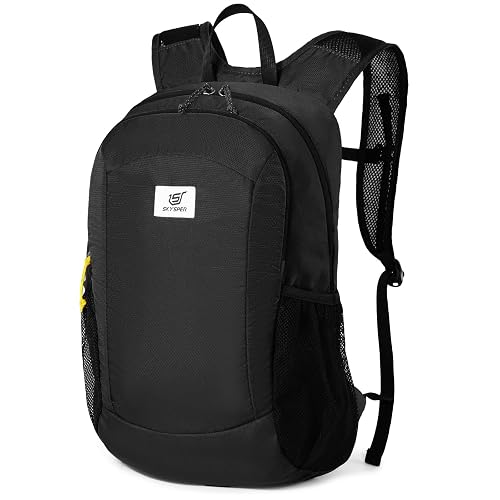
SKYSPER Hiking Backpack Ultralight Packable RFID Travel Daypack 16L
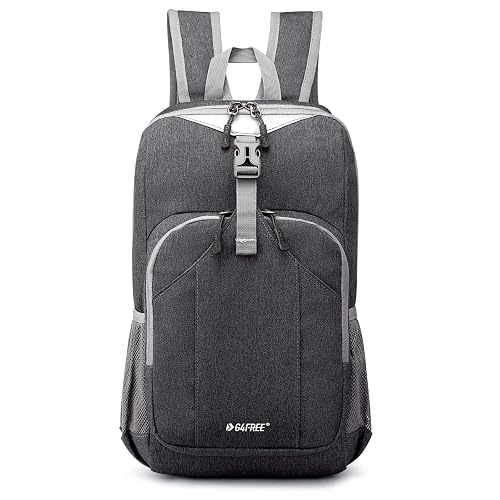
G4Free Mini 10L Hiking Daypack (Dark Grey)
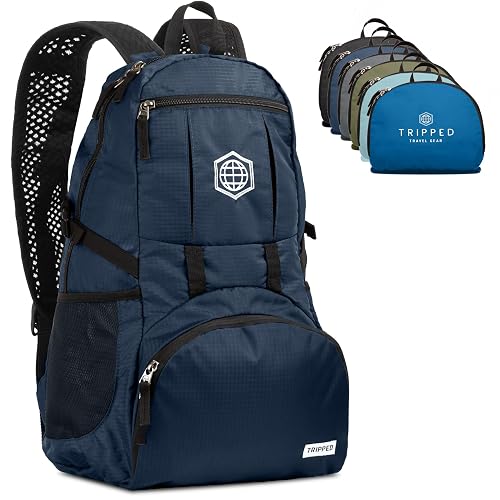
TRIPPED Travel Gear 35L Packable Travel Backpack
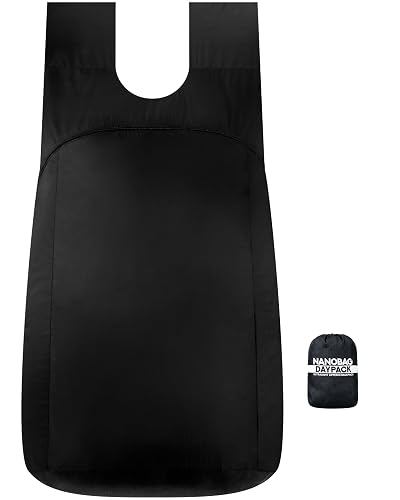
Nanobag Daypack 16L Ultralight Packable Foldable Travel Backpack
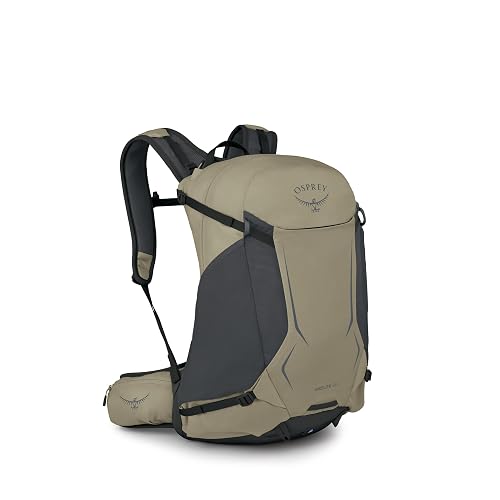
Osprey Hikelite 28L Hiking Backpack (Tan)
A Breakdown Of The Leading Choices
Where most packable daypacks focus only on weight and fold-down size, the SKYSPER 16L folds in a feature aimed squarely at travelers: RFID-blocking pockets (RFID stands for Radio Frequency Identification, the wireless tech used by card and passport scanners) that shield cards and passports from skimming devices. The 16L capacity lands in a useful middle zone, big enough for a layer, water bottle, snacks, and a compact rain shell without becoming a luggage piece.
The nylon shell stuffs into its own pocket when you don’t need it, which suits travelers who want one bag for the airport and the trailhead. Where the G4Free leans compact and the Osprey leans structured, this one splits the difference and adds a security layer most rivals skip.
Everyday Wins
- RFID-shielded pocket blocks 13.56MHz and 125kHz scanner frequencies commonly used for card skimming
- 16L capacity fits a rain shell, 1L water, snacks, and a small first-aid kit without bulging
- Packs into its own integrated pouch, so it tucks inside carry-on luggage without dedicated packing cubes
- Lightweight nylon shell keeps total carry weight low on casual trail days
- Works as both a hiking daypack and an airport daypack, reducing the number of bags you need to bring on a trip
Things To Consider
- Thin nylon shell construction may not handle repeated abrasion against rocky terrain as gracefully as a structured pack like the Osprey Hikelite
- RFID shielding is only useful if you actually carry cards or passports in the shielded pocket; hikers skipping travel days get no benefit from that feature
Made For
Travelers who bounce between airports and trailheads and want one packable bag that handles both jobs with built-in card protection.
Reach For A Different Pick When
The G4Free Mini 10L suits hikers packing only the bare minimum for short loops who want a smaller, more nimble silhouette.
At 10 litres the G4Free Mini is the smallest pack in this roundup, and that’s the entire point. It runs closer to a hydration vest than a backpack, with dimensions around 10.5 by 5 by 15 inches. You carry water, a snack, a phone, and keys, then move on. For short trail loops, city cycling, or a quick summit push, the small footprint disappears against your back.
The polyester shell carries waterproof and tear-resistant claims, and SBS metal zippers add a touch of durability where most mini packs rely on plastic hardware. Compared to the SKYSPER’s travel-oriented design, this one stays closer to pure outdoor utility at a tighter size.
Where It Helps
- Compact 10L capacity suits short hikes where carrying capacity matters less than staying nimble
- Waterproof and tear-resistant polyester shell handles light rain and brushy trails
- Metal SBS zippers hold up better than typical plastic hardware on mini packs
- Multiple pockets keep small essentials sorted without digging through one main compartment
Worth Noting
- 10L is genuinely small: owners commonly find that a full-size water bottle and a light jacket barely fit alongside other essentials
- Lacks the suspension or hip belt of a structured daypack like the Osprey Hikelite, so load it light
- Reinforced seams help durability, but the small shoulder strap profile can dig in on longer walks for some body types
Quick Facts
Who It Suits Best
Short-loop hikers and cyclists who want a small, durable daypack for water and a layer without hauling extra room.
Where A Sibling Pick Shines
The TRIPPED Travel Gear 35L fits hikers whose days run longer and who need room for lunch, extra layers, and camera gear.
Where most packable daypacks top out around 16 to 28 litres, the TRIPPED 35L pushes into carry-on territory. The size makes sense for travelers who want a single bag that works as overhead-bin luggage and as a hiking daypack once they land. You can fit a change of clothes, a laptop sleeve, and still have room for trail gear when you swap modes.
The “all-day comfort” framing in the name points at padded straps and a structured back panel, though it stops short of the ventilated suspension you find on dedicated trail packs like the Osprey. That positions it as a hybrid, useful when your hiking happens alongside other travel days rather than as the sole purpose of the trip.
Strong Points
- 35L capacity carries travel essentials and trail gear in a single bag
- Packable construction lets it fold down for storage inside a larger suitcase
- Padded straps aim to reduce shoulder fatigue across long airport-and-trail days
- Functions as both carry-on luggage and a daypack, simplifying packing for mixed trips
Honest Caveats
- 35L exceeds most airlines’ personal-item size limits; expect to use overhead bin rather than under-seat storage
- Lacks the ventilated back panels of trail-focused packs like the Osprey Hikelite, so it can run warm under heavy load in summer heat
- Bigger size adds weight and bulk compared to the ultralight Nanobag when you only need daypack capacity
Feature Snapshot
Best Suited To
Mixed-use travelers who want one bag to handle both flight days and longer hiking excursions without packing two separate packs.
Skip It When
The Nanobag 16L fits hikers who already have a main pack and only need a featherweight daypack for short side hikes from a base.
The Nanobag is the lightest pack here by a wide margin, and that’s the headline feature. At roughly 1.15 ounces and built from ultra-thin 0.05mm fabric, it borders on disposable in feel, yet it still claims a 16L capacity. You stash it inside your main travel pack, then pull it out for a side hike, a market run, or a beach day without adding measurable weight.
The trade-off shows up in the fabric: thin enough to feel almost translucent in hand, and clearly not built for bushwhacking or rough treatment. For travelers and ultralight enthusiasts who treat a daypack as a backup layer in a larger kit, that compromise is the whole point.
What Works In Its Favor
- 1.15 oz total weight is barely noticeable in luggage or on your back
- 0.05mm fabric packs into a tiny attached pouch with no folding required
- 16L capacity holds more than the weight suggests, fitting a layer, water, and daily essentials
- Doubles as a travel-day tote, sightseeing bag, or emergency spare pack
- Pulls out and deploys in seconds when plans shift from indoor to outdoor
Trade Offs
- Ultra-thin fabric offers minimal abrasion resistance, so rough trails with sharp brush may be hard on it
- Load it light: thin straps and basic construction aren’t built for heavy weights over long distances
- Not a primary hiking pack; best used as a secondary or backup option rather than a main daypack
Feature Card
Who Will Love This
Ultralight travelers and backpackers who want a featherweight daypack stashed inside their main kit for unplanned side trips.
Look Elsewhere When
The Osprey Hikelite 28L suits hikers who plan to load up with water, layers, and snacks on longer trail days and want proper suspension.
The Osprey Hikelite 28L is the most trail-focused pack in this group and the heaviest, and that contrast is the whole story. Where the SKYSPER and Nanobag prioritize packability, the Hikelite prioritizes how the pack feels on your back during a long day. The AirSpeed tensioned mesh backpanel is built to keep weight off your spine and let air circulate, which matters once you add water, food, and a layer or two.
Capacity sits at 28 litres, a middle-ground number that works for full-day hikes and light overnights but doesn’t push into overnight backpack territory. Compared to the TRIPPED’s travel-friendly 35L, the Hikelite is the pick you grab specifically because you’re going to walk five to ten miles that day.
Standout Benefits
- AirSpeed tensioned mesh backpanel reduces back sweat and shifts load off the spine
- Padded hipbelt with pockets keeps small items accessible without removing the pack
- 28L capacity handles full-day loads of water, food, rain gear, and a light insulating layer
- Integrated raincover protects gear when weather shifts mid-hike
- Panel-loading design lets you reach main-compartment contents without unloading the top
Points To Keep In Mind
- Heavier than the packable options here, so it doesn’t compress into a luggage pouch for travel
- Larger frame than the G4Free Mini, which may feel bulky on short urban walks where you don’t need the suspension
Right Fit For
Trail hikers who plan to load up with water and layers for longer day hikes and want a pack that carries weight properly.
Not Your Match When
The Nanobag 16L fits travelers who want a featherweight backup daypack that disappears into luggage and only comes out for short outings.
What Matters Most Before Choosing Light Backpacks For Hiking
Capacity and weight read like simple numbers, but they trade off against each other in ways that matter on the trail. A 10L pack like the G4Free keeps weight low but forces you to leave behind anything that doesn’t fit. A 35L pack like the TRIPPED swallows everything but adds bulk and warmth against your back. Most day hikers land somewhere between 16 and 30 litres, which is why three of the five picks here cluster in that range.
Suspension separates a hiking pack from a stuff sack. The Osprey Hikelite uses a tensioned mesh backpanel and padded hipbelt to transfer load to your hips, which is how a 28L pack can feel light even with three liters of water inside. The packable nylon packs here don’t have that, and depending on your fitness and shoulder tolerance, that becomes noticeable somewhere past the four-mile mark.
Packability matters more for travelers than for trail-only hikers. The SKYSPER, Nanobag, and TRIPPED all fold into integrated pouches. You trade some structure for the ability to stash the pack inside luggage or a larger backpack when you don’t need it. Pure trail hikers can ignore this category entirely.
Weather resistance ranges from waterproof shells on the G4Free to integrated raincovers on the Osprey. For wet climates, that difference shapes which pack actually keeps your gear dry on a long day. A thin fabric pack needs a pack cover or careful packing in steady rain.
Key Considerations Across These Picks
Pitfalls Shoppers Hit
Buying by listed capacity alone gets people in trouble, because usable volume shrinks fast once you add a water reservoir, a packed lunch, and a rain shell. A 10L pack really holds about 7L of stuff, and a 35L pack feels smaller than expected once you start organizing compartments. Aim for a size one notch larger than your first instinct.
Another trap is choosing a packable nylon bag as your primary hiking pack. They shine as backups and travel companions, but the thin fabric and minimal suspension wear on you by the second hour of a real hike. Keep one in your kit, but pair it with a structured daypack if you hike often.
When Paying More Pays Off
The price gap between a basic packable daypack and a structured hiking pack like the Osprey Hikelite reflects real engineering. Tensioned mesh backpanels, padded hipbelts, and integrated raincovers cost more to build and ship, but they change how a loaded pack feels over miles. For hikers who hit the trail weekly or carry heavier loads, that upgrade shows up directly in fatigue at the end of the day.
Frequently Asked Questions
How light should a hiking backpack actually be?
For day hiking, anything under two pounds feels light on your back, but the weight you carry matters more than the pack’s empty weight. A 1.15-ounce pack loaded with two liters of water is heavier than a structured 28L pack with an empty reservoir. Match the pack to the load, not the other way around.
What size daypack do most hikers need?
Most day hikers land between 20 and 30 litres, which fits water, food, a rain layer, and a small first-aid kit without forcing you to leave essentials behind. Shorter loops or fast-and-light outings get by with 10 to 16 litres.
Are packable nylon backpacks durable enough for real trails?
They handle casual and urban trails fine, but thin fabric and minimal structure wear faster than dedicated hiking packs on rough, brushy, or rocky terrain. Treat them as backups or travel companions rather than your only hiking pack.
Do I need a hipbelt on a small daypack?
For loads under five pounds, a simple shoulder-strap setup usually feels fine. Once you add water, food, and a layer, a hipbelt transfers weight off your shoulders and noticeably reduces fatigue on longer days.
Can I use these packs as carry-on luggage?
The TRIPPED 35L is sized for overhead-bin carry-on, while the SKYSPER, Nanobag, and G4Free work as personal items or pack-down backups inside larger luggage. The Osprey Hikelite reads more as a daypack and may exceed personal-item size on stricter airlines.
Final Verdict
Match the pack to your real day, not to a spec sheet. The Nanobag wins for ultralight travelers who want a backup, the Osprey Hikelite wins for committed trail hikers, and the SKYSPER, G4Free, and TRIPPED cover the middle ground depending on whether you prioritize security, compactness, or capacity. Whichever you pick, your shoulders will thank you by mile three.