
Mountain communication demands radios that punch through ridges, tree cover, and cold air. If your group spreads out across switchbacks, base camps, or ski lifts, standard FRS (Family Radio Service) bubble-pack radios often fall short within a mile or two. The picks below separate legit trail-ready gear from basic consumer units, with options spanning micro-mobile base stations, rugged backcountry handhelds, and family-friendly license-free sets.
Your Options, Compared

Midland T10 X-Talker FRS Walkie Talkie, 2 Pack
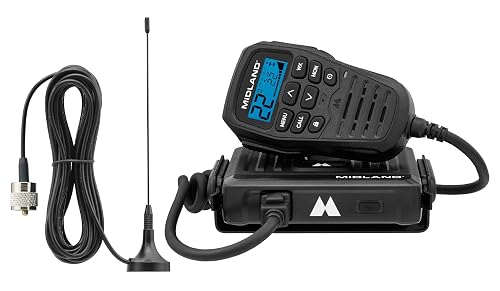
Midland MXT275 15W MicroMobile GMRS Two-Way Radio
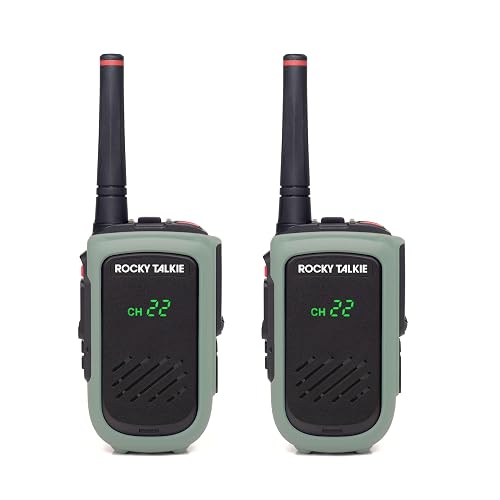
Rocky Talkie Expedition 5W GMRS Radio, 2 Pack

Retevis RT22 Business FRS Two-Way Radios, 10 Pack
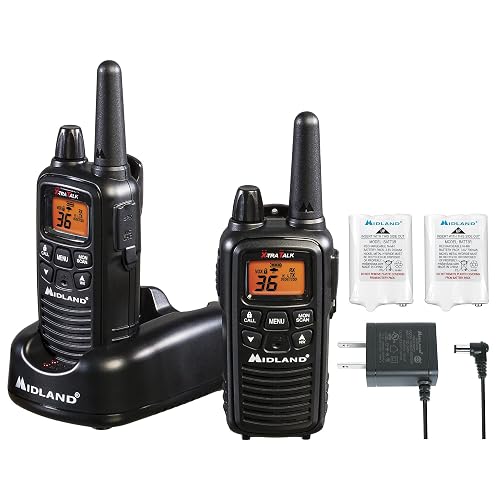
Midland LXT600VP3 FRS Walkie Talkies, 2 Pack
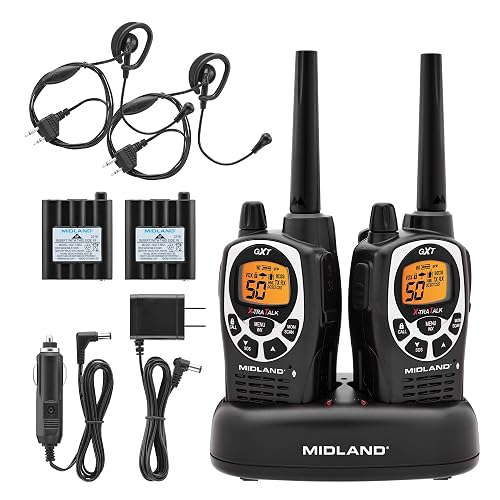
Midland GXT1000VP4 GMRS Two-Way Radio, 2 Pack
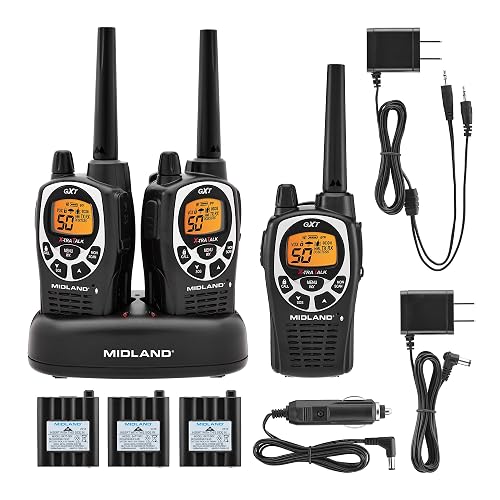
Midland GXT1000X3VP4 GMRS Two-Way Radio, 3-Pack

Midland T51VP3 X-Talker FRS Walkie Talkies, 2 Pack

Midland LXT630X3VP3 FRS Walkie Talkies, 3-Pack
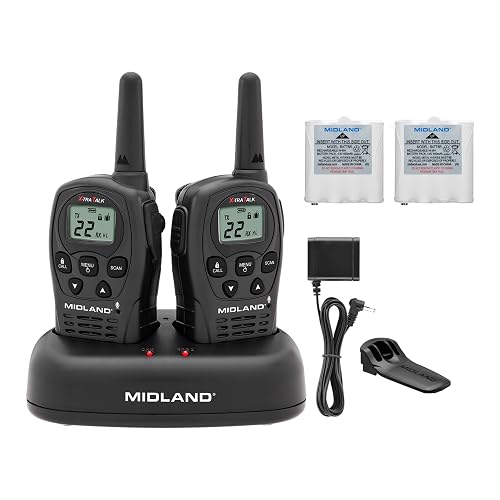
Midland LXT500VP3 22-Channel FRS Walkie Talkies
The Strengths Of Each Pick
The Midland T10 X-Talker targets hikers and weekend outdoor users who want simple radios without paperwork. It operates on FRS (Family Radio Service) frequencies, which means no FCC license is needed, and the dual-pack format keeps groups paired from the first hike.
For day hikes on trails without extreme elevation gain or dense ridgelines, the T10 covers the basic need: channel scan, call tones, and a familiar Midland button layout. It feels approachable for first-timers and slips into a pack pocket without bulk.
Where It Delivers
- License-free FRS operation straight out of the box
- Two-pack format suits couples and small hiking pairs
- Channel scan simplifies setup on crowded shared frequencies
- Lightweight shell fits daypack hip belts and jacket pockets
Things To Consider
- Limited transmission power compared with the GMRS units below
- Range falls off quickly in steep, forested mountain terrain
Who It Suits Best
Beginners tackling gentle summit trails and family hikers staying within a couple of miles of each other.
Consider Something Else When
Switch to the Midland GXT1000VP4 GMRS Two-Way Radio when your routes cross deep drainages where FRS bubbles tend to die.
The MXT275 takes a different approach from every other pick on this list. It is a vehicle-mounted mobile unit running 15 watts of GMRS (General Mobile Radio Service) output, which is the legal ceiling for that service band. The benefit shows up the moment you mount an external antenna on a roof rack or truck cab.
Overlanders, search teams, and base-camp coordinators prize it because line-of-sight becomes much longer when a vehicle sits at a saddle or trailhead pullout. Handheld partners like the Rocky Talkie Expedition 5W GMRS Radio can talk back to the mobile unit across miles of canyon, which makes convoy communication far more reliable than handheld-to-handheld alone.
A Favorable Mix
- 15-watt output sits at the GMRS ceiling for serious reach
- Vehicle-mounted form factor frees hands while driving
- Compatible with handheld GMRS partners for hybrid coverage
- Strong base-camp anchor for multi-day expeditions
Trade Offs
- Requires a 12V power source and an external antenna for full benefit
- GMRS operation requires an FCC license in the US
- Less portable than any handheld on this list
Made For
Overlanders and base-camp coordinators running a vehicle as a communication anchor for an entire group.
Where Another Pick Suits Better
The Midland T10 X-Talker FRS Walkie Talkie fits backpackers who would never want to wire a vehicle rig.
The Expedition sits at the rugged end of the lineup. Rated IP67 for dust and water ingress (submersible to one meter for short periods), it shrugs off sleet, snowmelt, and the inevitable drop onto talus. The removable antenna also helps when packing the radio inside a tight pack.
Climbers and backcountry skiers choose it because GMRS operation delivers noticeably more reach than the license-free Midland LXT600VP3 FRS Walkie Talkies, and the dedicated NOAA weather receiver keeps afternoon storm warnings a button-press away.
Practical Pluses
- IP67 sealing handles rain, snow, and stream crossings
- 5-watt output is the maximum handheld GMRS power allowed
- NOAA weather receiver broadcasts storm warnings on demand
- Removable antenna simplifies pack storage
Worth Noting
- GMRS use in the US requires an FCC license
- Heavier than bubble-pack FRS alternatives in this list
- Two-pack price sits above most FRS pairs on this list
Feature Snapshot
Right Fit For
Alpine mountaineers and backcountry skiers who push into exposed terrain where weather and ruggedness matter most.
A Better Fit Elsewhere
The Midland T10 X-Talker FRS Walkie Talkie is the simpler choice for mellow forest trails where IP67 sealing is overkill.
The RT22 is a slim, pocket-style FRS radio sold in a 10-pack, which makes it a unique entry on a mountain gear list. Guides, instructors, and outdoor program directors prize the format because one purchase equips a whole cohort without mixing and matching brands.
VOX hands-free operation (transmits automatically when you speak) is a quiet benefit for climbers belaying or instructors demonstrating moves. Charging happens over micro-USB, which means the same cable already in a guide’s kit likely works here.
What Pays Off
- 10-pack equips an entire group with one purchase
- Slim form factor disappears into a chest pocket
- VOX hands-free aids belayers and instructors
- USB charging simplifies cable management on the road
Points To Note
- FRS power limits reach in steep backcountry terrain
- Not weather-sealed like the IP67 Expedition above
Best Suited To
Large guided groups and outdoor programs outfitting a full cohort with one bulk buy.
Look Elsewhere When
Solo hikers who only need a pair should save with the Midland LXT500VP3 22-Channel FRS Walkie Talkies instead.
The LXT600VP3 sits a step above the T10 in Midland’s licensing-free FRS lineup. It adds 36 channels and a useful channel scan feature that checks for traffic before settling on a frequency, which speeds setup at the trailhead.
Compared with the T10, you get a noticeably wider channel pool and NOAA weather alerts on demand, but you stay inside the license-free FRS framework. For weekend hikers who want a touch more capability without paperwork, the LXT600VP3 is a sensible middle step.
What Helps Most
- 36 FRS channels with scan-to-find-active-channel function
- NOAA weather alerts keep afternoon storms in view
- Dual power via rechargeable pack or AAA cells
- License-free FRS operation out of the box
Honest Caveats
- FRS power limits deep canyon performance
- Plastic shell feels lighter than the GMRS radios above
Key Product Details
Perfect Match For
Weekend trail walkers who want channel scan and weather alerts without stepping into GMRS licensing.
Swap It Out When
Choose the Rocky Talkie Expedition 5W GMRS Radio when routes cross serious elevation and weather exposure.
The GXT1000VP4 is one of the longest-running GMRS handhelds in Midland’s lineup, with 50 GMRS channels and JIS4 water resistance (splash-resistant from any direction, though not submersible). The feature set skews toward users who want more channel room and direct weather reception.
Compared with the license-free LXT630X3VP3 below, you trade license paperwork for significantly more transmit power and a wider channel grid. Mountain hunters, four-wheel-drive clubs, and storm-watch volunteers tend to gravitate here.
Good Reasons To Consider
- 50 GMRS channels give more room to escape interference
- JIS4 splash protection handles rain and snow flurries
- NOAA weather receiver broadcasts storm alerts directly
- Higher GMRS power extends range beyond FRS options
Points To Keep In Mind
- GMRS use in the US requires an FCC license
- JIS4 splash resistance is below the IP67 sealing of the Expedition
Whose Shelf It Belongs On
Storm-prone trail users and four-wheel-drive club members who value weather alerts and channel flexibility.
Reach For A Different Pick When
Submersible waterproofing matters more than channel count: pick the Rocky Talkie Expedition 5W GMRS Radio instead.
The X3VP4 variant keeps the GXT1000 platform and ships as a three-pack rather than two. That format matters when you run three-person rope teams, three-vehicle convoys, or instructor-led outings where one radio per participant is the rule.
With 142 privacy codes (sub-audible CTCSS/CDCSS tones that filter out other users on the same channel) layered on 50 channels, the effective combinations reach into six figures. In busy mountain valleys where multiple groups share the same FRS/GMRS bands, that filtering helps conversations stay private.
Bright Spots
- Three-pack format suits three-person rope teams directly
- 142 privacy codes cut through crowded shared channels
- NOAA weather receiver broadcasts storm alerts
- SOS siren feature assists emergency signaling
Less Ideal Details
- Requires an FCC license for GMRS operation
- Larger and heavier than pocket-style FRS radios
Who Should Grab It
Three-person rope partners who want matched radios with shared privacy settings straight out of the box.
Skip It When
Cyclists and two-person pairs will find the Midland T51VP3 X-Talker FRS Walkie Talkies a lighter license-free option.
The T51VP3 leans into Midland’s X-Talker spotting and recovery role: high-contrast black/orange shells that stay visible if dropped in leaves or grass, and a feature set aimed at families caravanning together on mountain roads.
It runs on 22 license-free FRS channels with 38 privacy codes and a dedicated NOAA weather scan function. That weather scan automatically tunes to the strongest local NOAA transmitter, which is helpful when driving between valleys with different transmitter coverage.
Practical Advantages
- High-contrast shell stays visible when dropped outdoors
- NOAA weather scan finds active transmitters automatically
- License-free FRS operation for stress-free family trips
- 38 privacy codes add a layer of channel separation
Worth Bearing In Mind
- FRS power limits reach across steep mountain terrain
- Not as rugged as the IP67-sealed Expedition radio
Who Will Love This
Family caravanning crews and recreational trail users who want simple, license-free radios with built-in weather scanning.
Another Choice May Suit
Backcountry skiers pushing into serious terrain should consider the Rocky Talkie Expedition 5W GMRS Radio for its sealing and power.
The LXT630X3VP3 ships as a three-pack with bright yellow faceplates, which is a quieter advantage than it sounds. On a lift line, a crowded summit, or a parking lot full of black jackets, a bright radio is easier to recover than a matte-black one.
It carries 36 FRS channels, 121 privacy codes, and three levels of eVOX (electronic voice-activated transmission) for hands-free operation. Compared with the GXT1000X3VP4 GMRS trio above, you give up transmit power but skip the FCC license requirement entirely.
Where It Helps
- Bright yellow faceplate aids visibility and recovery
- Three-pack suits families or small groups without extras
- 121 privacy codes reduce cross-group chatter
- Water-resistant shell handles snow flurries
Practical Considerations
- License-free FRS power limits deep mountain reach
- Not sealed to the IP67 standard of the Expedition
Feature Snapshot
Built With In Mind
Ski party groups and lift-line crowds where high-visibility shells and license-free operation matter.
Not Your Match When
Solo mountaineers pushing deep into remote terrain should choose the Rocky Talkie Expedition 5W GMRS Radio for sealing and range.
The LXT500VP3 is the smallest, lightest FRS pair in Midland’s current catalog, and that low weight is its main reason to exist. Pack-gram counters, ultralight backpackers, and travelers cutting ounces will see why this pair earns a spot in a kit.
It still covers the basics: 22 FRS channels, channel scan, dual power via rechargeable pack or AAA cells, and a battery life extender mode. The honest read is that reach falls well short of the GMRS units above, but for short ridge traverses and trailhead coordination, that is acceptable.
What It Does Well
- Lightweight shell trims pack weight noticeably
- Channel scan speeds setup at the trailhead
- AAA backup option rescues a dead rechargeable pack
- License-free operation simplifies travel
Where It May Fall Short
- FRS-only reach against high ridges and long valleys
- Not weather-sealed for serious mountain storms
Who Should Grab It
Lightweight pack hikers and short-trip travelers who value low weight above all else.
Look Elsewhere When
Serious mountaineering calls for the Rocky Talkie Expedition 5W GMRS Radio with its IP67 sealing and 5-watt output.
Picking Radios That Punch Through Mountain Terrain
Mountain radio performance hinges on a handful of attributes that do not always show up on a spec sheet. Knowing what to weigh makes the difference between a kit that works at the saddle and one that goes silent mid-ridge.
Power And Frequency Band
The two practical service bands here are FRS and GMRS. FRS is license-free and capped at lower transmit power, which works fine on gentle trails but tapers off in dense terrain. GMRS allows higher handheld wattage and the option of repeater channels, but in the US it requires an FCC license. GMRS radios also share channels with FRS, so mixed-brand groups still talk to each other.
Range Claims In Real Terrain
Marketing range numbers assume open sightlines on flat ground, which mountain ridges never offer. Rock walls, tree cover, and humidity all cut effective range dramatically. Expect a small fraction of the claimed maximum in real alpine conditions, and plan your routes around line-of-sight, not spec sheets.
Battery And Power Flexibility
Cold weather saps battery capacity, so lithium-ion packs rated for multi-day use pay off on winter trips. Dual-power radios that also accept AAA cells give a backup when the rechargeable pack dies at the trailhead. Charging via USB also simplifies field charging from a small power bank.
Weather Alerts And Safety Features
NOAA weather receivers broadcast updates continuously in the US, and built-in receivers save the battery drain of running a phone in cold. SOS sirens and weather scan modes add peace of mind without adding bulk, especially on routes where afternoon storms develop fast.
Form Factor And Mounting
Handheld units dominate backpack use, but vehicle-mounted MicroMobile radios can serve as a base-camp anchor when paired with handheld partners. Pack weight, antenna removability, and clip quality all shape daily usability more than people expect from a radio spec sheet.
Field Notes Across These Picks
Wrong Turns To Avoid
A common slip-up is trusting advertised “X-mile range” claims on flat, open terrain as gospel. Mountain ridges block and reflect signals in ways those numbers ignore. Test radios on a familiar ridge before committing to them on an unknown route, and bring a backup means of communication on any serious objective.
Another misstep is buying GMRS radios without budgeting time for the license paperwork. The FCC process is quick, but it has to happen before you transmit on GMRS frequencies. Skipping it puts you outside the rules even if your radio works.
When Paying More Pays Off
The jump from a basic FRS pair to a rugged 5-watt GMRS handheld with IP67 sealing costs more up front and pays back when weather turns and routes stretch into serious terrain. Higher-tier radios also tend to have better antenna design, which often matters more than the raw wattage number.
Spending up makes the most sense for users who venture above treeline, into storms, or beyond easy rescue range. Casual day hikers rarely need the upgrade; alpine climbers and backcountry skiers usually do.
Frequently Asked Questions
How Far Can Walkie Talkies Actually Reach In Mountains?
In real mountain conditions, most handheld radios reach between one and eight miles, depending on terrain. Open ridge-to-ridge paths often stretch several miles, while deep canyons or dense forest cut range down quickly. The maximum figures on packaging assume flat, open conditions that rarely exist in mountain use.
Do I Need An FCC License For GMRS Radios?
Yes. The FCC requires a license for any GMRS transmission in the US, even on handheld units. The license covers an entire household and is free to obtain, but the application must be filed before transmitting on GMRS frequencies.
What Is The Difference Between FRS And GMRS?
FRS (Family Radio Service) is license-free with lower transmit power, typically limited to a couple of watts on handhelds. GMRS (General Mobile Radio Service) allows higher wattage, external antenna mounting, and repeater use, but requires an FCC license. Both bands share some channels, so FRS and GMRS radios can usually communicate on shared frequencies.
Are Waterproof Ratings Important For Mountain Use?
Yes, especially in winter or wet climates. IP67 sealing protects against brief submersion and is a strong choice for alpine users. Lower water-resistance ratings handle splash and flurries but not stream crossings or heavy rain over hours.
Can I Mix Different Brands Of Walkie Talkies On The Trail?
Yes, as long as they share the same frequency band and channel. Most modern FRS and GMRS radios follow shared channel numbering, so a Midland and a Rocky Talkie on the same GMRS channel can talk directly. Privacy codes must also match for filtering to work.
Closing Remarks
The right pick depends on where you actually go. Casual day hikers on mellow trails will do fine with a simple FRS pair like the Midland T10 X-Talker. Anyone crossing serious elevation, weather, or distance should invest in a 5-watt GMRS handheld or pair a mobile unit at the trailhead with handhelds in the field. Match the radio to the terrain, and the mountains stay connected.