
Coordinating crews across a sprawling jobsite, keeping tabs on kids at a busy festival, or staying in touch with hiking partners miles into the backcountry: license-free FRS radios handle all of it without paperwork or monthly fees. The challenge is sorting real range from marketing claims, since FRS (Family Radio Service) caps output at 2 watts and the FCC keeps that ceiling fixed for unlicensed use.
What follows is a hands-on-style breakdown of ten strong contenders, with each pick tied to a specific use case so you can match the radio to your situation rather than guessing.
A Snapshot Of The Selections
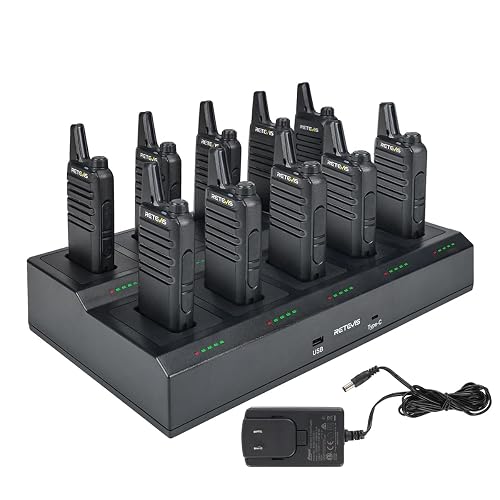
Retevis RT22 Compact Walkie Talkies Long Range (10 Pack)

DEWALT DXFRS800 FRS Walkie Talkies, 2W, IP67, 2 Pack
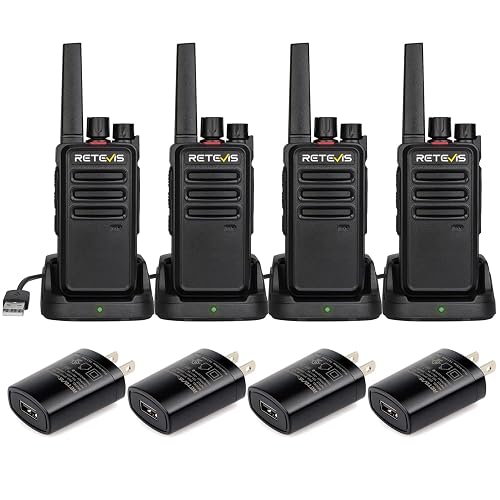
Retevis RT68 Walkie Talkies for Adults, FRS 4 Pack

pxton 999S Walkie Talkies Long Range with Headphones (4 Pack)

Retevis RT68 Adults Walkie Talkies, FRS 10 Pack

Retevis H-777S Walkie Talkies for Adults with Earpiece Mic
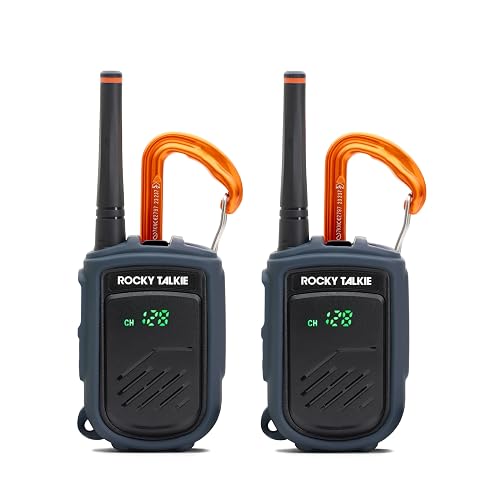
Rocky Talkie Mountain Radio Long Range FRS Handheld 2 Pack

Retevis H-777S Walkie Talkies Long Range FRS 6 Pack
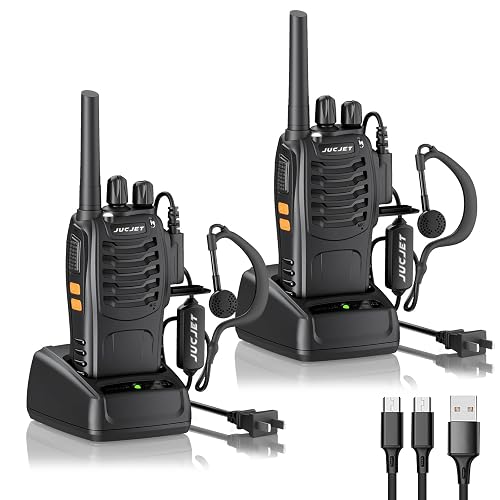
JUCJET H888S FRS Two Way Radios, 16CH, 2 Pack

Retevis RB48 Walkie Talkies, Heavy Duty Long Range
Meet The Standout Selections
The RT22 sits in the slim, pocket-friendly tier of FRS radios, and the ten-pack ships with a single multi-bay charging dock that handles every unit at once. Each radio clips to a belt or collar with the included back clip, and you remove that clip before sliding the radio into the dock to charge.
For a restaurant floor, a hotel housekeeping team, or any small business handing radios out at the start of a shift, this format keeps the storage closet tidy and the daily routine consistent. Compared with the bulkier H-777S units covered later, the RT22 is noticeably lighter in hand, though that comes at the cost of ruggedness.
What Stands Out
- Ten-unit charging dock with LED status indicators removes the cable clutter of ten separate adapters.
- Compact form factor slides into an apron pocket or clip-on holster without weighing you down.
- License-free FRS operation means zero paperwork, no FCC application, and no recurring fees.
- Back clip is removable for charging, which also lets you swap belt mounts if one style fails.
Trade-Offs To Weigh
- The slim housing is less drop-rated than the chunkier Retevis H-777S, so rough crews may wear through them faster.
- Removal of the back clip before every charge is a small step that gets missed in busy environments.
Key Specs
Whose Shelf It Belongs On
Small business owners outfitting a service team, hotel, or event crew who want a tidy charging station and radios light enough to wear for a full shift.
Where Another Pick Suits Better
For harsher environments where drops and dust are daily hazards, the Retevis H-777S offers a sturdier shell that holds up to rougher handling.
The DXFRS800 trades the friendly look of an entry-level radio for the chunky, gripped housing that construction pros expect. An IP67 rating means the radio survives full dust exposure and temporary water immersion, and the anti-slip shell stays put in a gloved hand.
DEWALT lists reach up to 300,000 square feet or 25 floors, which assumes an open commercial layout rather than a typical home. Twenty-two FRS channels paired with 121 privacy codes give you room to dodge interference from neighboring crews, and auto-squelch cleans up the constant background hiss you hear on crowded sites.
What Works In Its Favor
- IP67 sealing handles dust storms, sudden rain, and the occasional drop into standing water.
- Drop-rated housing survives falls up to two meters onto hard surfaces.
- 121 privacy codes across 22 channels keep cross-talk from neighboring teams to a minimum.
- Higher 2-watt output extends usable range across multi-floor buildings.
Things To Weigh Up
- Two-pack quantity is fine for a small crew but requires multiple purchases for larger teams.
- Heavier body weight causes fatigue during full-shift wear on a belt clip.
- Listed square-footage range assumes open commercial layouts and drops sharply in dense residential areas.
Who Should Grab It
Contractors, warehouse supervisors, and facility managers who need a radio that shrugs off dust, drops, and the occasional puddle without missing transmissions.
Swap It Out When
For pure backcountry durability with longer battery life in freezing temperatures, the Rocky Talkie Mountain Radio is the better companion.
The RT68 prioritizes simplicity: out of the box, you set a channel and start talking. The compact body fits both adult and child hands, which makes it a sensible choice for families who want kids to carry one on hikes or at crowded events.
Retevis built the enclosure to handle a one-meter drop onto hard ground without functional damage, which is enough margin for the average backyard or campsite. Penetration through walls and concrete is described as a strength, though real-world performance depends on building materials and intervening obstacles.
Good Reasons To Consider
- Truly out-of-box operation with no programming required.
- Drop-resistant enclosure handles the everyday fumble off a picnic table or car seat.
- Compact shell suits small hands, making it a family-friendly fit.
- License-free FRS keeps the setup fast and the cost predictable.
Worth Noting
- Range claims assume open terrain and shrink noticeably in dense urban or wooded areas.
- Battery life depends heavily on how often you transmit, so heavy talkers charge more often.
Best Suited To
Families introducing kids to radio communication for camping, theme park visits, or neighborhood play who want minimal setup steps.
Skip It When
Crew chiefs outfitting a larger workforce will find the four-pack limiting and should consider the Retevis RT68 ten-pack instead.
The pxton 999S operates on GMRS frequencies, which technically require an FCC license in the United States. If you hold a GMRS license, you can pair these radios with nearby repeater stations to push usable range far beyond what FRS allows.
Without a repeater, the radios still work in the standard simplex mode, and the four-pack ships with a flexible charging setup so you are not tethered to a proprietary dock. The included headphones make sense for anyone using the radios in a moderately noisy environment.
Advantages To Know
- GMRS repeater compatibility unlocks much greater range when a nearby repeater is in reach.
- Multiple charging options reduce dependence on a single dock.
- Included headphones support clearer audio in moderate background noise.
- Open-terrain performance is strong for rural properties and wide campsites.
Soft Spots
- GMRS operation requires an FCC license, which adds a paperwork step before you transmit.
- Repeater-dependent range means performance varies widely by geography.
Quick Facts
Right Fit For
Rural property owners and off-trail adventurers who already hold a GMRS license or plan to get one for repeater access.
Not Your Match When
If you want true grab-and-go with zero paperwork, the Retevis RT68 keeps things simpler on the FRS-only bands.
Think of this as the larger version of the four-pack RT68, sized for schools, daycare operations, and event staff who need multiple radios in rotation. The same rugged enclosure and license-free FRS operation carry over, with the drop-rated shell holding up to everyday bumps.
The compact body still fits in a coat pocket or lanyard, so distributing ten radios at the start of a shift is fast. Charging logistics scale up, though, and you will likely want a multi-bay dock or a stack of single cradles to manage the overnight cycle.
Everyday Advantages
- Ten radios cover an entire shift rotation from a single order.
- Drop-tested enclosure survives the typical classroom or retail floor mishap.
- Compact form factor suits both staff and volunteer users.
- Wall penetration handles typical interior walls and floors.
Trade-Offs To Weigh
- Charging ten units requires either a multi-bay dock or disciplined rotation through single chargers.
- Heavy simultaneous transmit use drains batteries faster than casual family use.
Feature Snapshot
Who Will Love This
Administrators at schools, churches, and event venues who need to equip a sizable team without managing individual radio purchases.
Look Elsewhere When
Crew leads in noisy industrial settings will get better clarity from the Retevis H-777S, which ships with acoustic tube earpieces.
The H-777S leans into durability and clear communication in noisy environments. A thickened plastic shell and reinforced antenna handle the kind of shock and vibration you find on active job sites or in event production.
The two-pin acoustic tube headset is the headline feature, since it routes audio directly into your ear and keeps conversations private. VOX (voice-activated transmission) frees your hands when you cannot press a push-to-talk button, which is helpful during loading, climbing, or scanning a crowd.
Useful Strengths
- Acoustic tube earpiece delivers clear audio in loud environments.
- VOX hands-free mode keeps your hands on the task at hand.
- Thickened shell and rugged antenna handle vibration and minor impacts.
- License-free FRS operation simplifies deployment for small teams.
Points To Note
- VOX sensitivity can trigger transmissions in very windy outdoor conditions.
- Earpiece hygiene matters when multiple users share the same acoustic tube.
Core Details
Perfect Match For
Security teams, retail floor leads, and event staff who need private, clear communication without holding a radio to their ear.
Consider Something Else When
For sheer drop and water resistance on a tough jobsite, the DEWALT DXFRS800 carries a stronger IP67 seal.
The Rocky Talkie Mountain Radio is built around the realities of multi-day trips: a specialized rechargeable lithium-ion battery that delivers over four days of life, even in cold conditions where standard batteries fade quickly.
Output is the legal maximum 2 watts for unlicensed FRS use, with a stated maximum range over 35 miles that drops to a more realistic 1 to 5 miles in real backcountry terrain. The shatterproof LED screen and reinforced body target the drops and scrapes that come with mountain use, and the waterproof hand mic option supports clearer calls in wet weather.
What It Does Well
- Four-day battery life holds up in freezing temperatures where ordinary radios quit early.
- Maximum-legal 2-watt FRS output covers typical backcountry communication distances.
- Shatterproof LED display and reinforced shell survive rough pack handling.
- Waterproof hand mic option supports clearer communication in rain or snow.
Honest Caveats
- Premium positioning means the two-pack costs more than most FRS starter bundles.
- Range in real mountain terrain falls well short of the optimistic 35-mile figure.
Technical Reference
Made For
Mountaineers, ski tourers, and multi-day backpackers who need reliable cold-weather battery life and durable construction.
A Better Fit Elsewhere
For indoor crews and event teams, the multi-pack Retevis RT22 gives you more units per dollar with easier charging logistics.
This six-pack version of the H-777S bridges the gap between the smaller retail-friendly bundles and the larger ten-packs. A six-bay gang charger sits at the heart of the kit, charging all six radios or their batteries at once from a single outlet.
The same rugged material and reinforced antenna from the two-pack carry over, so you still get solid construction for schools, hotels, and small event venues. For most mid-sized operations, six radios hits the sweet spot of having spares without inflating the fleet.
The Good Stuff
- Six-bay charger saves space and avoids the clutter of multiple adapters.
- Rugged material handles vibration and shock in active environments.
- License-free FRS operation streamlines deployment for staff.
- Mid-size pack covers typical team needs with room for spares.
Trade-Offs To Weigh
- Without the earpieces of the two-pack H-777S, noisy environments are harder to manage out of the box.
- Six units may leave larger crews short during peak shifts.
Best Suited To
Hotels, mid-sized event crews, and church or daycare operations that need a tidy six-unit charging station and durable radios.
Reach For A Different Pick When
For noisy retail or security work, the two-pack H-777S with earpieces delivers better out-of-box audio clarity.
The H888S keeps the feature set family-friendly and useful: 16 FRS channels for quick coordination, VOX hands-free operation, a built-in LED flashlight, and an emergency alarm for added peace of mind on the trail or at a campsite.
Channel scan helps locate active signals if you forget which channel your group picked, and the included earpieces offer clearer audio in moderate noise. The two-pack is sized for a couple, a parent-and-child pair, or a small friend group heading out together.
The Case For It
- VOX hands-free and channel scan simplify use for casual and family operators.
- Built-in LED flashlight and emergency alarm add practical safety features.
- 16 channels give you enough room to avoid busy local frequencies.
- Included earpieces improve clarity over the stock speaker.
Points To Keep In Mind
- Range is typical for unlicensed FRS and falls off in dense urban areas.
- Two-pack limits you if your group grows beyond a pair.
Who Should Grab It
Couples and small families heading into camping, hiking, or road trip situations who want practical extras like a flashlight and emergency alarm.
Where Another Pick Suits Better
For multi-day cold-weather trips, the Rocky Talkie Mountain Radio offers much longer battery life and tougher construction.
The RB48 is the most demanding radio in this lineup, certified to MIL-STD-810H, which is the military benchmark for testing equipment under extreme conditions. Retevis lists 19 individual tests covering temperature shock, rain, salt fog, humidity, sand, dust, vibration, shock, and water immersion.
For someone working in genuinely harsh environments, from offshore platforms to desert operations to arctic job sites, that certification is meaningful insurance. The radio still operates on license-free FRS frequencies, so you skip the FCC paperwork even at this rugged tier.
The Helpful Details
- MIL-STD-810H certification covers temperature, water, dust, vibration, and shock.
- True rugged option for the harshest deployment environments.
- License-free FRS operation keeps deployment simple.
- Heavy-duty construction justifies the price for professional use.
Less Ideal Details
- Premium build pushes the cost above casual or family-oriented radios.
- Heavier body weight can cause fatigue during full-shift belt-clip wear.
Feature Rundown
Built With In Mind
Industrial crews, search and rescue volunteers, and field service technicians who operate in environments where ordinary radios would fail.
Where A Sibling Pick Shines
For lighter-duty family and team use without the rugged premium, the Retevis RT68 four-pack covers the basics at a friendlier price.
What To Weigh Before Choosing Your Radio
Range vs. Real-World Obstacles
Stated range numbers assume open terrain with no obstructions, which rarely matches your actual environment. Walls, trees, hills, and even heavy foliage cut usable distance sharply, so a radio that claims 30 miles may realistically deliver 1 to 5 miles in wooded or urban settings. Match the radio to your terrain rather than chasing the biggest headline number.
Power, Licensing, and Frequency Bands
FRS radios run at a fixed 2-watt ceiling and require no license in the United States, which is the simplest path. GMRS radios allow higher power and repeater use, but require an FCC license and a short application process. If you want zero paperwork and predictable operation, stay on FRS. If you need repeater-boosted range in rural areas, GMRS earns the extra step.
Battery Life and Charging Logistics
Single-charge batteries suit casual weekend use, while multi-day trips or rotating shifts demand higher-capacity packs and gang chargers. Lithium-ion cells hold up better in cold weather than standard chemistries, which matters for outdoor and winter use. Plan your charging dock or cable setup before buying, especially with larger multi-packs.
Durability and Environmental Sealing
An IP67 rating handles dust and temporary water immersion, while MIL-STD-810H certification indicates testing against a wider set of environmental stresses. Indoor teams rarely need either, but construction, marine, and backcountry users benefit from both. Drop ratings also vary, and a one-meter free-fall spec is the minimum for handheld abuse.
Key Considerations Across These Picks
Pitfalls Shoppers Hit
The biggest mistake is trusting headline range numbers without testing in your actual environment, since real-world obstacles cut distance dramatically. Another common slip is buying a GMRS radio and expecting repeater performance without ever confirming a repeater is nearby. Skipping battery and charging planning leaves you with dead radios mid-shift, especially with multi-packs where overnight dock space matters.
Where The Extra Money Goes
Premium tiers typically invest in tougher housings, MIL-spec certifications, longer-lasting cold-weather batteries, and higher-grade antennas. You pay more for radios that survive drops, immersion, salt fog, and temperature extremes that would destroy an entry-level unit. The upgrade pays off when your environment actually exposes those stresses, and it does not when you only need basic communication in mild conditions.
Frequently Asked Questions
Do FRS walkie talkies really work without a license?
Yes. FRS radios operate on fixed frequencies at a maximum of 2 watts and require no FCC license for personal or business use in the United States.
How far can license-free walkie talkies actually reach?
In open terrain, quality FRS radios can reach several miles, but dense urban or wooded environments typically reduce usable range to under a mile. Terrain and obstacles matter more than advertised maximums.
Can different brands of FRS radios talk to each other?
Yes, as long as they share the same FRS channel and privacy code setting, since FRS channel numbers are standardized across brands.
What is the difference between FRS and GMRS radios?
FRS caps output at 2 watts and requires no license, while GMRS allows higher power and repeater use but requires an FCC license.
Are license-free radios suitable for business use?
Yes, FRS radios are commonly used by restaurants, retail teams, hotels, schools, and event crews for short-range coordination without recurring service fees.
The Takeaway
The right pick depends on where and how you plan to use your radios, since a backcountry skier and a hotel manager need very different things. Match the radio’s strengths to your real environment, whether that means a slim multi-pack with a tidy dock or a MIL-spec unit built for harsh weather. Start with the use case and let the rest of the decision follow from there.