
Whether you’re a weekend hiker wanting more from your trail time, a desk worker trying to slip conditioning into a long commute, or a GORUCK-style athlete chasing a faster mile with weight on your back, rucking turns a simple walk into something more demanding. The catch is that not every backpack handles a plate correctly, and a poorly loaded bag can shift weight to your shoulders, ruin your posture, and shorten your ruck long before you’ve burned the calories you came for.
This guide walks through ten packs and the matching plates, vests, and starter kits worth considering. Some are purpose-built for rucking with weight plates, others are tactical packs that adapt well when loaded heavy. Each pick comes with an honest look at strengths and trade-offs so you can match the right rig to your training.
A Side-By-Side Look

Polyfit Rucking Backpack 2.0 Side-Loading Ruck Pack

Polyfit Rucking Weight Plate 10×12 Cast Iron

Polyfit Fortify Weighted Vest for Men & Women
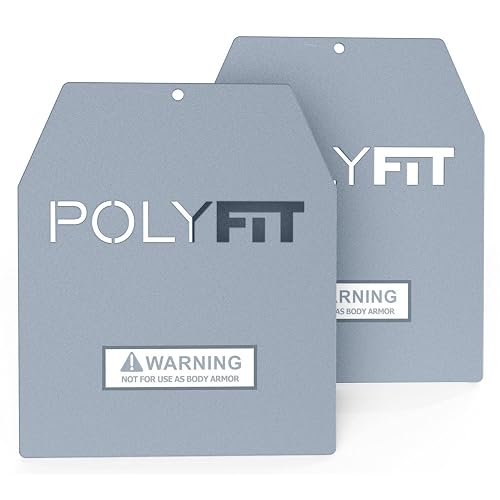
Polyfit Weight Vest Plates for Strength Training
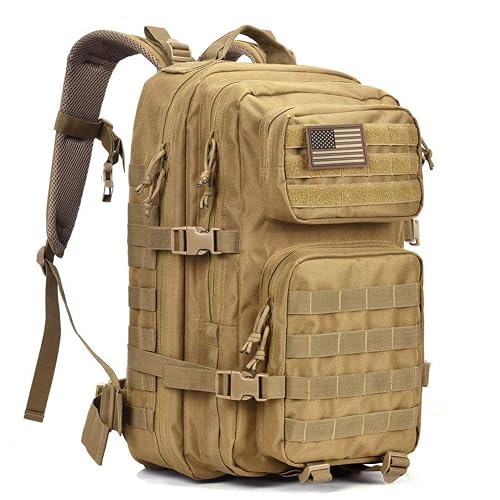
REEBOW GEAR Military Tactical 3 Day Assault Pack 40L

ProCase Tactical Backpack 42L Large Rucksack

REEBOW GEAR Tactical Backpack 3 Day Assault Pack 35L
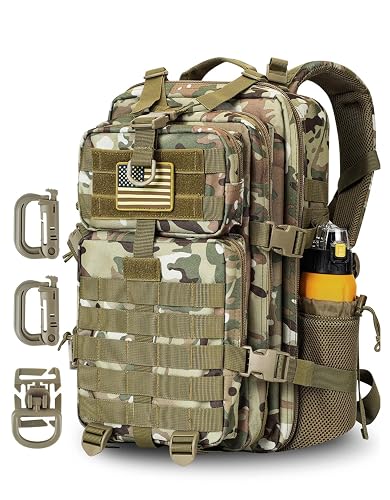
Hannibal Tactical 30L MOLLE Assault Pack

QT&QY 45L Military Tactical Backpack Molle Assault
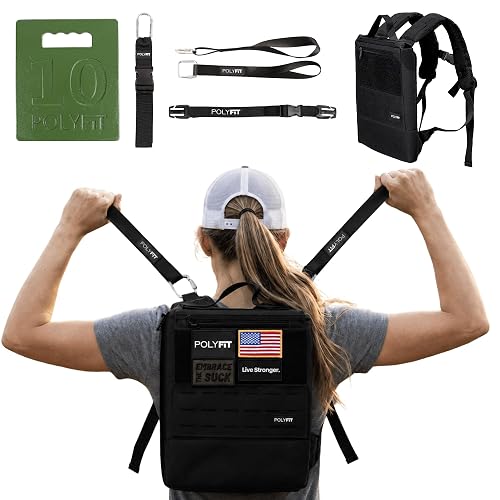
Polyfit Rucking Starter Kit with 10 lb Plate
What Each Pick Brings To The Table
If you take rucking seriously, a regular daypack fights you the whole way. The Polyfit Rucking Backpack 2.0 sidesteps that problem with a side-loading design (plates slide in through a dedicated opening) that places weight against your upper back, where your frame handles load far better than a top-heavy school-style pack.
This pack earns its place at the top for anyone who already owns or plans to buy standard 10 by 12 inch plates. If you commute a few miles a day or train on a measured loop, you’ll feel the difference between this and the tactical picks further down the list, which often treat the plate like an afterthought rather than the whole reason for the bag.
Strengths Worth Knowing
- Side-loading plate sleeve keeps weight close to the upper back, reducing forward lean.
- Accepts 10 by 12 inch cast iron plates and most ruck-compatible plates up to that footprint.
- Up to 40 lb load rating, which suits most structured ruck workouts.
- Designed specifically for plate work, so the shoulder straps sit where rucking load wants them.
Things To Consider
- Plates are sold separately, so your total cost climbs once you add a plate or two.
- Smaller-volume interior means it isn’t a substitute for a multi-day pack or range bag.
Key Specs
Who It Suits Best
Dedicated ruckers who want a pack engineered around plate work rather than adapted from a hiking bag.
Consider Something Else When
Step up to the Polyfit Rucking Starter Kit (item 10) for a first-time setup that includes a plate and straps in the same box.
A rucking pack is only as useful as the plate inside it. The Polyfit Rucking Weight Plate is a 10 by 12 inch cast iron slab sized specifically to slide into compatible ruck sleeves rather than gym barbells. You load it, you zip up, and you’re walking with real iron.
This is the plate to choose when you want a single, durable loading solution that drops cleanly into the Polyfit pack above (item 1) and a wide range of other 10 by 12 compatible bags. It earns its slot as the most “set-and-forget” plate in the lineup.
Good Reasons To Consider
- 10 x 12 inch footprint fits Polyfit packs and a wide range of ruck sleeves.
- Cast iron construction handles repeated loading without flexing or rattling.
- Single-plate format makes progressive overload simple; buy another when you outgrow the weight.
- Works for general strength training outside of rucking if you ever need a flat plate.
Worth Noting
- Cast iron is heavy to ship and store, so plan where it will live between rucks.
- Single-plate buy means stepping up requires buying a second unit later on.
Right Fit For
Ruckers who want a clean, no-fuss cast iron solution for a Polyfit-style plate sleeve.
Look Elsewhere When
Pick the Polyfit Fortify Weighted Vest (item 3) if you want the load hugging your torso for runs and calisthenics rather than bouncing on your back.
A vest puts the load where your body likes it: hugging the torso rather than swinging off your shoulders. The Polyfit Fortify Weighted Vest holds two plates, one front, one back, for balanced distribution during push-ups, pull-ups, and tempo runs.
Where the rucking pack above (item 1) shines on long walks, this vest shines on bodyweight sessions where a swinging pack would throw off your balance. If you cross-train with calisthenics or want to add load to a 5K without changing your gait much, the Fortify fills a gap the plate-style packs cannot.
Positive Points
- Front and rear plate pockets keep weight centered, which is friendlier for push-ups and sprints.
- Up to 40 lb total capacity (20 lb per side) covers most weighted-vest workouts.
- Fits plates up to 13 x 11 inches, including Polyfit plates and many standard vest plates.
- Adjustable fit works for a range of body types without dedicated men’s and women’s cuts.
Room For Improvement
- Plates are sold separately, so cost climbs fast when you fill both pockets.
- Less suited for very long walks, where a pack usually wins on hip-belt support.
Whose Shelf It Belongs On
Calisthenics athletes and runners who want load close to the core rather than perched high on the back.
Reach For A Different Pick When
Choose the Polyfit Weight Vest Plates (item 4) to fill this vest with progressive loads as your strength builds.
Vest plates only matter if they let you step load up over time. The Polyfit Weight Vest Plates are sold in pairs ranging from 4 lb up to 19 lb each, so you can build a 10, 14, 20, 30, or 40 lb vest configuration by stacking pairs.
For someone who already owns the Polyfit Fortify vest from item 3, these are the missing pieces. For someone who owns a different weighted vest, the size compatibility is the first thing to check, because not every vest accepts this footprint.
Why It Works Well
- Multiple weight options let you progress from light conditioning to heavier strength sessions.
- Pair format keeps loading balanced front to back.
- Designed to fit the Polyfit Fortify vest and many other standard weighted vests.
Trade Offs
- Stepping weight up means buying another pair, not adjusting a single plate.
- Buyers with non-Polyfit vests should confirm pocket dimensions before committing.
Best Suited To
Lifters who already own a weighted vest and want clean, progressive load jumps.
A Better Fit Elsewhere
Choose the Polyfit Fortify Weighted Vest (item 3) if you don’t yet own a vest and need the carrier itself.
Tactical packs weren’t designed for rucking, but the REEBOW GEAR 3 Day Assault Pack ends up there anyway because it holds weight, swallows gear, and takes abuse. With roughly 40L of capacity, a 600 by 600 density fabric shell, and MOLLE webbing across the outside, it’s the bag you grab when rucking is one task in a longer day.
Compared with the Polyfit pack in item 1, this one isn’t plate-shaped out of the box. You load it with a weight plate, sandbag, or dense gear and adjust accordingly. For a rucker who also hikes, hunts, or trains in the field, that flexibility is the whole point.
Reasons It Performs
- 40L capacity fits a plate plus spare layers, water, and kit.
- MOLLE webbing across the bag lets you strap extra pouches when needed.
- Water-resistant 600 x 600 density fabric handles rain and brush.
- Approximate 13 x 20 x 11 inch frame carries heavy loads without collapsing flat.
Honest Caveats
- Not plate-shaped, so loading a single weight plate takes some creative packing.
- Heavier empty weight than a purpose-built ruck pack, which adds fatigue on longer walks.
Feature Snapshot
Who Will Love This
Long-range ruckers and field-oriented athletes who want one pack for plate work and overnight use.
Where Another Pick Suits Better
Step up to the Polyfit Rucking Backpack 2.0 (item 1) when rucking is the only job the bag has to do.
The ProCase Tactical Backpack pushes 42L into a budget-friendly shell, which makes it appealing for ruckers who don’t want to spend on a niche rucking bag. The build leans on double-stitched seams, heavy-duty zippers, and a mesh-padded back panel to keep the load comfortable when fully loaded.
Versus the REEBOW GEAR 40L pack in item 5, the ProCase adds a touch of volume and a structured compression system to keep the load tight. That’s the practical difference for a rucker: a tightly compressed bag walks cleaner than a loose one.
Positive Takeaways
- 42L volume handles plate work plus overnight kit.
- Compression system tightens the load so plates don’t shift mid-ruck.
- Mesh-padded back panel helps when you’re walking under load in warm weather.
- Heavy-duty zippers hold up to repeated stuffing and unstuffing.
Points To Keep In Mind
- Heavier empty weight than minimalist packs, so smaller ruckers may feel it on day one.
- Less plate-specific than the Polyfit pack in item 1.
Made For
Shoppers who want a budget-friendly tactical pack that can be pressed into rucking service.
Skip It When
Choose the Hannibal Tactical 30L pack (item 8) if you’d rather carry less bulk on shorter, faster rucks.
The 35L REEBOW GEAR pack is the middle sibling between the larger 40L pack in item 5 and the more compact 30L pick in item 8. That mid-range size makes it the most balanced option for daily ruck commutes where you want capacity for a plate, a layer, and water, without the bulk of a multi-day bag.
It uses the same 600 x 600 density fabric, double-stitched seams, and heavy-duty zippers as its bigger brother, so build quality isn’t the place it cuts corners. Where it differs is footprint, and footprint matters more than people expect for rucking comfort.
Everyday Advantages
- 35L is a practical size for a daily ruck with plate plus essentials.
- MOLLE webbing supports extra pouches or modular add-ons.
- Water-resistant fabric handles drizzle and trail dust.
- Utility cord pulls on zippers are glove-friendly in cold weather.
Less Ideal Details
- Not plate-shaped; plates sit mid-pack rather than hugging your upper back.
- 35L can feel large on shorter frames once a plate is loaded.
The Right Fit
Daily ruck commuters who want a tactical pack that handles a plate without feeling oversized.
Another Choice May Suit
Reach for the ProCase 42L pack (item 6) when overnight capacity matters more than compactness.
Some ruckers would rather skip the bulk. The Hannibal Tactical 30L pack trims the assault-pack format down to roughly 9.8 by 15.7 by 10.2 inches, which is a friendlier size for tempo rucks and shorter conditioning sessions. The side bottle holder is a small but useful touch on hot pavement.
Versus the bigger tactical packs above, this one rewards a faster pace. Versus the dedicated Polyfit rucking pack in item 1, it loses some plate-specific posture but gains everyday usability. Trade-offs are the name of the game here.
Features That Help
- 30L size suits faster, shorter rucks where bulk slows you down.
- Side pocket holds a water bottle or radio without占用 main compartment.
- High-density water-resistant fabric tolerates daily wear.
- MOLLE webbing keeps expansion options open.
Practical Considerations
- Smaller volume means less room for layers and overnight kit.
- Plate sits mid-pack; not engineered for upper-back placement.
Built With In Mind
Faster-paced ruckers and shorter-distance trainees who value compactness over capacity.
Swap It Out When
Choose the REEBOW GEAR 35L pack (item 7) if you want a touch more volume without jumping all the way to 40L or 45L.
If you’re the rucker who treats every outing as a chance to also carry extra water, layers, and “just in case” kit, the QT&QY 45L pack answers that habit with room to spare. At roughly 18 by 13.2 by 11.6 inches, it’s the biggest pack on this list, and it’s also the most obvious choice for anyone who wants one bag for plate rucks, bug-out prep, and weekend overlanding.
For pure rucking comfort, bigger isn’t always better. The Polyfit pack in item 1 still wins on plate placement. But for a single bag that handles multiple roles, this size makes a strong case.
Standout Benefits
- 45L fits a plate plus multi-day clothing and supplies.
- Layered interior compartments help separate clean layers from a heavy plate.
- MOLLE exterior lets you expand further if 45L still isn’t enough.
- Large enough to double as a bug-out or range bag.
Trade-Offs To Consider
- 45L feels oversized on short urban rucks.
- Empty weight is higher than smaller packs, so shorter walkers may want to size down.
Perfect Match For
Multi-day packers and prep-minded ruckers who want one bag for several roles.
Not Your Match When
Pick the Hannibal Tactical 30L pack (item 8) for shorter, faster rucks where compactness matters.
Most beginners don’t want to research five products before their first ruck. The Polyfit Rucking Starter Kit answers that by bundling the Rucking Backpack 2.0 from item 1, a 10 lb weight plate, a detachable sternum strap, removable rucking straps, and a reinforced hang loop for storage into one box. You open it, fill it, and walk.
For first-timers, this removes the guesswork around plate sizing and strap fit. For seasoned ruckers, the kit is also a clean way to set up a partner or family member who keeps asking why you’re walking with a loaded backpack.
Bright Spots
- Plate included, so you skip the research on which plate fits.
- Removable rucking straps add load support for longer distances.
- Hang loop makes storing the loaded pack between sessions easy on a door or hook.
- Same side-loading backpack design as item 1.
Honest Caveats
- 10 lb plate is light, so experienced ruckers will want to add a second plate soon.
- Bundled convenience usually costs more than buying the pack and plate separately, which is worth weighing.
Who Should Grab It
First-time ruckers who want a complete, ready-to-walk setup without researching each piece.
Consider Something Else When
Pick the Polyfit Rucking Backpack 2.0 (item 1) alone when you already own a compatible plate and just need the carrier.
Picking The Right Rucking Rig For Your Training
Match The Pack To The Plate, Not The Other Way Around
Plate compatibility is the first thing to settle before anything else. Rucking plates come in a standard 10 by 12 inch footprint, and a plate that doesn’t slide cleanly into a sleeve sits awkwardly mid-pack, which shifts your center of gravity and undoes the whole point of the exercise. If you’ve already invested in a specific plate, choose a pack with a matching sleeve; if you’re starting fresh, the Polyfit Rucking Backpack 2.0 and its matching plate are sized to work together without surprises.
Volume, Fit, And Load Together
A 40 to 45L tactical pack looks generous on paper and oversized on a 5’4″ frame under a 30 lb load. Before you commit, picture the bag fully loaded: where does the plate sit, how does the hip belt (or lack of one) handle the weight, and does the bag compress enough to keep the load from bouncing? Bigger isn’t automatically better, and a tightly compressed 30L often walks cleaner than a loose 45L.
Purpose-Built Versus Tactical
Purpose-built rucking packs like the Polyfit Backpack 2.0 put weight against your upper back, where posture stays cleaner over miles. Tactical packs trade some of that for capacity, MOLLE expansion, and weather-resistant shells. Ruckers who treat every outing as a multi-role mission will lean tactical; ruckers who want one job done well will lean purpose-built.
Vest Or Pack
A weighted vest hugs the torso and stays out of the way during calisthenics, sprints, and bodyweight circuits. A pack shifts load to the back and shoulders, which is fine for walking and hiking but awkward during push-ups. Many ruckers end up owning both, and the decision usually comes down to which movement pattern you’ll do more often.
Key Considerations Across These Picks
Common Shopping Slip Ups
The most common mistake is buying a tactical bag and assuming it will ruck well just because it’s large. Capacity isn’t the same as plate compatibility, and a plate floating mid-pack feels nothing like a plate seated against your upper back. The second most common slip is buying a single plate and expecting to scale up later; matching pairs (like the Polyfit Weight Vest Plates) make progressive overload cleaner than mixing sizes. Finally, ignoring strap geometry is a quiet mistake that shows up three miles in, when a thin shoulder strap starts digging into a collarbone.
Where The Extra Money Goes
Higher-tier rucking gear usually buys three things: a dedicated plate sleeve, better load distribution along the hip belt and sternum strap, and stronger stitching at the seams where weight stress concentrates. Those upgrades show up most clearly on long rucks and heavier loads. For ruckers who train under 20 lb and stick to short walks, the budget tier handles the work fine. For anyone pushing toward event-style training with 30 to 40 lb plates over multi-mile loops, the premium tier earns its keep in comfort and durability, mile after mile.
Frequently Asked Questions
How heavy should a rucking pack be for a beginner?
Most beginners start somewhere between 10 and 20 lb, including the pack itself. A 10 lb plate in a starter kit is a sensible first step because it lets you walk several miles with form intact before adding weight.
Can any backpack be used for rucking?
Technically yes, practically no. A regular daypack loads weight high and loose, which throws off posture. Purpose-built rucking packs and plate-compatible tactical packs hold weight low and tight, which is the whole point of the exercise.
Is a weighted vest better than a rucking pack?
Neither is better across the board. A vest wins for calisthenics, sprints, and short conditioning because the load stays close to your center of mass. A pack wins for walking, hiking, and longer distances because the load sits on your hips and frame rather than your shoulders and chest.
How often should you ruck per week?
Most beginners do well with two or three sessions per week, leaving room for recovery. As fitness builds, you can add a fourth session or extend distance before adding plate weight, which keeps joints happier than aggressive weight jumps.
Do you need special shoes for rucking?
Sturdy footwear with a stable heel and decent cushioning helps, especially once you cross the 25 to 30 lb mark. You don’t need specialty boots to start, but trail-oriented shoes tend to outlast road runners once plate weight climbs.
The Takeaway
Rucking gear works best when the plate, pack, and straps form a single system rather than three separate purchases. Match the plate footprint to the pack sleeve, decide whether your training leans vest or pack, and choose volume based on how long and how often you’ll carry. The ten picks above cover the main paths from first-mile beginner to multi-day rucker, so trust the profile that sounds most like your training week and build from there.