
A good hiking pack quietly disappears on your shoulders. A bad one turns every mile into negotiation. The difference usually comes down to fit, ventilation, and how the load sits once water, layers, and lunch get thrown in. This roundup covers seven technical backpacks built to carry real gear over real terrain, from weekend loops to week-long hauls.
You’ll find options from the established names that dominate the trailhead parking lot, plus a few smaller tactical-leaning packs that pull double duty for commuting and shorter days out. Each one earns its slot for a specific reason, so it’s less about chasing a single winner and more about matching the carry to your trips.
Your Options, Compared
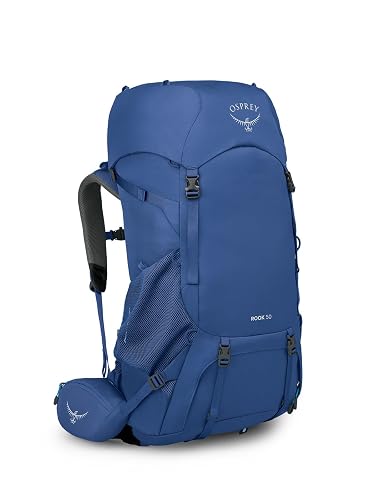
Osprey Rook 50L Men’s Backpacking Backpack (Blue)
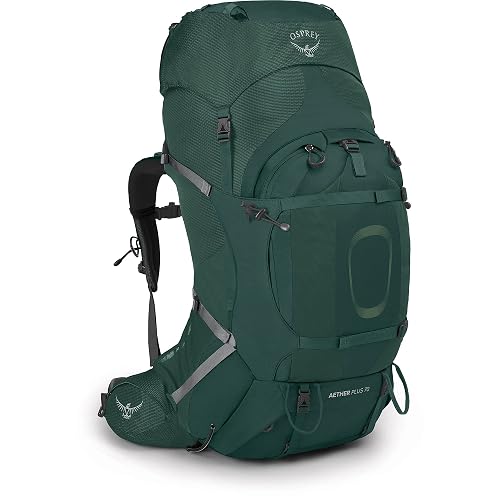
Osprey Aether Plus 70L Men’s Backpacking Backpack (Green)
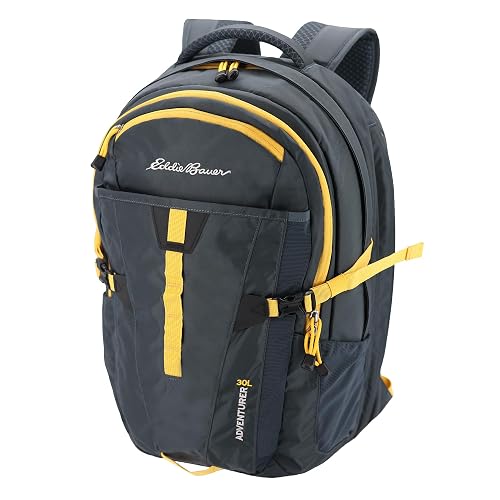
Eddie Bauer Adventurer Backpack 30L (Storm)
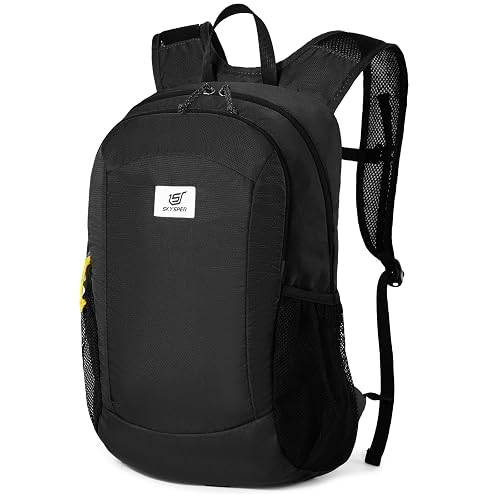
SKYSPER Packable RFID Hiking Daypack 16L
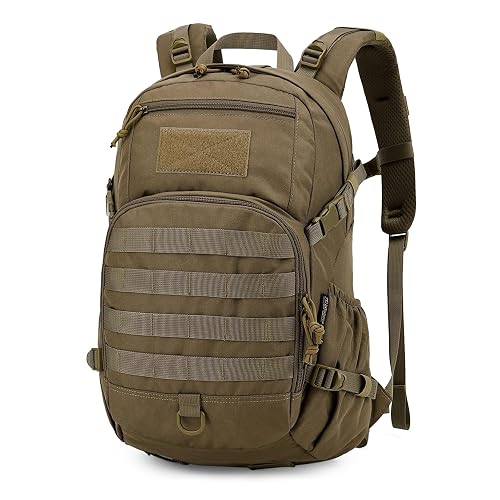
Mardingtop 15L/25L Tactical Hiking Backpack (Molle)

Mardingtop 15L Tactical Molle Sling Bag
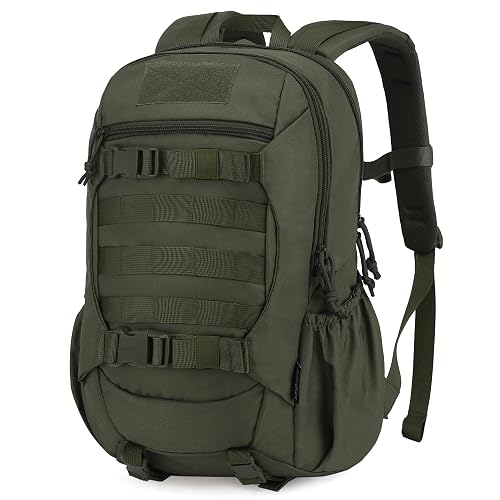
Mardingtop 18L Tactical Molle EDC Backpack
The Picks, Examined More Closely
The Osprey Rook 50L is the pack you hand someone heading out for their first overnight without much hand-holding. The 50-liter capacity swallows a weekend of food, layers, and shelter without leaving space for overpacking regret. An injection-molded ladder lock torso system dials in the back length, so two friends borrowing it before a trip won’t fight over a bad fit.
Osprey’s AirSpeed suspension (a mesh tensioned back panel that promotes airflow between pack and body) keeps the sweaty-back syndrome under control on warm climbs, and an integrated raincover means you’re not scrambling to buy one mid-trip. The bluesign certification signals the fabric and treatments meet stricter environmental standards, a quiet plus for anyone who reads labels.
Where It Helps
- Torso adjustment is intuitive, so a first-time owner can dial in fit in a few minutes rather than a frustrating afternoon.
- 50 liters covers most two- to three-night trips with room for a shared tent or extra food.
- Built-in raincover removes one accessory from your shopping list.
- AirSpeed back panel keeps airflow moving on warm-weather climbs.
Things To Consider
- At 50 liters, the Rook sits in a middle ground that can feel either roomy for day hikes or tight for longer hauls compared to the Aether Plus 70.
- The included raincover is sized to the pack, so owners usually don’t need to size up, but it’s worth keeping dry before stuffing it back.
Who Will Love This
First-time backpackers and weekend warriors who want a forgiving pack that doesn’t punish a slightly off center of gravity.
Where Another Pick Suits Better
The Osprey Aether Plus 70L is the smarter call for thru-hikers and anyone carrying a full week of food and fuel.
The Aether Plus 70 is the long-haul sibling to the Rook, and it shows up when the trip gets serious. The 70-liter volume comfortably swallows a week of food, cold-weather layers, and group cooking gear without forcing you to strap things awkwardly to the outside. Osprey’s Custom Fit-on-the-Fly hipbelt and shoulder straps adjust on the move, which matters when the load shifts between water-heavy and food-heavy days.
The removable top lid converts to a small daypack for side hikes from basecamp, a feature that quietly saves you from hauling the big pack up every side ridge. Like the Rook, it ships with a built-in raincover. The suspension is built to keep 40-plus pounds stable rather than fighting you, which is the difference between a pack you carry and a pack that carries you.
Useful Touches
- Fit-on-the-Fly system lets you micro-tune the hipbelt without removing the pack.
- Detachable lid doubles as a summit or camp daypack.
- 70-liter volume handles bear canisters, four-season tents, and group cook kits.
Honest Caveats
- For short day hikes, the harness and frame are overkill and the empty weight is noticeable.
- Size and frame stiffness make it less suitable for users under a certain torso range, so checking the S/M fit is important before committing.
Key Product Details
Perfect Match For
Thru-hikers, week-long backpackers, and gear-hauling trip leaders who carry above 35 pounds regularly.
Skip It When
The Eddie Bauer Adventurer 30L is a friendlier everyday carry for trail-to-office routines under 30 liters.
Where the Osprey pair leans wilderness, the Eddie Bauer Adventurer 30L is the hybrid you grab for Saturday trail work and Monday morning meetings. The 420D fabric (a mid-weight denier nylon that balances abrasion resistance and weight) has a water-repellent finish that shrugs off light rain long enough to get to cover, and a cooling back panel keeps airflow moving when you’re hustling between subway and trailhead.
Four fleece-lined pockets protect sunglasses, tablets, and a laptop, which sounds minor until you’ve watched a screen scratch on a bus ride. The hydration/laptop compatible sleeve is a smart dual-use: pop a reservoir in for a hike, then drop the laptop back in for the commute home. It’s the most versatile pack in this roundup for someone whose trail time and work time overlap.
Strong Points
- 420D fabric with water-repellent finish handles drizzles and accidental drops without drama.
- Fleece-lined pockets keep screens and lenses scratch-free during transit.
- 30 liters works for day hikes, gym gear, and laptop commutes.
- Cooling back panel adds real comfort on warm hikes compared to flat foam panels.
Where It May Fall Short
- 30 liters can’t cover overnight gear; weekend trips will need the bigger Osprey packs.
- Water-repellent finish helps in showers but isn’t a substitute for a rain cover in sustained downpours.
Made For
Hybrid users who walk from apartment to trailhead to office in a single day, plus day-hikers who carry electronics.
A Better Fit Elsewhere
The Osprey Rook 50L is the upgrade path for anyone adding overnight trips to the calendar.
Packable daypacks solve a specific problem: your main luggage is full, and you still need something to carry on a day hike in Rome. The SKYSPER 16L stuffs into its own pocket, which is the kind of feature you stop underestimating the first time you watch it disappear into a carry-on. At 16 liters, it covers water, snacks, a layer, and a camera without becoming a haul-everything bag.
The shielded security pocket blocks 13.56MHz and 125kHz RFID scanners (the frequencies used by most contactless credit cards and passports), which is genuine peace of mind in airports, metros, and crowded markets. Lightweight ripstop nylon is what you trade away here, and that’s fair: this isn’t a pack built for bushwhacking, it’s built for a walk from the train station to the trailhead.
The Value In It
- Compresses into its own pocket for stashing in luggage and day bags.
- RFID-shielded pocket protects cards and passports in crowded spaces.
- 16-liter capacity is just right for water, snacks, and a light layer.
Small Caveats
- Lightweight nylon isn’t built for abrasive brush or sharp rock edges.
- No internal frame, so heavier loads sit awkwardly without support.
Best Suited To
Travelers and city-based day-trippers who want a backup pack that disappears in luggage until needed.
Consider Something Else When
The Mardingtop 15L Tactical Molle Sling Bag offers more structure and modular carry for users who want a small pack with a real harness.
Mardingtop’s tactical daypack leans into the modular side of hiking. The Molle webbing (rows of stitched nylon loops that let you clip on compatible pouches and accessories) lets you bolt on extra pouches for a bike ride, then strip it down for a quick trail lap. Available in 15L and 25L versions, the same chassis covers everything from a city commute to a half-day summit push.
The breathable air mesh back panel reduces the sauna effect on warm rides and hikes, while reflective strips and a sternum-strap whistle (a small plastic whistle built into the chest buckle) cover the safety basics for low-light cycling or early starts. It pulls triple duty as a hiking pack, running pack, and cycling bag without committing to a single use case.
Advantages To Know
- Molle webbing accepts add-on pouches for tools, water, and electronics.
- Available in 15L and 25L sizes to match different trip lengths.
- Reflective strips and a built-in whistle add safety for low-light use.
Points To Keep In Mind
- The tactical aesthetic isn’t for everyone, and the Molle straps can catch on branches in tight brush.
- Smaller 15L version gets tight if you carry a laptop alongside hiking gear.
Right Fit For
Commuter cyclists, urban hikers, and anyone who wants one pack to shift between bike and trail.
Look Elsewhere When
Long wilderness hikers should move up to the Osprey Aether Plus 70L for load-hauling support.
Where the previous Mardingtop is a hybrid, this 15L sling bag is the most adaptable carry on the list. Detachable shoulder straps let the same bag switch between a backpack, sling, crossbody, chest pack, or hand carry depending on the moment. At 9.5 x 7.1 x 16.9 inches and around 0.88 kg, it stays out of the way whether you’re riding a motorcycle or walking a museum.
The 600D polyester body (a heavier denier fabric that resists scuffs) holds up to daily use, and YKK buckles and zippers (a well-known hardware maker that often signals longer hardware life) tend to outlast generic hardware by a margin. Think of this as the pack for short missions where you want options rather than a single carry style.
Features That Help
- Five carry modes from one bag, depending on what the day demands.
- 600D polyester resists scuffs and rough handling.
- Compact dimensions fit easily under airplane seats.
Trade Offs
- 15L is small enough that packing for hiking still requires ruthless editing.
- Without a hipbelt, full loads pull on one shoulder when used as a sling for long stretches.
Who Should Grab It
City dwellers, motorcyclists, and short-distance hikers who want one bag that adapts to the moment.
Reach For A Different Pick When
The Mardingtop 18L Tactical Molle EDC Backpack is the better fit for users who want a hydration sleeve.
The 18L sits in the sweet spot for riders and trail users who want tactical features without the bulk of a 25L pack. The hydration compartment is sized for a 2-liter bladder, with a hose port at the top so you can route a drinking tube without zipping the bag open (bladder sold separately, a small thing to remember). At 9.5 x 6.7 x 17.7 inches, it tucks behind a motorcycle seat or rides comfortably on a half-day hike.
Ventilated padding on the back and shoulder straps prevents the clammy feel that cheaper packs develop in summer. The 600D polyester shell and YKK hardware build on the same formula as the 15L sling, so durability expectations are similar. For an EDC-plus-trail pack, this is a balanced middle option in the Mardingtop lineup.
A Few Strong Suits
- Hydration compartment fits a 2L bladder with a routed drinking tube.
- 600D shell and YKK hardware handle daily commute and trail use.
- Ventilated padding on the back panel adds comfort on warm days.
Less-Strong Areas
- 18L is generous for EDC but tight for trail users carrying a packed lunch and extra layers.
- Hydration bladder is sold separately, adding a small extra purchase.
Quick Facts
Whose Shelf It Belongs On
Motorcyclists, EDC users, and trail-day hikers who want a tough compact pack with hydration support.
Swap It Out When
Day-hikers needing more volume and weather protection should consider the Eddie Bauer Adventurer 30L.
Getting The Right Fit Out Of Any Hiking Pack
Torso Length Beats Capacity Every Time
A pack’s liter rating only tells you how much stuff fits inside, not how it rides. The most important number is your torso length, measured from the C7 vertebra (the bony bump at the base of your neck) down to the iliac crest (the top of your hip bones). Most Osprey and Mardingtop packs split fit ranges into S/M and M/L, and dialing into the right band prevents shoulder-strap pinch and hipbelt sag.
For weekend trips under three nights, a 30 to 50 liter pack handles the volume. Anything longer typically benefits from 60 liters and up, especially when food and fuel weight climb. The Aether Plus 70 lives in that world, while the Rook 50 straddles the line.
Ventilation And Suspension Matter More Than Pockets
A breathable back panel reduces the soggy-shirt feeling on climbs, and a real frame transfers load to the hips rather than the shoulders. The Osprey AirSpeed system uses a tensioned mesh trampoline back, while the Mardingtop tactical packs use foam-and-mesh padding. For warm-weather hikers, the trampoline design pulls noticeably more heat off the back.
Pockets are tempting to optimize for, but they matter less than how the pack carries under load. Hipbelt pockets for snacks and a phone are worth prioritizing; everything else is fine to leave for a later upgrade.
Plan For Weather Before You Buy
An integrated raincover (Osprey) or a water-repellent finish (Eddie Bauer) handles drizzle, but sustained storms still benefit from a dedicated pack cover or dry bags inside. For snow travel, a pack with a removable lid that doubles as a small pack, like the Aether Plus 70, saves carrying an extra summit bag.
Key Considerations Across These Picks
Pitfalls Shoppers Hit
Buying by liter count alone is the most common misstep. A 50-liter pack with a short torso range can ride worse than a 30-liter pack that fits properly. Skipping the raincover question is another frequent miss, since light drizzle becomes a soaked sleeping bag fast on a multi-day trip. Finally, ignoring load range is costly: a sub-30L pack loaded with 25 pounds sits poorly, and a 70L pack with two nights of gear flops around like an empty suitcase.
Where The Extra Money Goes
The jump from entry-level to premium packs, such as moving from a basic Mardingtop daypack to an Osprey Aether Plus, pays for suspension refinement, hipbelt adjustability, and longer hardware life. Higher-tier models also tend to include integrated raincovers and convertible lids, which are real convenience upgrades on longer trips. The trade-off is weight and bulk, so the upgrade only pays off for trips heavy enough to need the support.
Frequently Asked Questions
What size backpack do I need for a day hike?
For most day hikes, 20 to 30 liters covers water, snacks, layers, and a small first-aid kit. The Eddie Bauer Adventurer 30L is a comfortable middle, while the SKYSPER 16L works for shorter, lighter outings.
Are tactical backpacks good for hiking?
Tactical packs like the Mardingtop 15L and 18L options handle day hiking well, especially when you want Molle webbing for accessories. The trade-off is weight distribution over long miles, where a dedicated hiking pack like the Osprey Rook 50L pulls ahead.
How do I measure my torso for a hiking pack?
Tilt your head forward and find the bony bump at the base of your neck (C7 vertebra), then measure down to the top of your hip bones (iliac crest). That measurement, in inches, lines up with a pack’s size range, typically S/M or M/L.
Can a hiking backpack double as a travel bag?
Packable daypacks like the SKYSPER 16L work well as secondary travel bags, and convertible top-lid designs like the Aether Plus 70 add a daypack option. Larger technical packs without frame sheets flatten oddly in overhead bins.
What features matter most on a long-distance hike?
Load-hauling suspension, an adjustable hipbelt, and an integrated or stowable raincover matter more than pocket count. The Aether Plus 70 checks all three, which is why it shines on multi-day trips.
Wrap Up
A hiking pack is the piece of gear your body feels for thousands of steps, and getting the fit right makes everything else easier. Match capacity to trip length, fit to your torso, and ventilation to your climate, then build out from there. The right pack tends to be the one that disappears on your shoulders, and any of these seven can pull that off for the right trip and the right user.