
A solid pair of trekking poles changes how the trail feels on your knees, your shoulders, and your balance on wet rock or loose gravel. The right match depends on where you go most often, how you pack, and whether you value a custom-fit feel or ultralight packability. This roundup walks through six different takes, from one-piece Nordic-style poles to featherweight carbon race-day pairs, so you can pick the pair that actually fits the way you hike.
The Choices Worth Comparing
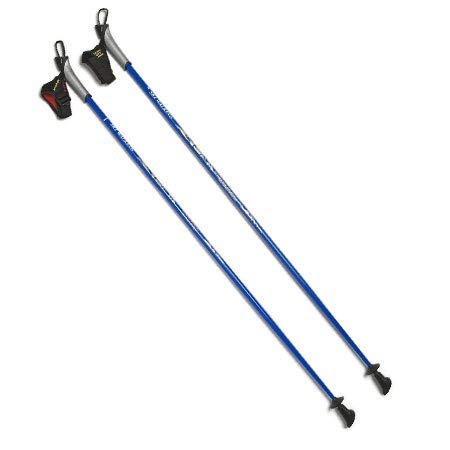
Nordic Walking Poles 32-Length Custom Fit (1-Piece)

Mountain Man Dark Wood Walking Stick 60″
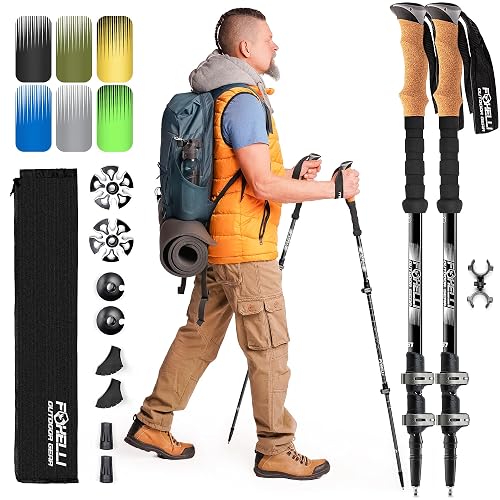
Foxelli Collapsible Aluminum Trekking Poles (Pair)
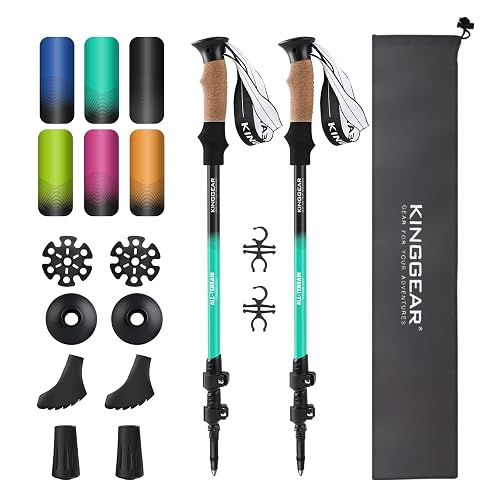
KINGGEAR 7075 Aluminum Trekking Poles
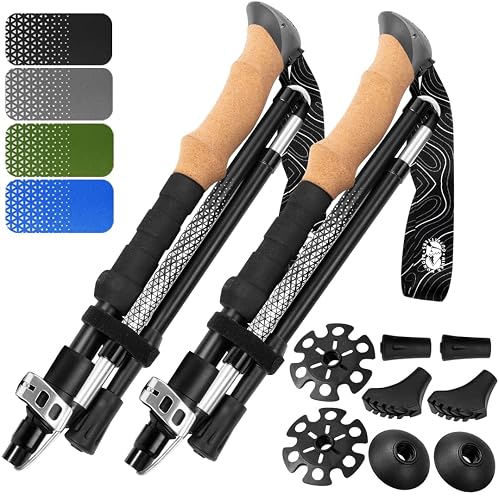
Hiker Hunger Foldable Aluminum Trekking Poles

LEKI Ultratrail FX.One Trekking Poles
The Picks, Examined More Closely
These poles take a completely different approach from every collapsible aluminum option on this list. Built from SWIX and EXEL ski-pole factories (the real-deal Nordic gear used in cross-country skiing), they ship as solid one-piece shafts cut to one of 32 lengths, so the fit is custom to your barefoot height rather than adjusted mid-trail. Carbide metal tips bite into dirt, sand, and snow, while removable rubber paws handle pavement and indoor tracks without that click-click racket.
For walkers logging serious miles on mixed surfaces, the rigid one-piece construction transfers energy more cleanly than folding shafts, and the proper Nordic straps (the kind that wrap your hand, not just loop around the wrist) make a real difference to technique. The honest read is that these are a specialist’s tool: heavier in the pack and not adjustable, but unmatched for daily fitness walking and therapy work.
Bright Spots
- 32 length options let you dial in true custom height for cleaner technique
- Solid ski-pole shafts from SWIX and EXEL factories transfer power more directly
- Interchangeable rubber paws and carbide tips cover pavement, trail, snow, and beach
- Proper Nordic hand straps support wrists during long sessions, useful for therapy users
- Made for Nordic walking technique, not just generic hiking
Things To Consider
- Non-collapsible design means a full-length carry on airplanes and pack storage
- Specialist build runs heavier than the folding aluminum picks later in the lineup
Made For
Daily Nordic walkers, fitness hikers, and anyone in physical therapy who wants a custom-fit, technique-driven pole over a generic adjustable.
Consider Something Else When
Backpackers flying with gear should look at the Hiker Hunger Foldable Aluminum Trekking Poles, which fold short enough for a duffel and break down for travel.
This is the odd one out, intentionally. Where the other picks on this list are engineered aluminum or carbon shafts with locking mechanisms, the Mountain Man stick is a single 60-inch length of hand-finished dark hardwood, turned and polished by an artisan in the USA. A leather wrist strap and a rubber tip come standard, so it works the moment you pull it out of the box.
For casual walkers, photographers on uneven ground, or anyone who wants the look and feel of a traditional staff, nothing else here matches the aesthetic. The honest caveat is performance: a hardwood shaft transfers more vibration than aircraft aluminum, and you cannot fold it down for a daypack, so it is not built for serious mountain mileage.
A Strong Showing
- Handcrafted USA hardwood with a smooth polished finish
- Leather safety strap and rubber tip included out of the box
- Quiet, traditional look that suits casual trail and neighborhood walks
- Fixed 60-inch height suits most adults without adjustment
Trade Offs
- Hardwood transfers more shock than aluminum or carbon over rough ground
- Non-collapsible shaft is awkward to transport and store in tight spaces
- Not designed for adjustable fit, so taller or shorter users need to look elsewhere
Best Suited To
Casual walkers, photographers, and collectors who value a handcrafted traditional stick over adjustable or packable engineering.
Look Elsewhere When
Hikers tackling technical or all-day mileage will get more from the KINGGEAR 7075 Aluminum Trekking Poles, which fold down and handle rough terrain.
The Foxelli pair is the kind of trekking pole most people picture when they think “hiking pole,” and for good reason. Aircraft-grade aluminum (a metal commonly chosen for its strength-to-weight ratio in aviation and bike frames) keeps each shaft around 9.4 ounces, and the telescoping design collapses to about 21 inches, which makes them genuinely packable for a daypack or carry-on. Cork handles feel cooler than foam or plastic on hot climbs and conform a little to your grip over time.
Adjustable from roughly 24 to 54 inches, they cover most adults with a flip-lock mechanism that takes seconds to set. The trade-off versus the KINGGEAR 7075 aluminum pair later on is gauge thickness and locking feel: lighter shafts flex more under heavy downhill load, and plastic flip locks demand a quick check before each descent.
The Good Stuff
- Telescoping design collapses to about 21 inches for easy packing
- Cork grips absorb sweat and stay cooler than foam in warm conditions
- Wide 24 to 54 inch range fits users from average adults to taller hikers
- All-terrain tip accessories handle snow, mud, and pavement without swapping tools
- Lightweight enough for fast-packing and casual backcountry trips
Points To Note
- Flip locks need a quick tension check before steep descents
- Lighter aluminum flexes slightly more than the thicker KINGGEAR 7075 build
- Cork wears over years of heavy use, so expect eventual grip replacement
Whose Shelf It Belongs On
Beginners and weekend hikers who want a reliable, adjustable, packable pair without paying for premium carbon.
A Better Fit Elsewhere
Backcountry hikers pushing weight limits benefit from the KINGGEAR 7075 Aluminum Trekking Poles, which use a stiffer, stronger alloy shaft.
Where the Foxelli pick aims at casual mileage, the KINGGEAR pair targets real backcountry punishment. The shafts use 7075 aluminum, an alloy (a metal blended with other elements for specific properties) common in aircraft structures because it offers higher tensile strength (resistance to being pulled apart) per gram than the more common 6061 aluminum, so the pole takes heavier downhill loads without flexing. Quick flip locks extend from about 25.5 to 54 inches to fit a wide range of adults.
For hikers carrying full packs, pushing through rocky terrain, or simply wanting a stiffer swing, the difference shows the first time you lean hard on a steep grade. The honest tradeoff is a slightly heavier shaft than the Foxelli pair, though still well under a pound per pole for most users.
Good Reasons To Consider
- 7075 aluminum is stronger and stiffer than typical 6061 alloy shafts
- Wide 25.5 to 54 inch adjustment range fits most adults
- Quick flip locks set length in seconds with no tools required
- Stiff swing handles heavy pack loads on steep descents
- Better edge feel than lighter poles on rocky, rooty terrain
Honest Caveats
- Heavier per pole than the Foxelli aluminum pair, so weight matters on long days
- Flip locks benefit from a quick tension check before each big descent
The Right Fit
Backcountry hikers with full packs who want a stiffer, stronger shaft and do not mind a few extra ounces in the hand.
Reach For A Different Pick When
Trail runners and ultralight pack counters should look at the LEKI Ultratrail FX.One Trekking Poles, which drop a quarter-pound per pole through carbon construction.
Folding poles solve a problem telescoping poles do not: packability. The Hiker Hunger pair collapses accordion-style into a compact bundle small enough for a duffel or carry-on, which is why travelers and backpackers with limited space gravitate toward this design. Aircraft aluminum keeps weight reasonable, and metal external locks hold the three-section shaft together with less wobble than the cord-and-tension systems you find on cheaper folding poles.
For hiking trips abroad, hut-to-hut traverses, or anyone storing poles in a small apartment closet, the short packed length changes how often you actually bring them along. Cork and EVA (a softer foam-like grip material) dual-density handles suit hikers who want one grip zone for casual walking and a softer wrap for extended descents.
Where It Helps
- Folding design collapses to a fraction of telescoping-pole length
- Metal external locks resist slip better than cord-tension systems
- Cork and EVA dual grips cover casual and steep-descend use cases
- Aircraft aluminum keeps weight manageable for travel days
- Compact packed size fits duffels, carry-ons, and small closets
Things To Watch
- Slightly more flex under heavy load than the KINGGEAR 7075 aluminum pair
- Folding hinge points add one more maintenance check before long trips
Who Should Grab It
Travelers, backpackers, and apartment dwellers who need poles that pack down small without sacrificing real hiking performance.
Where Another Pick Suits Better
Hikers focused on Nordic walking technique or therapy work should pick the Nordic Walking Poles 32-Length Custom Fit (1-Piece), which use proper Nordic straps and a rigid one-piece shaft.
The Ultratrail FX.One is the race-ready carbon offering in this lineup, and you feel the difference the moment you pick it up. Carbon fiber construction (a stiff, woven composite used in high-end bike frames and aircraft parts) keeps the pole at roughly a quarter-pound per shaft while holding rigidity that aluminum struggles to match at the same weight. A push-button three-section collapse breaks the pole down to three 14.5-inch pieces, which fits race vests and small packs.
For trail runners and ultralight thru-hikers counting every gram, the carbon savings add up across a long day. The Trail Trigger Shark foam grip conforms to the hand and works with running straps better than traditional T-shaped handles. The honest tradeoff is cost and impact sensitivity: carbon holds stiffness beautifully but does not tolerate hard rock strikes the way aluminum absorbs.
Practical Advantages
- Carbon fiber keeps each pole around a quarter-pound for fast movement
- Push-button three-section collapse packs into small race vests
- Trail Trigger Shark foam grip suits running straps and fast cadence
- Stiff swing transfers power cleanly at running pace
- Designed for training, races, and long trail days alike
Where It Is Less Suited
- Carbon is more sensitive to hard rock strikes than aluminum shafts
- Premium materials push it well above the entry-level pairs earlier in this list
Perfect Match For
Trail runners and ultralight thru-hikers who want the lightest, stiffest pole they can carry and use it across training days and race weekends.
Swap It Out When
Hikers who beat up poles on rocky, off-trail routes should consider the KINGGEAR 7075 Aluminum Trekking Poles, which take abuse aluminum absorbs more gracefully.
Picking Trekking Poles That Actually Match Your Hike
The most important decision comes down to where you hike and how you pack. Aluminum shafts (the Foxelli and KINGGEAR pairs, plus the Hiker Hunger folding set) offer real durability and a lower entry cost, while carbon (the Ultratrail FX.One) cuts weight noticeably at the trade-off of impact sensitivity. Folding designs shine for travelers and tight-pack users, while telescoping pairs stay simpler to length-check mid-trail.
Shaft strength tells you how a pole feels under load. 7075 aluminum is stiffer than the common 6061 alloy, so it bends less under heavy downhill force. Lock mechanisms matter too: external lever locks hold better than internal twist locks for most users, though both demand a quick tension check before steep descents.
Grip material affects comfort over long miles. Cork absorbs sweat and softens with use, EVA foam stays cooler in cold weather and dries faster, and foam-wrapped running grips (like the Shark grip on the LEKI) suit fast cadence better than standard T-shaped handles. For Nordic walking technique, proper wrap-around straps beat basic loop straps because they support the wrist through the push phase.
Packed length matters more than people expect. Anything over 24 inches fights you for space in a daypack, and folding poles collapse shorter than telescoping poles of the same useable length. For air travel, folding designs slide into checked luggage without disassembly, while telescoping poles sometimes require partial breakdown.
Common Pitfalls and Premium Trade-Offs
Mistakes Worth Dodging
Choosing poles by overall length alone is a common trap. A pole that’s too tall makes you work harder on climbs, and one that’s too short throws off your downhill posture. Measure against a 90-degree elbow when sizing, and double-check any “one-size-fits-most” claim against your height.
Lock quality is another place shoppers get burned. Twist locks can slip mid-descent when tightened by feel rather than visibly marked, so a quick visual check before each drop protects both knees and poles. External lever locks typically hold better for most users.
Why Top Tier Costs More
Premium carbon poles cost more because the material itself costs more to produce and shape, and the layup (the way carbon layers are arranged and bonded) directly affects performance. Cheaper carbon poles use lower-grade layups that flex under load, so the premium you pay goes into stiffness you can actually feel during a swing. Higher-tier designs also save weight where it counts on long days, which is why the Ultratr FX.One appeals to runners logging serious vertical.
Frequently Asked Questions
How do I size trekking poles to my height?
A simple starting rule is to set the elbow at a 90-degree angle when the pole tip touches the ground. For Nordic walking, slightly taller (around 100% of your height) suits technique; for general hiking, 90% to 95% of your height usually feels natural.
Are carbon trekking poles better than aluminum?
Carbon is lighter and stiffer per gram, which trail runners appreciate, but aluminum absorbs rock strikes better and costs less. Pick based on the terrain you hike most, not on materials alone.
Can I take trekking poles on a plane?
Most airlines allow collapsible or folding poles in checked luggage, but solid one-piece poles often require special arrangement. Folding designs like the Hiker Hunger pair collapse to airline-friendly lengths without disassembly.
Do I really need trekking pole tips for different terrain?
Carbide tips bite well on dirt, rock, and ice, while rubber paws protect pavement and indoor floors and quiet the click on hard surfaces. Swappable tips extend the useful life of any pole across mixed terrain.
How do I maintain flip locks on telescoping poles?
Sand and grit are the main enemies of flip locks, so a quick wipe-down after dusty hikes keeps the mechanism clean. A periodic check of the lever tension (the spring-loaded resistance when closed) catches wear before it becomes a slip mid-descent.
Closing Remarks
The trekking pole that fits your trail is rarely the one with the most features on paper. Match the shaft to your terrain, the lock type to your habits, and the pack length to how you actually travel. Once those three line up, the trail stops fighting you on the ups and the downs alike.