
A good pair of poles quietly shoulders a surprising share of every step. On long climbs, descents, and flat miles in between, your knees, ankles, and lower back absorb far less impact when two lightweight shafts are planted rhythmically ahead. Ultralight hiking poles matter most when you stop noticing them in your hands, and that is the bar this list uses to separate the forgettable from the worthwhile.
The Choices Worth Comparing
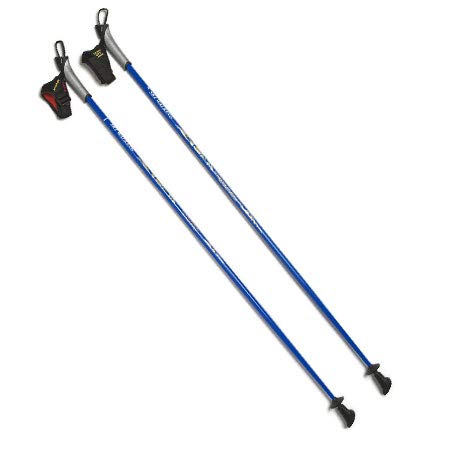
American Nordic Walking System 1-Piece Poles (32 Lengths)
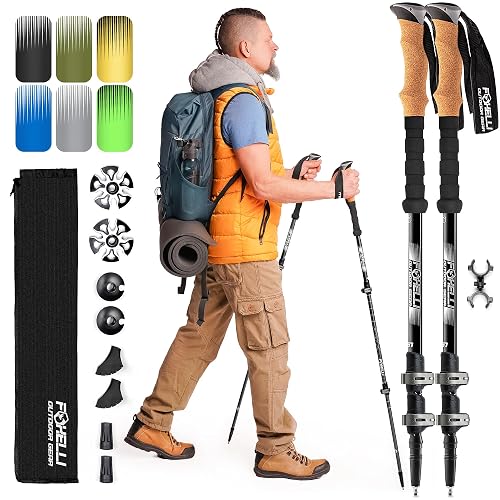
Foxelli Aluminum Collapsible Trekking Poles

Hiker Hunger 3K Carbon Fiber Trekking Poles
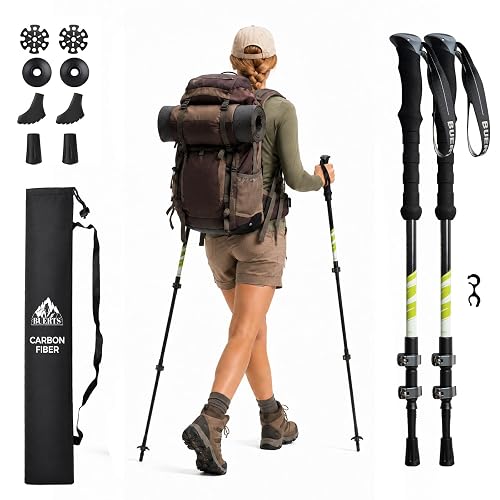
BUERTS 3K Carbon Fiber Trekking Poles
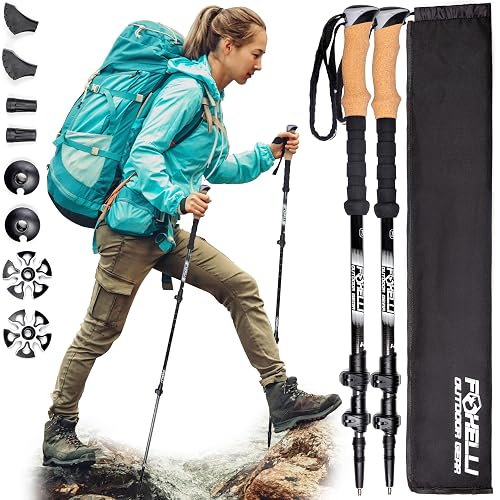
Foxelli Carbon Fiber Trekking Poles
Trekology Trek-Z Collapsible Trekking Poles

LEKI Ultratrail FX.One Trekking Poles
TrailBuddy 7075 Aluminum Trekking Poles
More On The Choices That Made The List
Built in partnership with SWIX and EXEL ski pole factories, these one-piece walking poles ship in 32 distinct lengths so you can match your barefoot height to a near-exact custom fit. That single decision changes how the poles feel: no twist-locks to loosen mid-hike, no rattling shafts, no flex joint absorbing the energy you put into the ground. The non-collapsible construction suits users who treat poles as a daily habit rather than a stowable accessory.
Nordic-style straps wrap the back of the hand so each plant feels controlled, and removable rubber tips make pavement, indoor tracks, and carpet as workable as dirt and gravel. For walkers in physical therapy, balance-conscious seniors, or anyone moving long city blocks in a Nordic gait, the precision of the length match tends to outweigh the inconvenience of a full-length pole that does not fold down.
Useful Strengths
- 32 lengths allow a near-custom fit matched to barefoot height
- One-piece ski-factory build removes rattle and lock-slip concerns
- Nordic-style straps support natural wrist position
- Interchangeable rubber and carbide tips cover pavement through ice
- Final assembly completed in the United States
Things To Consider
- Non-collapsible design complicates airline luggage and bus travel
- Fit requires you to enter your height on the listing before ordering
Who It Suits Best
Daily Nordic walkers, physical therapy users, and anyone in a structured urban fitness routine who values precise pole length over packability.
Where Another Pick Suits Better
Travelers who need poles to collapse into a carry-on should look at the Trekology Trek-Z Collapsible Trekking Poles, which fold to a fraction of this length.
Aircraft-grade aluminum makes these Foxelli poles forgiving on rocky terrain where a hard carbon shaft might crack. At roughly 9.4 ounces per pole, they sit at the heavier end of this list, but for first-time pole users that extra mass can feel reassuring rather than burdensome. The flip locks adjust with a simple open-close lever, so getting the right length on a cold morning requires no fine motor skills.
Cork grips absorb sweat in summer heat and stay cooler than foam or plastic alternatives, which matters on humid day hikes. The kit arrives with all-terrain baskets, mud, snow, and rubber tips so the same pair handles pavement, trail, and shoulder-season slush without a separate purchase.
Bright Spots
- Aluminum construction handles rough contact without cracking concerns
- Flip locks adjust quickly without tools
- Cork grips manage moisture on warm days
- Full accessory kit covers pavement, trail, mud, and snow
Honest Caveats
- Heavier than the carbon entries on this list, which adds up over long days
- Aluminum transmits more vibration than carbon on rocky descents
Right Fit For
Newcomers to trekking poles and weekend hikers who want one pair that works across pavement and trail without overthinking the choice.
Skip It When
Thru-hikers counting every ounce in their pack will find the Hiker Hunger 3K Carbon Fiber Trekking Poles a lighter match for the same use case.
Carbon fiber construction at 7.6 ounces per pole puts these firmly in the ultralight category without pushing into the fragile end of the spectrum. The 3K carbon weave, a visible crosshatch pattern in the resin, is a mid-grade layup that balances stiffness and impact resistance for backpacking distances. Compared with the Foxelli aluminum pair above, the swing weight during a fast cadence feels meaningfully lighter.
Cork grips mold to your hand shape over time, and the extended EVA foam section beneath them lets you choke down on side slopes without leaving your comfort zone. Quick-adjust flip locks let you reset the length between flat trail and steep descent in seconds, which matters when weather rolls in mid-ridge.
The Value In It
- 3K carbon shaft keeps swing weight low across long days
- Cork and EVA grip pairing handles sweaty palms and steep terrain
- Flip locks reset length fast on changing grades
- Carbide tips grip well on loose rock and wet roots
Points To Note
- Carbon can crack under hard side loads, so avoid prying between rocks
- Lock tension should be checked periodically as the pole seasons in
Made For
Backpackers and thru-hikers who count grams and want one carbon pair that handles mixed terrain without specialized babysitting.
Consider Something Else When
Racers who need the tightest Z-fold packability will prefer the LEKI Ultratrail FX.One Trekking Poles, which break down to 14.5-inch sections for vest carry.
BUERTS leans into stiffness with this 3K carbon build, marketing a noticeably more rigid feel than many entry-level carbon poles at a similar weight. The EVA foam grips run long enough to relocate your hand on steep pitch changes without breaking stride, which trail runners will appreciate when terrain tips steep without warning. Flip locks hold the length under repeated shock loading better than twist locks tend to over a season of fast hiking.
Like the Hiker Hunger poles above, these collapse into a pack-friendly length, though they do not fold quite as short as the LEKI or Trekology options. For runners and fastpackers whose trails are mostly dirt and rock rather than pavement, the rigidity trade-off tends to be worth it for the more direct energy transfer on each plant.
Key Advantages
- Rigid 3K carbon shaft gives responsive energy transfer
- Long EVA grip suits steep terrain changes
- Flip locks hold up under repeated high-cadence impacts
Worth Noting
- Stiffness can feel harsh on prolonged descents without shock absorption
- Does not pack as short as dedicated Z-fold options for running vests
Best Suited To
Trail runners and fast hikers moving fast over mixed dirt and rock who want a stiffer plant than typical entry-level carbon.
Look Elsewhere When
Runners needing the shortest possible pack size for a vest should reach for the LEKI Ultratrail FX.One Trekking Poles instead.
Foxelli pairs a 7.6-ounce carbon shaft with cork grips and a generous accessory bundle, hitting a balance point that works for day hikes, multi-day backpacking, and travel alike. Compared with the stiffer BUERTS poles above, this carbon layup feels a touch more compliant, which softens hand fatigue on long descents. The cork handles absorb sweat and conform to the hand over time, similar to the aluminum Foxelli pair but at half the swing weight.
Quick flip locks let you shorten the poles for uphill climbs and extend them again for flat miles without stopping your stride. The included basket set covers snow, mud, and standard trail conditions, so most hikers can leave the box behind and head straight to the trailhead.
The Practical Payoff
- Carbon weight at 7.6 oz per pole reduces long-day fatigue
- Cork grips handle sweat and stay comfortable over hours
- Flip locks adjust without tools mid-route
- All-terrain accessory kit suits most conditions out of the box
Trade Offs
- Carbon shaft requires care to avoid point impacts on sharp rock
- More expensive than the aluminum Foxelli pair for first-time shoppers
Who Will Love This
Year-round hikers who want one carbon pair that works across seasons without buying separate baskets or tips for each trip.
A Better Fit Elsewhere
Shoppers who would rather start with aluminum at a lower entry cost can find a more forgiving build in the Foxelli Aluminum Collapsible Trekking Poles.
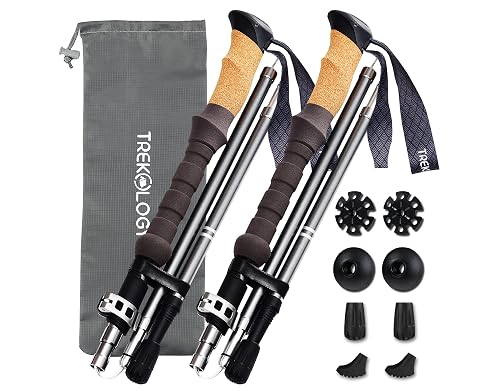
Trekology builds the Trek-Z around aero-grade aluminum in a Z-fold configuration that collapses shorter than most twist-and-telescope competitors. That matters when you are stashing poles in a carry-on, a packraft bag, or a daypack without external attachments. Cork grips keep hands cool and dry, and the collapsible design lets the poles ride in a suitcase without bending locks out of alignment.
Aluminum is heavier than carbon, so this is not the choice for gram-counting backpackers, but for travel and casual day hiking the trade-off is reasonable. Levers on the locks adjust quickly, and the broad color options help the pair stand out in a hostel gear corner so they do not wander off between trips.
Strengths Worth Knowing
- Z-fold collapses to a travel-friendly packed size
- Aluminum tolerates rough baggage handling better than carbon
- Cork grips manage moisture on warm travel days
- Flip locks work in cold and gloved conditions
Room For Improvement
- Aluminum weight is noticeable on long mileage days
- Packed length still longer than race-oriented Z-fold poles
Perfect Match For
Travelers, hostel-to-hostel trekkers, and packrafters who prioritize compact packability over absolute minimum weight.
Reach For A Different Pick When
Backpackers focused on minimum carry weight will be happier with the Hiker Hunger 3K Carbon Fiber Trekking Poles, which cut ounces more aggressively.
LEKI builds the FX.One for trail runners and ultra racers, with a push-button internal connection that separates the pole into three 14.5-inch sections small enough to ride in a running vest. Carbon construction keeps each pole near a quarter-pound while maintaining the rigidity racers want for a clean push-off at speed. The Trail Trigger Shark foam grip is designed to anchor on terrain where a thicker cork handle would slip.
These sit at a different price tier than the rest of this list, and the trade-off is real: you pay for a refined race-grade Z-fold, and you also need to be the kind of user who actually uses that compactness. Casual day hikers will find more value in the Foxelli carbon or aluminum options above.
Real Benefits
- Push-button Z-fold breaks to 14.5-inch sections for vest carry
- Carbon shaft keeps weight near a quarter-pound per pole
- Trail Trigger Shark grip locks in place during fast cadence
- Internal connection resists snag on brush and rigging
Minor Gripes
- Higher price than other carbon options on this list
- Push-button requires practice to deploy cleanly one-handed
Who Should Grab It
Trail runners and ultra racers who need poles small enough to live in a vest on the run and stiff enough to push a fast cadence.
Not Your Match When
Casual day hikers and backpackers will find a better price-to-use ratio in the Foxelli Carbon Fiber Trekking Poles, which trade race-grade packability for more accessible cost.
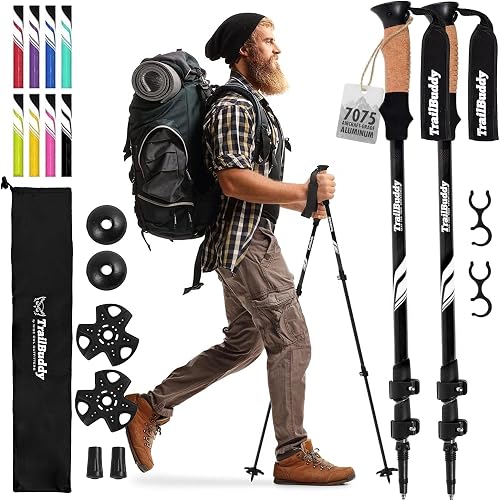
TrailBuddy uses 7075 aluminum, an alloy known for high strength-to-weight, to make poles that survive the kind of accidental drops and curbside stumbles casual walkers tend to put gear through. The 7075 grade is the same family of aluminum often used in climbing hardware, so a tip caught in a sidewalk crack is less likely to bend the shaft than cheaper alternatives. Compared with the carbon entries above, these weigh more, but for seniors and casual users the trade is worth the durability.
Levers adjust the length in seconds, and the included baskets cover the snow, mud, and standard trail conditions most casual users will encounter. Foam grips stay warmer than cork in shoulder-season cold, which is worth knowing for early-morning walkers in cooler climates.
Positive Points
- 7075 aluminum resists bending from everyday knocks and drops
- Levers are easy to operate with limited hand strength
- Foam grips stay warmer than cork in cool weather
- Bundled basket kit covers most casual conditions
Points To Keep In Mind
- Heavier than carbon options, which adds up on longer walks
- Aluminum transmits more vibration to wrists on hard pavement
Built With In Mind
Seniors, casual walkers, and balance-conscious users who want poles that forgive mistakes and keep working through years of daily use.
Where A Sibling Pick Shines
Walkers focused on Nordic gait technique or physical therapy routines will find the American Nordic Walking System 1-Piece Poles a more precise match for their stride.
Choosing The Right Poles For Your Trail
Weight, Packability, And The Trade Between Them
The first decision to make is how your poles will live when you are not using them. Carbon fiber shafts are the lightest option on this list, with several entries at or below 7.6 ounces per pole, and that low weight shows up most clearly on long days when your arms and shoulders accumulate fatigue from repeated swings. Aluminum shafts cost more in weight but reward rough users with a metal that bends rather than cracks under hard side loads. Collapsible Z-fold designs, like the LEKI and Trekology entries, pack shorter than telescoping poles, which matters for runners and travelers working with limited pack space. Telescoping three-section poles pack reasonably short and let you fine-tune length on changing terrain, which is the more common format on this list.
Grip Material, Strap Design, And Hand Comfort
Cork grips mold to your hand over time and absorb sweat in summer heat, which is why they appear on most of the carbon entries here. EVA foam grips weigh slightly less, stay warmer in cool weather, and are more comfortable for users with hand sensitivity. Strap design matters more than most people expect: full Nordic-style wrist straps wrap the back of the hand to add downward force on each plant, while simple loop straps just keep the pole attached to your wrist. A real Nordic strap turns each plant into a controlled push rather than a grip-and-lift motion.
Tip And Basket Setup For Where You Actually Walk
Carbide metal tips bite into dirt, rock, and ice and are the right default for trail use. Removable rubber tips extend the same pair to pavement, indoor tracks, and gym floors without scarring the surface. The bundled basket sets on this list cover mud, snow, and standard trail, and the main reason to own a separate basket is powder snow or deep sand where the standard setup sinks too far. A pole that arrives without a basket you need often means a separate purchase down the road, so check what is included before you commit.
Key Considerations Across These Picks
Common Slip Ups When Buying Ultralight Hiking Poles
The most common error is choosing the lightest pole without checking the collapsed length against your pack. A 7.6-ounce carbon pole is no bargain if it does not fit on the side of your pack or inside your luggage. Another pitfall is ignoring grip material: cork and EVA foam behave very differently across seasons, and swapping grips later is rarely simple. Buyers also tend to overlook the tip setup and end up needing a separate rubber tip set for pavement and a basket set for snow that the box did not include. Finally, matching the pole to your actual use matters more than chasing the lightest spec: a thru-hiker, a Nordic walker, and a trail racer have genuinely different needs and the same pole rarely serves all three well.
Where The Extra Money Goes In Higher-Tier Poles
Premium poles earn their higher cost through refined connections, better carbon layups, and shorter packed lengths. The LEKI FX.One sits at the top of this list because its push-button Z-fold and race-grade carbon layup are genuinely different from entry-level offerings, and the difference is felt on every long run. Mid-tier carbon poles like the Hiker Hunger and BUERTS options deliver most of the weight savings without the race-grade fittings, and that is often the right place for backpackers to land. Spending up makes sense when you know the feature you need, whether that is shorter packability, lighter weight, or a more durable build, and is harder to justify when the extra cost is buying a feature you will not use.