
Slogging up a switchback for hours teaches you fast: every ounce in your hands is an ounce your knees pay for on the way down. Ultralight trekking poles take that sting out, transferring load to your arms and giving you two extra points of contact on loose scree or muddy roots. The challenge is sorting genuine weight savings from marketing fluff. This roundup looks at eight strong options for 2026 across carbon fiber, aircraft aluminum, fixed-length, and collapsible designs, so day hikers, thru-hikers, and anyone rehabbing a knee can find a pair that actually fits how they walk.
The Leading Options At A Glance
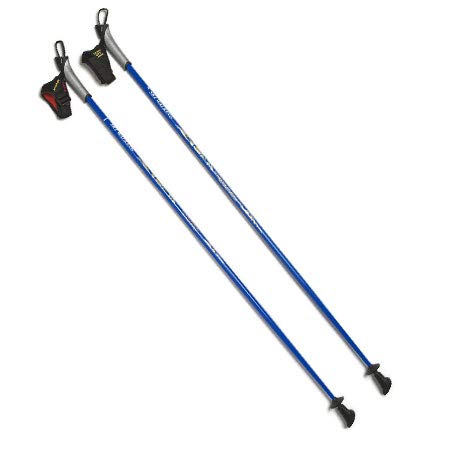
Nordic Walking Poles Custom Fit 1-Piece Non-Collapsible
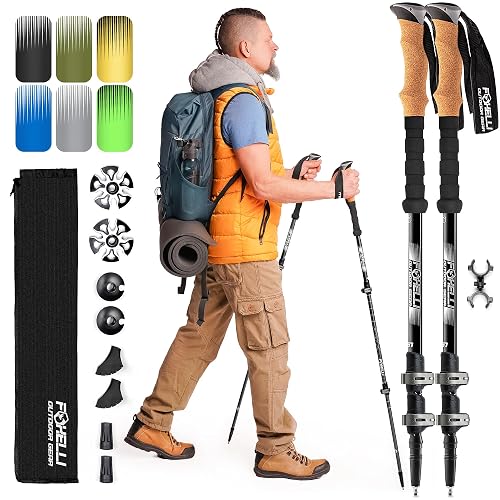
Foxelli Aluminum Trekking Poles Cork Grips Pair

Hiker Hunger 100% Carbon Fiber Trekking Poles Cork EVA
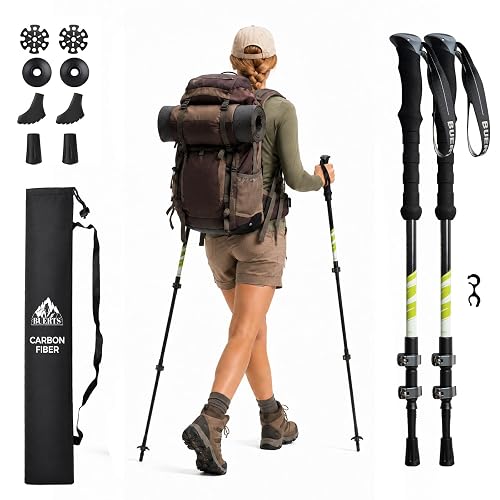
BUERTS Ultralight 3K Carbon Trekking Poles EVA
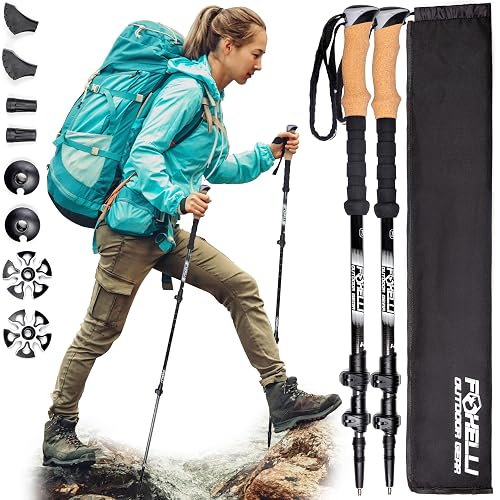
Foxelli Carbon Fiber Trekking Poles Cork Grips
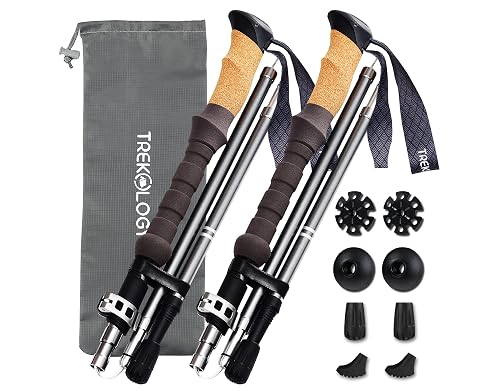
Trekology Trek-Z Cork Grip Collapsible Trekking Poles

LEKI Ultratrail FX.One Carbon Trekking Poles
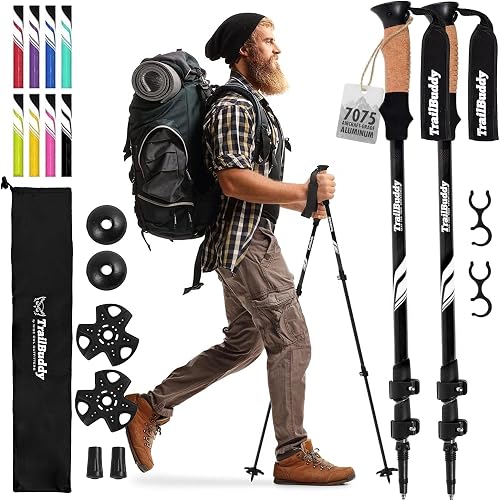
TrailBuddy 7075 Aluminum Trekking Poles Collapsible
The Details Behind The Selections
If your priority is a custom fit that mirrors real Nordic technique, these one-piece poles stand apart from every collapsible model in this roundup. Made in the same factories as the SWIX and EXEL ski poles they share DNA with, they come in 32 fixed lengths matched to your barefoot height, which removes the wobble that twist locks and lever locks can introduce on long descents.
For physical therapy users, fitness walkers logging miles on pavement, and hikers who simply want rigidity without fuss, that fixed length becomes a feature rather than a limitation. You give up packability, but you gain a true Nordic strap system and metal carbide tips built for trail, beach, and snow alike, plus removable rubber paws for indoor tracks and sidewalks.
Benefits That Matter
- Custom-matched length from 32 size options removes lock-slip worry on steep grades
- Real Nordic straps distribute force through the wrist, easing grip fatigue over long walks
- Ski-factory construction feels noticeably stiffer than typical collapsible poles
- Rubber paws snap on for pavement and carpet, then off for trail tips on snow or sand
- Carbide metal tips handle ice, frozen ground, and rocky terrain without dulling quickly
Things To Consider
- Fixed length means the poles cannot collapse for transport on buses, planes, or pack-frames
- Custom sizing adds lead time compared to off-the-shelf adjustable pairs
Made For
Fitness walkers, physical therapy users, and traditional Nordic walkers who want a custom-fitted pole sized to their barefoot height.
Look Elsewhere When
You need a pair that collapses into luggage or a pack: the TrailBuddy 7075 Aluminum Trekking Poles collapse small and cost far less for travelers.
The Foxelli aluminum pair is the workhorse option in this lineup: a collapsible three-section design in aircraft-grade aluminum that extends to roughly 54 inches and folds down to about 21 inches for pack carry. Cork grips add a touch of comfort that matters on warm-weather hikes when palms turn slick, and quick flip locks make height changes fast on rolling terrain.
At around 9.4 ounces per pole, the weight sits at the heavier end of this list, but aluminum bends before it breaks, which is a real safety plus on rocky scrambles where carbon can crack. The included all-terrain accessories and EVA lower grips cover the trail and sidehill cases most day hikers hit on weekend loops.
Noteworthy Benefits
- Aircraft-grade aluminum tolerates rock scrapes and brush abuse better than carbon
- Cork grips absorb sweat and shape to the hand over time
- Flip locks are quick to set cold, even with light gloves on
- Collapses to roughly 21 inches for daypack or suitcase carry
Worth Noting
- Heavier than the carbon options in this list, by roughly 1.5 to 2 ounces per pole
- Aluminum transfers more vibration to the wrist on rocky descents
- Flip locks can loosen over months of use and may need a periodic snug-up
Who It Suits Best
Weekend hikers and casual backpackers who want durable, adjustable poles without paying a premium for carbon fiber.
A Better Fit Elsewhere
You count every gram for long-distance trips: the Hiker Hunger 100% Carbon Fiber Trekking Poles shave weight while still collapsing for travel.
Built around 3K 100% carbon fiber, these poles come in at roughly 7.6 ounces per pole, putting them firmly in thru-hiker territory. The cork-and-EVA grip pairing is a smart dual setup: cork on top wicks sweat and molds to the hand, while EVA foam extends down the shaft for choke-up grip on sidehills without burning your knuckles.
For backpackers logging 15 to 25 miles a day, every gram saved at the wrist compounds over thousands of strides, and carbon’s stiffness translates more of your push into forward motion rather than shaft flex. The flip lock system is quick to fine-tune on the move, and the included accessories cover snow, mud, and rubber tip scenarios.
Everyday Perks
- Full carbon fiber shaft keeps each pole near 7.6 ounces for low swing weight
- Moisture-wicking cork top grip with extended EVA lower grip for terrain changes
- Stiff construction transfers energy into the next stride rather than flexing
- Collapsible design packs down for carry on long-distance routes
Points To Keep In Mind
- Carbon can crack under sharp rock impact where aluminum would only dent
- Flip locks benefit from a quick tension check before committing to a long descent
Right Fit For
Thru-hikers, section hikers, and fast-packers who want a genuine carbon upgrade and pay close attention to base weight.
Consider Something Else When
You mostly hike rugged, brushy terrain where aluminum forgives more abuse: the Foxelli Aluminum Trekking Poles stand up to scrapes that can spook carbon shafts.
The BUERTS pair is the entry point into 3K carbon fiber for hikers who want the weight savings without the highest-tier cost. The 3K designation refers to the carbon weave pattern (a tight, visible basket-weave style) which tends to feel solid in the hand, and the EVA extended grips give you a second hold position for stream crossings and sidehills.
For newer ultralight converts who are moving from aluminum to carbon for the first time, this pair offers a useful middle ground: collapsible for travel, light enough to notice the difference, and built around an EVA grip that performs well when wet. The flip lock mechanism is straightforward, and the moisture-wicking surface helps on humid summer trails.
What Stands Out
- 3K carbon fiber shaft lowers swing weight compared to aluminum of similar length
- Extended EVA foam grips handle sweat and wet conditions without slipping
- Collapsible for transport in luggage or on a backpack strap
- Useful access point for first-time carbon pole owners
Honest Caveats
- Long-term durability reports on newer carbon brands are still building, so treat them carefully around sharp rock
- EVA grips insulate well but can feel warmer than cork in direct sun
- Lock tension should be checked after a season of heavy use
Best Suited To
New ultralight hikers curious about carbon construction who want a collapsible, mid-priced pair for varied terrain.
Swap It Out When
You want a more established carbon name and the comfort of cork grips: the Hiker Hunger 100% Carbon Fiber Trekking Poles step up the grip material and brand track record.
The carbon sibling to the Foxelli aluminum pair, this version swaps the metal shaft for full carbon fiber at roughly 7.6 ounces per pole, while keeping the same cork grip layout hikers have grown used to. The result is a familiar-feeling pole with noticeably less swing weight, which adds up across a 10-mile day on rolling terrain.
For long-distance day hikers and backpackers who want a balance of comfort and light carry, the cork grips handle sweat well and the quick flip locks make on-trail adjustments easy. Compared to the BUERTS entry, you get an established brand track record and a more polished cork top grip out of the box.
A Few Strong Suits
- Carbon shaft drops roughly 1.5 ounces per pole versus the Foxelli aluminum pair
- Cork top grips conform to the hand and improve with use
- Quick flip locks adjust on the fly without stopping the hike
- Includes terrain accessories for snow, mud, and hard-surface walking
Points To Note
- Carbon still carries the usual caveat of brittleness on sharp rock contact
- At this weight class, the price step versus aluminum is meaningful for budget shoppers
Who Should Grab It
Long-distance day hikers and backpackers who want a trusted brand name and the comfort upgrade that real cork grips provide.
Another Choice May Suit
You want the lightest possible pole for a fast-and-light setup: the LEKI Ultratrail FX.One Carbon Trekking Poles come in even lighter, geared toward trail runners.
The Trek-Z has earned its place as a travel-friendly favorite, folding down to roughly 21 inches to fit in carry-on luggage or strapped to the side of a daypack. The shaft uses 100% aircraft-grade aluminum rather than carbon, so the weight is on the heavier side of this roundup, but the upside is a forgiving feel on rocky terrain and resistance to bend on off-angle plant.
For travelers, weekend hikers, and anyone who wants a single pole pair for both trail and trip, the compact folded length is the headline feature. Cork grips add a touch of moisture management, and the quick lever locks keep setup fast when you’re hopping off a train and into a trailhead.
What Earns Its Place
- Folds to around 21 inches, small enough for carry-on luggage
- Aircraft-grade aluminum tolerates rocky terrain without cracking
- Cork grips improve comfort on warm-weather hikes
- Quick lever locks are easy to operate with cold or wet hands
Minor Gripes
- Heavier than the carbon options in this list
- Folding mechanism adds a small step to setup and takedown compared to telescoping poles
Perfect Match For
Travelers and pack-hikers who want a pole that disappears into luggage and is still comfortable for full-day hikes.
Skip It When
You want the lightest pack weight over pack-down size: the Hiker Hunger 100% Carbon Fiber Trekking Poles keep weight low while still collapsing for travel.
The LEKI Ultratrail FX.One is the most purpose-built pole in this roundup, designed for trail runners and fast hikers who treat every gram like a personal offense. The carbon construction keeps each pole near a quarter pound while staying stiff under load, and the Z-push-button collapsible design breaks the shaft into three 14.5-inch sections for pack-down to roughly the length of a water bottle.
For trail running, fastpacking, and race-day use, the Trail Trigger Shark grip is a foam design that conforms to the hand and stays secure without a thick strap. It’s a pole built for forward motion, not casual strolling, and the price reflects that engineering focus.
Real-World Strengths
- Carbon shaft near 4 ounces per pole reduces arm swing fatigue on long runs
- Z-push-button three-section fold collapses to about 14.5 inches per section
- Foam Trail Trigger Shark grip conforms to the hand without bulk
- Stiff carbon transfers push-off force efficiently into the next stride
Practical Considerations
- Premium price tier puts it well above the rest of the list
- Lightweight build trades some impact tolerance for speed, so avoid wedging poles between rocks
Who Will Love This
Trail runners, ultra racers, and fastpackers who want poles engineered for moving fast over technical terrain.
Where Another Pick Suits Better
You mostly hike rather than run and want a sturdier all-around carbon pole: the Foxelli Carbon Fiber Trekking Poles offer similar weight at a friendlier price for day hikers.
The TrailBuddy pair is the most accessible entry in this list, built around 7075 aluminum (a high-strength alloy common in aerospace applications) with a collapsible design that suits seniors, casual hikers, and anyone stepping into trekking poles for the first time. Twist locks keep the adjustment simple: turn to tighten, turn to release, no finicky lever to learn.
For balance support on neighborhood walks, day hikes on mellow terrain, or recovery walks after a knee injury, this is a forgiving, low-maintenance option. The trade-off is weight, since aluminum runs heavier than carbon, but the price point makes it easy to try poles without a big commitment.
A Strong Showing
- 7075 aluminum offers solid strength at a budget-friendly price
- Twist locks are intuitive for first-time pole users
- Collapses for transport in a car trunk or carry-on bag
- Works well for seniors needing a balance aid on flat and rolling terrain
Less-Strong Areas
- Heavier than both the Foxelli aluminum and any carbon option in this list
- Twist locks can slip in extreme cold if not firmly seated before heading out
- Aluminum transmits more vibration through the grip on rocky descents
Built With In Mind
New hikers, seniors, and anyone rehabbing a knee who wants a simple, budget-friendly pole that just works on everyday trails.
Reach For A Different Pick When
You want to drop weight on long walks: the Foxelli Aluminum Trekking Poles are a noticeable step lighter in the same aluminum category.
Matching The Right Pole To Your Hiking Style
A trekking pole is a tool, and the right one depends on how you use it. Material is the first fork in the road: aluminum bends before it breaks, which makes it a safer choice on rocky, brushy terrain where poles take real punishment. Carbon fiber is stiffer and lighter, which suits distance hikers and trail runners who count grams and want efficient push-off, with the caveat that it can crack under sharp impact rather than denting.
Next, think about length and adjustment. Fixed-length poles (like the Nordic Walking Poles) feel solid and eliminate lock-slip concerns, but they force you to size precisely at purchase and don’t collapse for travel. Adjustable telescoping or folding poles let you change length for uphill vs. downhill and pack down to suitcase-friendly sizes, which matters for travelers and backpackers stashing poles mid-route.
Grip material is the comfort dial. Cork wicks sweat, shapes to your hand over time, and stays cooler in summer sun, making it a strong fit for warm-weather hiking. EVA foam is lighter, handles wet conditions well, and often extends down the shaft for choke-up grip on sidehills. Foam-heavy grips (like the LEKI Trail Trigger) suit runners who want minimal bulk and quick hand release.
Locking mechanism affects on-trail experience. Flip locks are fast and easy to use with gloves, and they tolerate cold well. Twist locks cost less and work fine for casual use, but they need a firmer hand-check before committing to long descents, and they can be sluggish with numb fingers in deep winter. A final consideration is tip setup: carbide metal tips bite into ice, frozen ground, and rocky trail, while rubber paws save indoor tracks, sidewalks, and the knees of walking partners on hard surfaces. Most poles ship with both, but it’s worth confirming the swap is included.
Key Considerations Across These Picks
Where Shoppers Go Wrong
A common slip is buying the lightest pole you can find without checking shaft material behavior. Carbon fiber saves weight but can crack on sharp rock, and a snapped pole 20 miles in is a real problem, so trail conditions matter as much as the gram count on the spec sheet. Another trap is overlooking folded length: a pole that doesn’t collapse small enough to strap to your pack will spend more time at home than on the trail, especially for backpackers and travelers. Finally, ignoring grip ergonomics leads to blisters and hand fatigue, so cork versus EVA versus foam is a real comfort decision, not a finish swatch.
Where The Extra Money Goes
Higher-tier poles like the LEKI Ultratrail FX.One cost more because they use higher-modulus carbon (a stiffer, lighter grade of carbon weave), tighter tolerance folding mechanisms, and refined grip geometries designed for repetitive motion under load. You also pay for weight engineering at every component, from the strap webbing to the carbide tip, which matters when you swing poles thousands of times per day. The upgrade is worth it for trail runners, thru-hikers logging 20+ mile days, and anyone who has used cheaper poles and felt the flex. For weekend hikers on shorter routes, mid-tier carbon or quality aluminum delivers nearly all the comfort at a much friendlier price.
Frequently Asked Questions
How do I know what length trekking pole I need?
A general rule is to bend your elbow at 90 degrees and match the pole height to that angle, with the grip in hand and tip on the ground. Most adjustable poles span from about 24 to 54 inches to cover a wide range of heights, and fixed-length poles require exact sizing at purchase.
Are carbon fiber poles really better than aluminum?
Carbon fiber poles are lighter and stiffer, which reduces arm fatigue on long hikes, but aluminum poles bend rather than break and are cheaper to replace. The honest read is that carbon wins for distance and speed, while aluminum is the safer bet for rough terrain and tight budgets.
Do trekking poles help with knee pain on descents?
Trekking poles take a portion of load off the knees by transferring weight to the arms during downhill steps, which can reduce joint stress on long descents. For existing injuries, a doctor or physical therapist can advise on how much load to offload and the right grip style for your condition.
Can I take trekking poles on a plane?
Most adjustable and folding poles collapse short enough to fit in checked luggage or a carry-on, but airline policies on long items vary, so it’s worth checking current rules before flying. Fixed-length poles are harder to transport by air and may need to be shipped separately.
How do I maintain trekking poles over time?
Rinse poles after muddy hikes, check lock tension before each outing, and store them dry to prevent grit from wearing the locking mechanism. Replacing worn tips and keeping the strap webbing free of frays extends the working life of any pole on this list.
Bottom Line
The right ultralight trekking pole is the one you actually take on the trail. Aluminum pairs like the TrailBuddy and Foxelli give you durable, budget-friendly support that forgives rough handling, while carbon options from Hiker Hunger, BUERTS, and Foxelli shave weight for distance days. If speed is the goal, the LEKI Ultratrail FX.One is the engineered choice, and for a true custom fit, the Nordic Walking Poles are in a class of their own. Match the pole to your terrain, your trip length, and how you actually hike, and the rest takes care of itself.