
Drinking straight from a stream used to mean crossing your fingers and hoping your stomach held out. That’s a gamble nobody should take on a long ridge traverse or a multi-day backcountry loop, where dehydration can derail a trip faster than a rolled ankle. The right filter turns questionable water into a reliable refill station, whether you’re filtering from a creek at 10,000 feet or topping off a bottle at a questionable roadside spigot.
This lineup pairs pump-style bottles with ultralight straws and tablet backups, so you can match your setup to the trail, the trip length, and the kind of water you’ll actually face. Every pick earns its spot by solving a real problem trail-goers hit, from viral protection in sketchy foreign sources to ultralight emergency redundancy.
The Lineup, Simplified
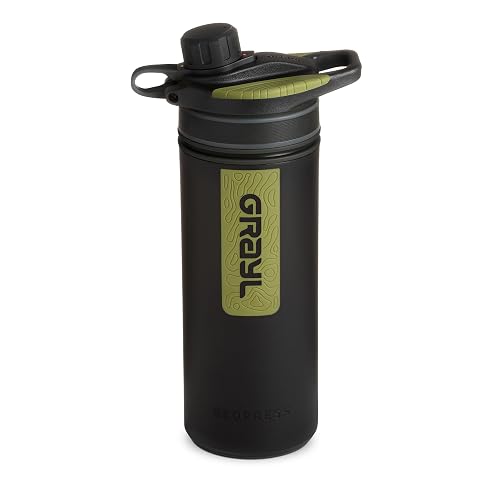
GRAYL GeoPress 24 oz Water Purifier Bottle (Black Camo)

GRAYL GeoPress Replacement Filter Cartridge (Hi-Vis Orange)

LifeStraw Personal Water Filter (Blue)

Aquatabs 49mg Water Purification Tablets, 50 Pack
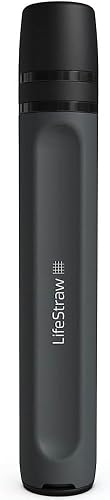
LifeStraw Peak Series Personal Water Filter Straw
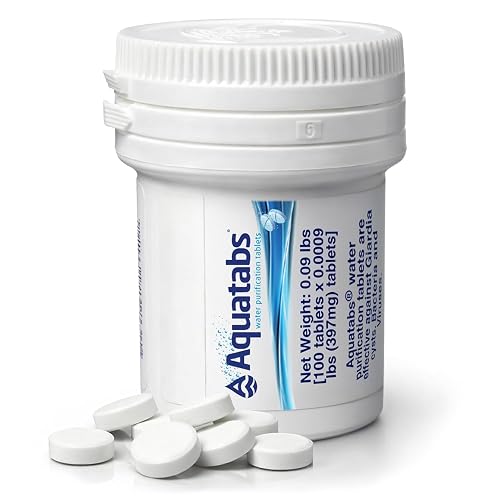
Aquatabs 397mg Water Purification Tablets, 100 Pack
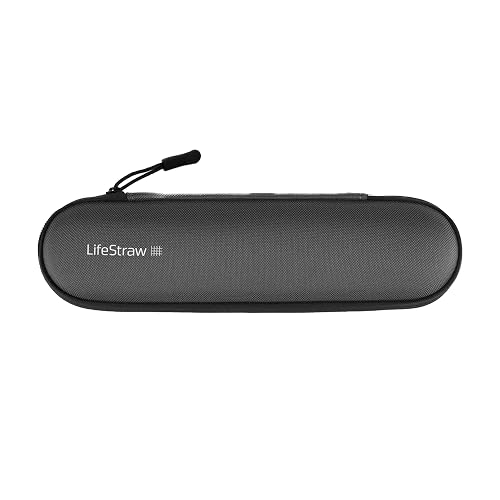
LifeStraw Official Carry Case for Filter Straw
A Closer Look At Each Pick
The GRAYL GeoPress flips the usual script on trail filtration. Instead of squeezing or pumping, you fill the outer cup, drop in the purifier cartridge, and press down like a French press. That single motion forces water through a layered media that screens out viruses, bacteria, and protozoan cysts in roughly the time it takes to lean over a map and plan your next turn.
What sets it apart from pump bottles and hollow-fiber straws like the LifeStraw picks later in this list is virus protection. Most lightweight filters stop bacteria and protozoa; the GeoPress adds antiviral coverage, which matters in unfamiliar foreign sources or stagnant alpine pools where runoff can carry more than just Giardia. For international travel or high-risk backcountry water, that’s a meaningful upgrade.
What Helps Most
- One-press operation clears a 24 oz serving in seconds, with no pumping or sucking required.
- Virus-level purification, not just bacteria and cysts, broadens safe refill options abroad.
- Replaces your water bottle entirely, so you carry one item instead of a bottle plus a separate filter.
- Rugged build and sealed cup design resist leaks inside a stuffed pack.
- Drink-through lid lets you sip the clean water directly without pouring into another vessel.
Trade Offs Worth Weighing
- Heavier than a hollow-fiber straw, so ultralight thru-hikers may want a lighter primary filter.
- Replacement cartridges add ongoing cost and need to be packed for trips that outlast the rated cycle.
- Pressing requires some hand strength, which can be a factor on a cold morning with numb fingers.
Quick Technical Notes
Best Suited To
International trekkers, group leaders, and anyone drawing from questionable roadside, hostel, or backcountry sources who wants virus protection in a one-step bottle.
A Better Fit Elsewhere
Ultralight solo thru-hikers counting every gram should reach for the LifeStraw Personal Water Filter below instead, which weighs less and skips the press mechanism.
Once the GeoPress bottle earns a permanent spot in your pack, the cartridge becomes the consumable that keeps it useful. This Hi-Vis Orange replacement drops into the same press body the original uses, so you don’t have to learn a new system or carry a different bottle. It’s the kind of part you toss in a resupply box before a long trail so your press still works three weeks in.
Because the cartridge handles the same virus, bacteria, and protozoa work as the original, swapping is a clean continuity move rather than a downgrade. The bright orange color is a small but smart touch, since owners of multiple GRAYL parts tend to lose track of which cartridge has been used versus which is fresh. A glance solves it.
The Case For It
- Drop-in compatibility with the GeoPress bottle means no learning curve when you swap on the trail.
- Same virus-level purification as the original keeps your safety profile intact between changes.
- Hi-Vis Orange shell makes a fresh cartridge easy to spot in a cluttered pack.
- Compact footprint fits into most resupply boxes and pouch pockets without drama.
Practical Considerations
- Only useful if you already own the GeoPress bottle, which is the pricier upfront investment.
- You need to track cycle counts manually; the cartridge doesn’t flag when it’s spent.
Made For
Existing GeoPress users planning trips that outlast a single cartridge rating, or anyone stocking a resupply cache for a long-distance hike.
Consider Something Else When
You don’t yet have a GeoPress bottle: start with the GRAYL GeoPress 24 oz Water Purifier Bottle above and add cartridges afterward.
The LifeStraw Personal is the straw filter most backpackers learned on, and it’s still a strong starting point. You drop the mouthpiece into a stream, sip like a straw, and the hollow-fiber membrane inside strips bacteria, parasites, microplastics, and visible sediment on the way to your lips. No cups, no pump, no moving parts to fuss with at a tired camp.
What makes it endure is the weight and simplicity trade. For thru-hikers trying to drop ounces, a filter you just suck through removes every cup, bag, and bottle from the equation. Compared to the GRAYL GeoPress bottle above, it sacrifices virus protection and active water storage for grams saved, which most solo hikers consider a fair swap.
Where It Delivers
- Ultralight and compact, easy to slip into a hipbelt pocket or stash pocket.
- Zero setup time, since you drink directly from the source.
- Effective against bacteria, parasites, microplastics, and visible sediment.
- Long filter life supports thousands of liters before needing replacement.
Honest Caveats
- No virus protection, so stagnant or human-impacted water may still carry concerns.
- Sipping directly from a stream requires you to get low or kneel, which is awkward on uneven ground.
- Doesn’t store filtered water, so you’ll want a bottle or reservoir to carry your filtered supply.
Feature Snapshot
Right Fit For
Solo thru-hikers, section hikers, and emergency kit builders who want a lightweight filter they can deploy anywhere with no moving parts.
Skip It When
You need virus protection or want to store filtered water in your bottle: the GRAYL GeoPress 24 oz Water Purifier Bottle at pick one covers both gaps.
Aquatabs dissolve a chlorine tablet into your water bottle and let chemistry do the rest. These 49 mg tablets, a 50-pack, are the lighter-duty option that suits small-volume containers and short trips where you only need a few treatments per day. Toss the strip in a stuff sack and they weigh almost nothing.
The honest role for tablets is redundancy, not your primary filter. They’re the safety net you carry when your main system freezes, cracks, or runs out of cycle. They pair nicely with the LifeStraw straw above: if it clogs on silt mid-trip, you can fill with a tablet and wait it out.
Where It Helps
- Tiny footprint and featherweight pack small into any kit or emergency stash.
- Effective against bacteria, viruses, and cysts in still or moving water.
- No squeezing, pumping, or sucking involved.
- Long shelf life means tablets stay viable in stored emergency kits.
Less Ideal Details
- Doesn’t remove sediment, so murky water still tastes and looks dirty without a pre-filter.
- Contact time means you can’t drink immediately, which tests patience on a hot climb.
- Slight chlorine taste that some hikers find unpleasant compared to filtered water.
Who Should Grab It
Emergency kit builders, budget backpackers, and anyone wanting a no-moving-parts backup to complement their main filter.
Reach For A Different Pick When
You’re treating water for several people or large bottles at once, in which case the Aquatabs 397mg 100 Pack below handles the volume faster.
The Peak Series is LifeStraw’s modern take on the classic straw filter, refined for easier sipping and a grip that survives wet hands. Built from premium sustainable materials, the updated shell feels more like a small flashlight than the older plastic tube, with no extra parts to keep track of on the trail. For hikers who already know the LifeStraw brand but want the newest version, this is the obvious step.
The improvement shows up where you notice it. An enhanced flow rate makes each sip less of a workout, which matters during long sessions of squeezing a liter of water out of a slow stream. Compared to the original LifeStraw Personal above, you give up nothing in protection but gain ergonomics and an updated look.
Well-Handled Touches
- Improved flow rate keeps sips fast when you’re refilling multiple bottles.
- Lighter shell materials trim weight without sacrificing durability.
- No loose parts or attachments, so there’s nothing to drop in a creek crossing.
- Textured grip stays usable with cold or wet fingers on early-morning trail days.
Possible Compromises
- Still a straw-only filter, so you need to kneel or get low to drink at the source.
- Doesn’t store filtered water, so you’ll still want a reservoir or bottle for carrying supply.
Key Attributes
Whose Shelf It Belongs On
Hikers loyal to the LifeStraw brand who want the current generation, and anyone building a backup straw into a layered filtration kit.
A Better Fit Elsewhere
Filter newbies looking for the most familiar, well-known option should start with the LifeStraw Personal at pick three for the same protection at a slightly lower tier.
The 397mg tablets in this 100-pack are the heavy hitters of the Aquatabs lineup, sized for treating larger volumes of water at a time. Where the 49mg tabs handle a quart or so per tablet, these higher-dose tablets cover up to four gallons per treatment in roughly 30 minutes. For groups, base camps, or emergency water caches, that scale changes the math.
The honest read is that these tablets still work best as a backup rather than a primary filter. If your main pump fails on day three of a section hike, you can treat larger batches at once with one of these instead of running through a whole strip of smaller tabs. Same chemistry, just a much bigger dose per tablet.
What Earns Its Place
- Treats up to four gallons per tablet, so group prep moves faster.
- Effective against bacteria, viruses, and cysts in varied water sources.
- Long shelf life supports long stints in stored emergency bins.
- Still featherlight per tablet, so the 100-pack adds almost nothing to a kit.
A Few Limitations
- Sediment still needs separate handling, since the tablets don’t filter particulates.
- Chlorine taste may be more noticeable at this dose compared to lower-dose options.
- Overkill for solo day trips where the 49mg pack at pick four is plenty.
Who Will Love This
Trip leaders, group campers, and emergency-prep households stocking for multi-person or multi-day scenarios.
Swap It Out When
You’re a solo hiker with modest daily water needs, in which case the Aquatabs 49mg Water Purification Tablets above save weight.
The LifeStraw Carry Case is a small accessory with a focused purpose. It’s designed to store and protect your personal water filter straw from the bumps, scuffs, and grit that come with every pack toss. A secure inner strap holds the straw in place, while the sturdy zipper keeps everything closed through rough handling.
The honest trade here is weight and bulk for protection and longevity. For hikers who keep their straw loose in a hipbelt pocket, the case reduces accidental damage that shortens filter life. For those who already baby their straw, the case may feel like one more thing to keep track of, depending on how rough your trips get.
Features That Help
- Inner strap secures the straw so it doesn’t rattle around during a long trek.
- Sturdy shell resists bumps, drops, and pack compression.
- Zippered closure adds a layer of dirt and grit protection.
- Compact footprint matches the straw itself, so it adds almost no pack bulk.
Soft Spots To Consider
- Only compatible with the LifeStraw straw shape, so it doesn’t double as a generic pouch.
- Adds a small amount of weight and one more thing to remember on a fast pack-up.
Perfect Match For
LifeStraw owners who want their straw to last through years of backcountry use without surface wear or cap loss.
Look Elsewhere When
You already stash your straw in a hipbelt pocket or small dry bag, in which case this case duplicates what your existing kit already handles.
Picking The Right Filter For Your Trail Style
The right water filter depends more on where you’re going than what looks good in a catalog. Match the system to the trip, and you’ll stop thinking about water halfway through day one, which is exactly the goal.
Filtration Scope And What Each Source Demands
Not all trail water carries the same risk. A clear Sierra creek and a roadside puddle in a foreign country are not the same problem. Hollow-fiber filters like the LifeStraw picks handle bacteria and protozoa, which covers most North American backcountry. Virus protection, which the GRAYL GeoPress adds, becomes valuable in stagnant pools, downstream of livestock, or in regions where viral waterborne illness is common. The honest read is that for most U.S. hikes, the simpler filters are enough, but for travel abroad or sketchy sources, virus coverage pays off in peace of mind.
Flow Rate, Weight, And Effort Per Liter
Filters that take forever to push water through turn refills into chores. Straws demand nothing but sipping, but they don’t store water. Press bottles like the GeoPress deliver fast, drink-ready water with a single motion. Pump filters handle high volume but add weight and moving parts. Weight matters most for solo trips where every gram compounds across resupply boxes. Tablet backups like the Aquatabs add almost no weight, but they require patience during the wait time before drinking.
Maintenance, Cartridge Life, And Long-Term Cost
Every filter has a lifespan, and the cost shows up over time. Hollow-fiber straws can handle thousands of liters before wearing out, but they do clog with silt and need backflushing. Press cartridges have a rated number of uses and need scheduled replacement. Tablets run out one dose at a time but cost pennies per treatment. For low-frequency hikers, the upfront cost matters most. For thru-hikers, cartridge and replacement cost can rival the original purchase over a long season.
Cross-Cutting Notes Across All Seven Picks
A few patterns show up across the whole category, worth knowing before you commit to one system.
Where Shoppers Go Wrong
The most frequent mistake is buying the lightest filter and trusting it everywhere. Ultralight straws are tempting, but they don’t protect in every scenario. Another common slip is skipping backup entirely. Filters fail, freeze, or clog on silt, and having one extra option in the kit can save a trip. Lastly, ignoring maintenance leads to early failure. Backflushing a clogged straw takes 30 seconds and adds hundreds of liters to its life.
The Case For Spending Up
The premium end of this list, like the GRAYL GeoPress bottle, costs more per use but changes how you interact with water. Virus protection means you’re comfortable at a wider range of sources. Press-style operation means you can refill fast without leaning over a stream. For hikers who treat water three or four times a day, those small upgrades add up to a noticeable comfort bump. For casual day hikers, the entry-level filters are plenty.
Frequently Asked Questions
Do I really need virus protection on a U.S. hike?
Most U.S. backcountry water sources carry bacteria and protozoa, not viruses. Hollow-fiber filters handle that risk well. Virus protection becomes valuable when traveling abroad or drawing from stagnant, downstream, or human-impacted sources where the risk profile shifts.
Can I drink from the filter immediately?
Straw filters and press bottles give you drink-ready water on contact. Tablet treatments need contact time, usually 30 minutes for the Aquatabs in this list, before the water is safe to drink. Plan your refill timing around the wait.
How long does a filter cartridge last?
Hollow-fiber straws like the LifeStraw models are rated for thousands of liters, while press cartridges have a more limited cycle count, often printed on the cartridge or in the product documentation. Real-world life depends on water quality, since silt-heavy sources clog filters faster than clear alpine creeks.
Can I use these filters in freezing conditions?
Most hollow-fiber membranes lose effectiveness if water freezes inside them. In sub-freezing weather, keep the filter close to your body or insulated, and consider tablets as a backup since they aren’t affected by ice the same way.
What’s the best way to clean a clogged filter?
Most straw filters respond to a hard backflush, blowing air or clean water back through the membrane in the reverse direction. Carry a clean squeeze bottle for this, and never blow into the mouthpiece end since that recontaminates the clean side.
The right filter quietly disappears into your routine. Pick the one that matches your water sources, your trip length, and your tolerance for moving parts, and trust it to do its job. Your pack weight and your stomach will both thank you on day three.