
One wrong step on a frozen trail and a winter hike turns into a long walk home. Hiking ice cleats strap onto your boots and give you real grip on packed snow, glare ice, and slushy switchbacks, turning sketchy terrain into something you can stride through with confidence. This list rounds up six traction systems built for different feet, budgets, and trail ambitions, from kids’ first snow hikes to adults crossing steeper, icier ground.
A Snapshot Of The Selections
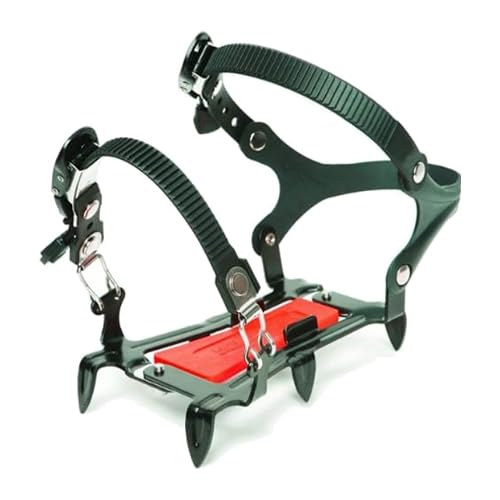
Hillsound Cypress6 Six Point Instep Ice Cleat Traction System
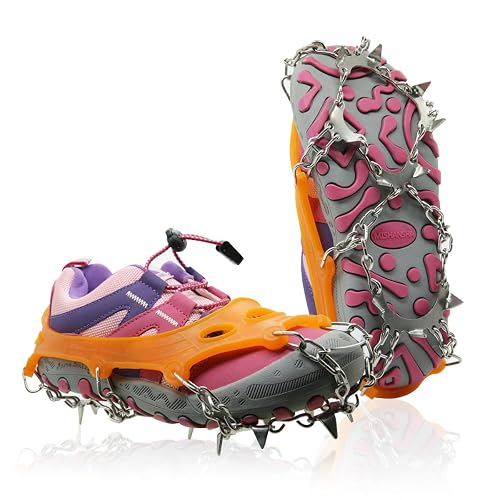
Giggleway Kids Crampons for Hiking Boots and Shoes
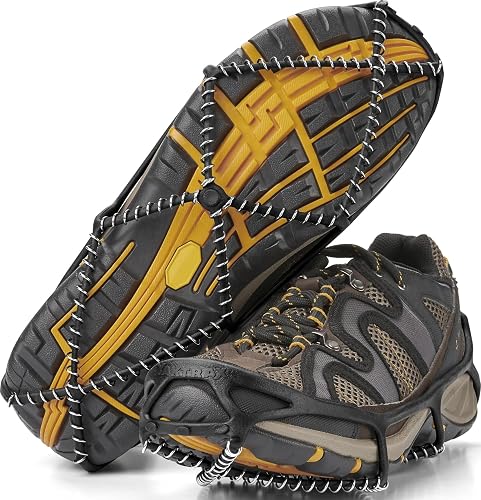
Yaktrax Walk Traction Cleats 360-Degree Grip
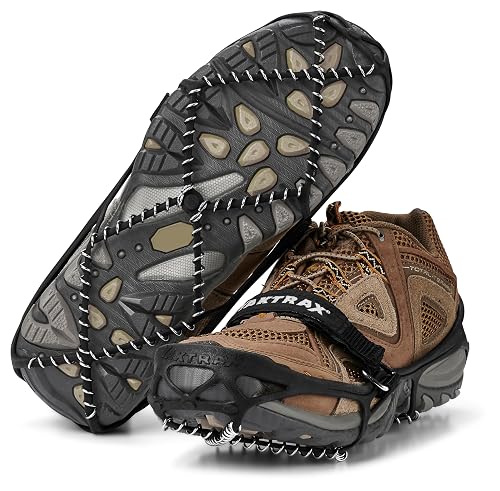
Yaktrax Pro Traction Cleats 360-Degree Grip
Yaktrax Diamond Grip Full-Foot Traction
Yaktrax Adventure Grip Winter Traction Device
More Details On Our Top Picks
The Hillsound Cypress6 is a real traction tool, not a winter fashion accessory. It uses six pointed carbon steel spikes (20mm and 25mm lengths) mounted directly under the foot, the same basic approach you see on a glacier crampon but trimmed down for non-technical trekking. You strap it on over hiking boots when packed snow or hard ice makes a route sketchy, and the spikes bite in where softer rubber slip-ons would skate across the surface.
Compared to the Yaktrax options later in this list, the Cypress6 is stiffer, more deliberate, and built for people who actually push into deeper terrain. It is not an everyday city-walking choice, but for a winter ascent or a hard-frozen ridge, the difference shows up quickly underfoot.
Everyday Advantages
- Carbon steel spikes dig into hard ice where coiled rubber tends to skate, giving you real bite on packed snow and glacier-style terrain.
- Mixed 20mm and 25mm spike lengths spread contact across uneven ground, which helps on rolling or stepped trails.
- An orange anti-snowballing pad sits above the spikes to shed packed snow before it builds up and lifts the spikes off the ice.
- A simple ratchet buckle lets you snug the binding over your boots without fighting with elastic, which matters when your fingers are cold.
- Stainless hardware and a focused six-point layout keep the overall weight reasonable for the amount of grip you get.
Things To Consider
- The rigid design takes more storage space than a stretchy rubber slip-on, so it lives in a pack rather than a coat pocket.
- You will need a few minutes to fit and tension the ratchet properly, which can feel like a lot for a short walk.
- Carbon steel can show surface rust if stored wet, so drying the spikes before packing is part of normal care.
Quick Facts
Who It Suits Best
Hikers tackling non-technical glacier crossings, frozen ridgelines, or deep snowpack with stiff boots will get the most from this setup.
Where Another Pick Suits Better
For casual winter walks around town, the Yaktrax Walk is lighter, easier to slip on, and far less aggressive on pavement.
Scaling down traction gear for small feet is harder than it looks, and the Giggleway kids cleats are aimed at exactly that problem. They are sized and shaped for toddler, kid, and youth boots rather than being a shrunken adult product, which matters when a child is wobbling on a frozen driveway or a snowy trail. Stainless steel spikes handle the biting, while a stretchy body keeps the fit snug over everything from snow boots to hiking shoes.
This sits in a different lane from the Hillsound Cypress6 above. The Cypress6 is built for serious terrain; this one is built for the everyday reality of parents who just want their kid to walk to school without sliding.
Positive Takeaways
- Sized specifically for kids’ boots, so the fit does not slide around the way an oversized adult cleat would.
- Stainless steel spikes resist rust, which matters when cleats get dragged through wet slush by curious children.
- Versatile enough for sledding hills, snowy playgrounds, ice fishing, and short winter hikes.
- A stretch-and-go design means kids can put them on without much adult help.
Worth Noting
- Because sizing is kid-specific, you will likely replace these every season or two as feet grow.
- Spike count is lower than adult units, which is fine for casual snow but limits their value on steep, hard ice.
Right Fit For
Parents outfitting young hikers for snow play, school walks, and family winter outings get the most practical value here.
Consider Something Else When
For an adult doing the same winter commute or trail, the Yaktrax Pro offers the same stainless steel approach in adult sizing.
The Yaktrax Walk is the kind of traction gear that lives in a coat pocket until the first icy morning. A stretchy thermoplastic rubber sling wraps over your shoe or boot, with 1.2mm zinc-coated steel coils spiraling across the sole. The design distributes grip across the whole underside of your foot rather than focusing on a few points, which makes it feel natural on flat ground, sidewalks, and gentle trails.
Where the Hillsound above is a piece of equipment you strap on for a mission, the Walk is something you grab on the way out the door. That difference defines who each one is for.
Key Advantages
- The 360-degree coil layout covers heel and toe, so grip stays consistent as you shift your weight walking.
- Zinc-coated steel resists rust during repeated wet winter use.
- An easy-on, easy-off heel tab saves you from wrestling frozen fingers.
- The thermoplastic rubber upper stays flexible in freezing temperatures instead of cracking.
- Slip-on design rolls up small enough to stash in a backpack or glove box.
Trade Offs
- Coils do not bite into hard ice the way pointed spikes do, so performance drops on steep, glazed terrain.
- The flexible sling can stretch out over seasons of heavy use, which loosens the fit.
Feature Snapshot
Best Suited To
Commuters, dog walkers, and casual hikers dealing with icy sidewalks and well-packed neighborhood trails will appreciate the balance of grip and convenience.
Not Your Match When
If your route climbs steep frozen slopes, the Yaktrax Adventure Grip brings actual triangular teeth that bite harder than these coils.
The Yaktrax Pro is the heavy-duty sibling of the Walk above, and the difference lives in the wire gauge. Where the Walk uses 1.2mm zinc-coated coils, the Pro steps up to 1.4mm stainless steel coils, giving you noticeably more bite and longer service life. The shape, stretch, and heel tab are all familiar, so anyone who has worn a Yaktrax before will not need a learning curve to use these.
This is the version you grab when winter is not a couple of novelty weeks but a real part of how you live, hike, or commute for four months at a time.
Where It Delivers
- Thicker 1.4mm stainless steel coils dig deeper and resist wear better than lighter zinc-coated wire.
- The same 360-degree coil layout keeps traction balanced across the whole foot from heel to toe.
- Recyclable thermoplastic rubber stays pliable in freezing temperatures without cracking.
- Stainless steel construction means less rust worry during multi-season use.
- Easy-on heel tab and elastic upper make for quick transitions in and out of the car or trailhead.
Honest Caveats
- Heavier coils add a touch more weight than the standard Walk, which you may notice on longer days.
- Coil design still favors packed snow and ice over the harder, sharper bite of a true spike system.
Feature Card
Made For
Frequent winter hikers and cold-climate commuters who rack up real mileage across packed snow and ice each season.
Look Elsewhere When
For deep, technical winter terrain where pointed spikes matter more than coils, the Hillsound Cypress6 brings real carbon steel bite to the table.
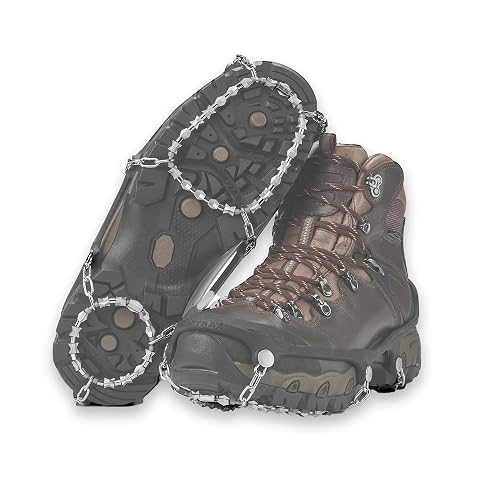
The Diamond Grip is the polite member of the Yaktrax family. Instead of exposed wire coils or spikes, it uses small swiveling diamond-shaped beads set across the sole, which grip with less scratch and less noise on hard surfaces. If you have ever flinched at the sound of metal coils scraping across a coffee shop floor, you already understand why this design exists.
It runs cooler than the Pro above in terms of pure ice biting, but it makes up for that with smoother pavement manners and a familiar stretch-on fit.
What Earns Its Place
- Patented diamond beads swivel to maintain contact as the foot rolls through a stride.
- Quieter and less scratchy on indoor floors and pavement than exposed steel coils.
- Elastic upper band is easy to slip on and stays flexible in cold temperatures.
- Full-foot coverage spreads traction evenly rather than concentrating it under a few points.
Points To Note
- Beads bite less aggressively than coiled wire, so steep icy slopes still favor the Walk or Pro.
- Beads can wear smooth after heavy seasons of use and lose their edge.
Whose Shelf It Belongs On
City dwellers and casual walkers who want reliable grip on slick sidewalks, transitions through lobbies, and gentle winter trails.
Skip It When
You spend more time on steep, technical snow than on pavement, where the Yaktrax Adventure Grip’s pointed teeth earn their keep.
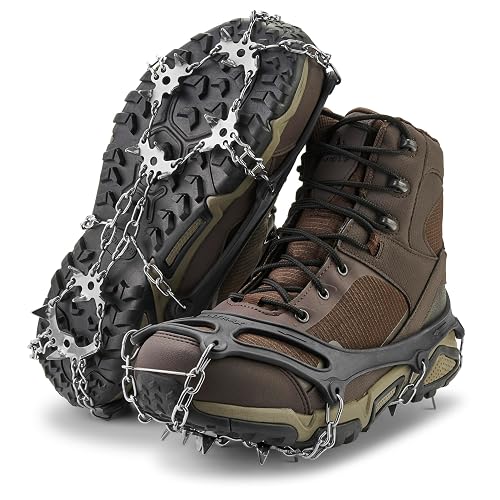
The Adventure Grip is what happens when Yaktrax stretches into real backcountry use. Nineteen half-inch stainless steel triangular teeth line the sole, replacing the gentler coils of the Walk, Pro, and Diamond Grip with something closer to a crampon. The flexible thermoplastic rubber upper keeps the slip-on feel the brand is known for, but the contact points underneath are a different animal entirely.
Where the Diamond Grip is meant to be polite on pavement, the Adventure Grip is unapologetically aggressive on ice. Hikers moving from city trails into steeper frozen terrain will recognize the upgrade immediately.
Standout Benefits
- Triangular stainless steel teeth bite into ice in a way that coils simply cannot match.
- Stainless steel resists corrosion even after months of wet snow use.
- Flexible upper stretches to fit various winter footwear without a complicated binding system.
- Useful for hiking and mountaineering routes where coils would skate across frozen ground.
- Slip-on design keeps the transition fast at the trailhead or the truck.
A Few Limitations
- Aggressive teeth feel loud and rough on bare pavement and indoor floors.
- More metal means more weight than the lighter Yaktrax Walk, so packing it adds bulk.
- Spike style puts more stress on softer boot soles, so pairing with a stiffer hiking boot is wise.
Built With In Mind
Mountaineers, alpine hikers, and backcountry trekkers tackling steep, icy ascents will value the spike-style bite most.
Reach For A Different Pick When
For everyday commutes where you mostly cross flat sidewalks, the Yaktrax Walk is lighter, quieter, and easier on indoor surfaces.
What To Weigh Before Choosing Hiking Ice Cleats
Match Spike Style To Terrain
The first decision is whether you need point spikes, coils, or beads. Point spikes (like the Hillsound Cypress6 and Yaktrax Adventure Grip) bite hardest into hard ice and steep ground but feel rough on pavement. Coils and diamond beads (Walk, Pro, Diamond Grip) spread traction across the foot for smoother everyday use but struggle on glazed slopes. Your typical route decides which side of that trade-off matters most.
Think About How Often You Will Use Them
Occasional winter walkers can get by with lighter zinc-coated wire, but people who wear cleats every day for months will benefit from thicker stainless steel coils or actual steel spikes. Stainless construction resists rust during repeated wet-wear cycles and holds its edge longer, which pays off across a season.
Fit And Footwear Pairing Matter
Cleats only work if they stay on your boot. Stretchy rubber slings fit a wide range of shoes and boots, while ratchet bindings like the Cypress6 require a more deliberate fit. Make sure the cleat you choose matches the footwear you actually own. Stiffer boots handle aggressive spike systems better; soft sneakers do better with lighter coils.
Storage And Care Are Part Of Ownership
Steel components need a quick dry before packing, and rubber uppers last longer if they are stored flat rather than crushed in a trunk. Building a two-minute cleanup habit into your routine extends the life of any traction system significantly.
Key Considerations Across These Picks
Where Shoppers Go Wrong
A common mistake is buying aggressive spike cleats for short sidewalk commutes and then being annoyed by the noise and scratch on indoor floors. The opposite mistake is grabbing a soft coil pair for a steep icy ascent and discovering too late that coils skate across hard ice. Match the cleat to the route, not the other way around.
Another pitfall is ignoring sizing. Adult cleats stretched over kids’ boots, or vice versa, shift around underfoot and defeat the purpose of having traction at all.
The Case For Spending Up
Higher-tier cleats in this category earn their price through stainless steel construction, thicker gauge wire, and more aggressive spike patterns. For weekend hikers, the upgrade shows up as longer service life and better bite on hard ice. For daily winter commuters, it shows up as fewer mid-season replacements and more confident footing across months of use.
Frequently Asked Questions
Do hiking ice cleats work on regular boots?
Most cleats are designed to stretch over standard hiking boots, winter boots, and even sturdy sneakers. Aggressive spike systems pair best with stiffer soles, while coil and bead designs work fine on softer footwear.
Can you wear ice cleats indoors?
Coil and bead designs are gentle enough on smooth indoor floors for short transitions, but pointed spike cleats can scratch surfaces and feel loud. Removing them before going inside is usually the better call.
How long do hiking ice cleats last?
Lifespan depends on frequency and terrain. Light coil cleats on flat sidewalks can wear out within a season, while stainless steel spike and coil systems often last multiple winters with basic care.
Are kids’ ice cleats worth it?
For children who walk to school, play in snow, or join family winter hikes, properly sized cleats make a real difference in stability and confidence on icy ground.
Do I need different cleats for hiking versus commuting?
Not always, but spike-style cleats handle trails better, while coil and bead designs handle pavement more comfortably. Choosing one based on your most common surface usually works out fine.
The Takeaway
The right hiking ice cleats depend less on brand loyalty and more on where your boots actually go. Coils and beads cover sidewalks and packed trails, point spikes handle steep ice, and kids need their own sizing to fit properly. Match the cleat to the terrain, take care of the steel, and your winter footing stops being something you worry about.